Last call: 100 art exhibitions ending in February 2026
This issue of Kunsti Radar focuses on the diverse range of 100 art exhibitions set to close across Europe and the United Kingdom in February 2026.

This issue of Kunsti Radar focuses on the diverse range of 100 art exhibitions set to close across Europe and the United Kingdom in February 2026. A significant theme this month is the 250th anniversary of J.M.W. Turner’s birth, marked by major surveys at the Walker Art Gallery and the Whitworth. Simultaneously, long-overdue retrospectives for pioneers like the Baroque master Michaelina Wautier in Vienna and the modernist Félix Vallotton in Lausanne are entering their final weeks.
In the United Kingdom, the coming weeks represent the final opportunity to visit several landmark surveys before they conclude in mid-February. Tate Britain’s extensive retrospective of Lee Miller’s photography and the National Gallery’s presentation of Edwin Austin Abbey’s Gilded Age studies both end on 15 February. Visitors in London also have until 8 February to view the “radical visions” of Neo-Impressionist masters, while those in Edinburgh can explore the wartime illustrations of F.C.B. Cadell and the graphic artistry of Sir David Wilkie until the same date.
Mainland Europe also sees the conclusion of numerous significant displays throughout the month. Major highlights ending in early February include René Magritte’s visual riddles in Antwerp , Kandinsky’s intersection with music at the Centre Pompidou , and the dialogue between Picasso and Klee in Madrid. For those seeking contemporary perspectives, the month also marks the final days for Marisol’s satirical Pop Art in Copenhagen and the profound revaluation of colonial archives through the lens of Lehnert & Landrock in Lausanne.
🇦🇹 Exhibitions in Austria
Michaelina Wautier, Painter
Until 22 February 2026
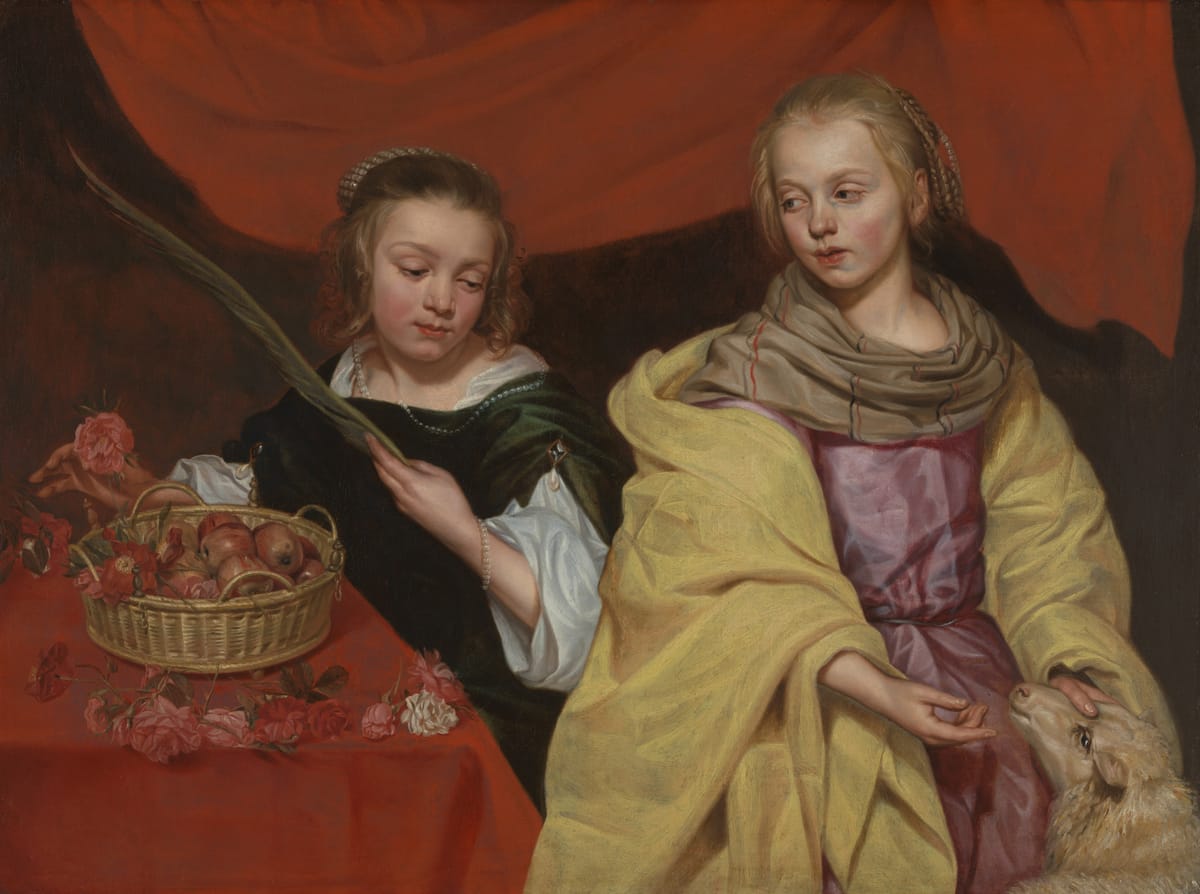
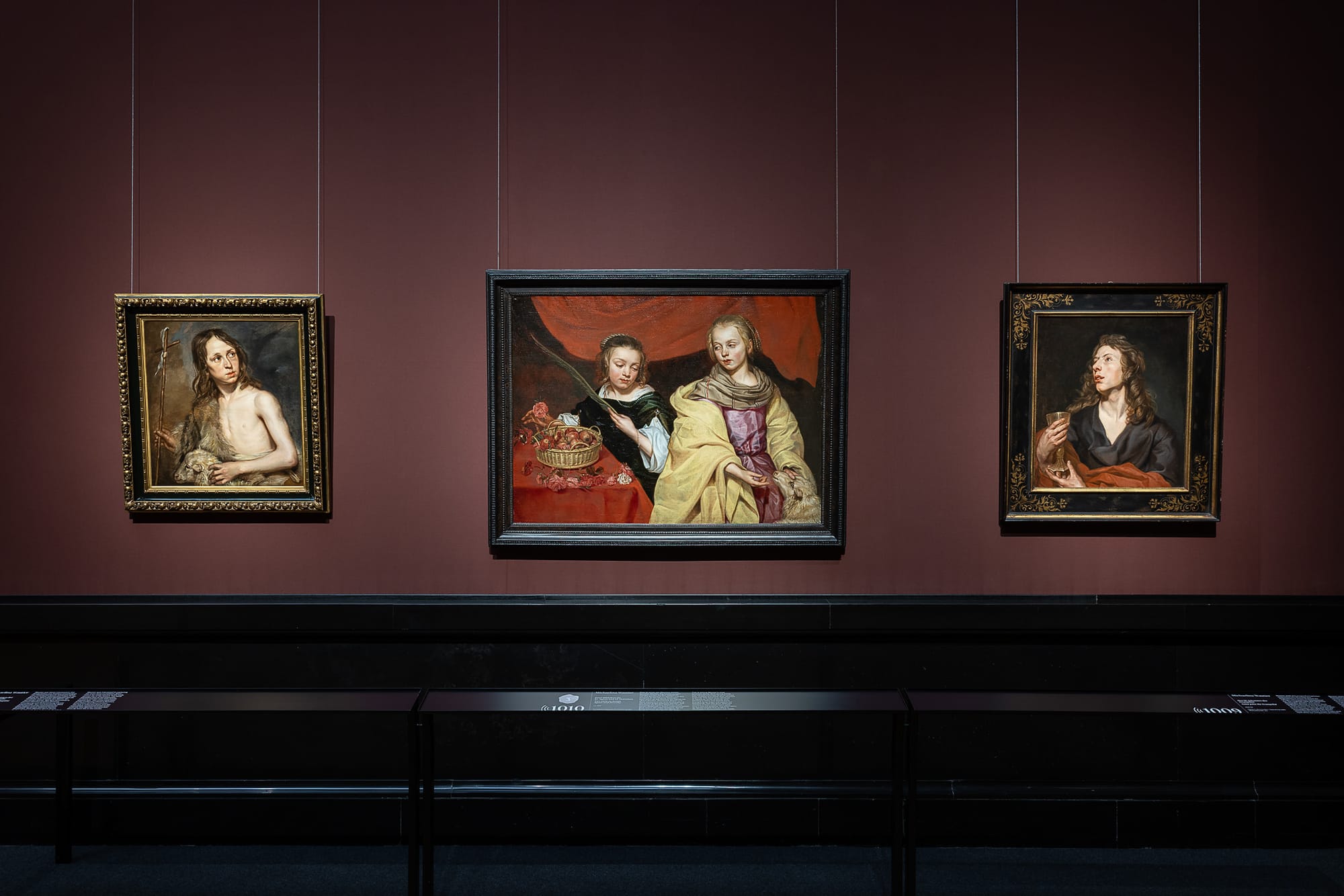
This exhibition at the Kunsthistorisches Museum Vienna celebrates Michaelina Wautier, a 17th-century Baroque master whose work was long forgotten or misattributed to men. The display features nearly her complete body of work, ranging from small-scale flower garlands to monumental history paintings and daring male nudes — subjects rarely permitted for women at the time. A highlight is her masterpiece, The Triumph of Bacchus. Another prominent artwork in the exhibition is a “portrait historié” painting Two Girls as Saints Agnes and Dorothy. This comprehensive showcase highlights her exceptional skill and versatility alongside contemporaries like Rubens.
Oliver Laric. Liminal Beings
Until 15 February 2026
This solo exhibition at the Kunsthistorisches Museum features the work of Austrian artist Oliver Laric, who explores the relationship between original artifacts and digital transformation. By using 3D scanning and printing, Laric creates hybrid sculptures that engage in a direct dialogue with the museum's Collection of Greek and Roman Antiquities. His translucent resin forms and modular compositions rethink historical motifs, such as sphinxes and mythical creatures, moving between the ancient world and the digital present. The display invites visitors to view the museum as a space for constant recontextualisation and cultural transmission through modern technology.
Cézanne, Monet, Renoir: French Impressionism from the Museum Langmatt
Until 8 February 2026
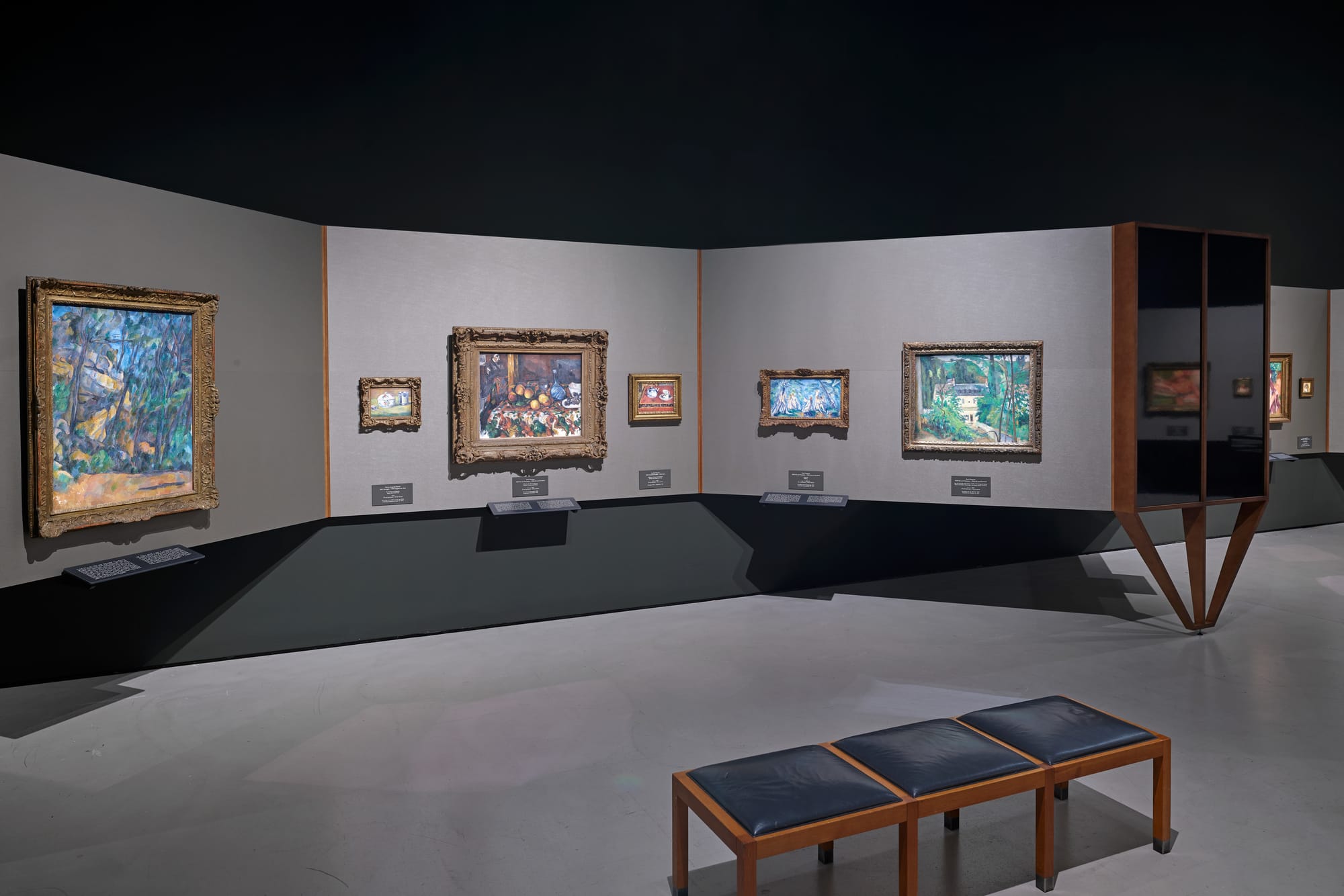
This exhibition at the Lower Belvedere presents a selection of masterpieces from the Museum Langmatt, one of Switzerland’s most significant private collections of French Impressionism. Collected by Jenny and Sidney Brown during the early 20th century, the works reflect a personal passion for the movement — especially for the paintings of Pierre-Auguste Renoir. The display features exceptional pieces by Cézanne, Monet, and Renoir, alongside works by Camille Corot and Alfred Sisley. Visitors can explore how the “industrial bourgeoisie” embraced modern art, creating a dialogue between the Swiss collection and the Belvedere’s own Impressionist core.
Lisette Model: Retrospective
Until 22 February 2026
This broad retrospective at the Albertina Museum honours Lisette Model, one of the 20th century’s most influential photographers. Born into a Viennese Jewish family, Model emigrated to New York in 1938, where she rose to prominence with her candid and gritty portrayals of urban life. The exhibition showcases her most significant work created between 1933 and 1959, including iconic images such as Coney Island Bather and Café Metropole. Her photographs capture a vast social spectrum — from the poverty of the Lower East Side to the leisure of the upper class — and highlight her unique ability to document the human condition with unflinching honesty.
Duane Linklater: mâcistan
Until 15 February 2026
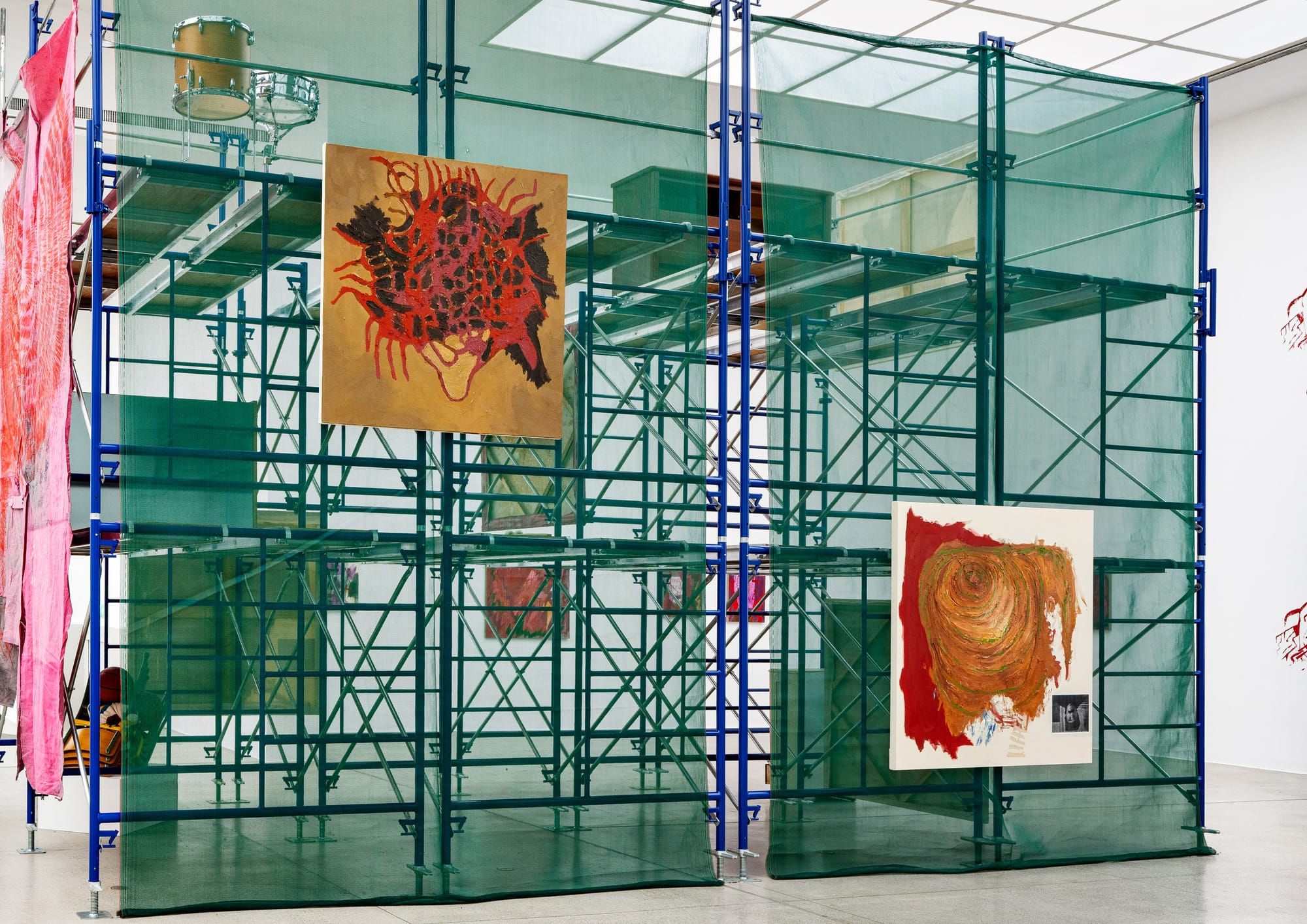
In this site-specific exhibition at the Secession, Omaskêko Ininiwak artist Duane Linklater explores the concept of the “cache” — a space for storing, preserving, and world-building. Using towering scaffolds as a framework instead of the institution’s walls, Linklater displays paintings, found objects, and family possessions to critique the colonial systems of knowledge and representation found in traditional museums. By elevating everyday items and ancestral motifs, he highlights the continuity of Indigenous life and the labour of cultural restoration. The installation serves as a powerful gesture of care and repair, bridging the gap between personal memory and historical ruptures.
Mimi Ọnụọha: Soft Zeros
Until 22 February 2026
In her exhibition Soft Zeros at the Secession, Mimi Ọnụọha investigates the unreliability of archives and the political production of invisibility within data systems. The title refers to a statistical term for values that appear as “nothing” due to a lack of recording rather than true absence — a metaphor for how algorithmic bias and historical denial marginalise specific groups. The heart of the show is the docu-fiction film Ground Truths, which reflects on the “Sugar Land 95”, whose remains were discovered in Texas after being erased from public memory. Through photography and installation, Ọnụọha challenges us to read the silences and reckon with systematically excluded histories.
Cevdet Erek: Secession Ornamentation
Until 22 February 2026
Cevdet Erek explores the concept of “sound ornamentation”, transforming decoration into a vibratory structure that organises space. By mounting loudspeakers on the building’s façade, Erek turns the iconic architecture into a surface that can be heard, with rhythmic patterns that reconfigure its geometry. The exhibition also includes wood reliefs in the Grafisches Kabinett designed to be experienced through touch, modelled after Braille symbols found on local pedestrian crossings. Through these interventions, Erek challenges the modernist rejection of ornament — famously championed by Adolf Loos — and replaces it with a porous, inclusive sonic architecture that draws the visitor’s full body into the experience.
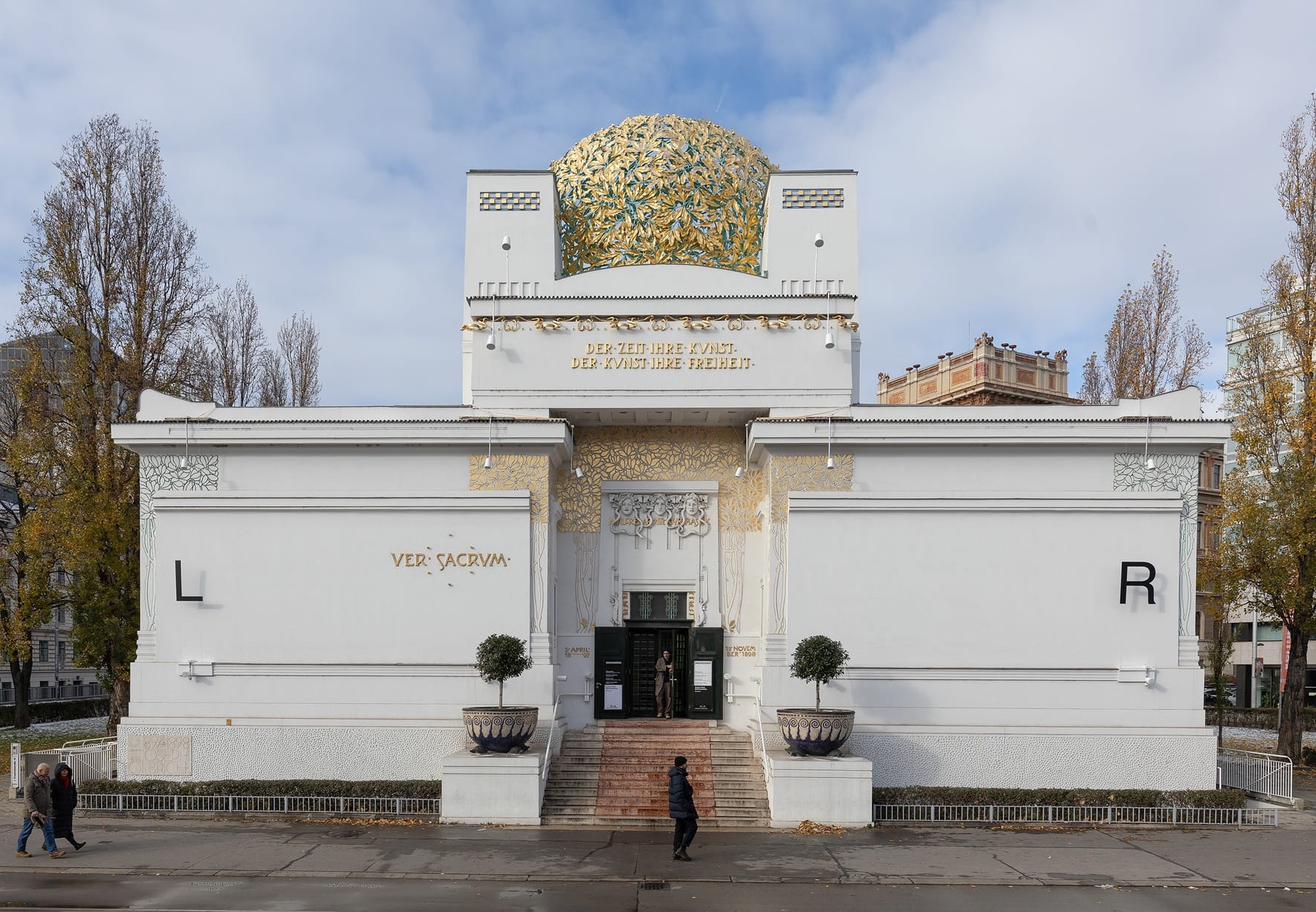
Bicycle & Lobster: Sparkling Tree Decorations From Gablonz
Until 1 February 2026
This exhibition at the MAK presents a sparkling selection of hundreds of Christmas tree decorations from the Waltraud Neuwirth Collection, originating from Gablonz (Jablonec nad Nisou) between 1920 and 1980. Arranged by designer Johanna Pichlbauer, the display transforms the Works on Paper Room into a glittering cosmos of intricate glass beads and wirework. What makes these ornaments particularly fascinating is their surprising variety — alongside traditional stars and angels, one can find miniatures of everyday objects such as bicycles, lobsters, handbags, and even slide rules. The exhibition celebrates a unique craft tradition that combines festive charm with an unexpected, almost surreal playfulness.
Emilija Škarnulytė: Waters call me home
Until 15 February 2026
In the immersive exhibition Waters call me home, Lithuanian artist and filmmaker Emilija Škarnulytė explores the intersection of documentation and imagination. Her work delves into “deep time” and invisible structures — ranging from cosmic and geological phenomena to ecological and political shifts. Set within the dome-shaped Space01 of Kunsthaus Graz, the installation combines video, light, and artefacts to create a mystical environment. Populated by mythological figures and deities, her films offer a perspective beyond the purely human, searching for hope and life in the remotest corners of a world scarred by destruction.
Unseen Futures to Come. Fall
Until 15 February 2026
The Kunsthaus Graz takes a hard look at the messy state of the world in Unseen Futures to Come. Fall. Through the work of twelve artists, the exhibition explores how things like war, climate change, and political instability make our daily lives feel increasingly shaky. A standout feature is a physical library of 250 books chosen by philosopher Federico Campagna to help visitors make sense of a world that feels like it is falling apart. It is a thought-provoking show that balances the darkness of global crises with a quiet search for human connection and a way to move forward.

🇧🇪 Exhibitions in Belgium
Everlyn Nicodemus: Black Bird
Until 1 February 2026
WIELS Brussels presents a vibrant survey of Everlyn Nicodemus, an artist who views creativity as a vital tool for healing and freedom. Spanning forty years, the exhibition Black Bird features over eighty works — ranging from early experiments on bark cloth to recent drawings and textiles. Nicodemus uses bold colours and textures to confront difficult themes like racism, the global oppression of women, and personal trauma. Her work is a powerful testament to her refusal to fit into traditional Western frames, offering a singular blend of abstraction and figuration that celebrates the resilience of the human spirit.
Magritte: La ligne de vie
Until 22 February 2026
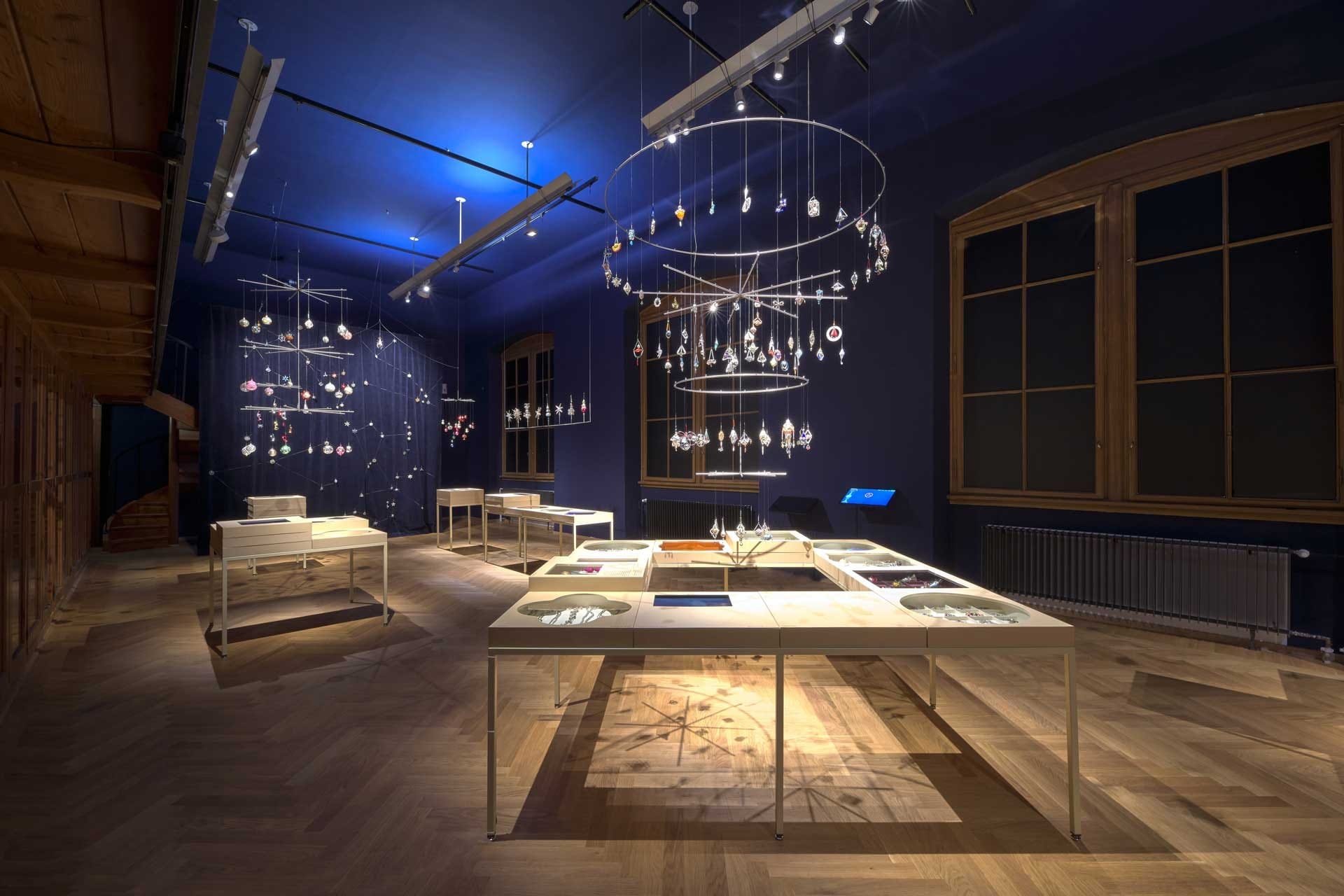
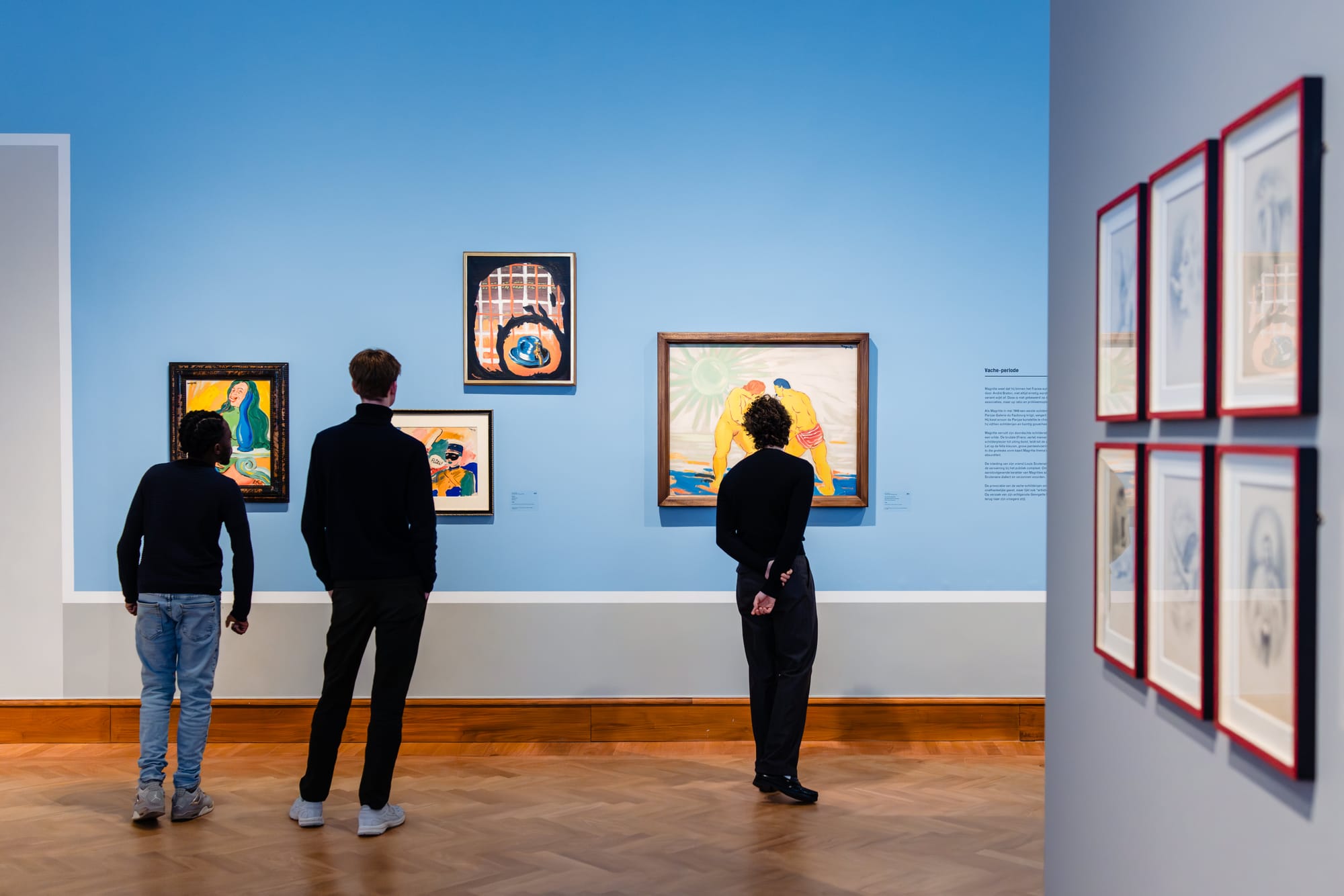
In 1938, René Magritte arrived at the KMSKA to deliver a lecture that would define his legacy. La ligne de vie retraces that historic moment, inviting visitors to follow the artist’s own words as they navigate a landscape of visual riddles and his famous wordplay — most notably the iconic “Ceci n’est pas une pipe”. The exhibition sheds light on why Magritte favoured motifs like trees and windows, presenting him as a thinker who found mystery within the banal. It is a sharp, sober look at the Belgian Surrealist master’s rejection of abstraction in favour of painting pure ideas.
The Associations of Pauline Curnier Jardin
Until 8 February 2026
At the M HKA in Antwerp, the first survey of Pauline Curnier Jardin’s work offers a spirited dive into a twenty-year career defined by resistance and imagination. The exhibition, titled The Associations, brings together over twenty films alongside sculptures and large-scale installations that feel more like stage sets than traditional gallery pieces. Curnier Jardin explores the festive energy of carnivals, circuses, and processions to tell stories of female empowerment and collective ritual. At the heart of the show is a live stage, hosting guest associations and performances that turn the museum into a site of active community and constant transformation.
No Longer Not Yet: Katja Mater and the FOMU collection
Until 22 February 2026
In Antwerp, the FOMU presents a sophisticated dialogue between the museum’s own archives and the contemporary lens of Katja Mater. No Longer, Not Yet sees the Dutch artist spend a year as a “resident” within the collection, selecting historical works to pair with her own site-specific interventions. Mater is interested in the tension between what a photograph shows and what it hides, using her characteristic blend of performance and installation to deconstruct the medium. It is a quiet, intellectual exercise in looking — challenging the viewer to find the gaps in history and the moments of transition that usually go unnoticed.
Alicja Kwade: Dusty Die
Until 22 February 2026
Alicja Kwade’s first solo exhibition in Belgium, Dusty Die, invites visitors to M Leuven to step into a world where reality is quite literally turned upside down. The Polish-born, Berlin-based artist uses heavy materials like boulders, ancient rocks, and petrified wood to create sculptures that seem to float or defy gravity. Kwade treats science not as a set of rules, but as a subjective attempt to find order in a chaotic universe. Her work — featuring clever use of mirrors and repetition — suggests that our understanding of time and matter is far more fragile than we think, opening up a space where imagination takes over from knowledge.
The Pursuit of Knowledge
Until 22 February 2026
To mark the 600th anniversary of KU Leuven, M Leuven has assembled a curated cabinet of curiosities from the university’s vast study collections. The Pursuit of Knowledge brings together an eclectic mix of objects — from fluorescent minerals and scientific instruments to Congolese gourds and taxidermy. These items are more than mere relics; they tell the story of how generations of researchers gathered and shared information. Paired with large-scale photography by Karin Borghouts, the display also tackles difficult questions regarding colonial history and the evolution of academic heritage, proving that the search for truth is never a static endeavour.
🇩🇰 Exhibitions in Denmark
Pop-up Exhibition Al-Najah / النجاة
27 January – 1 February 2026
The David Collection in Copenhagen kicks off the year with a focused pop-up exhibition featuring the work of Jordanian-Palestinian designer Sylwia Nazzal. Created in collaboration with artist Jad Maq and presented as part of Copenhagen Fashion Week, the Al-Najah collection explores the survival instincts and traditional craftsmanship of Bedouin life. Nazzal utilizes raw natural materials, rock pigments, and hand-crafted latex to translate ancient techniques into contemporary silhouettes. The display moves beyond mere nostalgia, positioning Bedouin heritage as a living guide for spiritual and physical endurance while highlighting the importance of community — based, ethical production over mass manufacturing.
Larissa Sansour, These Moments Will Disappear Too
Until 15 February 2026
In her largest exhibition to date, Palestinian-Danish artist Larissa Sansour takes over Kunsthal Charlottenborg with These Moments Will Disappear Too. This compelling showcase interweaves film, opera, and science fiction to navigate the heavy terrain of inherited trauma, forced migration, and national identity. Sansour’s meticulously crafted video works create alternative realities that offer a visceral space for reflecting on the right to a land and the ongoing threat of environmental collapse. It is a visually experimental and richly imaginative journey that manages to find profound beauty within themes of grief and memory — reminding us that while history is troubled, the human experience remains a shared, collective venture.
Aleksandra Domanović, Canopy Collapse
Until 15 February 2026
Aleksandra Domanović brings her conceptually sharp survey, Canopy Collapse, to Kunsthal Charlottenborg, marking her first solo exhibition in Scandinavia. Over the past fifteen years, Domanović has built a reputation for exploring how technology, gender, and cultural memory collide in our hyper-connected age. The exhibition ranges from monuments of international celebrities to genetically modified bulls and the neon-lit legacy of 1990s techno rave culture. By looking at history through a gender-conscious lens — including the curious case of Yugoslav cybernetics — she creates a complex, personal narrative about how digital networks and news broadcasts shape both our identity and our collective past.
Marisol
Until 22 February 2026
The Louisiana Museum of Modern Art presents Europe’s first major retrospective of Marisol, the visionary “Queen of Pop” who was once as famous as Andy Warhol before being largely sidelined by art history. Her work offers a sharp, satirical departure from standard Pop Art, blending life-sized wooden carvings with found objects and folk-art influences. These often-disturbing tableaus confront 1960s consumerism, celebrity culture, and rigid gender roles with a dark sense of humour. By placing her own self-portrait at the centre of many works, Marisol created a body of work that is as enigmatically personal as it is politically charged — marking a long-overdue return for this radical artist.
Alex da Corte – Mr. Dream
Until 22 February 2026
Step into the neon-drenched parallel universe of Alex Da Corte at Kunsten Museum of Modern Art Aalborg, where the banal is transformed into the surreal. Mr. Dream presents a sensory-overloading array of video works and enticing installations that feature iconic characters — from the Pink Panther to Eminem — portrayed by the artist himself in elaborate disguises. Mixing highbrow references with the kitsch of American consumer society, Da Corte explores the fragility of identity and the absurdities of modern life. It is a playful yet melancholy celebration of pop culture, delivered with a satirical bite and a heavy dose of existential nostalgia.
LIFE ANGST
Until 15 February 2026
In a sophisticated pairing of historical and contemporary voices, Museum Jorn presents LIFE ANGST, an exhibition that explores the intersection of creativity and mental well-being. The show finds its roots in Asger Jorn’s own stay at a tuberculosis sanatorium in 1951 — a period of physical frailty that paradoxically fuelled a creative surge. Works by Edvard Munch, Marina Abramović, and Cindy Sherman are brought into dialogue to examine themes of illness, healing, and hope. It is a poignant, meticulously curated survey that treats art not just as an aesthetic pursuit, but as a vital tool for navigating the complexities of the human psyche.
🇫🇷 Exhibitions in France
The Carracci Drawings: The Making of the Farnese Gallery
Until 2 February 2026
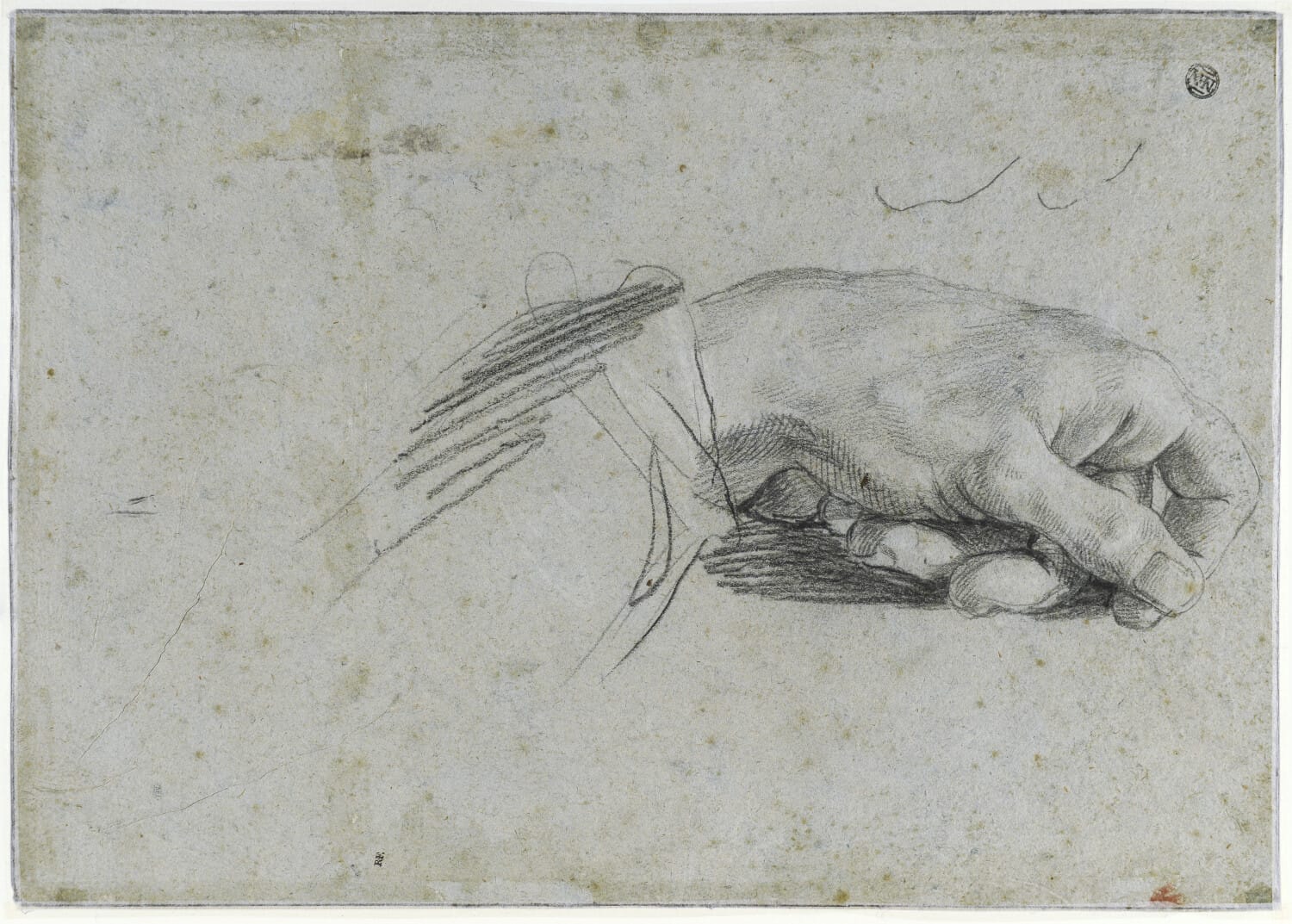
The Musée du Louvre celebrates a milestone in Baroque art with The Carracci Drawings: The Making of the Farnese Gallery. For the first time, a monumental collection of preparatory sketches, rapid studies, and full-scale cartoons has been assembled to recreate the Palazzo Farnese’s legendary ceiling as a sophisticated visual puzzle. Visitors can explore the creative process of Annibale Carracci and his workshop, following the artist’s journey from initial inspiration to the final, breathtaking frescoes. The exhibition features an immersive design that reproduces the gallery’s vault alongside the ceiling of the Camerino, offering a rare, close-up look at the intellectual revival and draftsmanship that defined one of Western painting’s greatest masterpieces.
Gabrielle Hébert: Amour fou at the Villa Medici
Until 15 February 2026
In a dedicated showcase at the Musée d’Orsay, the photographic work of Gabrielle Hébert takes centre stage, offering a rare glimpse into life at the Villa Medici during the late 19th century. As the wife of the French Academy’s director, Hébert was an early adopter of the handheld camera, using it to capture remarkably candid moments that broke away from the stiff, formal portraiture of her time. The exhibition, Amour fou at the Villa Medici, highlights her keen eye for spontaneous movement and intimate family scenes, as well as her striking documentation of Rome and its surroundings. Her work serves as a pioneering example of amateur photography’s power to record the ephemeral, blending personal memory with a sharp, modern sense of composition.
Beaubourg Competition 1971: A transformation of architecture
The Centre Pompidou revisits its own genesis with Concours Beaubourg 1971, an exhibition hosted at the Académie d’Architecture that dissects the pivotal moment when the museum’s radical form was first conceived. Drawing from a pool of 681 original entries submitted to the international jury — presided over by Jean Prouvé — the show moves beyond the winning design by Piano, Rogers, and Franchini to survey the broader architectural zeitgeist of the early 1970s. Through a curated selection of previously unseen plans, models, and photographs, the presentation illustrates how the competition became a battleground for conflicting ideologies — from Beaux-Arts traditionalism to avant-garde structuralism — ultimately reshaping the discipline and the profession for decades to come.
Kandinsky: La musique des couleurs
Until 1 February 2026
The Centre Pompidou and the Philharmonie de Paris have joined forces to present Kandinsky: La musique des couleurs, a major exhibition exploring the fundamental link between music and abstract art. Bringing together nearly 200 works and personal objects — including sheet music, records, and studio tools — the show recreates the artist’s “imaginary studio” and highlights his lifelong passion for sound. From his early Russian landscapes to his iconic Bauhaus compositions, the display illustrates how Kandinsky translated musical principles into a visual language of colour and form. An immersive journey with a headset allows visitors to experience the vibrant musical scene that shaped his practice, featuring the works of composers like Schönberg, Stravinsky, and Scriabin.
Arnaud Labelle-Rojoux: Voyez-vous ça !
Until 15 February 2026
In a significant retrospective co-organised with the Centre Pompidou, the MAC VAL presents the first major French exhibition dedicated to Tarsila do Amaral. A central figure of Brazilian modernism, do Amaral developed a unique visual language that blended the avant-garde influences of 1920s Paris with the vibrant landscapes and social realities of her homeland. The exhibition traces her journey from the "Pau-Brasil" period to the influential "Anthropophagy" movement, featuring iconic paintings that redefine national identity through a surreal and colourful lens. Her work remains a powerful testament to the dialogue between cultures, illustrating how she transformed traditional motifs into a bold, modern aesthetic that continues to resonate globally.
Bilal Hamdad: Paname
Until 8 February 2026
The quiet, often overlooked melancholy of Parisian life takes centre stage at the Petit Palais through the lens of Algerian-born painter Bilal Hamdad. His large-scale oil paintings focus on the solitary figure — an anonymous commuter or a pensive stranger — adrift in the city’s relentless bustle. While his technique leans on the classical mastery of Rubens and Courbet, the subject matter is strictly contemporary, capturing the specific brand of loneliness found on public transport or crowded street corners. By placing these modern scenes alongside the museum’s permanent collection, the exhibition creates a bridge between traditional fine art and the isolated reality of 21st-century urban existence.
Pekka Halonen: An ode to Finland
Until 22 February 2026
Finland’s rugged natural beauty and ancestral traditions are given a lyrical spotlight in this major retrospective of Pekka Halonen at the Petit Palais. A central figure of the Finnish Golden Age, Halonen studied under Paul Gauguin in Paris, a catalyst that helped him forge a unique style blending the Parisian avant-garde with the quiet authenticity of his northern homeland. Over a hundred works depict the tireless rhythm of the seasons — particularly the artist's obsession with snow, which he explored with a level of experimentalism that often bordered on abstraction. To heighten the sensory experience, the museum has even incorporated bespoke fragrances and olfactory installations, allowing the scent of the Finnish wilderness to drift through the gallery as you wander past frozen lakes and quiet, winter forests.
Copyists
Until 2 February 2026
The classical tradition of learning through imitation is given a bold, 21st-century makeover in Copyists, an exceptional collaboration between the Centre Pompidou-Metz and the Musée du Louvre. Curators invited a vast roster of contemporary artists — including names like Jeff Koons, Elizabeth Peyton, and Paul McCarthy — to select a masterpiece from the Louvre's permanent collection and produce their own interpretation of it. The resulting works range from faithful technical exercises to radical, avant-garde subversions, exploring how the act of copying remains a powerful tool for knowledge and transformation. It is a diverse and intellectually stimulating assembly that proves that even in an age of digital reproduction, the hand-drawn or hand-painted dialogue with the past is far from obsolete.
Robert Weaver / Tomi Ungerer: L’illustration en action
Until 15 February 2026
The art of visual journalism takes centre stage at the Musée Tomi Ungerer in Strasbourg, where the works of Robert Weaver and Tomi Ungerer are brought into a spirited dialogue. Moving away from the static nature of traditional illustration, the exhibition L'illustration en action focuses on reportage based on the direct observation of reality — a practice that flourished in the 1960s. Weaver, a pioneer of the genre, used his drawings as a tool for social investigation in urban America, while Ungerer captured the high-energy spectacle of sports matches and popular leisure for Sports Illustrated. The display also highlights the crucial role of courtroom sketches, where the artist’s hand must record the truth in spaces where cameras are forbidden, proving that the pen remains a vital instrument for documenting the context and atmosphere of contemporary history.
🇩🇪 Exhibitions in Germany
Rico Reframed: New Perspectives on Rico Puhlmann’s Fashion Photography
Until 15 February 2026
The aesthetic of fashion photographer Rico Puhlmann receives a contemporary update at Berlin’s Museum für Fotografie in the exhibition Rico Reframed. Fifteen photography students from the Lette Verein Berlin have produced new film and photographic works that challenge and expand upon Puhlmann’s classic 20th-century silhouettes. While the original works were celebrated for their clear lines and urban elegance, these new perspectives tackle modern themes of diversity, queer identity, and the breaking of normative beauty standards. By mixing vintage pieces with designs from emerging artists, the display creates a cross-generational dialogue on how the camera can be used not just to sell clothing, but to negotiate social and political representation in the 21st century.
Rico Puhlmann: Fashion Photography 50s–90s
Until 15 February 2026
Tracing four decades of sartorial elegance and cultural shifts, the Museum für Fotografie in Berlin hosts a comprehensive retrospective of Rico Puhlmann. Starting his career as a fashion illustrator in postwar West Berlin, Puhlmann eventually became an internationally sought-after photographer, capturing iconic figures such as Naomi Campbell and Cindy Crawford for Vogue and Harper’s Bazaar. The exhibition follows his move to New York in the 1970s, where he helped pioneer the relaxed "American Look" — replacing stiff studio poses with a sense of natural movement and spontaneity. It is a stylish journey through the evolution of the fashion press, showcasing how Puhlmann’s lens reflected the changing image of women and men from the mid-century until his abrupt death in 1996.
Newton, Riviera & Dialogues: Collection Fotografis x Helmut Newton
Until 15 February 2026
A dual narrative unfolds at Berlin’s Museum für Fotografie, where the sun-drenched glamour of the Côte d’Azur meets an intellectual exchange of imagery. Newton, Riviera & Dialogues features a collection of Helmut Newton’s photographs taken along the Mediterranean coast, many of which are being exhibited in Berlin for the first time. The second half of the show pairs Newton’s work with selected pieces from the FOTOGRAFIS collection, creating unexpected associations that range from formal similarities to coincidental, often odd thematic links. This curated conversation invites the viewer to look beyond the surface of the fashion world, encouraging a fresh imagination and a deeper understanding of how iconic photography can interact with historical archives.
The Scharf Collection: Goya – Monet – Cézanne – Bonnard – Grosse
Until 15 February 2026
Spanning over two centuries of artistic evolution, the Alte Nationalgalerie in Berlin unveils one of Germany’s most significant private holdings in The Scharf Collection. This vast assembly — a direct legacy of the legendary Otto Gerstenberg collection — features around 150 masterpieces, ranging from the haunting prints of Goya to the luminous landscapes of Claude Monet and Paul Cézanne. The exhibition tracks a family’s enduring passion for the French avant-garde, while also highlighting their more recent pivot toward bold contemporary works by Katharina Grosse and Daniel Richter. It is a rare opportunity to witness how a single collection can navigate the shift from representational classicism to the vibrant abstractions of the modern day.
On Paths Untrodden: Georg Schweinfurth and His Significance for the Collections of the Staatliche Museen zu Berlin
Until 8 February 2026
Marking the centenary of his death, the Neues Museum in Berlin presents On Paths Untrodden, an exhibition that re-evaluates the legacy of Georg Schweinfurth beyond his fame as an African explorer. Schweinfurth was a pivotal figure in the scientific birth of Egyptology, applying his botanical expertise to the study of ancient floral garlands found in royal tombs — including that of Ramses II. The display brings together a diverse array of artefacts, from prehistoric hand axes and colourful Faiyum textiles to previously unstudied papyri, illustrating how his multifaceted interests helped establish prehistoric Egypt as a rigorous field of research. It is a revealing look at a well-connected scholar whose obsession with the natural world provided a new, scientific lens through which to view the ancient past.
Carl Schuch and France
Until 1 February 2026
The Städel Museum in Frankfurt shines a light on the restless, cosmopolitan career of Carl Schuch, a painter often considered an "insider tip" of the late 19th century. Carl Schuch and France places around seventy of his works in a direct, sophisticated dialogue with fifty masterpieces by French titans such as Paul Cézanne, Édouard Manet, and Gustave Courbet. The exhibition specifically examines Schuch's transformative years in Paris between 1882 and 1894, during which he moved away from national artistic boundaries to pursue a pure, uncompromising search for light and atmosphere. It is a quiet yet powerful journey of discovery, proving that Schuch’s subtle colour nuances and sensitivity to the Doubs Valley landscapes effortlessly hold their own alongside the greatest pioneers of French modernism.
Domenico Gnoli: Cabinet Presentation
Until 8 February 2026
The poetic, highly zoomed-in world of Italian artist Domenico Gnoli is currently on display at the Städel Museum’s Garden Halls. This cabinet presentation focuses on Gnoli’s unique ability to transform everyday items — such as hairstyles, ties, and armchairs — into voluminous, almost architectural forms. While his work often draws comparisons to Pop Art, Gnoli was actually inspired by the extreme close-ups found in art-historical literature, using sand-mixed paint to give his surfaces a tactile, abstract quality. By isolating these fragments, he creates a sense of alienation where the familiar becomes strangely alien, inviting the viewer to find hidden stories and a quiet sense of wonder in the most commonplace objects.
Queer Modernism 1900 to 1950
Until 15 February 2026
Themes of desire, gender, and identity are woven together at K20 Kunstsammlung Nordrhein-Westfalen in the landmark exhibition Queer Modernism. Featuring more than 130 works from the first half of the 20th century, the show marks Europe’s first comprehensive survey of the contributions made by queer artists to the modernist movement. From the surreal self-portraits of Claude Cahun to the bold abstractions of Marlow Moss, the display re-examines the avant-garde through a lens of self-representation and resistance. It is an essential, polyphonic history that moves beyond traditional binaries to celebrate the alternative lifestyles and aesthetic innovations of thirty-four international artists who often lived and worked on the margins of society.
🇭🇺 Exhibitions in Hungary
Golden Repair
Until 22 February 2026
Inspired by the Japanese art of kintsugi, where broken pottery is mended with gold to celebrate its scars, Budapest’s Ludwig Museum presents Golden Repair. This sprawling group exhibition — featuring artists such as Yoko Ono, Kader Attia, and Ana Mendieta — moves beyond material restoration to address the psychological and social "fault lines" of our modern world. From colonial trauma and political oppression to the depletion of natural resources, the works explore how we might mend the fragmented fabric of our relationships and ecosystems. It is a profound, urgent call to value repair over disposal, suggesting that our collective healing begins only when we stop concealing our wounds and start treating them as vital parts of our shared history.
🇮🇹 Exhibitions in Italy
Venus Entering the Bath by Luigi Pampaloni
Until 1 February 2026
The creative journey from raw clay to polished stone is meticulously charted at the Galleria dell’Accademia di Firenze in the exhibition Venus Entering the Bath. This showcase celebrates a significant new acquisition — a delicate terracotta preparatory sketch by Luigi Pampaloni — and places it alongside its plaster counterpart and a rare marble replica. A student of the revolutionary Lorenzo Bartolini, Pampaloni was known for a style that softened classical idealism with an intimate, naturalistic sentiment. By bringing these different stages of the work together, the museum offers a rare glimpse into the 19th-century sculptor’s workshop, where myth was translated into everyday grace. The installation even features an innovative 3D-scanned tactile model, ensuring that this exploration of form and material remains inclusive for all visitors.
Nacho Carbonell: Entrate
Until 15 February 2026
The lobby of the MAXXI in Rome has been transformed into a living laboratory of design with the installation Entrate, featuring the work of Spanish designer Nacho Carbonell. At the heart of the space stands a colossal seven-metre-high tree, its sprawling canopy crafted from recycled fishing nets and glowing with integrated lights. Part of a multi-year programme to rethink the museum’s entrance as a social and experimental hub, the project encourages visitors to linger and explore the tactile, natural materials Carbonell is known for. This immersive environment — complete with bespoke furnishings nestled beneath the foliage — serves as the museum’s first major acquisition of contemporary design, bridging the gap between functional objects and monumental environmental art.
Sueño Perro: Instalación Celuloide de Alejandro G. Iñárritu
Until 25 February 2026
Marking the 25th anniversary of the cult classic Amores Perros, Fondazione Prada in Milan hosts Sueño Perro, a multisensory installation by Academy Award-winning director Alejandro G. Iñárritu. The filmmaker has unearthed over a million feet of never-before-seen 35mm footage from the film’s archives, transforming these forgotten "ghosts of celluloid" into a visceral mosaic of sound and moving image. While the ground floor of the Podium focuses on the raw, poetic materiality of the film grain, the upper level features a complementary display by journalist Juan Villoro. Titled Mexico 2000: The Moment That Exploded, this second layer contextualises the film’s grit within the socio-political upheaval of Mexico at the turn of the millennium, reminding viewers that the themes of violence and inequality explored a quarter-century ago remain alarmingly relevant today.
Luigi Bazzani and the Pompeian house
Until 28 February 2026
Vivid watercolours by successful set designer Luigi Bazzani offer a meticulously detailed window into the domestic life of ancient Pompeii at the Museo Archeologico Nazionale di Napoli. This showcase highlights a significant collection of seventy-four works acquired by the museum in 1922, specifically chosen for their surprising accuracy in documenting excavations, frescos, and gardens still in situ during the late 19th and early 20th centuries. A particular focus is reserved for the illustrious House of the Faun, exploring its refined decorative apparatus through restored sheets, rare drawings, and early photographs. By pairing these artistic renderings with the museum’s new permanent display of domestic objects, the exhibition provides a comprehensive and atmospheric bridge between the archaeological reality of the Vesuvian ruins and the creative heritage of their rediscovery.
1859 — A Russian photopgrapher in Pompeii. Gabriel Ivanovič de Rumine
Until 28 February 2026
The earliest known large-scale photographic reportage of Pompeii is finally revealed at the Museo Archeologico Nazionale di Napoli. Shot over just two months in the spring of 1859, these rare albumen prints by Russian aristocrat and army officer Gabriel Ivanovič de Rumine were long hidden in the museum’s archives without attribution. De Rumine, who was travelling with the entourage of Grand Duke Konstantin, secured a special royal permit to document the site, capturing remarkably clear views of the newly excavated Stabian Baths and various grand villas. Displayed alongside vintage documents that confirm the precise dates of his visit, this collection provides a hauntingly beautiful, monochrome record of the ruins as they appeared over a century and a half ago — an essential visual dialogue with the museum’s permanent collection of domestic Roman life.
🇱🇺 Exhibitions in Luxembourg
Eleanor Antin: A Retrospective
Until 8 February 2026
Subverting societal roles through a diverse array of fictional alter egos, American artist Eleanor Antin is the subject of a major retrospective at Mudam Luxembourg. As a pioneer of conceptual and feminist art, Antin has spent over five decades exploring the intersection of personal identity and historical narrative through photography, film, and performance. The exhibition features her seminal 100 Boots series — a playful "road movie" without people — alongside the provocative Carving: A Traditional Sculpture, which uses clinical taxonomy to critique patriarchal control over the female body. By presenting the full breadth of her work for the first time in Europe, the museum highlights Antin’s enduring influence on self-representation and her witty, ironic challenges to the power imbalances that continue to shape our world.
Jardin des possibles
Until 1 February 2026
Reimagining the traditional sculpture gallery as a sanctuary for mindfulness, Mudam Luxembourg presents Jardin des possibles. This unique collection display invites visitors to navigate a landscape of form and meaning at a deliberately slowed-down pace, mirroring the experience of wandering through a quiet garden. Featuring works by international artists such as Su-Mei Tse, Jason Dodge, and Monika Sosnowska, the exhibition explores the boundaries between the visible and invisible, the wild and the tamed. With dedicated reading corners and sitting areas scattered amongst the sculptures, the space encourages long-term observation and personal reflection, suggesting that the true shape of an artwork is often conditioned by the patience and gaze of its viewer.
Andrea Mancini & Every Island
Until 8 February 2026
At the intersection of visual art, architecture, and performance, Mudam Luxembourg presents A Comparative Dialogue Act. This experimental soundscape, originally conceived for the Luxembourg Pavilion at the 2024 Venice Biennale, is a collaboration between musician Andrea Mancini and the multidisciplinary collective Every Island. The gallery is transformed into a resonating architecture where glass panels and floor surfaces act as speakers, creating an immersive sensory field. During the exhibition, four newly invited guest artists — including Thomas Lea Clarke and Katarina Gryvul — participate in short residencies to expand a shared “sonic library” of field recordings, spoken word, and digital fragments. The result is a constantly evolving, collective artwork that probes the potential of sound as a medium for creative negotiation and cross-pollination between artists who may never meet, yet connect through a shared musical language.
Presentation of the Official Portraits of TT.RR.HH. the Grand Duke and the Grand Duchess
Until 1 February 2026
The Nationalmusée um Fëschmaart marks a historic transition for Luxembourg with a special presentation of the new official portraits of the Grand Duke and Grand Duchess. Commissioned to commemorate His Royal Highness’s accession to the throne, the ensemble features oil paintings and a bronze bust created by contemporary artists Serge Ecker, Andrew Gow, Louise Pragnell, and Roland Schauls. The exhibition provides a rare look at the intersection of centuries-old monarchical tradition and modern artistic technique — ranging from hand-crafted frames to 3D-scanning and advanced bronze casting. These works serve not only as formal markers of a new reign but also as a vibrant showcase of the country’s current creative scene, capturing the official image of the Head of State with a fresh, contemporary sensibility.
Theatre of Cruelty
Until 8 February 2026
Drawing inspiration from the radical 1930s vision of Antonin Artaud, Casino Luxembourg presents Theatre of Cruelty, a visceral exploration of performance and emotion. The exhibition gathers a diverse group of artists — including Ed Atkins, Pan Daijing, and Romeo Castellucci — who bypass traditional narrative comfort in favour of acts of “exorcism” that confront the rawest edges of human existence. Through a mix of kinetic installations, haunting soundscapes, and unsettling sculptures, the works seek to spiritually cleanse the audience by appealing to the senses and the body rather than reason. It is a mercilessly intense showcase that challenges our modern aestheticisation of pain, demanding a direct encounter with the suffering, ecstasy, and mortal vulnerability that lie beneath the surface of everyday life.
David Claerbout — Five Hours, Fifty Days, Fifty Years
Until 22 February 2026
The fluid boundary between memory and digital hallucination is explored at Konschthal Esch in the exhibition Five Hours, Fifty Days, Fifty Years. Featuring the intricate work of Belgian artist David Claerbout, the show serves as a comprehensive overview of his practice, which seamlessly blends experimental cinema with high-tech digital animation. A highlight of the display is the new performative installation The Woodcarver and the Forest, a long-duration project programmed to last for several years. In this meditative yet “ruthless” scene, a forest surrounding a modernist villa is slowly depleted, its timber harvested to create wooden objects in a process that challenges the viewer’s perception of time and ecological consumption. It is a profound meditation on the technological image, inviting the public to look beyond the surface and live with the evolving narrative of a shifting landscape.
🇳🇱 Exhibitions in the Netherlands
Co Rentmeester: Witnessing Life
Until 22 February 2026
The legendary career of Co Rentmeester, a photographer who has profoundly shaped our collective visual memory, is celebrated at Foam Amsterdam in the solo exhibition Witnessing Life. From his early days as an Olympic athlete to his tenure as a star photographer for LIFE magazine, Rentmeester’s work spans harrowing war reportage in Vietnam to the iconic “Jumpman” image of Michael Jordan. The display explores his rare ability to move seamlessly between the grit of the Watts riots and the polished artifice of the Marlboro Man campaigns, which helped redefine the visual identity of mid-century America. Returning to the city where his journey began, this retrospective honours a pioneer whose lens has captured the raw intensity of human conflict, the grace of sport, and the serene beauty of the natural world.
Blommers & Schumm Mid-Air
Until 22 February 2026
Celebrating over twenty-five years of creative partnership, Foam Amsterdam presents Mid-Air, a retrospective dedicated to the Dutch artist duo Anuschka Blommers and Niels Schumm. Known for blurring the boundaries between fashion editorial and autonomous art, the pair has developed a singular visual language that appears meticulously serene yet depicts impossible, fleeting moments. While many of their compositions — such as a falling glass or a face constructed from a collage of objects — might suggest digital manipulation, they are in fact physically constructed entirely in front of the lens. This deep dive into their archives, which includes iconic work for The Gentlewoman and Dazed & Confused, invites the viewer into a conceptually rich world where precision meets play and nothing is quite as it seems.
Scapino: the Escape Artist
Until 1 February 2026
To celebrate the eightieth anniversary of the Scapino Ballet Rotterdam, the Kunsthal presents Scapino: the Escape Artist, an immersive exhibition that explores the history of the oldest dance company in the Netherlands. Far from a traditional archive, the display uses costumes, stage sets, and photographs to reflect the company’s spirit of constant movement and reinvention — from its post-war origins performing for children to its current reputation as a pioneer of grand, cross-disciplinary spectacles. The exhibition highlights the vision of artistic director Ed Wubbe, whose work has famously blended classical ballet with contemporary circus, pop music, and opera. By inviting the audience to step onto a metaphorical stage, the show captures the visceral energy and visual daring that have allowed Scapino to escape the boundaries of traditional dance for eight decades.
Drawn: Rotterdam! My city, our freedom
Until 15 February 2026
Eighty years after the liberation of the Netherlands, the Kunsthal Rotterdam hosts Drawn: Rotterdam! My City, Our Freedom, an exhibition that explores the evolving nature of liberty in an urban landscape. Three city artists — Amber Rahantoknam, Minne Ponsen, and Christine Saalfeld — have been commissioned to record what freedom means to them and the people of Rotterdam today. From Rahantoknam’s poetic comic strips capturing diverse community stories to Ponsen’s exploration of safety in public spaces and Saalfeld’s gouache drawings of spontaneous everyday joy, the works highlight both the resilience and the vulnerability of modern civil rights. This initiative continues a long-standing tradition of documenting the city’s transformation through art, with the final pieces becoming a permanent part of the Rotterdam City Archives.
All they had: Jacoba van Heemskerck × Marie Tak van Poortvliet
Until 22 February 2026
At the start of the 20th century, artist Jacoba van Heemskerck and collector Marie Tak van Poortvliet formed a bond that was both intellectual and deeply personal, pushing against the social boundaries of their era. The exhibition All They Had at Kunstmuseum Den Haag explores this hidden history, showcasing Van Heemskerck’s vibrant expressionist paintings and stained-glass works alongside masterpieces by Piet Mondrian, Wassily Kandinsky, and Franz Marc from Tak van Poortvliet’s private collection. United by their belief in theosophy and biodynamic agriculture, the pair sought to transform the world through art and spirituality. Today, their legacy — bequeathed to major Dutch museums — remains strikingly relevant, touching on modern themes of queer identity, sustainability, and the power of a shared vision.
FOLLY — A Speculative Retelling
Until 15 February 2026
Blending archival research with a fever-dream aesthetic, artist Heleen Mineur presents FOLLY — A Speculative Retelling at the Centraal Museum Utrecht. As the winner of the K.F. Hein Stipendium 2024, Mineur explores the historical gaps in the portrayal of mental health, specifically focusing on the silenced voices of women throughout history. The installation — which includes a docu-fiction film, a tapestry, and a sculpture — connects bizarre ancient remedies, like electric shock therapy using eels, to fictional characters and symbolic narratives. By incorporating spatial sound compositions and sensory lighting, the exhibition invites the viewer to navigate a landscape of confusion, mourning, and dark humour, ultimately challenging us to find our own truths within this revitalising look at a topic often laden with preconceptions.
Face to Face with Monet
Until 15 February 2026
In a striking cross-temporal dialogue, the Van Abbemuseum in Eindhoven presents Face to Face with Monet, an exhibition that places the Impressionist master alongside contemporary and avant-garde voices. The presentation features Claude Monet’s The Fishing Nets at Pourville (1882) as a focal point, inviting visitors to view his revolutionary approach to light and nature through the lens of artists such as Yves Klein, Rineke Dijkstra, Zohra Opoku, and Tori Wrånes. By juxtaposing 19th-century landscapes with modern photography, performance, and monochrome abstraction, the show explores enduring themes of perception, atmosphere, and the human relationship with the environment. It is a contemplative encounter that proves Monet’s vibrant brushwork remains a vital influence on the diverse aesthetic practices of the 21st century.
Van Gogh and the Potato
Until 15 February 2026
Commemorating the 140th anniversary of Vincent van Gogh’s masterpiece The Potato Eaters, Het Noordbrabants Museum in ’s-Hertogenbosch presents Van Gogh and the Potato. This exhibition examines how a seemingly ordinary, rugged tuber became a profound symbol of rural life, colour, and texture in Van Gogh’s early Brabant period. At the heart of the display is the portrait of Gordina de Groot — a figure from the famous masterpiece who made international headlines in 2024 — shown alongside a selection of still lifes where the potato takes a starring role. By exploring the works of Van Gogh and his contemporaries, the presentation reveals how this humble crop was elevated from a mere practice subject to a central motif in 19th and 20th-century art.
🇪🇸 Exhibitions in Spain
John Akomfrah: Listening All Night To The Rain
Until 8 February 2026
Taking its title from an 11th-century poem by Su Dongpo about the transitory nature of life, Listening All Night to the Rain at the Museo Nacional Thyssen-Bornemisza is a profound reimagining of John Akomfrah’s acclaimed British Pavilion commission for the 2024 Venice Biennale. Through five immersive, multi-channel film and sound installations, the British artist blends geopolitical documentation with fictional storytelling to explore the layered histories of the British diaspora. By weaving together distinct historical moments and geographic locations, Akomfrah adopts a non-linear, cyclical view of time to address urgent themes of colonial legacies, racial injustice, and environmental change. The exhibition serves as a call to “listen as a form of activism”, using the power of the moving image to rewrite dominant historical narratives and give voice to the displaced.
Picasso and Klee in the Heinz Berggruen Collection
Until 1 February 2026
Staged as a visual and intellectual dialogue between two giants of modern art, Picasso and Klee in the Heinz Berggruen Collection at the Museo Nacional Thyssen-Bornemisza presents fifty masterpieces on loan from Berlin’s Museum Berggruen. Although Pablo Picasso and Paul Klee were polar opposites in temperament — one earthy and excessive, the other spiritual and introspective — the exhibition highlights their shared spirit of radical experimentation. Through four thematic sections, including “Portraits and Masks” and “Harlequins and Nudes”, viewers can explore how both artists used distortion and geometry to dismantle reality and forge a new plastic language. By weaving in additional works from the Thyssen’s own holdings, the show also pays tribute to the legendary dealer Heinz Berggruen, whose discerning eye helped define the public’s understanding of 20th-century avant-garde art.
Chez Matisse: The Legacy of a New Painting
Until 22 February 2026
In collaboration with the Centre Pompidou, CaixaForum Madrid invites visitors into the vibrant, experimental world of a modern master with Chez Matisse: The Legacy of a New Painting. This extensive retrospective departs from traditional chronological surveys to instead map the artist’s revolutionary impact on the international avant-garde. By examining how Matisse dismantled the conventions of the canvas to prioritise the raw emotional power of colour, the exhibition reveals a creator who was perpetually “out of place,” using his unique perspective to bridge the gap between realism and total abstraction. From early radical experiments to the iconic late-career masterpieces, the collection serves as a testament to an enduring creative spirit that continues to shape the way we perceive the intersection of space, light, and form.
Miró and the United States
Until 22 February 2026
Shifting the artistic lens away from Paris and towards the Atlantic, the Fundació Joan Miró in Barcelona explores the transformative bond between the Catalan master and the American avant-garde. The exhibition Miró and the United States features over 130 works that highlight a powerful, intergenerational exchange with figures such as Jackson Pollock, Mark Rothko, and Lee Krasner. By focusing on Miró's seven pivotal visits to America between 1947 and 1968, the show reveals how his surrealist vocabulary provided a vital spark for the development of Abstract Expressionism and action painting. This fresh narrative not only recontextualises Miró's global legacy but also underscores the crucial role of female artists of the era, illustrating a reciprocal enrichment that forever changed the course of 20th-century art.
Sentimental Portraits of New York
Until 15 February 2026
Joan Casellas, a Teià-born performer and artist, provides an evocative photographic record of his expatriate years in Sentimental Portraits of New York. After departing for the United States following his 1979 debut at Espai 10, Casellas spent his time in the American metropolis documenting the intimate social fabric and everyday routines of the Catalan creative circle. These images, presented in the museum's foyer, function as a human-scale narrative of migration and friendship, capturing a generation of artists as they navigated a new cultural landscape. By focusing on the lived experiences of these individuals, the exhibition offers a warm, personal reflection on the cross-continental ties that have long defined the Catalan avant-garde, serving as a soulful companion to the broader historical explorations found elsewhere in the gallery.
Germaine Dulac. Je n’ai plus rien
Until 22 February 2026
The radical cinematic legacy of Germaine Dulac is brought to the fore at the Museu Tàpies in the exhibition Je n'ai plus rien. As a pioneer of surrealist film and a fervent feminist theorist, Dulac challenged the hegemonic and heteropatriarchal discourses of the interwar period, yet her fundamental contributions were long relegated to the margins of art history. The presentation centers on her landmark 1927 work, The Seashell and the Clergyman — arguably the first surrealist film — and features a newly commissioned piece by filmmaker Mercedes Álvarez that explores Dulac’s subversive representation of the female body and desire. By excavating these silenced archives, the museum invites a vital dialogue on the nature of authorship and the power of the moving image to explore the depths of the human psyche.
André du Colombier. A Lyrical Point of View
Until 22 February 2026
André du Colombier, a Barcelona-born artist who radicalised his practice in Paris, is the subject of a revealing survey titled A Lyrical Point of View at the Museu Tàpies. Choosing to operate under a pseudonym, the artist developed an elusive and minimalist oeuvre that often repurposed everyday materials — such as sandpaper, household utensils, and reflective Chromolux paper — into cryptic, poetic compositions. From silent photographic sequences documenting domestic actions to handwritten Letraset texts featuring equivocal phrases, the exhibition highlights du Colombier's commitment to “modesty, competence, and efficiency.” By presenting these delicate works alongside his ephemeral, undocumented mise-en-scènes with tourist souvenirs and toys, the museum captures the spirit of a creator whose anti-heroic stance and distorted geometry challenge the viewer to engage in a free, ever-evolving process of interpretation.
Maria Helena Vieira da Silva. Anatomy of Space
Until 20 February 2026
Spanning five decades of meticulous creative output, the Guggenheim Museum Bilbao presents Anatomy of Space, a significant survey dedicated to the Portuguese-French master Maria Helena Vieira da Silva. The exhibition delves into her intricate fascination with the structure of urban life, where architectural landscapes are reimagined through a complex web of checkerboards, intertwined lines, and optical illusions. Drawing from diverse influences — from the geometric patterns of Azulejo tiles to the domestic interiors of Pierre Bonnard — Vieira da Silva’s work blurs the boundary between the tangible city and the fragile realm of memory. By showcasing key paintings from the 1930s to the late 1980s, the presentation highlights an artist whose elusive perspectives and receding spaces suggest that a painting is a living entity, constantly evolving and, in her own words, never truly finished.
Sky Hopinka. Fainting Spells
Until 20 February 2026
Xąwįska, the Indian Pipe Plant used by the Ho-Chunk people to revive those who have fainted, becomes a central protagonist in Sky Hopinka’s immersive video installation at the Guggenheim Museum Bilbao. Through a lyrical three-channel projection, the artist — a member of the Ho-Chunk Nation — constructs a modern myth that intertwines Indigenous storytelling with a dreamlike, “ethnopoetic” filmic language. The narrative follows a personified version of the plant through a series of vivid landscapes across the American West, guided by a moving handwritten poem and a haunting soundtrack. By blending abstract imagery with personal history, Hopinka rejects the traditional, detached gaze of ethnographic cinema in favour of a sensory journey that explores the fluidity of memory, the weight of colonial displacement, and the persistent power of cultural reclamation.
Being an Artist. Julio González
Until 22 February 2026
In a scholarly departure from traditional histories, the IVAM presents Being an Artist. Julio González, a critical review that seeks to dismantle the persistent myths surrounding this pioneer of modern sculpture. Curated by Juan José Lahuerta, the exhibition challenges the strict genealogies and formalist judgements often imposed on European vanguards, which have long categorised González’s work primarily as a precursor to abstraction. By treating all of the artist's stages and mediums as equal, the display utilizes extraordinary archive materials — including documents and photographs — to reconnect his complex creative output with the actual historical and social contexts of his era. It is a profound invitation to forget the “operational history” of the artist and instead discover the raw, multifaceted reality of a collection that refuses to be confined to a single redemptive narrative.
Cristina García Rodero. España Oculta
Until 8 February 2026
Spanning a relentless fifty-year pursuit of the “mysterious, true and magical soul of popular Spain,” the IVAM presents España Oculta by Cristina García Rodero. This landmark exhibition features 159 photographs that originated from a 1973 grant, allowing the artist to document the fading rituals, festivals, and ceremonies of rural Spanish villages. Far from being a mere ethnographic study, the series captures the intense emotional spectrum of its subjects — from rage and pain to humour and tenderness — during a transformative period in the country’s history. These images, which have become iconic within the canon of contemporary photography, offer a profound and visceral look at the human bond with age-old traditions, immortalising a “hidden” world that is as irresistible as it is spiritually powerful.
Classics and moderns. Masterpieces from the BBVA Collection
Until 15 February 2026
Five centuries of Western visual communication are distilled into a singular narrative at the Museo de Bellas Artes de Valencia in the exhibition Clásicos y modernos. Drawing from the prestigious BBVA Collection, the show brings together masterpieces by legendary figures such as Murillo, Goya, Van Dyck, and Sorolla to trace the enduring power of figurative realism. From the religious fervour of the 15th century to the social shifts of the early 1900s, these works serve as a “visual fabrication” of the European concept, documenting the continent’s shared cultural identity through portraits of monarchs, serene landscapes, and intimate everyday scenes. It is a kaleidoscopic journey that proves how, despite evolving techniques and tastes, the faithful representation of nature remained a universal language capable of uniting diverse societies long before the modern era of globalisation.
🇨🇭 Exhibitions in Switzerland
Verso: Tales from the Other Side
Until 8 February 2026
Unveiling the hidden histories typically reserved for curators and conservators, Verso: Tales from the Other Side at the Kunstmuseum Basel invites visitors to peer behind the canvas. This curious exhibition showcases the flipsides of artworks dating from the 14th to the 18th centuries, revealing how panels were reused, discretely marked with coats of arms, or designed as double-sided winged altarpieces to suit the liturgical calendar. Featuring works by masters such as Lucas Cranach the Elder, Hans Holbein the Younger, and Konrad Witz, the display explores the life of an object before it became a museum piece — from an Anabaptist leader’s posthumous criminal record to a mock school sign that was never intended for a storefront. By shifting the focus to these often-concealed surfaces, the museum offers a unique narrative on the circulation, function, and enduring materiality of art across five hundred years of European history.
Alice Bailly
Until 15 February 2026
Alice Bailly’s radical fusion of textile and avant-garde painting takes centre stage at the Kunsthaus Zürich in a dedicated presentation of her “pioneer of modernism” legacy. Breaking from academic traditions in Paris, Geneva, and Lausanne, the Swiss artist developed a unique visual language — influenced by Fauvism and Futurism — that culminated in her celebrated tableaux-laine, or wool pictures. These works, which Bailly described as “painting with wool,” were often dismissed as mere handicraft during her lifetime but are now recognised as visionary responses to a male-dominated art world. Through twenty-two oil paintings, works on paper, and textured textiles, the exhibition reclaims Bailly’s position as a radical voice who bridged the gap between abstraction and figuration, proving that her needles and yarn were as potent as any brush and palette.
Mongolia: A Journey through Time
Until 22 February 2026
Two thousand years of art and culture unfold at Museum Rietberg in Mongolia: A Journey through Time, an ambitious exhibition that dismantles common clichés about the vast Central Asian nation. By placing cutting-edge archaeological research alongside two hundred works — many of which have never left Mongolia — the show highlights the country’s early urbanisation and its pivotal role as a global crossroads between the 2nd and 14th centuries. Visitors are transported from the bustling modern megacity of Ulaanbaatar back to ancient capitals like Karakorum and the 8th-century Uygur kingdom, discovering a history of sophisticated administration, international trade, and diverse social coexistence. Through a mix of contemporary art and historical artefacts, the presentation captures the enduring tension between sedentary urban development and the nomadic traditions that remain the heartbeat of Mongolian identity today.
Casanova in Geneva: A libertine at Calvin’s
Until 1 February 2026
Giacomo Casanova’s 300th birth anniversary is commemorated at the Musée d’Art et d’Histoire de Genève with Casanova à Genève: Un libertin chez Calvin, an exhibition that goes beyond the caricature of the world’s most famous seducer. While his amorous exploits are well-documented, the presentation reveals the multifaceted life of a man who was also an abbé, violinist, spy, and prolific man of letters. By focusing on his various stays in Geneva between 1750 and 1762, the show highlights his intellectual duels with Voltaire and his deep connection to the Enlightenment era, all while contrasting his libertine spirit with the perceived austerity of Calvin’s city. Through a rich assembly of personal memoirs, prestigious loans, and even rare 18th-century “English raincoats” (early condoms), the museum provides a fascinating portrait of a free-thinking adventurer whose complex nature continues to captivate the public imagination.
MAMCO × John M Armleder: Encore(s)
Until 7 February 2026
John M. Armleder’s multidisciplinary flair is celebrated at MAMCO’s new temporary space in the heart of Geneva through the exhibition ENCORE(S). Transforming the ground floor of the museum’s administrative offices into a vibrant “boutique”, the project showcases the artist's “ancillary productions” — a diverse collection of everyday objects that defy the traditional boundaries between utility and high art. Visitors are invited to wander through a curated interior that functions simultaneously as a showroom and a tea room, featuring everything from signature door handles and porcelain dishes to embroidered ties and umbrellas. By elevating these functional items into the realm of the aesthetic, the exhibition continues Armleder's career-long exploration of the porous relationship between a creative work and its surrounding environment.
MAMCO × Art Genève: In Course of Acquisition
Until 1 February 2026
An evolving experiment in museum collecting takes place at the artgenève fair through the MAMCO project In Course of Acquisition. Rather than arriving with a static display, the museum opens its booth entirely empty, allowing the space to be populated in real time as works are purchased directly from the fair’s exhibitors. Over the course of five days, the booth gradually transforms into a curated reflection of the institution’s latest interests and the contemporary market’s pulse. Supported by the Friends Association of MAMCO and private donors, this performative approach to acquisition offers a transparent look at the building of a public collection, turning the bureaucratic process of institutional buying into a dynamic, site-specific installation.
Anni Albers: Constructing Textiles
Until 22 February 2026
Leading 20th-century textile pioneer Anni Albers is celebrated at the Zentrum Paul Klee through the exhibition Anni Albers: Constructing Textiles. As a former student of the Bauhaus, Albers revolutionised the field by treating fabrics as architectural elements, collaborating with legendary figures such as Walter Gropius and Marcel Breuer. The presentation provides a comprehensive overview of her versatile career — spanning innovative fabric designs and textile artworks to intricate prints and jewellery made from everyday hardware — while highlighting her deep intellectual connection to Paul Klee. By focusing on her contributions to renowned architectural projects, the exhibition underscores Albers’ visionary role in elevating weaving to a respected form of fibre art that continues to influence modern design.
The Collection. From Claude Monet to Ferdinand Hodler, from Meret Oppenheim to El Anatsui
Until 1 February 2026
Masterpieces spanning the late Middle Ages to the present day converge in The Collection, a major survey that has remained a cornerstone of the Kunstmuseum Bern’s programming since it first opened in November 2023. This enduring exhibition orchestrates a dialogue between international icons like Vincent van Gogh, Claude Monet, and Pablo Picasso — whose Violin Hanging on a Wall is a central highlight — and key Swiss figures such as Ferdinand Hodler and Meret Oppenheim. Beyond the avant-garde movements of Cubism and Surrealism, the display features a dedicated cabinet for the Johannes Itten donation and a powerful confrontation between expressive post-war positions and the works of Adolf Wölfli. By weaving together traditional landscapes with global contemporary art, the museum offers a kaleidoscopic view of artistic evolution, inviting a deep exploration of the foundational works that define its institutional identity.
Vallotton Forever. The Retrospective
Until 15 February 2026
Marking the centenary of his death, Lausanne pays tribute to its most famous artistic son with Vallotton Forever, the largest retrospective ever dedicated to the work of Félix Vallotton. Hosted at the MCBA within the Plateforme 10 arts district, the exhibition brings together over 250 pieces — ranging from his biting social caricatures and radical wood engravings to his enigmatically still interior scenes and revolutionary realist paintings. Spanning 1,400 square metres, the display traces Vallotton’s journey from a young observer of the Parisian avant-garde to an independent master of figurative modernism who remained aloof from the era's dominant movements. This ambitious presentation offers a once-in-a-generation opportunity to explore the biting humour and lucid critical spirit of a creator whose “fire under ice” aesthetic continues to fascinate audiences from Tokyo to New York.
Vallotton. The Ingenious Laboratory
Until 15 February 2026
A behind-the-scenes look at the creative machinery of one of Switzerland’s most celebrated modernists is offered in Vallotton: The Ingenious Laboratory. Serving as a technical companion to the major retrospective Vallotton Forever, this small-format exhibition focuses on the meticulous preparatory work that underpinned Félix Vallotton’s prolific output across illustration, painting, and engraving. Visitors can examine rarely seen sketchbooks used during his research campaigns in the field, alongside photographs and elaborate drawings that reveal the careful construction of his often-ambitious compositions. By placing original matrices and working proofs in direct dialogue with finished prints and published periodicals, the show demystifies the artist’s methods and illuminates the evolution of his thinking. It is a revealing study of a life devoted to art, highlighting the rigorous experimentation that allowed Vallotton to master a surprising range of mediums.
Gen Z: Shaping a New Gaze
Until 1 February 2026
Intersectionality and the urgency of representation are at the core of Gen Z: Shaping a New Gaze at Photo Elysée. Twenty years after its landmark reGeneration series, the museum returns to the pulse of emerging photography with a collective survey featuring 66 international artists born between the mid-1990s and 2010. Through a diverse array of visual languages, these photographers interrogate the transformation of home, the fluid representation of gender and the body, and the complex coexistence of overlapping identities in an ever-shifting world. By giving Generation Z a platform to tell their own stories in their own words, the exhibition transforms personal narratives into a vibrant, political tapestry of global cultures and perspectives, offering an intimate look at a generation striving to define its place in the 21st century.
L is for Look: Children’s Photobooks
Until 1 February 2026
The evolution of children’s literature is explored through a photographic lens in L is for Look, a co-production between Photo Elysée and the Institut pour la photographie in Lille. Tracing the development of children's photobooks from their industrial boom in the 1930s to the present day, the exhibition features around 100 international works that illustrate shifting perceptions of childhood, education, and the status of images in Western societies. Highlighting the pivotal role of women photographers — who often worked at the intersection of education and portraiture — the display examines how photography has been integrated into pedagogical and creative picture books. By showcasing original mock-ups and offering interactive experiences, the museum provides a rare glimpse into the behind-the-scenes creation of a genre that continues to shape how young readers perceive and engage with the world around them.
Lehnert & Landrock: Revisiting A Colonial Archive
Until 1 February 2026
Stereotypes of the “Orient” created for the European gaze are subjected to a rigorous critical revaluation in Lehnert & Landrock: Revisiting a Colonial Archive at Photo Elysée. Drawing from a vast photographic studio archive founded in 1904, the exhibition exposes how Rudolf Franz Lehnert and Ernst Heinrich Landrock constructed idealized iconographies of dunes, oases, and harems that fueled Western fantasies during the colonial era. For the first time, these original objects are displayed alongside contemporary interventions by artists Nouf Aljowaysir and Gloria Oyarzabal. While Aljowaysir investigates how modern artificial intelligence algorithms inadvertently prolong and reinforce these historical biases, Oyarzabal questions the museum’s own responsibility in mediating such problematic legacies. The result is a profound, introspective dialogue that challenges viewers to confront the political and aesthetic dimensions of images that have shaped the Western imagination for over a century.
One Another — Kara Springer and the Collection of Fotomuseum Winterthur
Until 15 February 2026
In a creative dialogue between contemporary practice and institutional history, the Fotomuseum Winterthur presents Miteinander: Kara Springer and the Collection of Fotomuseum Winterthur. The exhibition features the Jamaican-Canadian artist Kara Springer as she explores the museum’s extensive holdings to select works that resonate with her own exploration of structure, the body, and the archive. By placing her large-format photographs and sculptural interventions alongside historical and contemporary pieces from the collection, Springer creates a visual narrative that questions how institutional memories are built and maintained. The presentation highlights a shared interest in the materiality of the image and the architectural dimensions of photography, inviting viewers to consider the “togetherness” (Miteinander) of different artistic voices and the ways in which a collection can be revitalised through a fresh, external gaze.
Poulomi Basu — Phantasmagoria
Until 15 February 2026
Poulomi Basu’s visceral survey at the Fotomuseum Winterthur, titled Phantasmagoria, confronts the brutal intersections of patriarchal violence and ecological collapse in the Global South. By weaving together photography, film, and immersive installations, the Indian transmedia artist and activist challenges the traditional boundaries of documentary storytelling. The exhibition explores how corporate greed and state-sanctioned oppression leave indelible marks on both marginalised bodies and fragile landscapes. Blending raw realism with surreal, speculative narratives, Basu’s work makes visible the hidden layers of trauma and resistance that define the Anthropocene. It is a powerful, multisensory call to witness that transforms the museum space into a site for urgent political and environmental reflection.
Conrad Meyer: Pioneer of the Swiss Baroque
Until 1 February 2026
Zurich painter and etcher Conrad Meyer, widely regarded as the most significant artist of the Swiss Baroque, receives his first monographic museum presentation in this landmark exhibition at the Kunst Museum Winterthur. A prolific and cosmopolitan figure of the early modern period, Meyer produced over a thousand print designs and established lasting traditions — such as the annual New Year Prints still published by the Zurich Main Library today. His innovative topographical nature studies effectively founded the genre of Alpine painting, paving the artistic path for future masters like Alexandre Calame and Ferdinand Hodler. By showcasing original paintings, drawings, and prints — many hidden for centuries — alongside works from the Dutch Golden Age, the museum illuminates the legacy of a brave innovator who redefined the boundaries of 17th-century art.
David Weiss: The Dream of Casa Aprile. Carona 1968–1978
Until 1 February 2026
The utopian energy of a vibrant creative hub is brought to life at MASI Lugano in David Weiss: The Dream of Casa Aprile. Carona 1968–1978. Focusing on the formative decade before the artist became one half of the celebrated duo Fischli / Weiss, the exhibition explores the dynamic community that gathered at Casa Aprile in the village of Carona. This Ticinese residence became a magnet for a generation of artists and intellectuals — including Urs Lüthi, Anton Bruhin, and Meret Oppenheim — who sought a space for radical engagement and experimentation away from urban centres. Through a rich assembly of drawings, watercolours, archive photographs, and audio recordings, the show captures the vital spirit of this collective “dream”, tracing how these collaborative encounters shaped Weiss’s early practice and the broader landscape of Swiss contemporary art.
🇬🇧 Exhibitions in the United Kingdom
Radical Harmony: Helene Kröller-Müller’s Neo-Impressionists
Until 8 February 2026
A vibrant exploration of the world’s most significant collection of Neo-Impressionist art is presented in Radical Harmony: Helene Kröller-Müller’s Neo-Impressionists at the National Gallery. This major exhibition, a collaboration with the Kröller-Müller Museum in the Netherlands, showcases masterpieces by Georges Seurat, Paul Signac, and Vincent van Gogh that once ruffled critics with their revolutionary use of pointillism. By applying small dots of pure colour that blend only in the viewer’s eye, these artists simplify form to the edge of abstraction while infusing their works with radical 19th-century political ideas. The display highlights the visionary patronage of Helene Kröller-Müller, who assembled these luminous landscapes and portraits to ensure that the avant-garde’s “radical visions” remained accessible to the public.
Edwin Austin Abbey: By the Dawn’s Early Light
Until 15 February 2026
Centred on the monumental study for The Hours, the National Gallery’s exhibition Edwin Austin Abbey: By the Dawn’s Early Light reclaims the legacy of a significant American artist from the Gilded Age. This celestial masterpiece, destined for the Pennsylvania State Capitol, was produced in Abbey’s Gloucestershire studio — then the largest in Europe — and represents the final triumph of his career. A close friend of John Singer Sargent, the Philadelphia-born painter became a master of grand public commissions, blending national ambition with a lyrical, rhythmic style. Through detailed sketches and figure studies on loan from the Yale University Art Gallery, the display reveals how Abbey’s allegorical figures and graduating shades of blue mark the delicate passage from night to day. This presentation offers a rare opportunity to explore the meticulous process of a largely forgotten giant of American art whose work defined an era of optimistic national expression.
Lee Miller
Until 15 February 2026
Tate Britain celebrates the fearless spirit of Lee Miller in the most extensive UK retrospective of her photography to date. Tracing her extraordinary transition from a high-fashion model in 1920s New York to a trailblazing surrealist and war correspondent, the exhibition features around 250 vintage and modern prints that reveal her urgent artistic voice. Visitors can explore her poetic collaborations within the Parisian avant-garde, her evocative landscapes of Egypt, and her unflinching documentation of the Second World War. By showcasing both iconic works and previously unseen images, the presentation highlights Miller's unique ability to blend the surreal with the starkly real, cementing her legacy as one of the 20th century's most essential and versatile photographers.
A Story of South Asian Art: Mrinalini Mukherjee and Her Circle
Until 24 February 2026
The pioneering Indian sculptor Mrinalini Mukherjee is celebrated at the Royal Academy of Arts in the first major UK retrospective of her work. Renowned for her extraordinary, large-scale sculptures made from knotted hemp and jute, Mukherjee’s practice occupies a unique space between traditional craft and contemporary abstraction. The exhibition traces her career-long engagement with organic forms, from her towering fibre deities that evoke both nature and the divine to her later, more tactile experiments in ceramic and bronze. By blending vernacular techniques with a sophisticated modernist sensibility, her works challenge conventional hierarchies between high art and handiwork. This presentation offers a rare opportunity to experience the sensuous, monumental presence of her sculptures, which transform the gallery into a landscape of knotted textures and otherworldly silhouettes.
The John Madejski Fine Rooms
Until 1 February 2026
Step back into the 18th-century splendour of Burlington House as the Royal Academy of Arts invites the public to explore its historic Fine Rooms. These restored architectural gems, once the private apartments of the Earls of Burlington, serve as a permanent gallery for the Academy’s prestigious collection, featuring masterpieces by founding members such as Sir Joshua Reynolds, Thomas Gainsborough, and Angelica Kauffman. Visitors can admire the ornate ceilings and grand interiors while discovering significant works from the RA’s diploma collection — the art submitted by every Academician upon their election. By opening these typically private spaces, the Academy offers a unique journey through British art history, set within one of London’s most magnificent examples of Palladian architecture.
FCB Cadell: A Scottish Colourist at War
Until 8 February 2026
Francis Campbell Boileau Cadell, the only member of the Scottish Colourists to serve on the front lines during the First World War, is the subject of a focused display at the National. While Cadell rarely spoke of his combat experiences in the 9th Battalion of the Royal Scots and the Argyll & Sutherland Highlanders, he produced a poignant body of 50 ink and watercolour illustrations in 1915 that captured the daily lives of servicemen on duty and leave. These witty and tender scenes, published in the successful book Jack and Tommy, feature the bold, economic brushstrokes and luminous, flat colours that would become hallmarks of his later acclaimed painting style. By showcasing these rare wartime documents, the exhibition provides an intimate glimpse into the soldier-artist’s perspective during one of Europe’s most turbulent decades.
David Wilkie: Drawings
Until 8 February 2026
For Sir David Wilkie, the act of drawing was a fundamental process of “thinking” through which he developed his complex, multi-figure paintings of contemporary life. This career-spanning display at the National Galleries of Scotland highlights the stylish graphic artistry of the Fife-born master, who rose from the Trustees’ Academy in Edinburgh to achieve immense fame and royal patronage in London. From spontaneous pen-and-ink sketches on scraps of paper to precise chalk details and the bold, independent watercolours of his later years, the exhibition showcases Wilkie’s evolving technique and his deep interest in the history of drawing. Including works inspired by his travels to Italy, Spain, and the Middle East, the presentation provides a fascinating look into the mind of an artist who pushed the boundaries of the medium before his untimely death at sea in 1841.
“To see oursels as ithers see us!” Illustrating Robert Burns
Until 8 February 2026
Artists’ enduring fascination with the evocative poetry of Robert Burns is explored in the National Galleries of Scotland display “To see oursels as ithers see us!”. Grounded in the everyday life and vivid imagery of Scotland's national bard, the exhibition highlights how iconic poems like The Cotter’s Saturday Night and Tam O’Shanter have inspired generations of illustrators. Through a selection of works by artists such as Alexander Carse, John Faed, and David Allan, the presentation traces the transition of Burns from a household name to a global cultural icon. Featuring studies for engravings and spirited scenes of the supernatural, the display offers a visual journey through the literary heritage of a poet whose words continue to resonate in New Year celebrations and hearts worldwide.
Turner: Always Contemporary
Until 8 February 2026
Marking 250 years since J.M.W. Turner’s birth, the Walker Art Gallery presents Turner: Always Contemporary, an exhibition that bridges the gap between the 19th-century master and the modern day. By showcasing the gallery’s own collection of Turner’s oils, watercolours, and prints alongside works by later giants such as Claude Monet, Bridget Riley, and Ethel Walker, the display investigates the artist’s enduring influence on subsequent generations. The presentation offers fresh perspectives on his legacy by examining how Turner’s experimental approach to travel and landscape resonates with urgent 21st-century concerns, including climate change, immigration, and global tourism. It is a comprehensive study of an artistic pioneer whose radical visions of light and atmosphere continue to feel vital and contemporary two and a half centuries later.
Rethinking Abstract Art
Until 15 February 2026
Drawing from the gallery’s diverse collections, Rethinking Abstract Art at the Whitworth offers an expansive global perspective on the development of non-figurative art. This exhibition highlights how abstract forms have emerged across different cultures and centuries — from historic textiles and non-Western artefacts to modern paintings. By placing works by celebrated modernists in dialogue with intricate geometric patterns from diverse traditions, the presentation explores the rich, interconnected history of visual language. The museum invites visitors to discover the spiritual, political, and decorative dimensions of the abstract form, revealing a wide-reaching narrative that transcends borders and traditional art-historical hierarchies.
Turner in Time
Until 15 February 2026
As part of the Whitworth’s programme marking the 250th anniversary of J.M.W. Turner’s birth, Turner in Time embarks on a visual journey through the stylistic evolution of Britain’s most renowned landscape painter. The exhibition draws from the gallery’s extensive holdings — the largest publicly held group of his watercolours outside London — to trace the artist’s development and technical innovation across his career. Visitors can follow his progression from the cautious, delicate handling of his teenage years to the bold, expressionistic energy seen in his late works, such as A Conflagration, Regensburg, Germany. By focusing on his commitment to watercolour at a time when the medium was often overlooked by critics, the presentation highlights how Turner redefined the boundaries of British art through his inventive powers.
Sophie Mak-Schram and collaborators: To Shift a Stone
Until 15 February 2026
Exploring the dynamics of power and who gets to hold it, To Shift a Stone at the National Museum Cardiff is the culmination of a multi-year project by artist Sophie Mak-Schram. Working alongside activists, museum staff, and community members, Mak-Schram has developed a series of collaborative “tools” designed to challenge and reimagine institutional structures. These interventions, ranging from modified megaphones and ceramic pieces to new access templates, are displayed alongside key items from the museum's collections to reveal how power shapes what is seen and preserved. By encouraging visitors to touch and engage with these tools, the exhibition invites a radical rethinking of the hidden rules that govern museum spaces and whose voices are heard within them.
Cover image: Michaelina Wautier, Two Girls as Saints Agnes and Dorothy, c. 1655. Royal Museum of Fine Arts Antwerp – Flemish Community, © Art in Flanders (photo: Rik Klein Gotink)