93 art exhibitions around Europe closing in October 2026
The ninety-three exhibitions in this issue all end in October. For Metamorphoses: Ovid and the Arts at the Galleria Borghese that is three weeks later than planned, so Bernini’s Apollo and Daphne keeps the company of Titian, Poussin, Rodin and Brancusi a little longer.

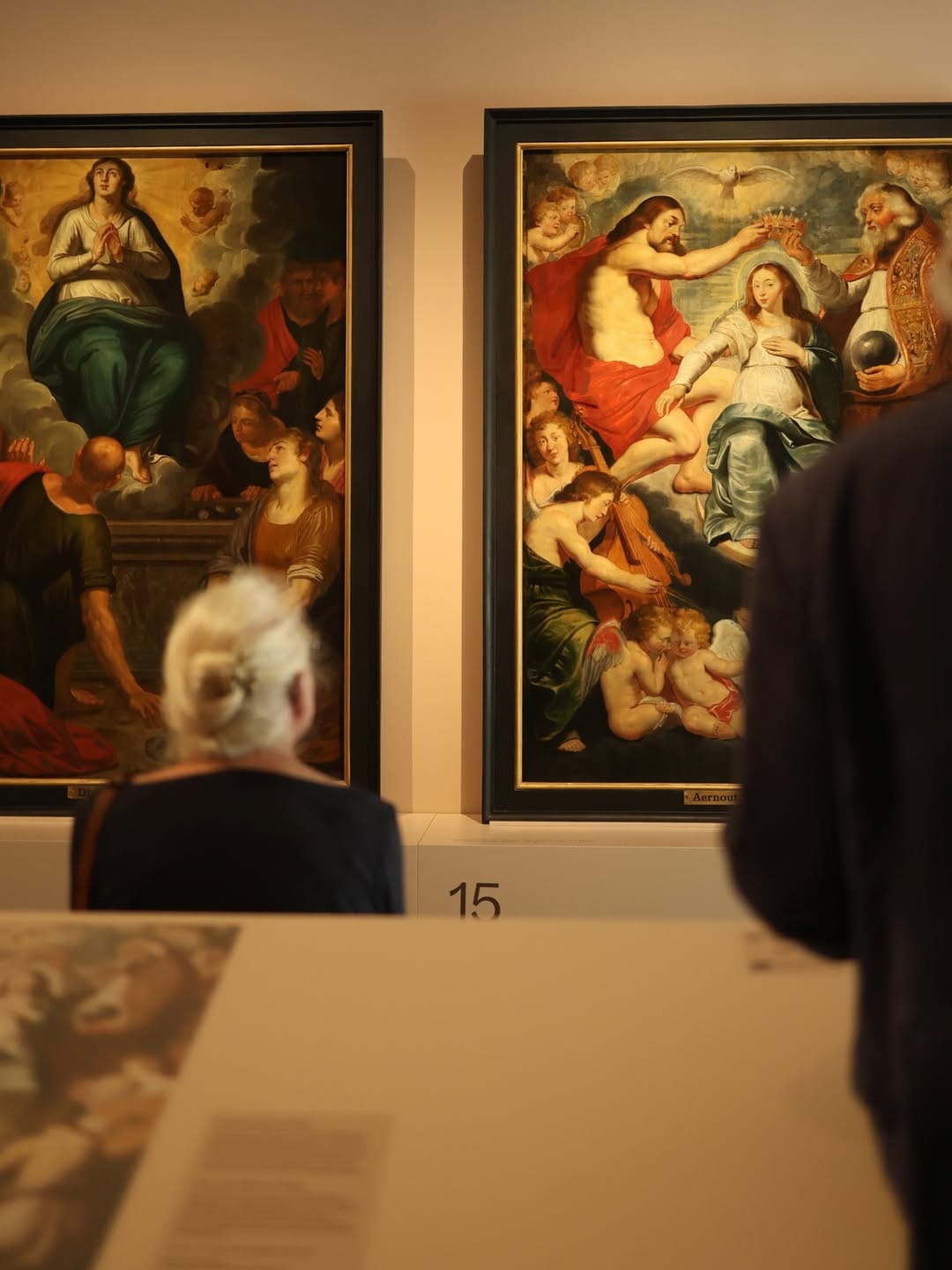
In ’s-Hertogenbosch, fifteen paintings by Rubens, Jordaens, Van Dyck and their Antwerp contemporaries hang at eye level. The Mysteries of the Rosary spent more than four hundred years four metres up the wall of the Sint-Pauluskerk in Antwerp. The church is under restoration until the end of 2028, so the Noordbrabants Museum has the whole cycle until 25 October, the first time it has been shown together outside the church. During the Eighty Years’ War the traffic went the other way, when Den Bosch sent its religious art to Antwerp for safekeeping.
The ninety-three exhibitions in this issue all end in October. For Metamorphoses: Ovid and the Arts at the Galleria Borghese that is three weeks later than planned. Its closing date has moved from 20 September to 11 October, so Bernini’s Apollo and Daphne keeps the company of Titian, Poussin, Rodin and Brancusi a little longer. In Vienna, the Albertina ends its 250th-anniversary show on the same day, Dürer’s Hare included, and the director of the Heidi Horten Collection gets a parking space back from Gottfried Bechtold’s concrete Porsche 911. Helen Levitt’s New York street photographs are at the Kunsthal in Rotterdam until the 4th, Cao Fei’s largest European survey so far at the Kunstmuseum Basel until the 11th and Jasper Johns at the Guggenheim Bilbao until the 12th. The 18th closes Baselitz Now in Salzburg and the Stedelijk’s survey of Kho Liang Ie, who designed the interior of Schiphol’s 1967 terminal. Hammershøi in Zurich and Richard Dadd at the Royal Academy run to the 25th.
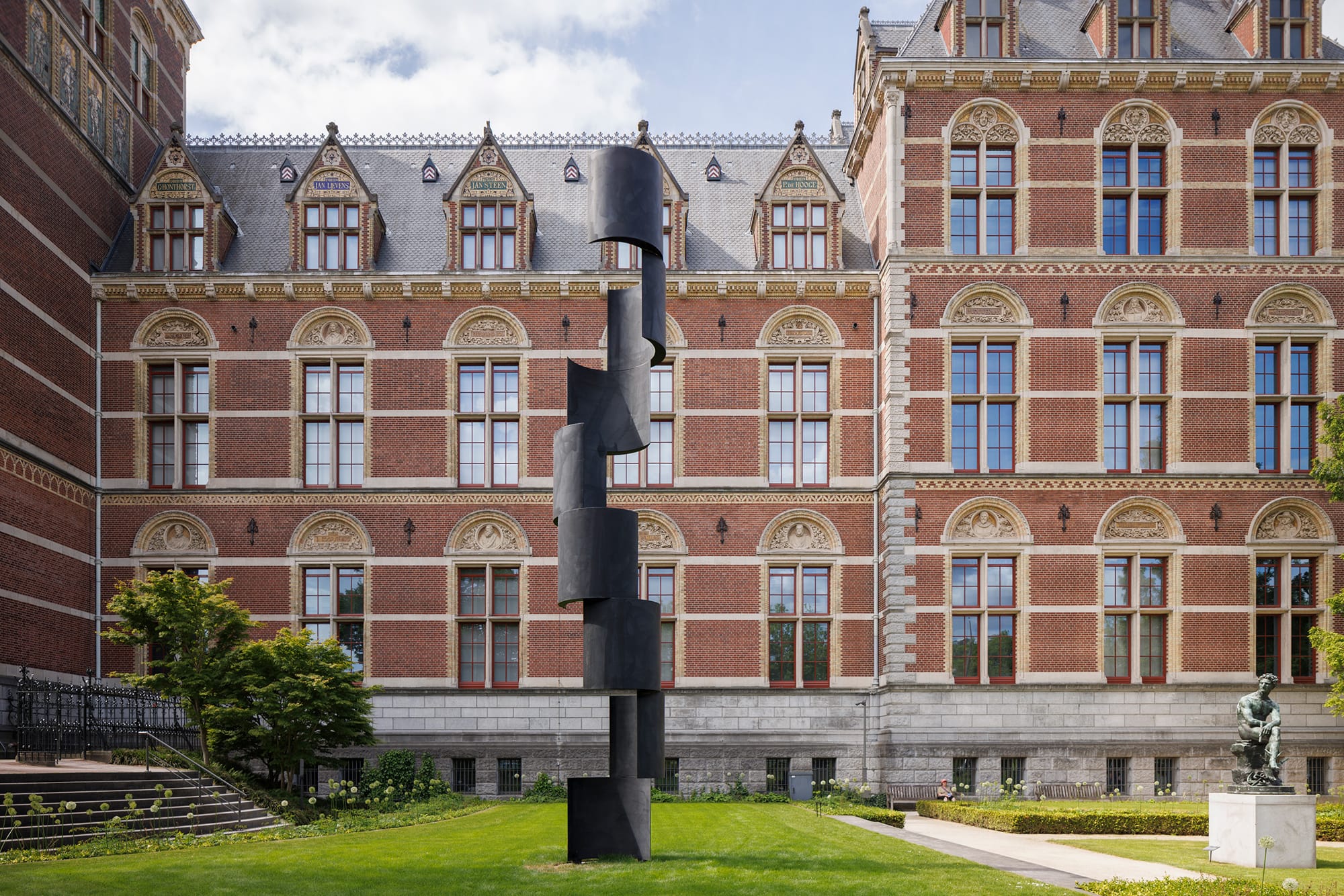
Several entries charge nothing at the door. Constable’s late drawings at the British Museum and the early Rubens show in Valencia are free until the 4th. So are Carel Visser’s thirteen steel sculptures in the Rijksmuseum gardens, some of them eight metres tall, until the 25th. Louvre-Lens screens an eight-minute film free until the 5th; it follows visitors through Beirut’s National Museum by the light of their phones during the power cuts of 2024. At the Reina Sofía until 12 October, the first work in the Felix Gonzalez-Torres show is a heap of blue sweets. Visitors may help themselves.
🇦🇹 Exhibitions in Austria
Njola Impressions. Kiteezi
Until 11 October 2026
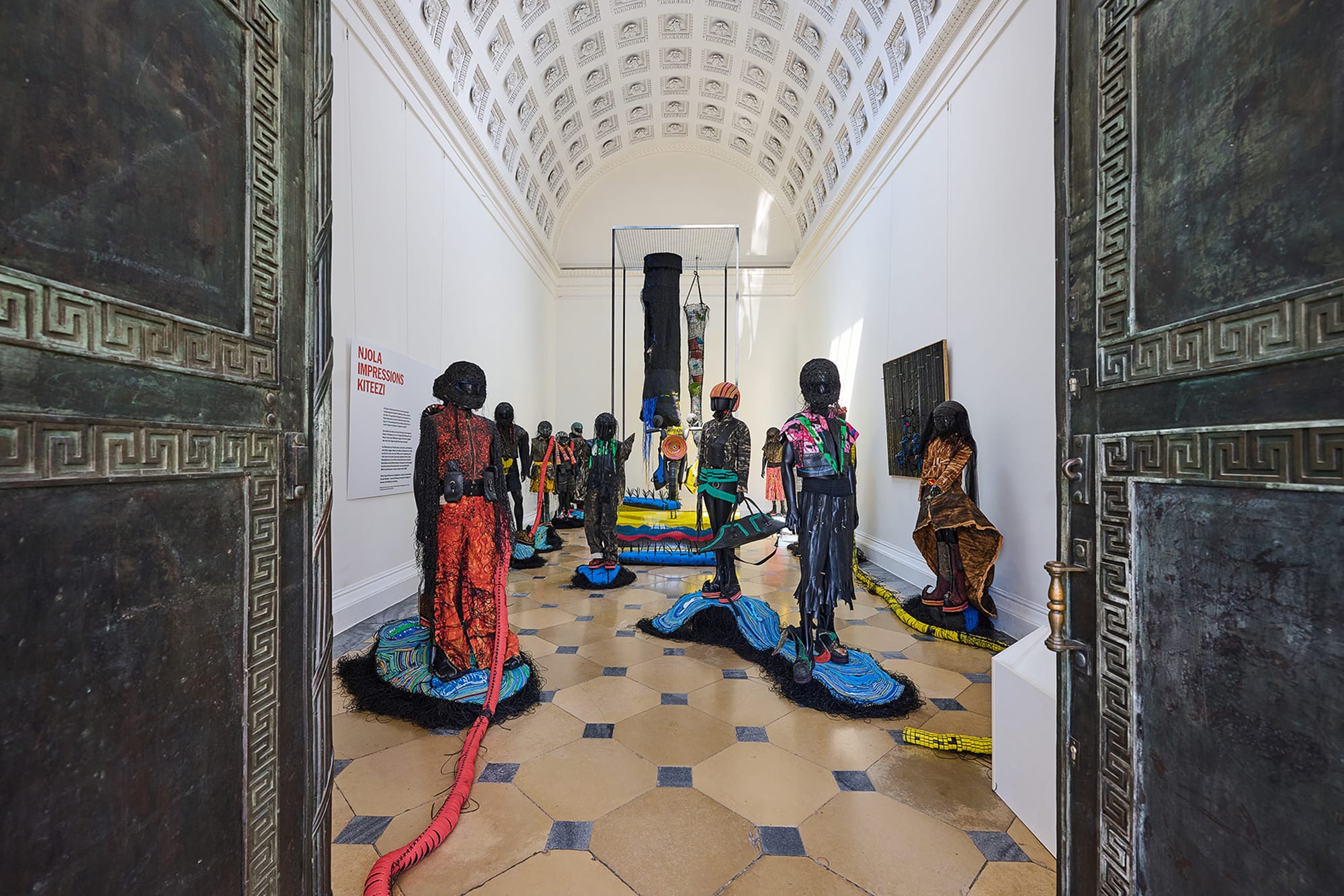
Flip-flops, yoga mats, car tyres, plastic bags and tarpaulin from Uganda, together with bicycle inner tubes collected in Vienna, are the raw material of Kiteezi, this year’s contemporary presentation in the Theseus Temple in the Volksgarten. The Ugandan artist Nabukenya Allen, who works as Njola, made the installation in response to the collapse of Kampala’s Kiteezi landfill in August 2024. A fashion collection designed for the city’s boda-boda motorcycle taxi drivers is shown alongside scenes of refuse collection in the capital. The Weltmuseum Wien organises the show around one question: who are we in the presence of waste?
IN-SIGHT: Johann Baptist Lampi The Elder and The Younger
Until 11 October 2026
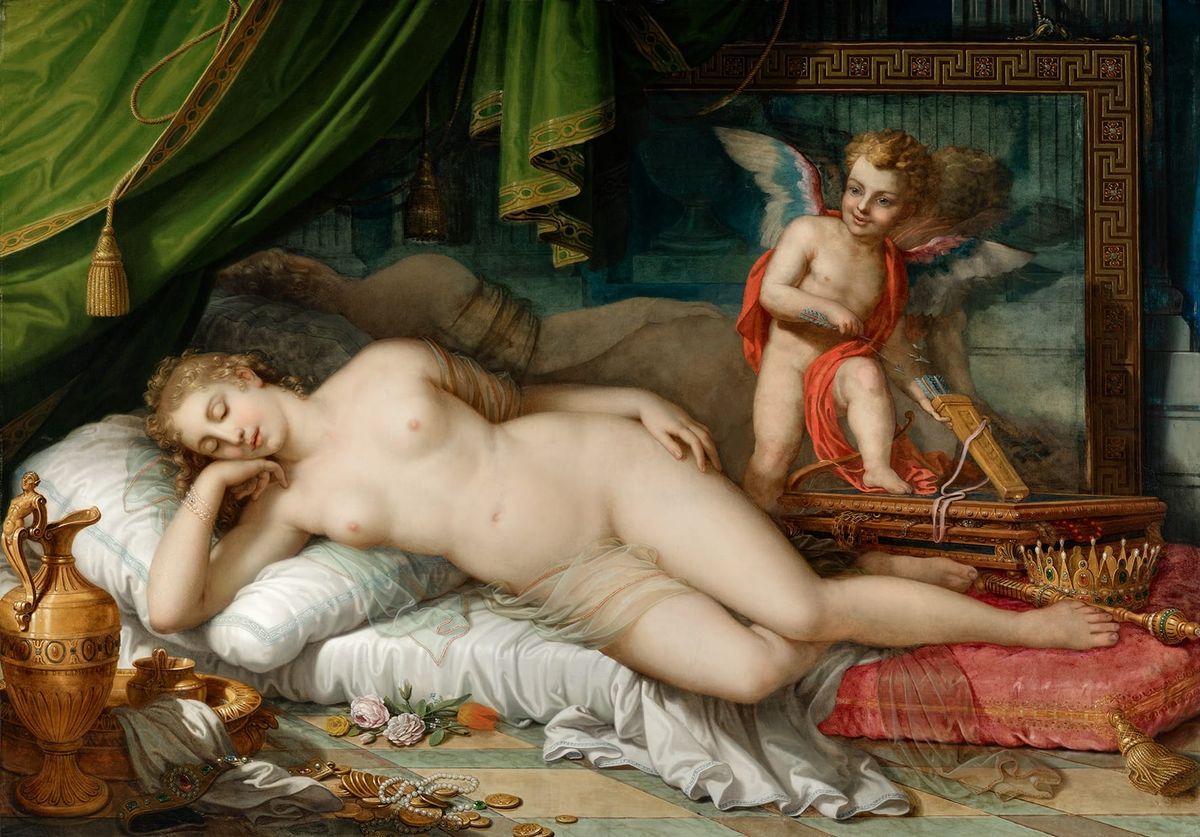
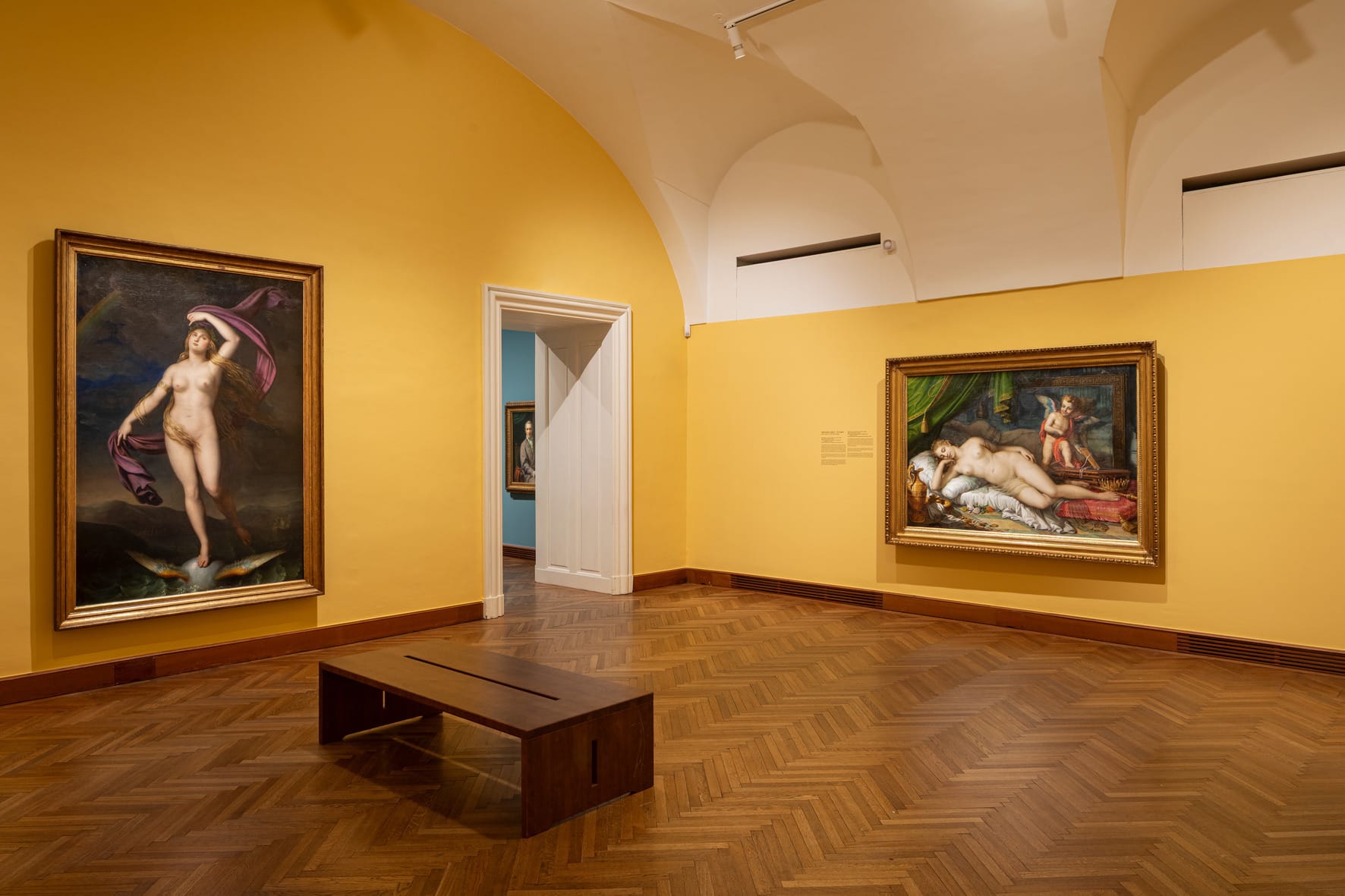
Two paintings by a father and son, both restored and examined with X-ray and infrared imaging, anchor this display at the Upper Belvedere. In Caroline and Viktor von Tomatis (1788/89), Johann Baptist Lampi the Elder originally showed the children’s mother Catarina embracing them. A later hand replaced her with a painted bust. Lampi the Younger’s Sleeping Venus with Cupid in Front of a Mirror (1826) lost its Cupid under dark overpaint, which for years led the picture to be misread as a portrait of Emilie Victoria Kraus. Both interventions are now uncovered and explained.
Stellprobe: Collection Acquisitions from the Last Decade
Until 4 October 2026
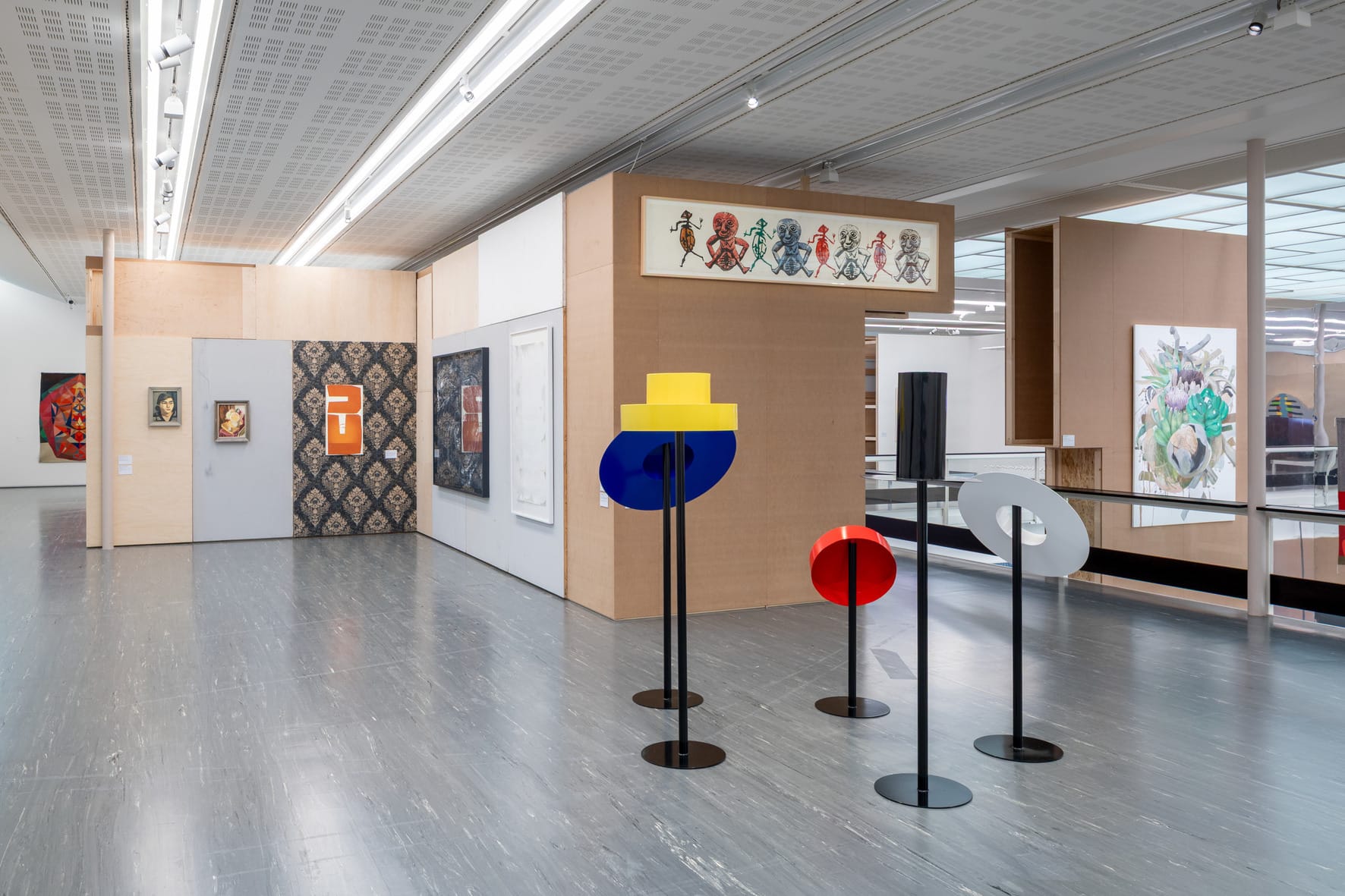
More than 150 works acquired or donated over the past decade fill the ground floor, upper floor, Blickle Cinema and sculpture garden of Belvedere 21, in a display designed by Heimo Zobernig. The museum calls it an inventory and a reflection on its own collecting strategy. Fifteenth-century altarpieces sit beside paintings, sculptures, drawings, moving-image works, textiles, porcelain and sound installations. The names run from VALIE EXPORT and Franz West to Ceija Stojka and Lynn Hershman Leeson. Women artists of the nineteenth and early twentieth centuries, and artists whose work deals with migration, have been deliberate priorities.
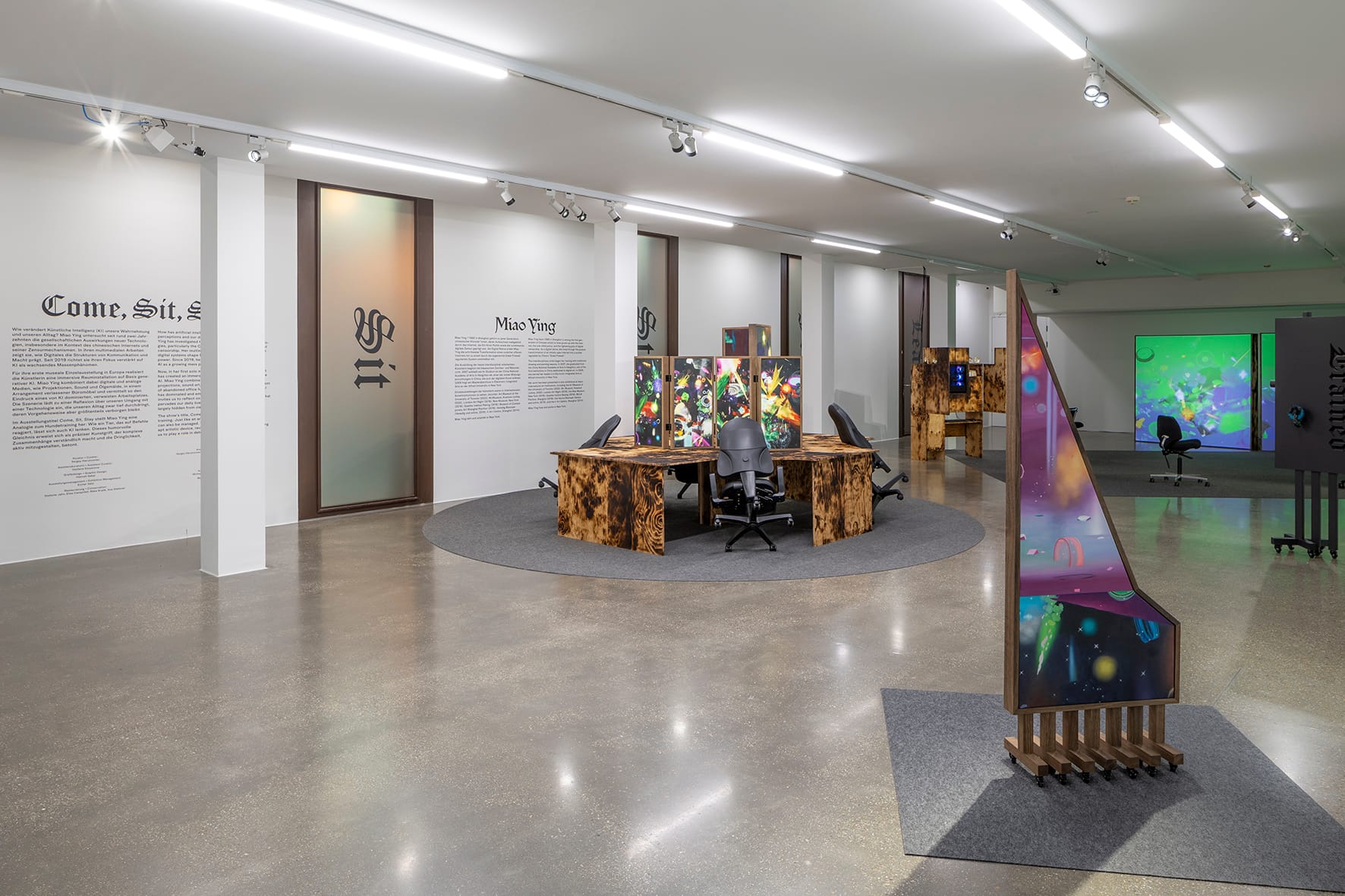
Miao Ying: Come, Sit, Stay
Until 4 October 2026
Dog-training commands give this exhibition at Belvedere 21 its title. Miao Ying, born in Shanghai in 1985, sets them beside the instructions humans give to artificial intelligence, treating both as exercises in control and learning. Her installations, videos, paintings and digital pieces include Perfect Sameness Makes Difference (2026), a live AI orchestra running on a PC, and the new works Magic Cabinet and Magic Triptych No. 1. Images generated by neural networks are carried over into paint by hand. Medieval magic, alchemy and incantation frame her reading of surveillance and media manipulation.
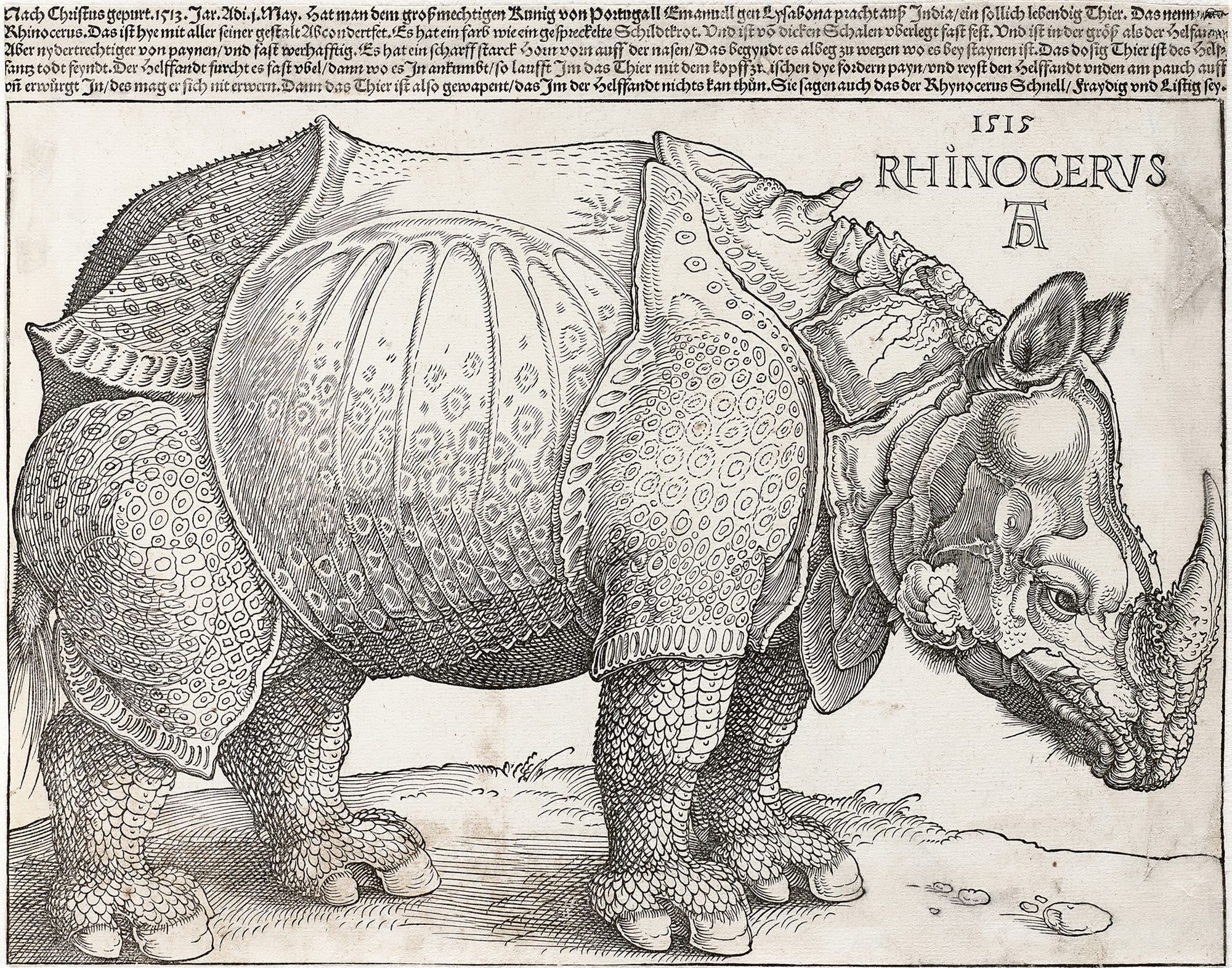
Collecting for the Future: 250 Years of the ALBERTINA Museum
Until 11 October 2026
Archduchess Marie Christine, daughter of Empress Maria Theresia, shares the credit with her husband Duke Albert of Saxe-Teschen for building the Albertina’s collection systematically from 1776 onwards. The anniversary exhibition makes that case, the first time the museum has set out women’s contributions to a holding that now exceeds a million objects. Dürer’s The Hare appears alongside Bosch, Bruegel, Michelangelo, Rembrandt, Maria Sibylla Merian, Caspar David Friedrich, Manet, Schiele and Nolde. Rosa Barba’s site-specific installation Private Metaphysics (2026) was made for the occasion and will enter the collection afterwards.
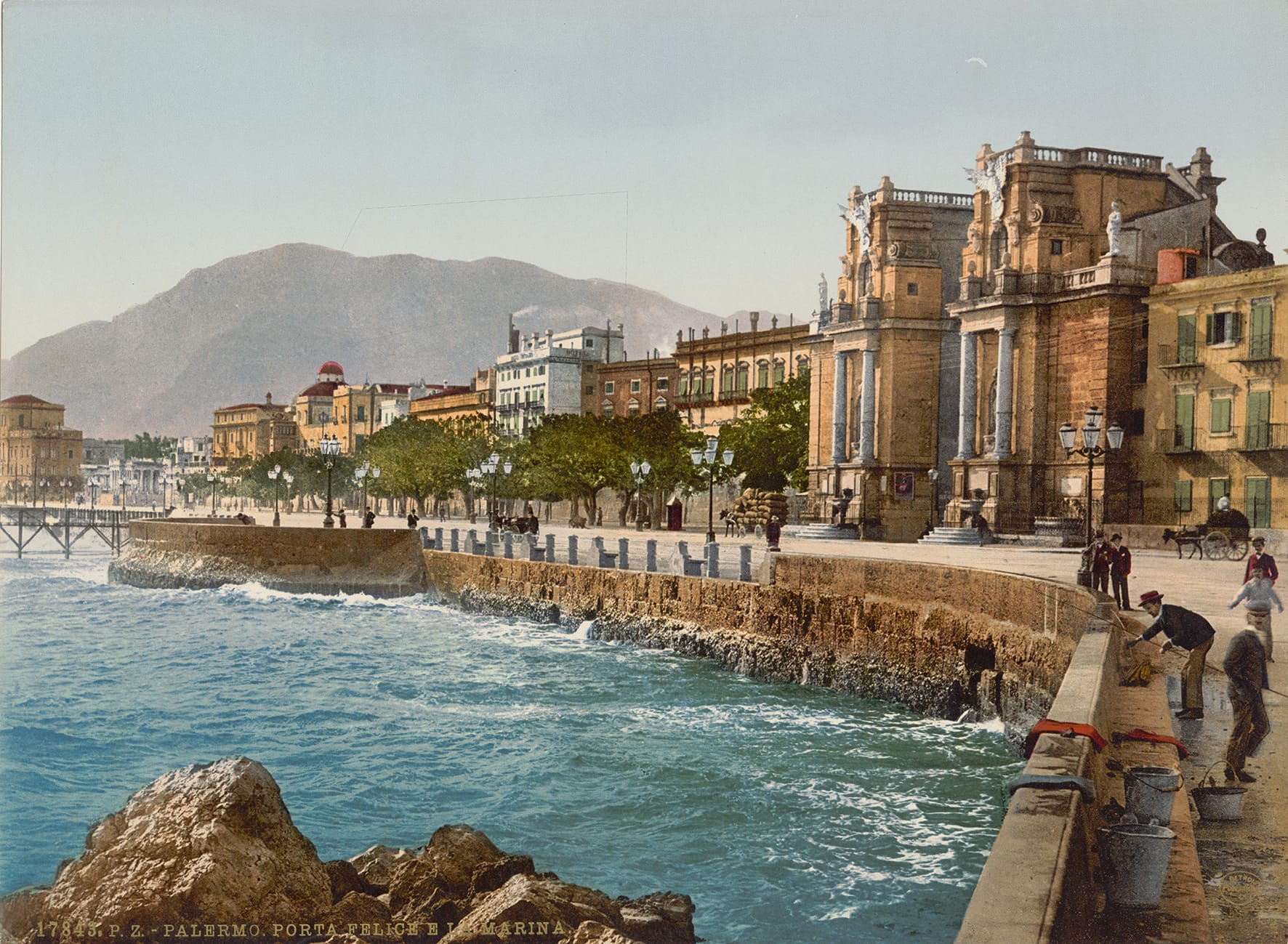
The World in Focus
Until 26 October 2026
Travel and expedition photography from the mid-nineteenth century onwards is the subject here, with Italy, Japan, Egypt, India, Norway, Bosnia and Herzegovina, Ukraine and the Holy Land as the destinations. All the works come from the Albertina’s own photographic collection and from the permanent loan of the Höhere Graphische Bundes-Lehr- und Versuchsanstalt. The rooms are organised by region rather than photographer, though Giorgio Sommer, Gustav Jägermayer, Francis Bedford and Raimund Stillfried von Rathenitz are among the names, alongside anonymous practitioners. Shifting power, expanding mobility and the beginnings of tourism run through pictures that shaped how distant places were imagined.
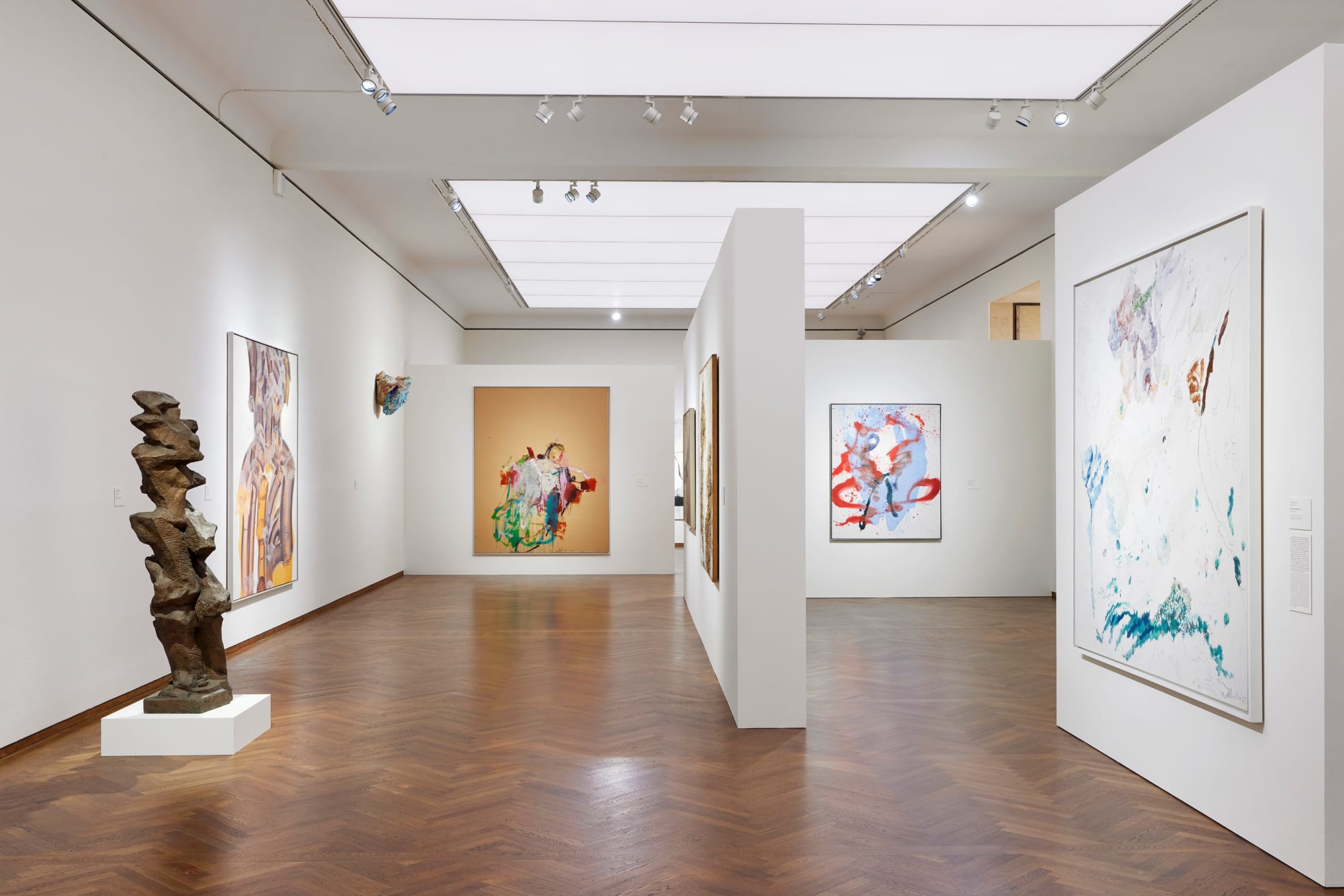
PREMIERE! The Oesterreichische Nationalbank Collection
Until 11 October 2026
Austria’s central bank has been buying Austrian painting and sculpture made after 1918 since the late 1980s. This is the first comprehensive public showing of the result, at a museum the Oesterreichische Nationalbank helped to found in 1994. Interwar New Objectivity and post-Expressionism are represented by Rudolf Wacker, Franz Sedlacek, Greta Freist and Max Oppenheimer, before the display turns to geometric and gestural abstraction after 1945. Maria Lassnig, Martha Jungwirth, Herbert Brandl and Ernst Caramelle lead to a younger generation including Tobias Pils, Svenja Deininger and Julia Haugeneder. Sculpture, including Josef Pillhofer, forms a strand of its own.
Felix Lenz: Soft Image, Brittle Grounds
Until 4 October 2026
Commissioned by the MAK for Austria’s contribution to the 24th Triennale Milano, this mixed-media installation is also part of the Klima Biennale Wien 2026. Felix Lenz, artist and filmmaker, examines the material and political cost of producing images. Brute Force [Exhibition Cut] (2025), an essay film made with Ganaël Dumreicher, follows imaging infrastructure from subatomic particles to planetary scale and reads the salt lakes of Utah and California as an archive of absent water. Valley of the Heart’s Delight (2025) sets industrial robot arms over soil and crushed shells that recall the Ohlone shellmounds beneath Silicon Valley.
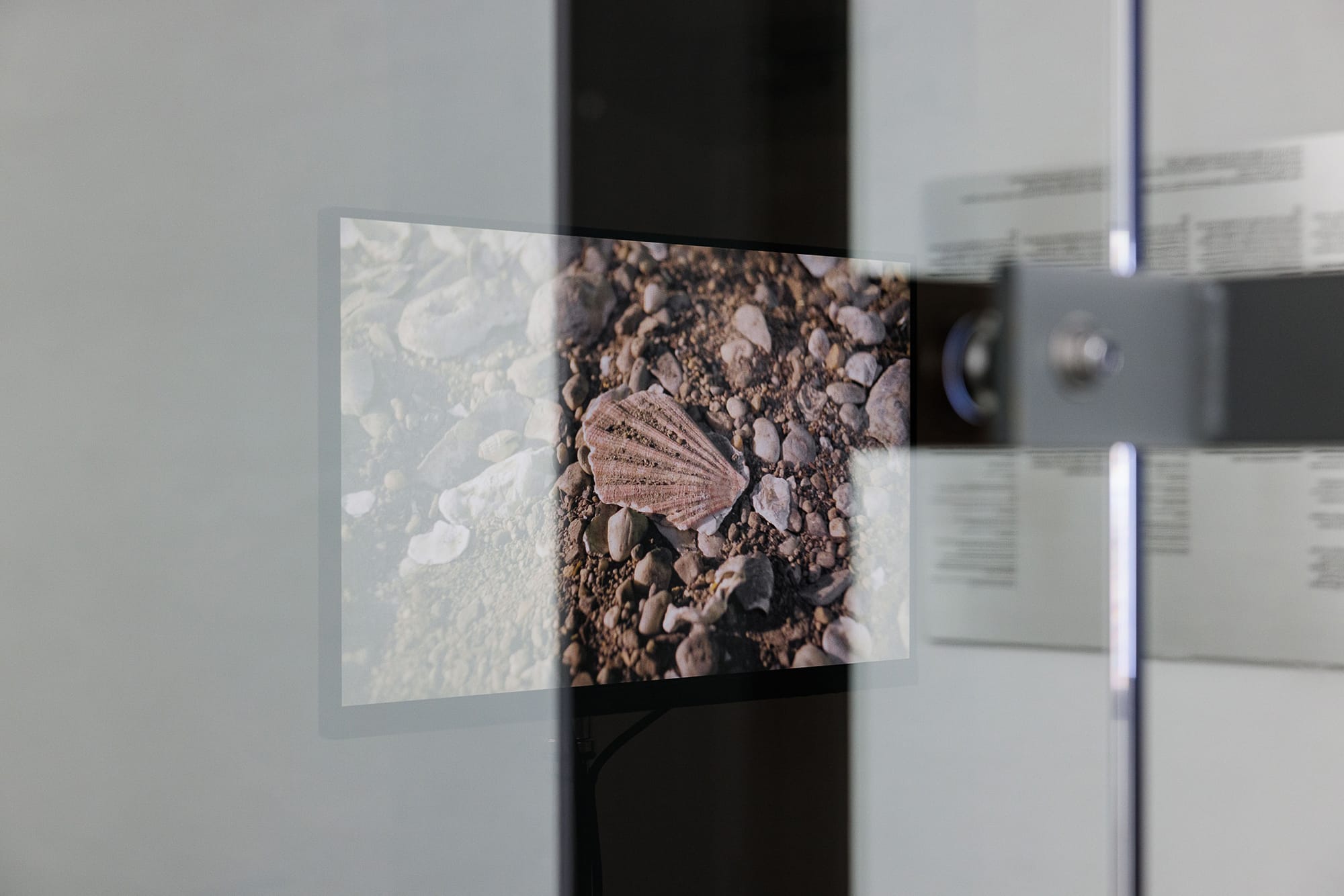
Gottfried Bechtold. Concrete Porsche
Until 11 October 2026
A Porsche 911 cast in solid concrete occupies the director’s parking space in the Hanuschhof courtyard for the length of this cabinet exhibition. The sculpture, from Gottfried Bechtold’s series Elf Elf (2006), is an exact replica weighing several tons, which strips speed, elegance and freedom from an object built to promise all three. Bechtold, born in 1947, has treated the automobile as a cultural, economic and ideological object since the 1970s. Photographs, films and serial works in the auditorium fill out the story and the questions of ownership and privilege it raises.
The Institute of Queer Ecology: I Wish We Had More Time
Until 4 October 2026
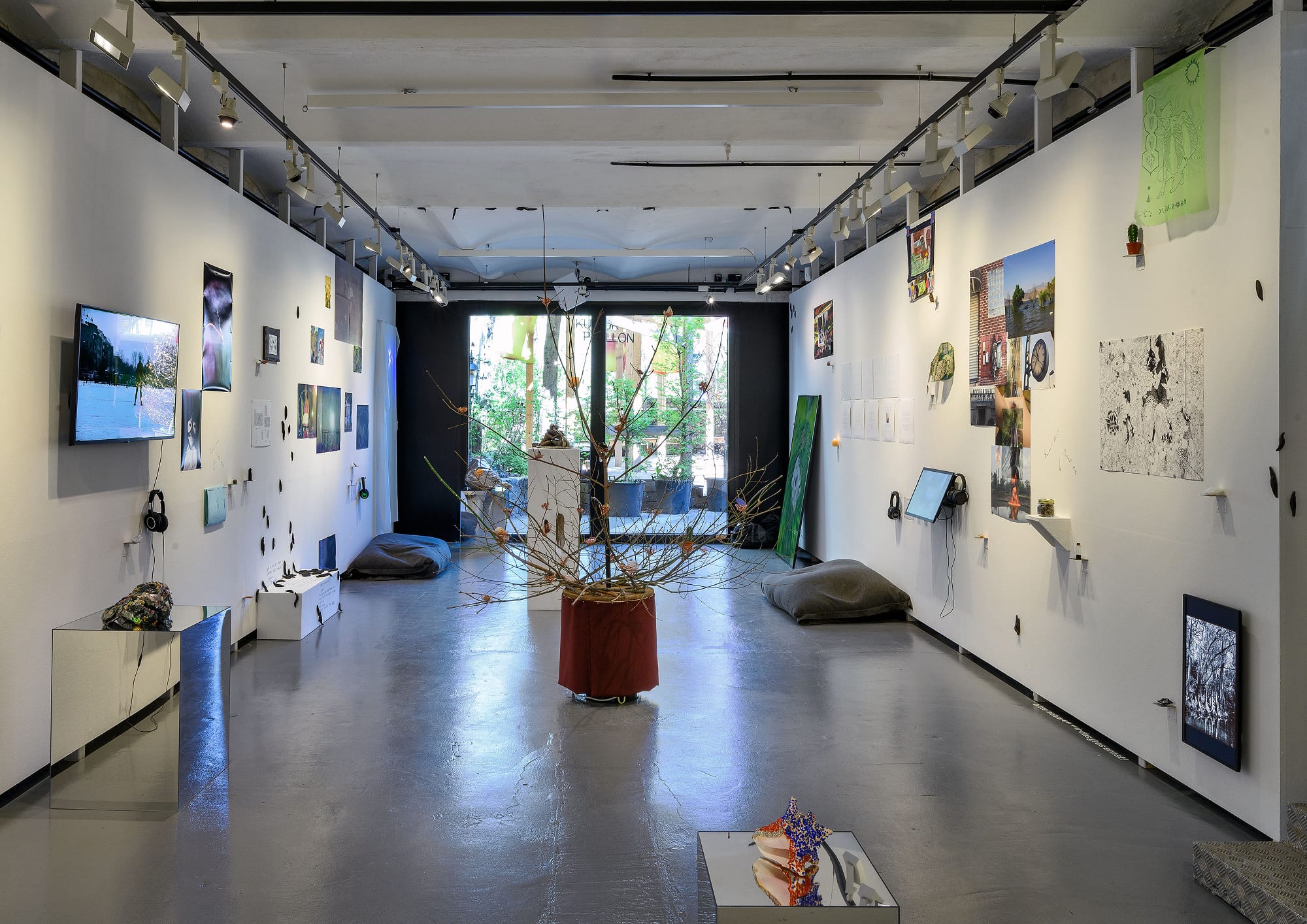
Thirty-four artists, scientists, writers and musicians contribute to this exhibition by the Institute of Queer Ecology, a collaborative organisation co-directed by Lee Pivnik and Nicolas Baird. Loss is examined on three levels: ecological, in climate-driven breakdown between species; social, in queer histories fragmented by crises such as AIDS; and personal, in missed connections and heartbreak. A sculptural Orrery of Interconnected Loss organises the rooms, around which sit drawings, photographs, videos, audio pieces and texts, among them the video series Metamorphosis and the installations Yesterday, Today, Tomorrow and Utopia in Burst. The whole is conceived as a time capsule.
BASELITZ NOW
Until 18 October 2026
The large-format paintings Georg Baselitz has made over the last decade, gathered on the Mönchsberg with support from the State of Salzburg, private lenders and Thaddaeus Ropac, deal with ageing and mortality. Imposing portraits dominate, many turning on the artist’s own life and that of his wife Elke. The exhibition is one half of a pair. Its companion at the Rupertinum in the old town, “Baselitz Manifestos”, closes two weeks earlier and covers the graphic work in smaller formats. Together they follow the painter from early drawings to the monumental late work.
BASELITZ MANIFESTOS
Until 4 October 2026
Each of the four manifestos Georg Baselitz wrote in the 1960s opens a section of this Rupertinum show. The drawings and prints begin with sheets from the same decade and follow how the artist wrestled with German history, national identity and the artistic ego. Choosing figuration at a moment when abstraction dominated is presented as the decisive act of a career that has combined classical traditions with an expressive visual language ever since. The show is the smaller-format counterpart to “Baselitz Now” on the Mönchsberg, which concentrates on the late paintings and stays open until 18 October.
GENERATOR #5: Georgia Gardner Gray. Stones
Until 4 October 2026
New paintings of prehistoric stone circles bring Georgia Gardner Gray to the Rupertinum for the fifth edition of the museum’s GENERATOR series. The painter, born in New York in 1988, mixes everyday observation with references from antiquity to pop culture and stages her scenes with an absurdity that exposes the contradictions of the present. Works from the museum’s collections by Iris Andraschek, Lovis Corinth and Leo Zogmayer, chosen for their mimetic qualities, extend the show. What we take for history, art or authenticity, it suggests, says as much about the present as the past.
Stephan Balkenhol: Là ci darem la mano …
Until 5 October 2026
Turandot, Othello, Figaro, Elektra, Don Giovanni, Carmen, Hamlet, Eurydice and Parzival have taken up residence in the state rooms of the Salzburg Residenz as figures by Stephan Balkenhol. The title comes from the duet in Mozart’s Don Giovanni (K. 527), and the operatic cast lets the sculptor address freedom, power, guilt, jealousy and love through characters most visitors already know. The outdoor half of the project, which placed the figures on Residenzplatz as temporary citizens of the city, ended on 5 September. The indoor presentation in the DomQuartier stays open until 5 October.
Pieter Claesz: Still Lifes
Until 31 October 2026
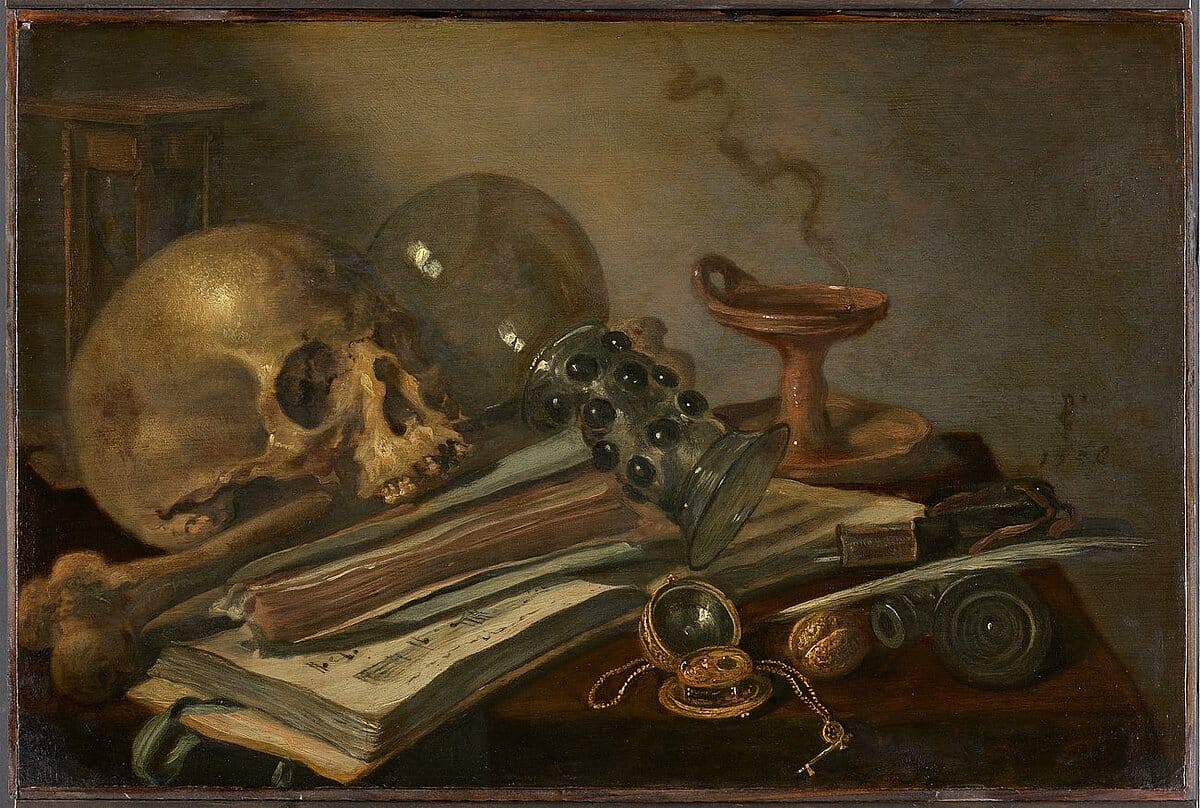
Three still lifes by the Dutch Golden Age painter Pieter Claesz hang in the Raum für Neues beside high-resolution photographs of themselves and several short films. Visitors can zoom into the pictures while standing before the originals, examining texture, colour and brushwork at a scale the eye cannot reach. Still Life with Fruit Pastry, Silver Tazza, Gilded Covered Goblet and Wine Glass (1637) shows the abundance of the genre; Vanitas Still Life (1656) turns it towards mortality. The films come from the Kaiserschild Foundation’s Art Defined project, a partnership with the Kunsthistorisches Museum and the Kunstmuseum Winterthur.
Antiquity — Ideal and Myth
Until 18 October 2026
Hallein’s sculpture tradition began with carving courses for salt miners and led in 1870 to the Austro-Hungarian Monarchy’s first vocational school. The town’s fourth summer sculpture programme marks that history. The Keltenmuseum’s contribution follows three Austrian-born artists who looked to ancient Greece and Rome. Archaic Greek statues served Ludwig Kasper as models for his life-size figures. Rudolf Hoflehner turned to Greek myth in the 1960s, as abstract art was gaining ground. Siegfried Anzinger later revisited antiquity in a postmodern spirit. Small sculptures from the Salzburg Museum collection open the show, including a 19th-century bronze after the Farnese Hercules.
Masterpieces of Furniture Art: Salzburg 1450–1500
Until 31 October 2026
Gilded carvings and figurative reliefs cover a portable shrine made around 1475 for the Bürgerspitalskirche in Salzburg and used in the Good Friday liturgy. Recent research has matched its ornament to chests and cabinets from Lungau, a mountain district of Salzburg province. Petrus Pistator’s workshop emerged there around 1455 and may later have moved to the city. A choir stall it made for the pilgrimage church of St Leonhard near Tamsweg joins the shrine, alongside loans from private collections. With its own building closed for renovation, Salzburg Museum is showing the group in Leogang.
🇧🇪 Exhibitions in Belgium
Germaine Rimbout: Poetry . Color . Movement
Until 18 October 2026
The Spilliaert Room of the Old Masters Museum has been given over to Germaine Rimbout (1894–1973), a Brussels artist who stayed in the shadows for decades. Cubism and Fauvism shaped her early work. After the Second World War she moved towards a freer abstraction and a daring palette, forging her own path in a field dominated by men. Works on paper such as Kneeling Nude (1959) carry the display, mounted with the KBR, the Royal Library of Belgium. Her development is presented as a record of the tensions and ambitions of her era.
Saul Steinberg: The Americans – Part 2
Until 18 October 2026
Eight series of panels stretching more than seventy metres make up The Americans, the collage Saul Steinberg created for the American Pavilion at Expo 58, where it formed the backdrop to Vogue’s daily fashion shows. The Belgian State bought the ensemble when the fair closed. Restoration has allowed the Royal Museums to show the work in instalments. This second selection of panels follows the first, shown in spring 2025, and hangs in the temporary exhibition room on level +1. The panels record the American way of life with an inventiveness the museum calls a high point of his career.
Diary of Happiness
Until 4 October 2026
A hundred watercolours, works on paper rarely shown, form the guiding thread through Jean-Michel Othoniel’s takeover of the Villa Empain. Monumental sculptures and installations stand in the garden and the salons, bringing the total past one hundred works. The rooms are ordered by country: Armenia, Belgium, Italy, the United States, France, India, Japan and Turkey, encountered over thirty years of travel. The exhibition reads as a travel notebook and a geography of thought. Othoniel calls the works witnesses to a long journey from shadow into light. The villa becomes a place of memory and inward travel.
Nicola L.: When the Earth Turned the Other Way
Until 18 October 2026
White Foot Sofa (1968) is one of more than ninety works gathered at M HKA for this survey of Nicola L. (1932–2018), a French artist born in Morocco who worked in Paris, Brussels, New York and Ibiza. Sculpture, installation, collage, performance, film, painting and design appear, with archival books, videos and performance documentation. La Chambre en Fourrure (1975) and Femmes Fatales: Marilyn Monroe (1995) sit beside the series of drawings that gives the exhibition its title. Her feminist politics grew from the activation of the body; art, for her, was a lived social process open to participation.
AAIMACHINE: Salon de la Muse
Until 25 October 2026
Where does art come from? A child’s question started this project by AAIMACHINE, the Antwerp artist-run space of Johanna Trudzinski, Lieven Segers and Frank Olbrechts. The answer now fills a wooden chamber in the ground-floor reading room at M HKA. More than 250 visualisations of the muse cover its interior walls. Professional artists, art students, primary school pupils and artists linked to the M HKA collection have all contributed, and the collection keeps growing. The result is a collective and polyphonic picture of artistic inspiration drawn from the city’s art community.
Carole Vanderlinden: Keep a promise
Until 11 October 2026
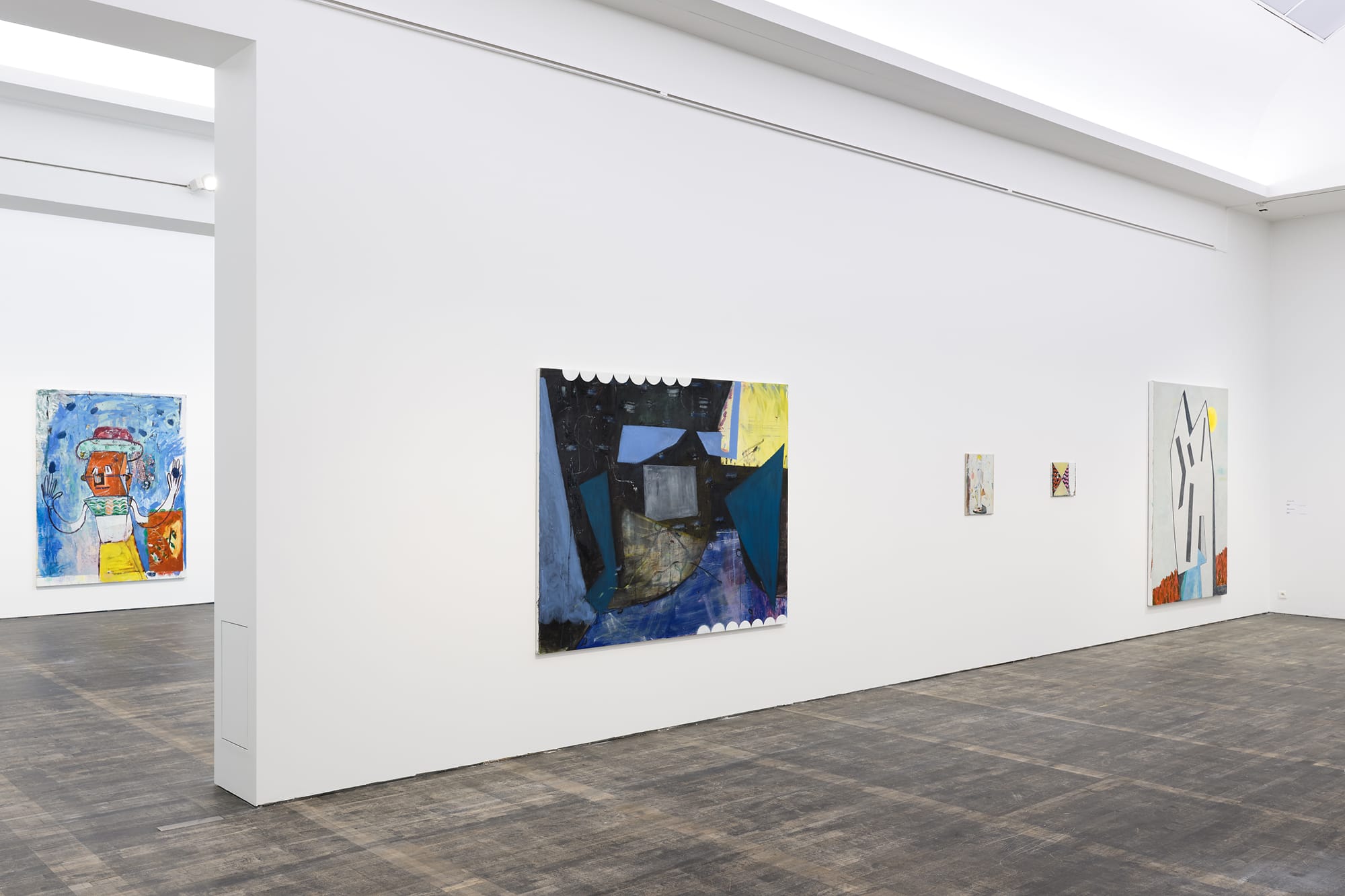
Paintings on canvas and works on paper from the past five years are gathered at S.M.A.K. for Carole Vanderlinden, born in Brussels in 1973 and at work since the mid-1990s. Her compositions grow from a process of experimentation with paint, colour and rhythm, taking cues from everyday surroundings, philosophy, music, sketchbooks and chance. The Jury (2025), a small oil on canvas, is typical of pictures that look simple and compact while carrying many layers of meaning. A monograph from Zolo Press, with texts by the writer Jean-Philippe Toussaint and the musician Joëlle Léandre, accompanies the show.
Anna Zaboun: Young Artists’ Space
Until 11 October 2026
Acid greens, deep purples, fluorescent pinks and almost unreal reds colour the garden paintings Anna Zaboun shows in La Boverie’s Young Artists’ Space, a free-admission programme for emerging artists. Born in Reni, Ukraine, in 1997, she holds a master’s degree in painting from the Academy of Fine Arts in Liège, where she now works. Her gardens are mental constructs, deliberately artificial landscapes in which medieval enclosed gardens and classical traditions merge into hybrid spaces where geometric rigour meets exuberant vegetation. The paintings answer a need for retreat and protection in an unstable world.
🇩🇰 Exhibitions in Denmark
Kontrapunkt
Until 18 October 2026
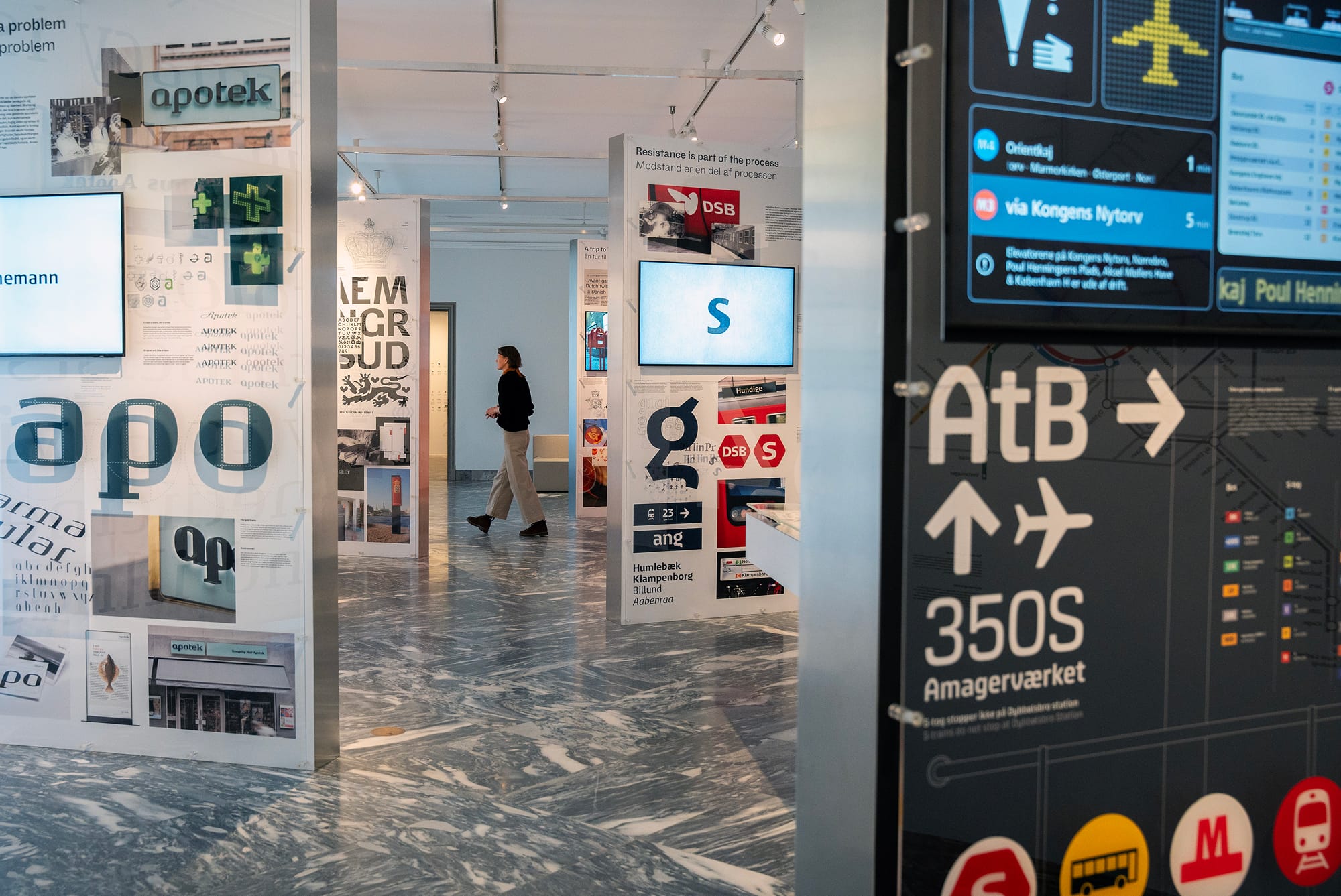
The hexagon of the DSB S-train, the pharmacy “a” on façades across Denmark and TV2’s circle are among seven design cases from four decades that Designmuseum Denmark has drawn from the archive of Kontrapunkt. The agency has shaped brands for banks, ministries and museums, working from the principle that visual identity is evidence of something real. This is the fourth show in the LABORATORIUM series, which opens the creative engine room of a designer or craft artist. The through-line is how a mark built on existing cultural symbols stays useful for decades.
Johan Bech Jespersen × Rewild: High
Until 4 October 2026
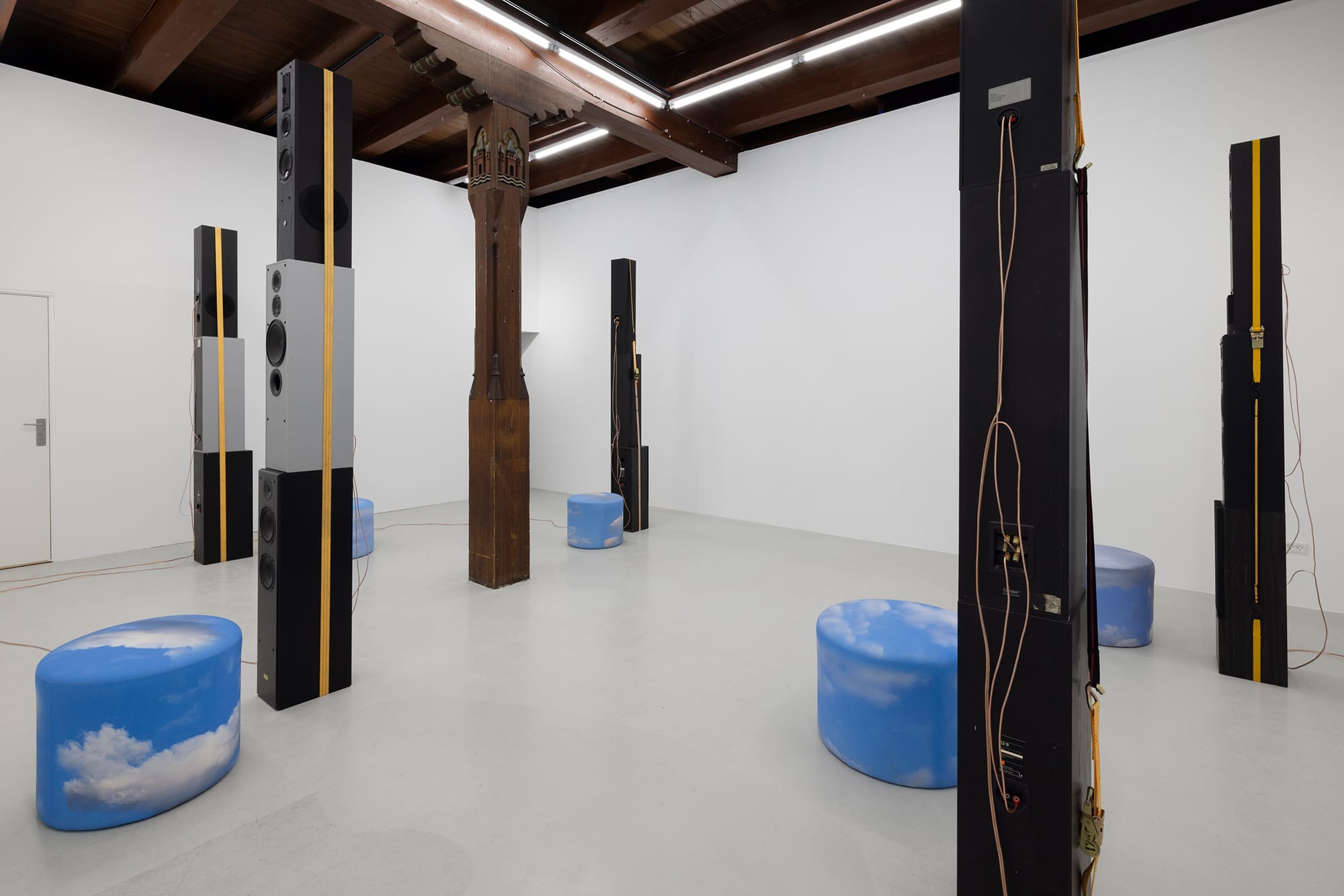
Recordings of Nikolaj Kunsthal’s church bell are the sole source of the ten-channel sound installation in High, Johan Bech Jespersen’s contribution to the Platform series, made with the Copenhagen series Rewild. Upholstered sculptures carry prints of archived sky photographs. Speaker towers are assembled from vintage hi-fi components. Processing turns the bell, once a marker of time, into a rhythmic and ritual pulse that suggests another way of experiencing time. Bech Jespersen, born in 1991, trained in architecture before graduating from the Royal Danish Academy’s sculpture school in 2024. He treats the organising of space itself as sculpture.
700 Nimes Road
Until 18 October 2026
Elizabeth Taylor’s house in Beverly Hills gives Catherine Opie’s series of fifty photographs its name, and the address stands in for a star she never met: Taylor died during the project. Opie, born in 1961, is known for portraits and for documenting subcultures within the queer community. Here she moves through the rooms of the house, where sparkling jewels sit beside everyday banality, in what Louisiana calls a sensual monument to a bygone star, part myth and part ordinary life. The museum acquired the series in 2012 and showed it in “Illumination”.
A Black Hole Calling Us
Until 11 October 2026
Eight screens surround anyone who steps into the centre of Cecilie Waagner Falkenstrøm’s installation in the public space of Køge. The visitor’s body is transformed on the displays while a sound composition by Yann Coppier deepens the sense of crossing into another dimension. Astrophysics research from the Niels Bohr Institute’s Center of Gravity is translated into a sensory and poetic experience of black holes as forces that both destroy and create galaxies. Falkenstrøm’s studio ARTificial Mind developed the work with the software developer Mathias Warnich. It runs daily from afternoon to twilight for one month.
Sisters Hope & Kunsten
Until 18 October 2026
Kunsten has handed its collection to Sisters Hope, the performance collective founded by Gry Worre Hallberg after the financial crisis of 2008, for a renewed look at a shared cultural heritage. Works chosen by the group from the museum’s holdings hang beside objects from the Sisters Hope universe. Their performance practice runs through the rooms. The collective works where art, activism, research and learning meet, proposing aestheticism, sensuousness and poetry as alternatives to economic rationality. Visitors are offered a poetic and reflective counterpoint to a hectic environment, along with the group’s conviction that art can bring about concrete change.
Grete Balle: Threads of Time
Until 18 October 2026
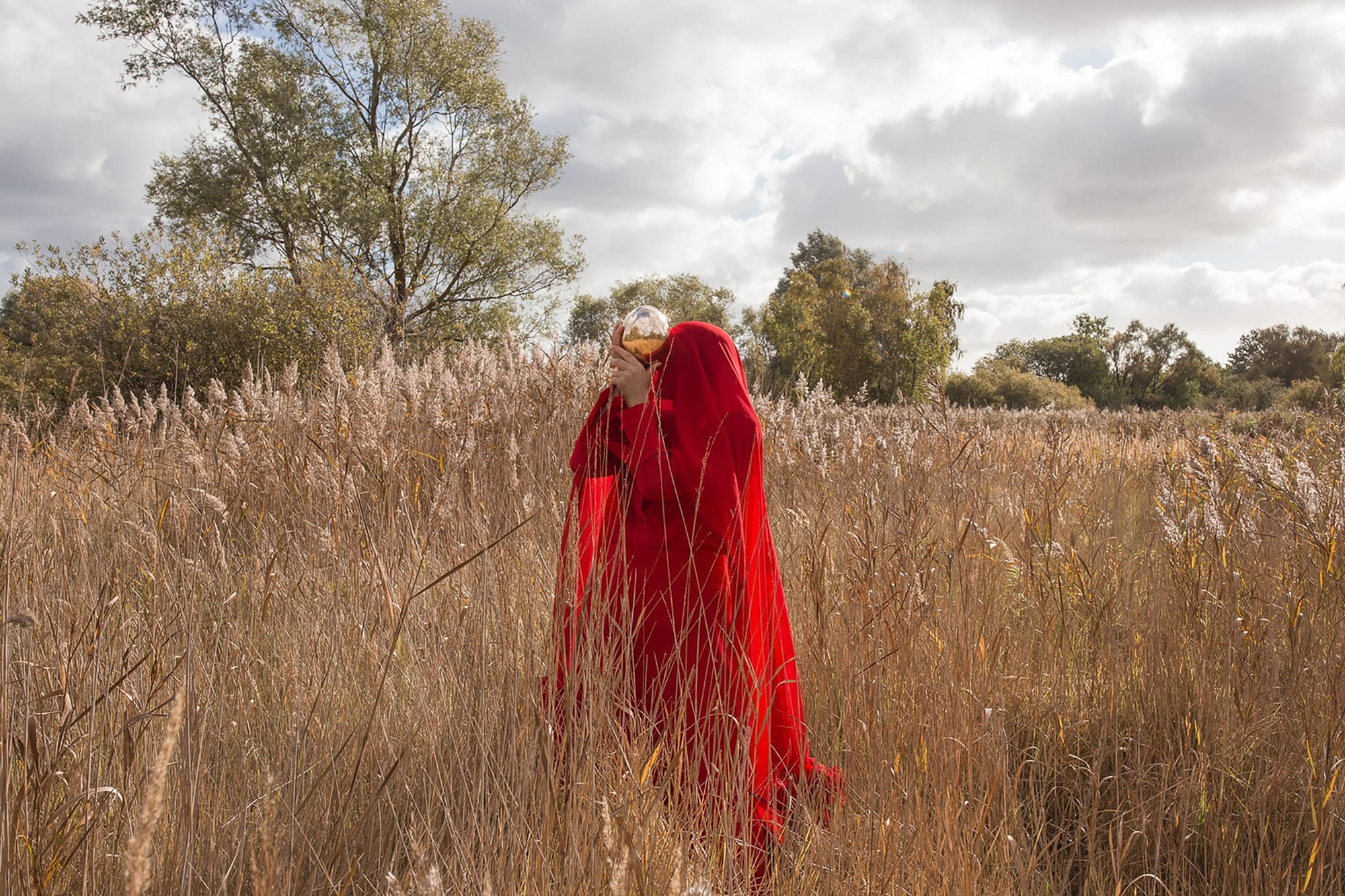
A hundredth birthday is the occasion for this focused selection of work by Grete Balle, born in 1926 and active for more than seventy-five years. Museum Jorn concentrates on the avant-garde weavings of the 1960s and 1970s, made with coarse fibres and unconventional materials, which pushed textile off the flat surface and into a sensory, spatial field. The museum makes the case that they look contemporary again now that textiles have regained a central place in art and culture. The exhibition was developed with Fuglsang Kunstmuseum and supported by five Danish foundations.
🇫🇷 Exhibitions in France
Sarcophage aux Amours ivres
Until 5 October 2026
An eight-minute film shot in the National Museum of Beirut occupies the free-admission Pavillon de verre at Louvre-Lens. Joana Hadjithomas and Khalil Joreige made it in 2024, during Lebanon’s power cuts, following visitors who move through the galleries by the light of their phones. The beams pick out antiquities one at a time and end on a Roman sarcophagus carved with drunken cupids, the work that gives the show its name. A hard reality takes on the look of science fiction, and the film asks why access to culture matters most when much else is failing.
Le temps retourné. Au fil des âges de la vie
Until 18 October 2026
Visitors enter through a room marked in memoriam and leave through one devoted to birth. The MAMCS runs the ages of life backwards in five chapters, from old age through the prime of adulthood and adolescence to early childhood, in paintings, photographs and videos that fix bodies and faces at one phase of existence. Most of the works come from the museum’s own collection, with Renoir, Muybridge, Sarah Jones and Marlene Dumas among the artists, supplemented by loans from other Strasbourg museums. The run ends after almost nine months.
🇩🇪 Exhibitions in Germany
Proud Ostrich and Raging Tiger: Animal Bronzes of the 19th Century
Until 4 October 2026
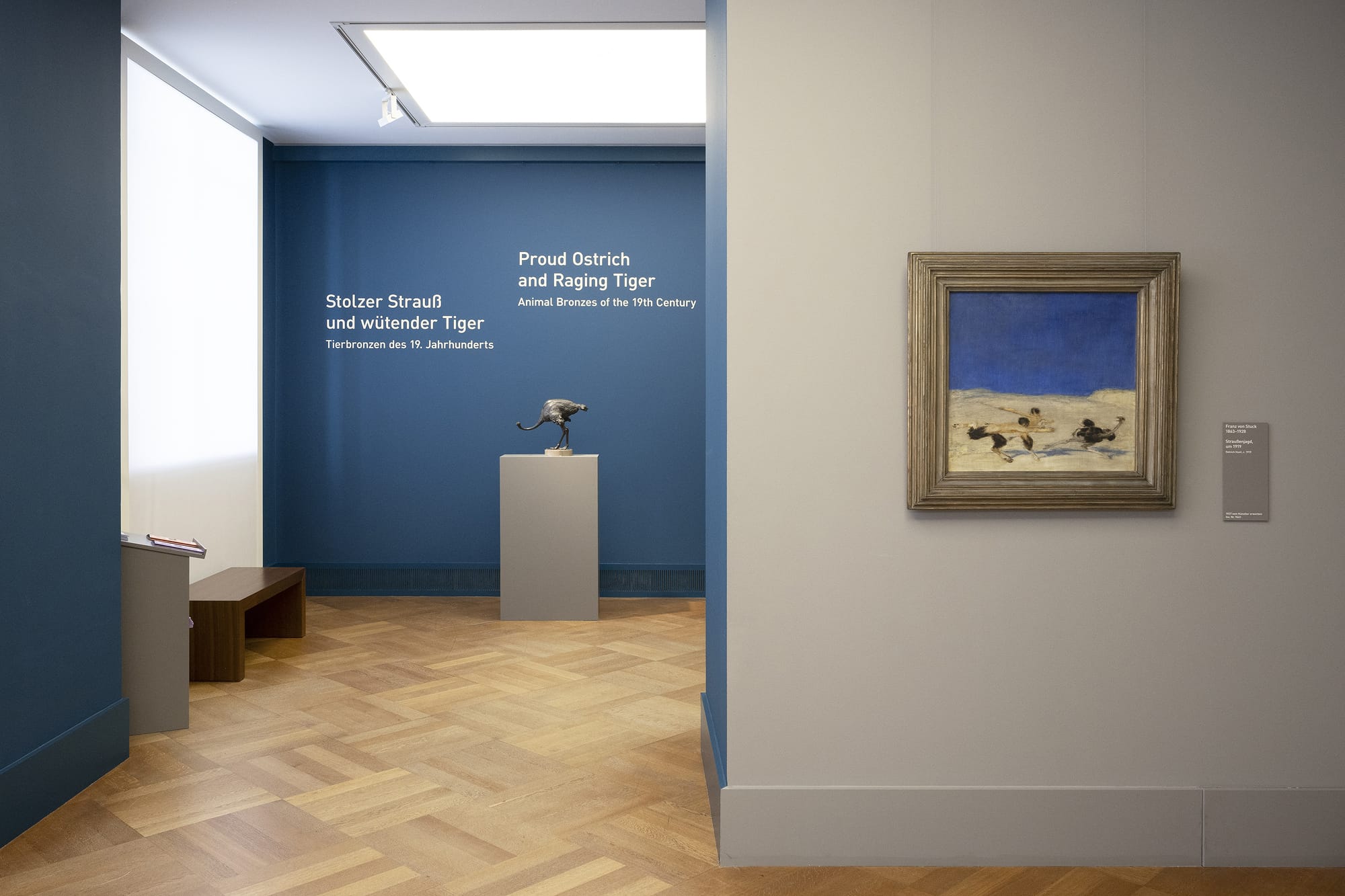
August Gaul’s Strutting Ostrich (1903) lends its swagger to the title of this cabinet presentation in Room IIc of the Alte Pinakothek’s east wing. The bronzes trace animal sculpture from the Animaliers, the French pioneers Antoine-Louis Barye and Pierre-Jules Mêne, to the later sculptors Gaul and Fritz Behn. The genre shed the symbolism of rulers, turned to farm animals and abandoned representative monumental art. Exotic species record the growth of zoological gardens and German colonial history. The display accompanies “From Turner to Van Gogh”, the Neue Pinakothek’s masterpieces shown here while that building is renovated.
Dana Schutz: Trouble and Appearance
Until 4 October 2026
Large-scale charcoal drawings are the surprise of Dana Schutz’s Munich debut at the Staatliche Graphische Sammlung, the first time the New York painter, born in 1976, has shown her drawings in such density. Catcher (2026), charcoal on paper, hangs with paintings, sketches and prints, among them the monotype with gouache Eaters (2025). Over two decades Schutz has built pictorial narratives in which minor and major mishaps, and tragedies dressed as modern myths, pose questions about human and interpersonal states of being. The exhibition makes the case for drawing as an expression of intellect and creative power.
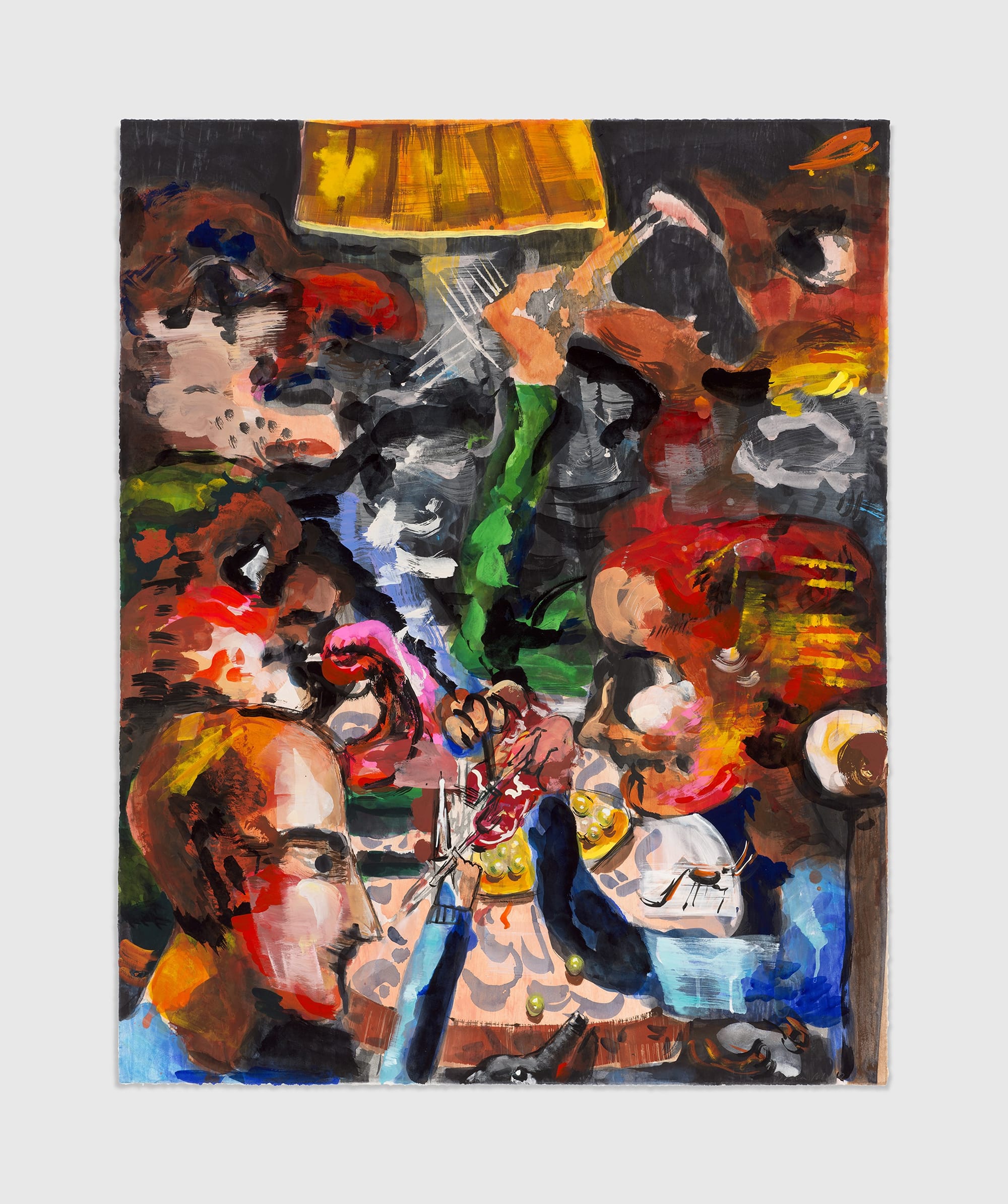
CONVIVIUM: Food Systems at the Limit
Until 18 October 2026
Twelve chapters on how food is produced and distributed make up the Architekturmuseum der TUM’s survey at the Pinakothek der Moderne, in photography, installations, graphic essays and multimedia in place of conventional artworks. Dutch high-tech greenhouses, salmon farming and its link to overfishing off West Africa, climate adaptation on Sicilian farms, octopus fishing in Portugal, soy and deforestation in Brazil and Ukrainian grain disrupted by war are among the cases. A Glass (Black) Box holds a model greenhouse. Daniel Szálai’s Technominotaurus follows the genetics of breeding bulls.
BUT I WORLD I SEE YOU
Until 4 October 2026
Henry Fox Talbot’s The Haystack (1844) opens a show of more than forty artists on the first floor of the Gallery of Contemporary Art, the Kunsthalle’s contribution to the 9th Triennial of Photography Hamburg, themed alliance, infinity and love in the face of the other. Three chapters follow: landscapes and obsolescence; photography and the readymade as conceptual vehicles; and archival practices around colonial histories, labour and documentation. On Kawara’s Thanatophanies and Tacita Dean’s The Tail End of Film appear in photographs, sculpture, 16mm film and video. Nan Goldin’s The Ballad of Sexual Dependency screens at Kampnagel.
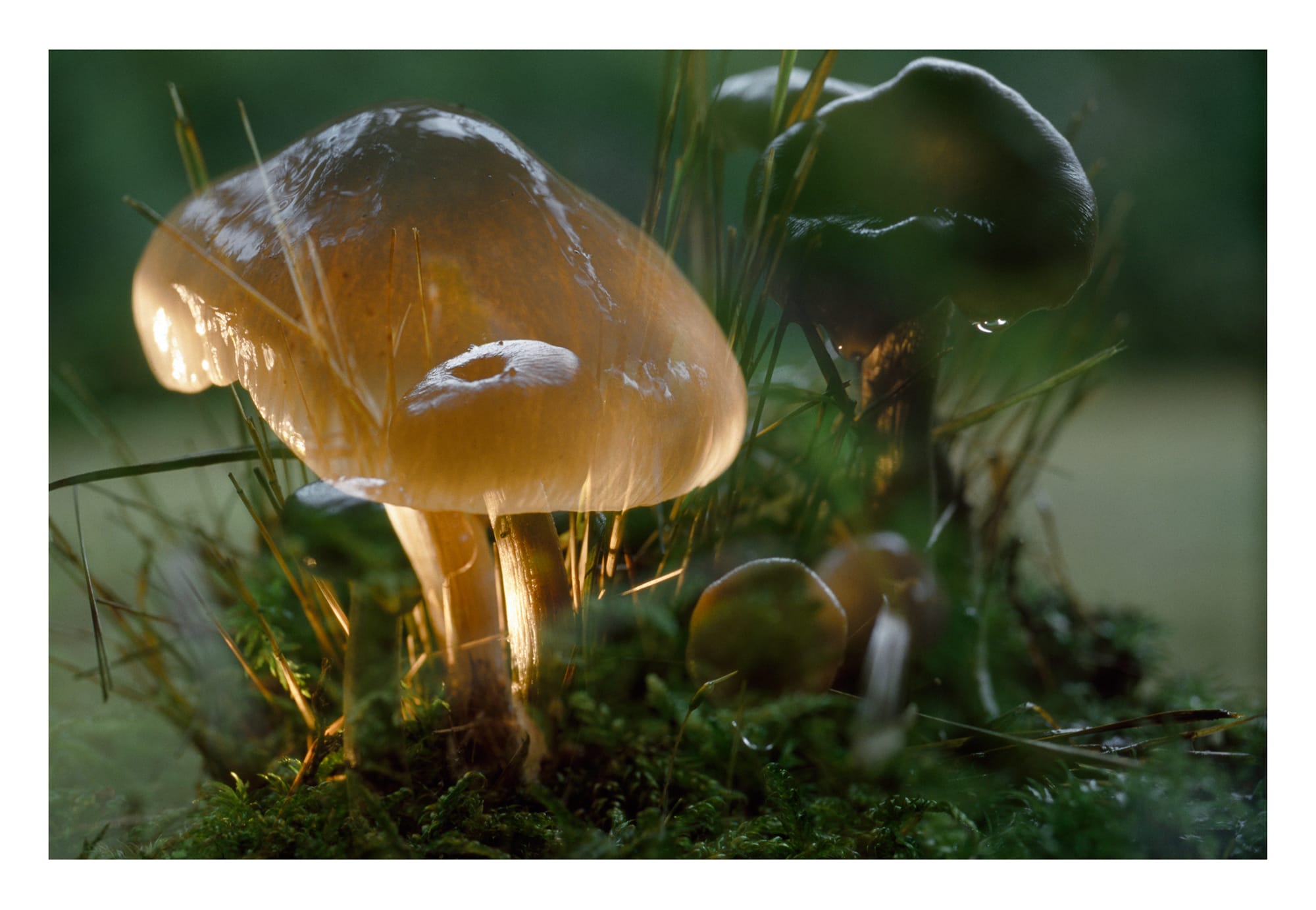
Isa Mona Lisa
Until 11 October 2026
Forty-three artists, from Etel Adnan and Louise Bourgeois to Wolfgang Tillmans and Haegue Yang, share the basement of the Gallery of Contemporary Art under a deliberately ironic and playful title. Newly acquired works hang beside well-known collection pieces, with loans from a Hamburg private collection widening the range. Paintings, drawings, photographs, installations and room-sized works rotate for conservation reasons, while the permanent installations by Bogomir Ecker, Jenny Holzer, Ilya Kabakov and Richard Serra stay in place. Brigitte Kölle, head of the contemporary collection, curated the hang.
The Photography Collection: Two Germanies circa 1980
Until 11 October 2026
Seven photographers, three looking at West Germany from outside and four associated with Leipzig’s Academy of Fine Arts, describe the two German states around 1980 in the photography rooms of Museum Ludwig. Derek Bennett’s Silent Dialogue. Portraits of Germans (1978–1981), Henry Maitek’s Looking Germany in the Face (1969) and Karl Kugel’s German Journey (1983/1987) supply the western view. Christiane Eisler, Ute Mahler, Evelyn Richter and Erasmus Schröter, with his infrared night scenes of Leipzig, cover the East. Incidental situations and ordinary people take precedence over historical events. The display resists easy political reading.
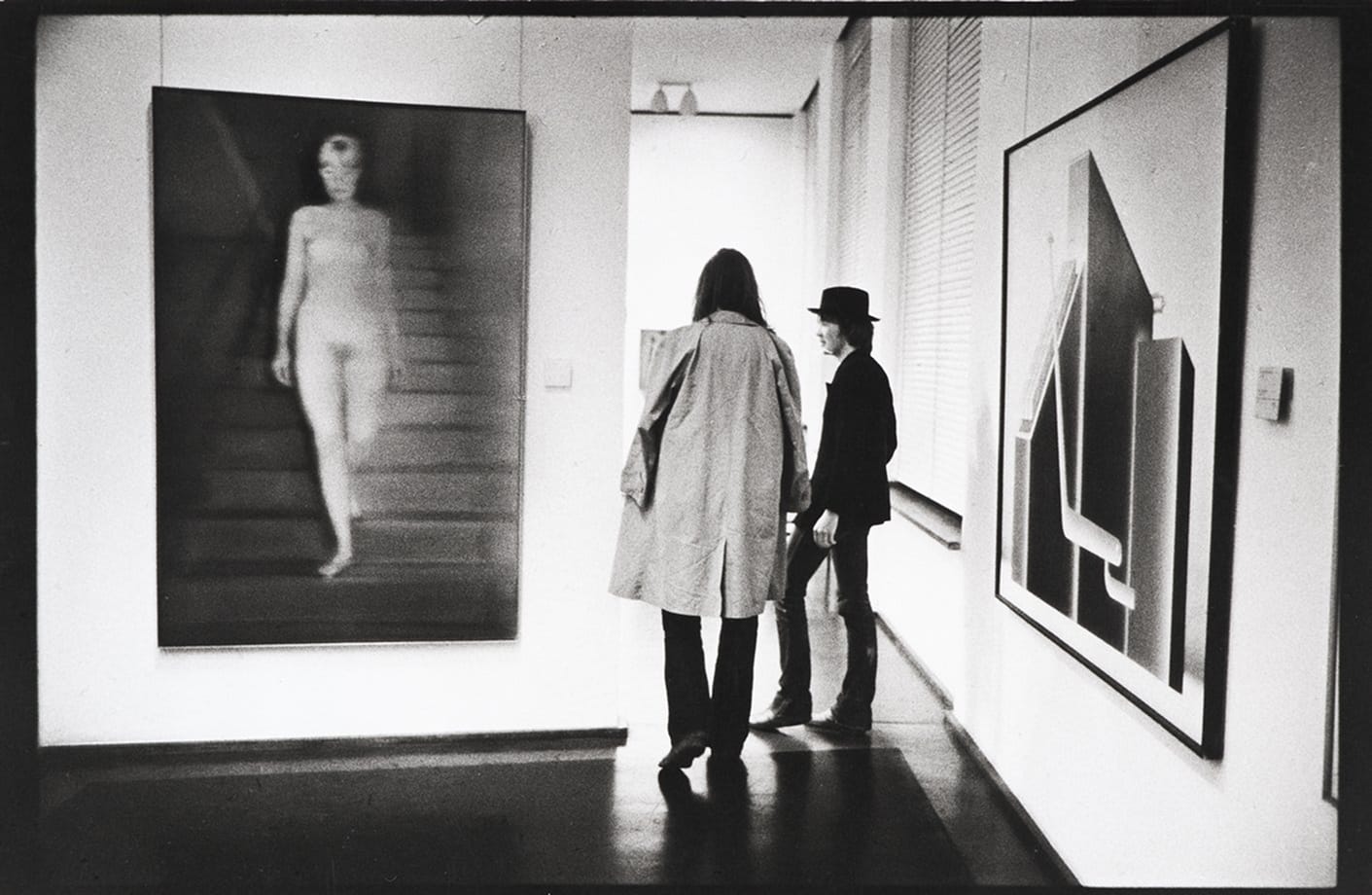
Holly Herndon & Mat Dryhurst: Starmirror
Until 11 October 2026
Visitors to K21 are invited to sing. Guided by ensemble singers in public recording sessions, their voices join a dataset that trains an AI choir, the core of Starmirror by Holly Herndon (born 1980) and Mat Dryhurst (born 1984). The songbook is drawn from Ordo virtutum, Hildegard von Bingen’s twelfth-century morality play. With the architecture practice sub, the artists have built a sound installation that serves as recording studio and listening room. The work asks how hierarchies of technical protocols shape the world unseen. KW Institute for Contemporary Art in Berlin co-presents the show.
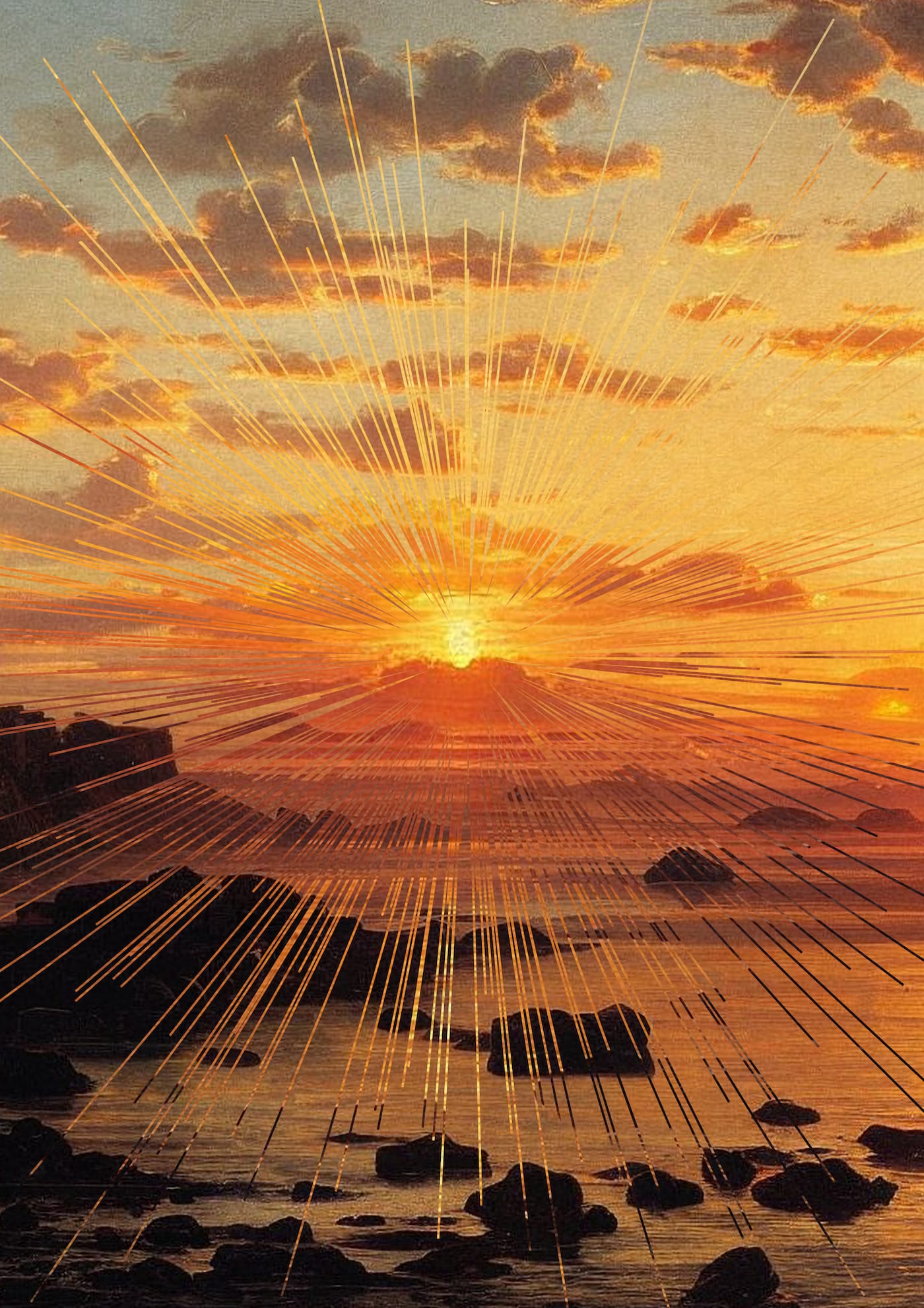
Saâdane Afif: Affiches/Plakate
Until 4 October 2026
Eighty screen-printed posters, produced in small editions, hang in one room of the Museum Folkwang collection beside a re-staging of Saâdane Afif’s first exhibition there in 2004, his inaugural museum show in Germany. The hang changed once, in June. The posters trace a practice that began with the text work Melancholic Beat and moved through performance into print over two decades. Blue Time (Sunburst) (2004) ties the display back to the original presentation. A concert-performance evening and screen-printing workshops accompany the show, which is supported by the French Republic and the Institut français.
6 ½ Weeks – Kiriakos Tompolidis: The Quiet Hour
Until 4 October 2026
Six and a half weeks is the length of this show, as its title says. Kiriakos Tompolidis was born in Essen in 1997, his grandparents having come from Greece in the 1960s, and now lives in Mexico. Seven paintings made for the occasion combine oil, acrylic, embroidery and photo transfer on linen. Sleep without Witness and Cabinet with Objects draw visitors into a room that feels long lived in, where self-portraits, family photographs and objects from several cultural backgrounds carry personal and collective history. Classical antiquity and seventeenth-century Dutch still life supply the art-historical references.
🇭🇺 Exhibitions in Hungary
Black Mirror. The Long Shadow of the Future
Until 11 October 2026
Ninety works by thirty-one artists, most of them from the Ludwig Museum’s own collection, picture the future as either an imagined vision or a dystopian reflection of the past. Nam June Paik, Andreas Fogarasi and Orshi Drozdik appear alongside Central European contemporaries and a handful of invited artists. Five sections give the show its shape: the sadness of fulfilled tales, in which utopias curdle into dystopias; personal worlds; the end of ideologies; No(n) Future!, on non-places; and Metropolis, on urban waste, memory and stratification. Müpa Budapest co-presents it as part of the Bartók Spring International Art Weeks.
Tamás Révész: Silent Poetry of Everyday Life
Until 11 October 2026
Nearly a hundred photographs across three rooms of the Kunsthalle follow Tamás Révész from Budapest to New York, Ecuador and Sicily. Street photography with a snapshot feel sits beside photojournalism and architectural images in what the museum calls a visual memoir of small, fleeting moments. Révész started as a photojournalist in the late 1960s at Képes Újság, Tükör and Új Tükör, published the photobook Búcsú a cigányteleptől in 1977 and won World Press Photo recognition for his 1990 picture of Soviet troops leaving Hungary. Zsuzsanna Tulipán curated the show.
Floating World
Until 1 October 2026
Samurai, kabuki masks, toy figures and strange creatures populate Sándor Rácmolnár’s new body of work at Várfok Gallery, painted over old printed documents, notebook pages and stamps in his signature vintage-paper technique. The title borrows from ukiyo-e, the pictures of the floating world, in both its senses: Buddhist transience and the Edo-period world of entertainment districts, kabuki theatres and geisha. Historical figures mix with characters from manga, toys and contemporary Japanese visual culture. Each sheet keeps traces of an earlier story while the heroic turns grotesque and the threatening playful. Admission is free.
Capturing Eternity. How Did Ancient Egyptian Artists Fashion Their Works?
Until 25 October 2026
The ancient Egyptian language made no distinction between artist and craftsman and called both hemut. Their working methods are the subject of this exhibition of some 140 statues, stelae, reliefs and coffins made for temples and tombs. Unfinished pieces, corrected mistakes and reused objects show how the work progressed. A hologram projector restores the lost colours of one statue. Most objects are the museum’s own, with loans from Turin’s Museo Egizio and Copenhagen’s Ny Carlsberg Glyptotek. The Glyptotek’s relief portrait from Akhenaten’s reign was reworked for Princess Meritaton.
🇮🇹 Exhibitions in Italy
Metamorphoses: Ovid and the Arts
Until 11 October 2026
Bernini’s Apollo and Daphne and Pluto and Proserpina anchor an exhibition that reads Ovid’s Metamorphoses as the gateway to a worldview built on change and the instability of forms. Correggio, Michelangelo, Titian, Rubens, Poussin, Gérôme, Rodin and Brancusi join the Borghese’s own Bernini marbles in sections on chaos and creation, Arachne, Leda and the swan, Pygmalion, Perseus, and Venus, Cupid and Narcissus, with rooms on love, the afterlife and the Ovide moralisé. Francesca Cappelletti and Frits Scholten curated the show with the Rijksmuseum in Amsterdam. Due to close on 20 September, it has been extended by three weeks.
MAXXI Collection: The Large Glass
Until 11 October 2026
Water, wind, fire and earth organise Alex Da Corte’s reading of the MAXXI collection in Galleria 4, the latest in a series in which an artist or intellectual is asked to bring the museum’s art, architecture and photography holdings into one display. The American conceptual artist takes his cue from the swelling curves of Zaha Hadid’s building and follows growth, decay and transformation through the collection towards what he calls an inevitable invisible ether and a glass age. Guided tours, lectures on colour theory, workshops and performances have accompanied the hang, which closes after almost two years.
Andrea Pazienza: They Don’t Always Die
Until 18 October 2026
Hundreds of comic strips, with sketches, studies and large improvisations, mark the seventieth birthday of Andrea Pazienza in Galleria 5 at MAXXI. Pentothal, Zanardi, Pertini and Pompeo, the characters through which the cartoonist, born in 1956, described the Italy of his day, are followed chronologically from his formative years to his last works. Photographs, films, recordings, letters and poetry fill in the milieu he worked in. A mural painted live at the 1987 Naples Comics Fair is shown for the first time. The exhibition follows an earlier one at MAXXI L’Aquila and has been extended to 18 October.
Hito Steyerl: The Island
Until 30 October 2026
Flooding recurs through the four narrative sequences of Hito Steyerl’s project at the Osservatorio in the Galleria Vittorio Emanuele II: Lucciole, The Artificial Island, The Birth of Science Fiction and Flash! A film made for the occasion, a video installation, objects, structures and video interviews carry the visitor from microorganisms to galaxies and from the Neolithic to the future. Steyerl, born in Munich in 1966, uses science fiction and quantum physics to reorganise time and space. Her targets here are the authoritarian tendencies encouraged by artificial intelligence, the climate crisis and political pressure on science.
Peggy Guggenheim in London: The Making of a Collector
Until 19 October 2026
Eighteen months in London, from 1938 to 1939, turned Peggy Guggenheim into a collector. Her gallery Guggenheim Jeune staged more than twenty exhibitions in that time, among them Kandinsky’s first solo show in the city, a Jean Cocteau monograph, the first British group show devoted to collage and a survey of contemporary sculpture. The Venice museum revisits the episode with works by Eileen Agar, Barbara Hepworth, Kandinsky, Rita Kernn-Larsen, Piet Mondrian, Henry Moore, Cedric Morris and Sophie Taeuber-Arp, plus archives on the friends who shaped her eye, from Marcel Duchamp to Samuel Beckett and Mary Reynolds.
🇱🇺 Exhibitions in Luxembourg
Video Killed the Radio Star: The 1980s and Their Cultural Echoes
Until 11 October 2026
Image overtook voice, access replaced ownership and aesthetics took on new political force in the 1980s, the decade Mudam revisits through some forty artists. Cindy Sherman, Isaac Julien, Daniel Buren, Jack Goldstein, Lorna Simpson and Thomas Struth are joined by the fashion designers Martin Margiela and Vivienne Westwood, with paintings, photographs, 16mm films, garments and performance documentation from the collection, loans and archives. Two sections, one on regimes of representation and one on the transformation of media, are linked by a foyer of archival material charting the rise of consumer culture and the attention economy.
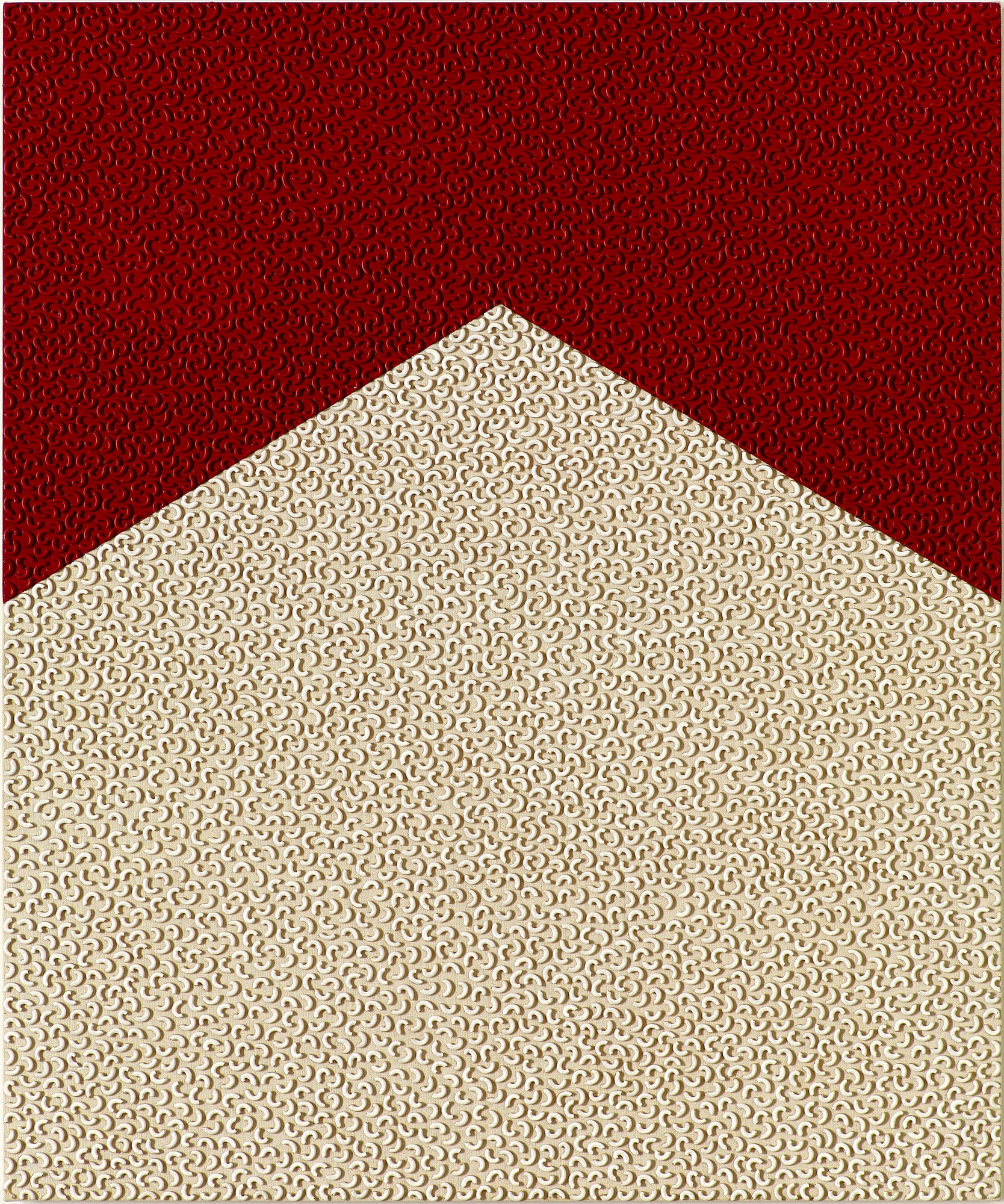
Vu Lilien a Linnen. Jugendstil, Handwierk a Konscht zu Lëtzebuerg
Until 18 October 2026
Luxembourg’s Art Nouveau gets its first in-depth examination in a show whose title translates as From Lilies to Linen. The style arrived alongside two institutions: an art association founded in 1893 and the state École d’Artisans of 1896, where artists and craftsmen trained side by side. Applied art, previously unseen sketches and historical photographs trace how a movement inspired by nature set out to make a better world through everyday beauty. A vase-painting design by Antoine Jans (1868–1933), a foreman at the Villeroy & Boch pottery in Luxembourg, stands for the craft behind the style.
Grand Tourists to Turner: British Artists in Europe, 1750–1850
Until 11 October 2026
Seven gouache views of Luxembourg by J. M. W. Turner, made on his visits of 1824 and 1839, bring the Bock, the Plateau du Rham and the Alzette valley back to the city in a show mounted with Tate. Paintings and drawings by John Robert Cozens, Francis Towne, William Pars, Richard Wilson and Joseph Wright of Derby follow British artists across Europe over a century. Italy drew the first travellers. By the nineteenth century the Alps and the valleys of the Seine, Loire and Rhine had joined the route, with Gothic churches and castles beside classical ruins.
Gravures anglaises: L’éditeur John Boydell (1719–1804)
Until 11 October 2026
Seven engravings make up this cabinet display on John Boydell, described by the museum as one of the most remarkable figures of eighteenth-century England. Five of the sheets come from his two great ventures: the Collection of Prints, Engraved from the most Capital Paintings in England of 1769, with a second volume in 1772, and the Shakespeare Gallery of the 1790s, for which leading painters supplied scenes from the plays. Two further engravings, one early and one late, show the Shakespeare Gallery itself as it looked in Boydell’s lifetime.
🇳🇱 Exhibitions in the Netherlands
Carel Visser in the Rijksmuseum Gardens
Until 25 October 2026
Thirteen sculptures by Carel Visser (1928–2015), some eight metres tall or five metres long, stand together for the first time in the Rijksmuseum gardens, where admission is free. Jacob’s Ladder (1954) has come from Utrecht, Big Four (1965) from Amersfoort and Lake (2006) from Apeldoorn, joined by Signal 1 and Signal 2 (1964). Visser cut and welded steel plates and beams, building his pieces on stacking, repetition and symmetry. Nature was the constant reference: spines, branches and resting animals surface in the forms. Much of his work stands outdoors on Dutch squares and in parks.
Kho Liang Ie — Mid-Century Modernist
Until 18 October 2026
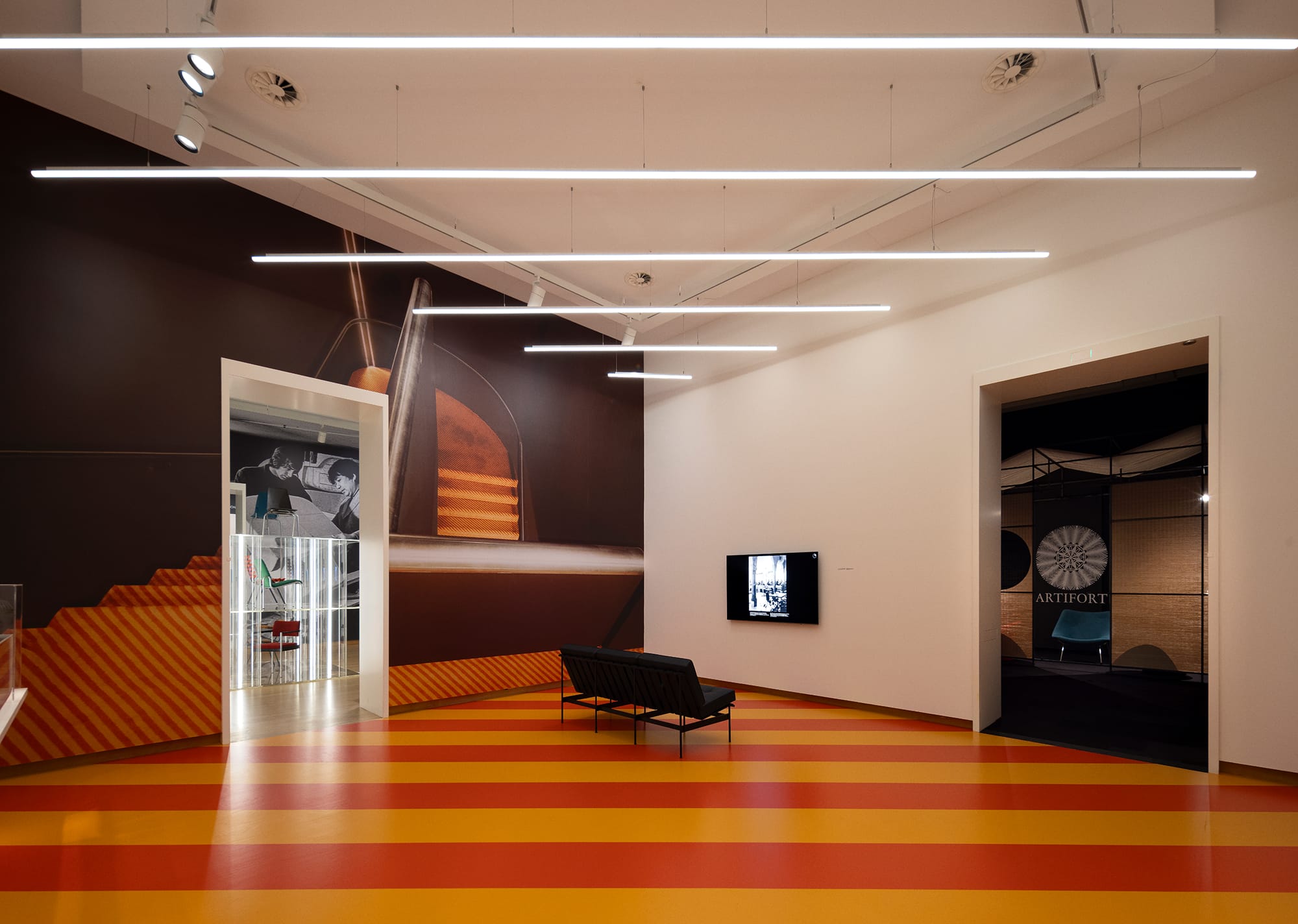
Two discreet steps after passport control were Kho Liang Ie’s way of calming anxious travellers at Schiphol. His interior for the airport’s new terminal opened in 1967 with oak handrails, muted colours and bright yellow signage. Part of that interior joins an Artifort trade stand among more than 200 objects. Some of his Artifort furniture and his Mosa wall tiles are in production today. Work with Pierre Paulin, Geoffrey Harcourt and Sheila Hicks also features. Born in Indonesia in 1927, Kho died aged 47. This is the first survey of his career in more than fifty years.
Endless Reflections
Until 25 October 2026
Museum interiors were the lifelong subject of Willem van Veldhuizen (Rotterdam, 1954–2025), and a selection from his oeuvre now hangs in compartment A3.06 of the Depot. His paintings are built symmetrically around a window or doorway opening onto a garden or skyline, with the view doubled in polished marble floors. New York Icons, Rio Curves and Museuminterior, Istanbul show the range of buildings he visited and the consistency of his approach, which holds a balance between recognition and abstraction. Light, shadow and reflection do most of the work.
Harvest 2026 — Pip Greenaway
Until 30 October 2026
Thirteen performers aged from two to eighty play a single family in Pip Greenaway’s video installation Family of None. Each resembles an anonymous face in the abandoned passport photos that Greenaway spent years collecting from photo booths. Documentary interviews, staged family portraits and choreography blend the performers’ own memories with fiction. The sets were developed with the Depot’s collection of family portraits in mind. The artist won the Lakeside Collection Award 2025 and made the work during a residency on the Depot’s fourth floor. The ten-minute piece plays there on a loop.
Helen Levitt: City at Play
Until 4 October 2026
More than 220 photographs, colour slides and the short film In the Street, made in the mid-1940s with Janice Loeb and James Agee, are drawn from Helen Levitt’s complete archive for the first time. Levitt (1913–2009) photographed New York unstaged, with a taste for children at play and the small dramas of the street, from Harlem and the Lower East Side in the 1930s to the chalk drawings of East Harlem and the Romani and Sinti communities of Spanish Harlem. A 1941 trip to Mexico City and her early move to colour complete the picture.
Woody van Amen: The Best Of
Until 4 October 2026
A thirteen-metre barrel-organ book painted as an abstract expressionist score, Habanera (1961), opens the Kunsthal’s survey of Woody van Amen, the Rotterdam artist born in 1936 who met Andy Warhol and Robert Rauschenberg in the United States in the 1960s. Paintings, assemblages, sculptures and drawings in Hall 4 run from that decade to Landscape with Two Horizons (2003), by way of vibro-objects, ice machines and electric chairs. Indonesian shadow puppets, Nepalese prayer flags and the Matterhorn recur, along with the Taxat, a double cross he found in the upholstery of a Singapore taxi and adopted as his emblem.
50 Years North Sea Jazz Photography
Until 11 October 2026
Ray Charles in 1983, Dee Dee Bridgewater in 2002 and Gregory Porter in 2011 are among the performers caught by Paul Bergen, Rico D’Rozario and Andreas Terlaak, the three photographers whose pictures mark the fiftieth anniversary of the North Sea Jazz Festival in Hall 7 of the Kunsthal. The first edition in 1976 had six halls, three hundred musicians and nine thousand visitors. Backstage images sit beside performance shots of Miles Davis, Herbie Hancock and Wynton Marsalis, and of debuts that turned into careers, among them Amy Winehouse and Jacob Collier. The show runs for five weeks.
Draw Withdraw Redraw
Until 4 October 2026
To draw, to draw from, to draw with, to be drawn to and to be drawn in: the verb’s many senses supply the frame for seven artists at Kunstinstituut Melly. Nohemí Pérez, Bani Abidi, Felipe Mujica, AYO, Cinthia Marcelle, Misheck Masamvu and Thierry Oussou treat drawing as a practice of recognition, resistance and reinvention. The curators, Gabi Ngcobo, Honey Kraiwee and Alicia Grobholz, describe a process of constant negotiation, chance-taking and self-preservation, in which lines are made, withdrawn and made again. Drawing becomes a place to lay new plans for what they call a desired waywardness.
Mix & Match: Kamalia Talhaoui
Until 25 October 2026
Calligraphy, botanical and bird ornament, lunar and celestial motifs and a mosque lamp from the Kunstmuseum’s Islamic applied arts collection are seen through the eyes of Kamalia Talhaoui, a children’s author and teacher who grew up as a second-generation Moroccan-Dutch woman between different worlds and expectations. The second edition of the Mix & Match series, in which contemporary makers read the collection from a personal angle, carries the subtitle Beauty from the World of Islam. Writing, nature and Islam are the anchors she names. Beauty is presented as a personal and evolving idea, shaped by moving between cultures.
Jan van der Vaart: For Jan and All
Until 25 October 2026
More than 150 objects, from series products to one-off pieces, trace almost fifty years of work by the ceramicist Jan van der Vaart (1931–2000), who called himself a potter and wanted his vases and tableware within reach of everyone. Mass production was his route to that end, a stance that unsettled collectors and fellow ceramists even as critics and museums recognised him. Teaching at the Rietveld Academy, he trained more than a hundred ceramists and shaped post-war Dutch ceramics from the inside. A publication, Jan van der Vaart: Meesterpottenbakker, accompanies the retrospective.
Patchwork Post
Until 3 October 2026
Textile remnants and waste from a career’s worth of projects have been turned by Simone Post into the colourful hub of the Centraal Museum, a space for gathering and resting in which pieces from the collection are set into the patchwork. At the entrance a Patchwork Tree, built from bands of Vlisco fabric, the Dutch cloth long produced for African markets, rises to the full height of the hall and holds collection objects in its branches. Inlaid textiles and techniques gathered over the years give the installation its texture. Sustainability, craft and growth are the threads.
The Mystery of the Girl in Blue
Until 11 October 2026
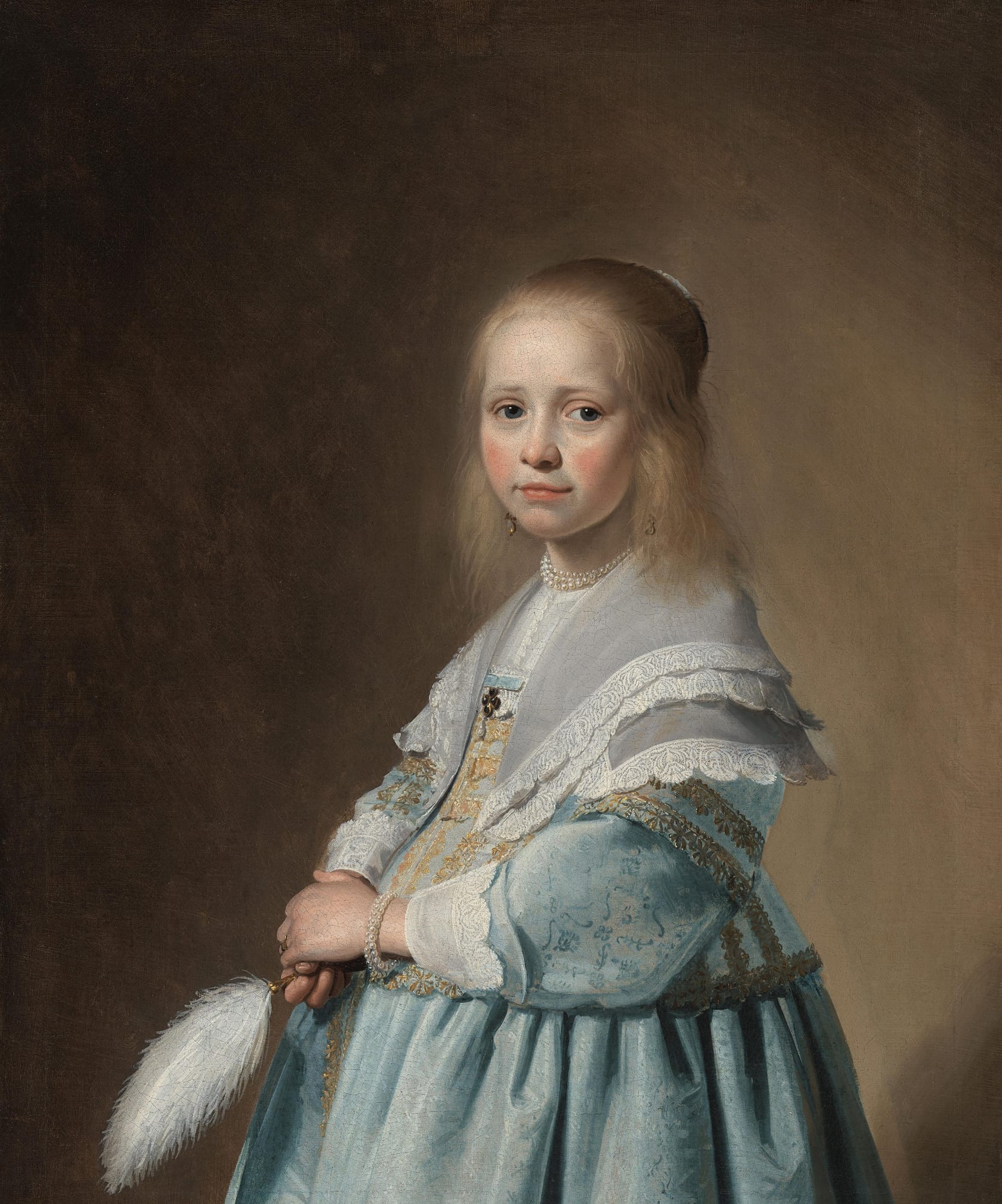
Nobody knows who she is. Johannes Verspronck’s Portrait of a Girl Dressed in Blue (1641), one of the Rijksmuseum’s most popular pictures, is reunited in Haarlem with the two portraits of her parents from Rijksmuseum Twenthe for the first time since 1979, and all three sitters remain unidentified. Frans Grijzenhout leads the investigation on show, working through family coats of arms, archives and estate inventories. The presentation also sets Verspronck (1601/03–1662) beside his contemporary Frans Hals, comparing their portrait styles and asking whether one taught the other. The question in the title stays open.
15 Mysteries of the Rosary
Until 25 October 2026
For four hundred years the fifteen paintings of the Mysteries of the Rosary hung four metres up in Antwerp’s Sint-Pauluskerk. Rubens, Jacob Jordaens and Anthony van Dyck are among the painters. The series is now shown at eye level for the first time outside the church. Den Bosch has a claim on the loan: during the Eighty Years’ War its church treasures were kept in Antwerp. Contemporary works by Mona Hatoum, Latifa Echakhch, Maria Roosen, Geraldo Dos Santos and Cecilia Vicuña answer the cycle’s themes of joy, sorrow and hope. A section on prayer beads closes the show.
Ruud Kuijer
Until 4 October 2026
How an object stands, lies, hangs or leans is the central question in Ruud Kuijer’s sculpture. The Utrecht-based artist works in concrete and steel and borrows his shapes from H-beams, reinforcing mesh and springs. Sixteen of his large pieces now occupy the Rietveld Pavilion in the Kröller-Müller’s sculpture garden, among them Jump (1999) and Large H-beam Piece 8 (2019). The pavilion was designed by Gerrit Rietveld for the 1955 Sonsbeek sculpture exhibition in Arnhem. The museum’s own sculptures have made way for Kuijer, whose raw materials are set against Rietveld’s straight lines and subtle light.
🇪🇸 Exhibitions in Spain
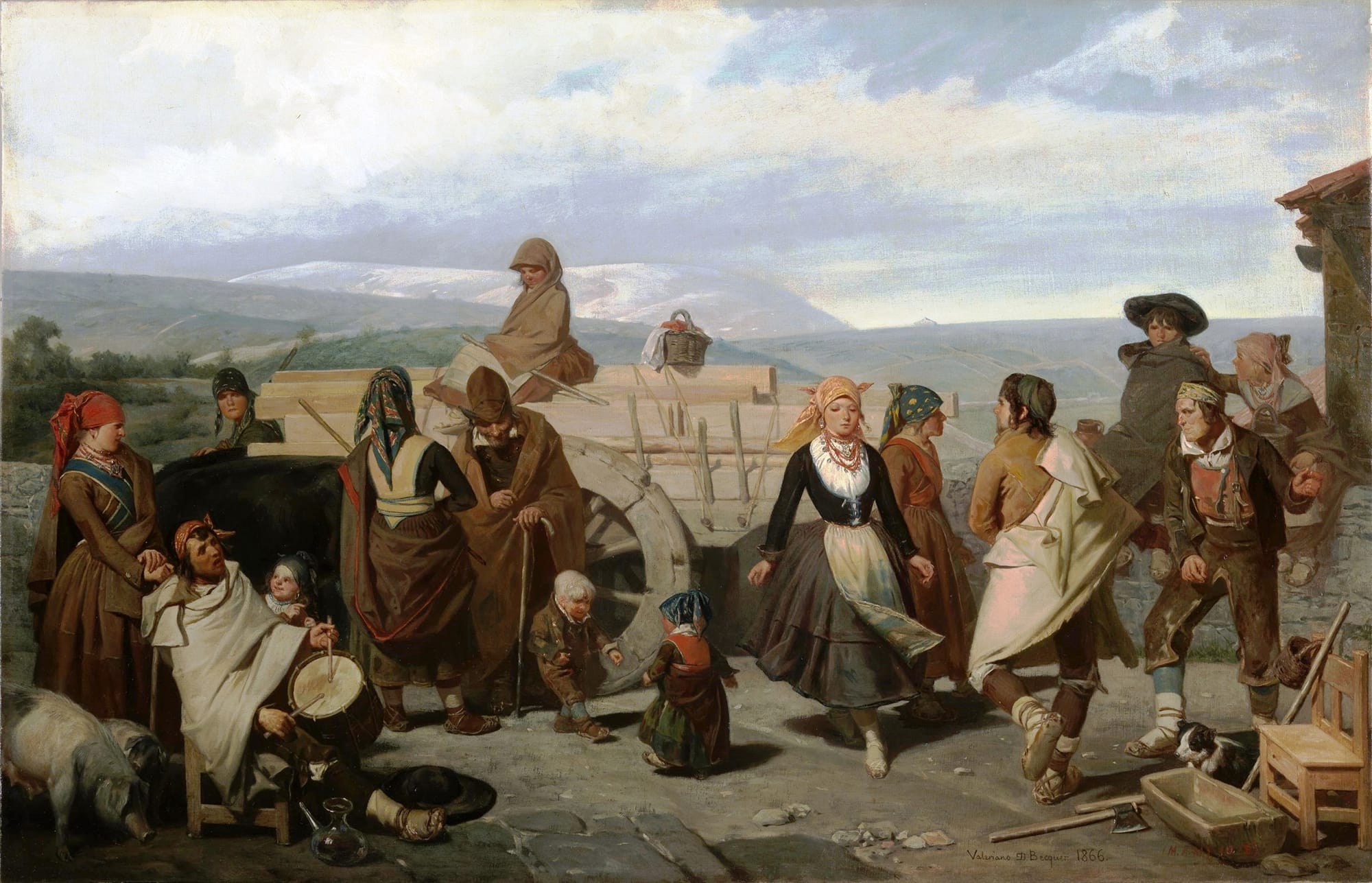
Valeriano D. Bécquer (1834–1870): The Genre Paintings
Until 4 October 2026
Eight paintings and an aquatint in Room 60 of the Villanueva Building record village life in Soria, Aragon and the Amblés valley of Ávila as Valeriano Domínguez Bécquer saw it in 1866 and 1867. A grant by Royal Order of 1865 sent him out to paint customs for the Museo de la Trinidad, whose holdings passed to the Prado when it closed. The Dance. Folk Traditions from the Province of Soria, A Woodcutter near Burgo de Osma and The Chapel Spring show dances, labour, festivals and pilgrimages, with an eye for women’s work in the home and regional dress.
Felix Gonzalez-Torres: Sweet Revenge
Until 12 October 2026
A pile of 325 pounds of blue sweets, “Untitled” (Revenge) (1991), opens the first solo exhibition of Felix Gonzalez-Torres in Madrid, the city his parents sent him to from Cuba at thirteen in 1971. “Untitled” (Madrid 1971) (1988) sets a childhood mugshot beside a public statue in a puzzle. The candy spills and paper stacks that made his name are here, among them “Untitled” (Ross) and “Untitled” (Portrait of Ross in L.A.), both from 1991, the year his partner Ross Laycock died of an AIDS-related illness. The survey is political and lyrical at once.
Milk, Snow, Tear, Hand: Blanca Sánchez’s Way of Making
Until 9 October 2026
Chocolate wrappers, sugar packets, photographs and cut-outs cover the central table of Space D in the Nouvel Building’s library, where the Reina Sofía looks at the collage habit of Blanca Sánchez Berciano (Madrid, 1948–2007). A curator, cultural manager and collector, she returned to Madrid in 1971 after years abroad, worked with the galleries Vandrés and Vijande and became a central figure of the Movida. The display treats her associative method and camp taste, high and low culture mixed, as a way into the city’s cultural history since the 1970s. Entry is free.
Soy Asurbanipal, rey del mundo, rey de Asiria
Until 9 October 2026
In the Reina Sofía’s library, a table is arranged like the desk of Blanca Sánchez. Chocolate wrappers, sugar packets and cut-outs lie beside work notes, grouped by the free association of her camp collage albums. Sánchez returned to Francoist Madrid in 1971 and became a central figure of the Movida, the city’s post-Franco cultural awakening. She worked for the Vandrés and Vijande galleries, managed the band Alaska y Dinarama and joined the Círculo de Bellas Artes. The title quotes an anonymous poem in her archive. The library opens on weekdays only.
Recuperado del enemigo: Deposits at the MNAC under Franco’s Dictatorship
Until 4 October 2026
One hundred and forty-six works left at the museum by the SDPAN, Franco’s agency for confiscated art, and 135 more received on loan between 1939 and 1958 are the subject of Rooms 63 and 64. The Generalitat had built stores to protect Catalan heritage during the Civil War; after the Republican defeat they passed to the new regime, and the museum became warehouse and showcase for contested property. Archival labels trace journeys such as that of Claudia’s Girls. Since the 1990s nineteen works have gone back to their rightful owners.
Maintenance
Until 18 October 2026
Nobody is cleaning Espai 13 at the Fundació Joan Miró. Under instructions from Turner Prize nominee Ghislaine Leung, the foundation has suspended routine upkeep and conservation work in the gallery, which stays open to visitors. Dust and wear build up in the white room and become the exhibit. The British artist’s subject is the labour that keeps an institution running and usually goes unseen. Two further works titled Budgets and FJM Edition examine the foundation’s finances and logistics. Leung herself stays away from installations, avoids travelling to openings and rations her own energy.
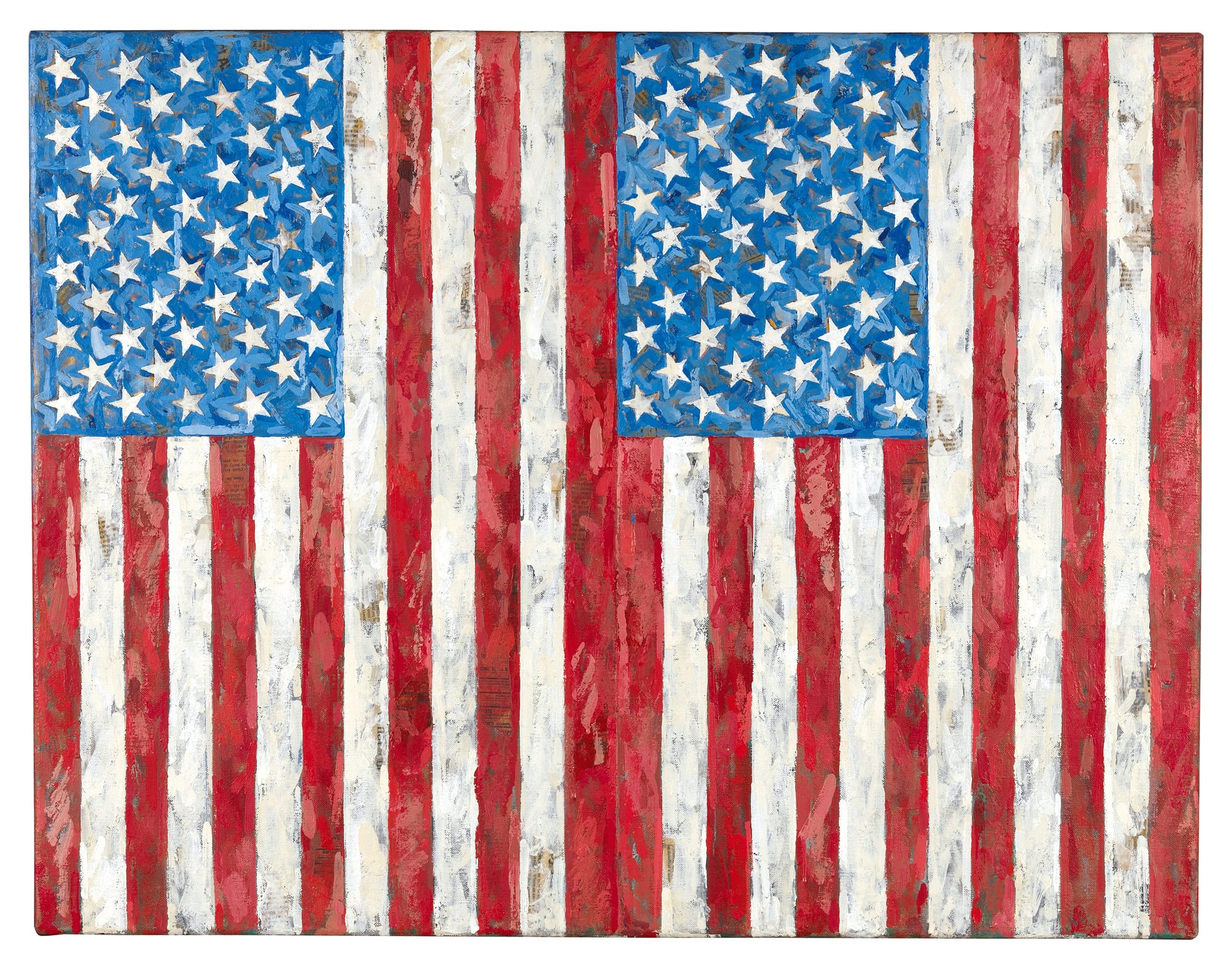
Jasper Johns: Night Driver
Until 12 October 2026
Flags, numbers, targets and maps, the motifs with which Jasper Johns stepped away from Abstract Expressionism and anticipated Pop, open a retrospective that runs from the 1950s to the 2000s in paintings, sculptures and works on paper. Flag on Orange Field (1957), Target and Map (both 1961) and Painting with Two Balls (1960) lead to Dancers on a Plane (1980–81), Summer (1985) and Montez Singing (1989–90), in encaustic, oil, charcoal, graphite, monotype and acrylic. Johns, born in Augusta, Georgia, in 1930, reached New York in 1953 and fell in with Rauschenberg, Cage and Cunningham. Enrique Juncosa curated the show.
The Ribaltas and Baroque Naturalism
Until 4 October 2026
Ten paintings lent by the Museo de Bellas Artes de Valencia bring Francisco Ribalta (1565–1628) and his son Juan (1596/97–1628) to the Carmen Thyssen, in a show curated by the Valencian museum’s director, Pablo González Tornel. Saints and biblical scenes are rendered with a naturalism the museum calls stark at times, the manner encouraged by Archbishop Juan de Ribera (1532–1611), who wanted painters to move the faithful with the Passion and the lives of the saints. Father and son worked at the height of the Counter-Reformation, and their pictures were made to inspire devotion before admiration.
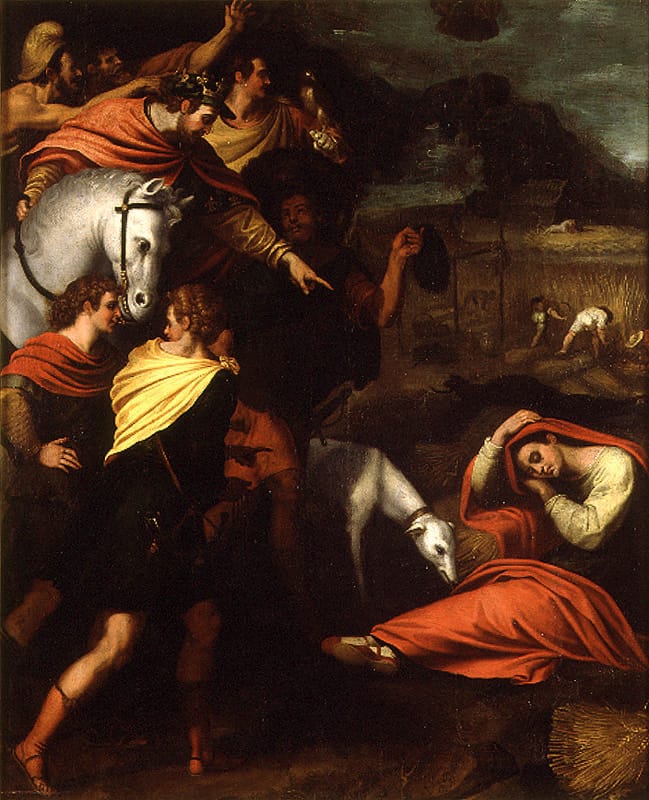
Manuel Franquelo: The Language of Things
Until 12 October 2026
Fourteen prints from the series that gives the show its name, two platinum-palladium photographs, two drawings of Madrid streetscapes make up this tribute to Manuel Franquelo (1953–2024), born in Málaga and settled in Madrid. He kept his distance from movements and the market, working in a studio the museum calls ascetic, and won the National Printmaking Prize in 1998 for experimental techniques of exacting precision. Ordinary objects arranged as still lifes were his lifelong subject. The museum calls him a collector of moments, for whom the things of daily life deserved the closest study.
The Albufera
Until 18 October 2026
A coastal lagoon south of Valencia, one of the most significant wetlands in the western Mediterranean, is read at the IVAM as a post-natural place where culture and nature can no longer be separated. The photographic project L’Albufera. Visió tangencial (1985) is the starting point, with six new commissions from Bleda y Rosa, Paula García-Masedo, Lucía Loren, Teresa Marín García, Jorge Ribalta and Jorge Yeregui, and historical images by Enric Martínez and Gustave Doré. Photographs, documents, video and sculpture follow four decades of change through Romantic imagery, farming, tourism, industry and environmental activism. Sandra Moros curated the show.
Cristina de Middel: Apoteosis Now
Until 12 October 2026
White, green, pink and red name the series in which Cristina de Middel, a member of Magnum Photos, projects her photographs onto the structure of the IVAM’s second floor. Each series is described as a visual novel and a seismograph of the manipulation of reality, loaded with facts, intuitions, myths, uncertainties, mutations, visions, totems and a few taboos. The images ask how a photograph can subjugate and how it can liberate. De Middel’s word for the present condition is Iconocracy, a culture drowning in pictures. Iván de la Nuez curated the exhibition in gallery G6.
Rubens. El florecimiento de un genio
Until 4 October 2026
When paintings sent from Mantua to Philip III’s court in Valladolid arrived damaged, the young Rubens had to repair them. One of them belongs to Pietro Facchetti’s Creation series and is among the 61 works tracing the painter’s early career. The story begins in late 16th-century Antwerp, where he trained under three masters. Eight years in Italy follow, with a little-known oil sketch for the high altar of Rome’s Chiesa Nuova. A surviving fragment may preserve part of his lost Continence of Scipio. Lenders include the Prado, the Albertina and Mantua’s Palazzo Ducale. Admission is free.
🇨🇭 Exhibitions in Switzerland
Cao Fei: Testimonies to the Near Future
Until 11 October 2026
All four floors of the Gegenwart building have been turned into a cityscape of seven zones for Cao Fei, born in Guangzhou in 1978 and based in Beijing, in her first solo exhibition in Switzerland and her largest European survey so far. Thirty years of video, digital media, photography, installation and sculpture follow China since the reforms of 1978: factory labour in Whose Utopia (2006), the virtual metropolis of RMB City (2007–2011), Asia One (2018), Nova, Oz and the HIP HOP series begun in 2003. Economic growth, technology and globalisation are examined without pessimism.
As If We Are Safe
Until 4 October 2026
A 2025 work grant from Kunstkredit Basel-Stadt links the eight artists in this exhibition. The canton’s art fund stages its annual show at the Kunsthalle Basel with new and recent pieces and free admission. Its title treats safety as fragile and changeable. The works ask how trust and belonging form and what people hold on to when certainties wobble. Birth years run from 1945 for Olga Zimmelova to 1997 for Samuel Haitz. Anan Fries, Pat Homse, Golnaz Hosseini, Lynne Gbodjrou Kouassi, Edit Oderbolz and Rondi Park complete the line-up.
Vilhelm Hammershøi: The Eye That Listens
Until 25 October 2026
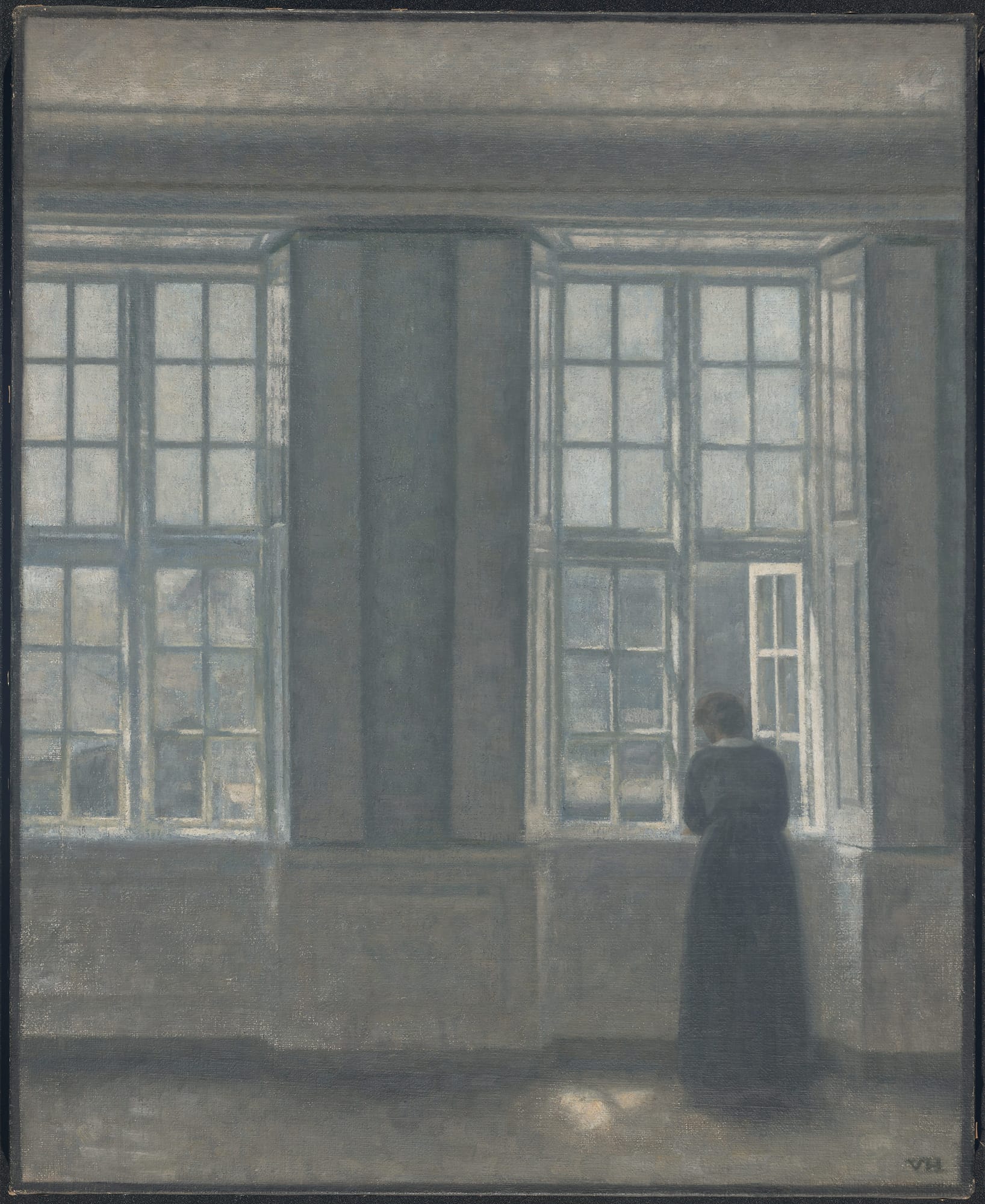
Instruments appear in Vilhelm Hammershøi’s quiet rooms often enough for the Kunsthaus to build a show around what the eye can hear. Interior with Woman at Piano, Strandgade 30 (1901), Sitting Room. Study in Sunlight (1906), Open Doors (1905) and The Tall Windows (1913) hang on the ground floor of the Moser building, lent by the David Collection, the Nationalmuseum in Stockholm, the Musée d’Orsay, Ordrupgaard and private owners. Whistler’s influence shaped a language of reduced compositions and muted colour. Perception, atmosphere and the tension between space and objects are the themes. The Thyssen-Bornemisza in Madrid is co-organiser.
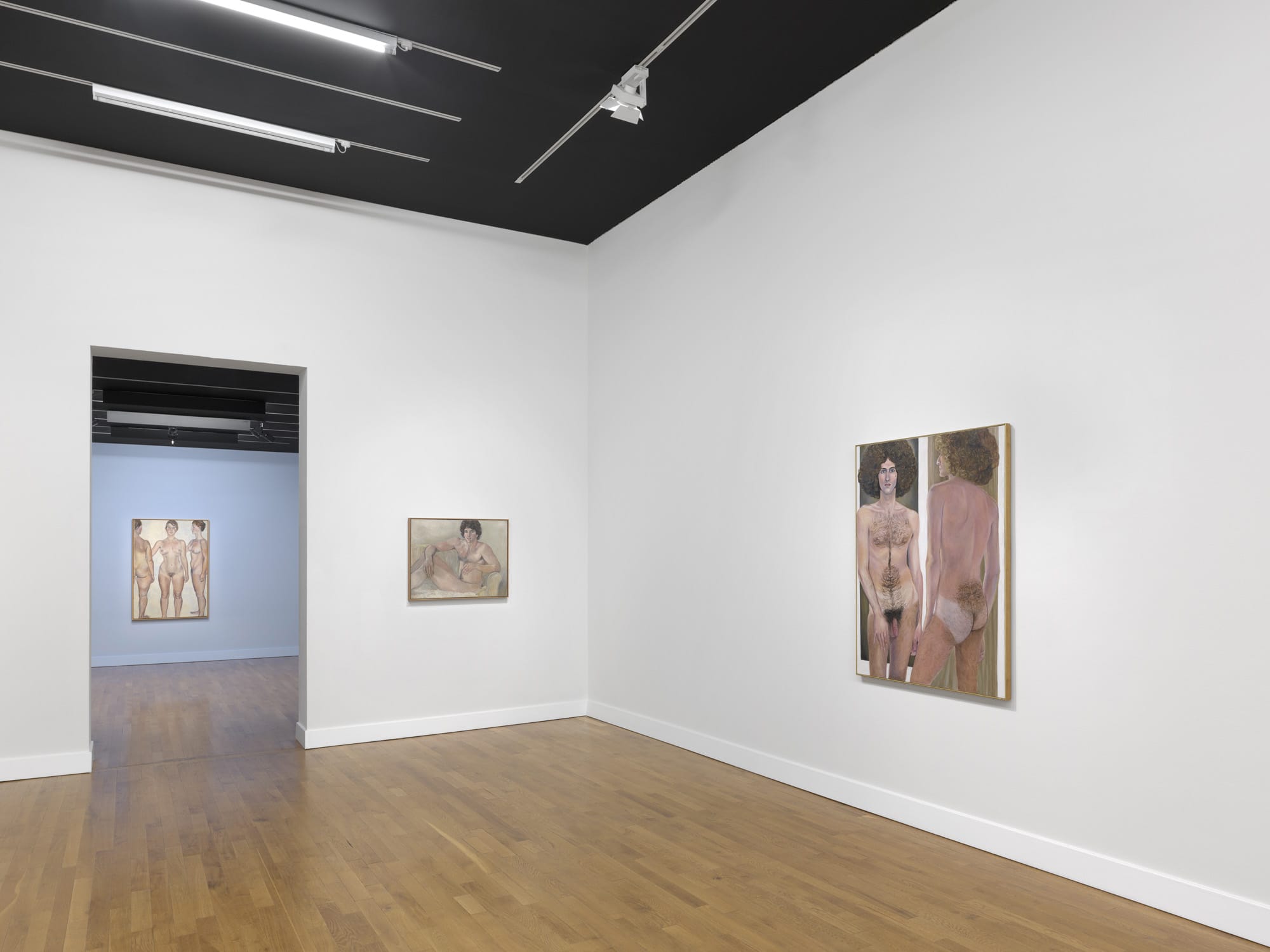
Sylvia Sleigh and Re-Collection: An Exhibition in Two Parts
Until 25 October 2026
Male nudes take the poses classical painting reserved for women in the work of Sylvia Sleigh (1916–2010), shown on the ground floor of the Musée Rath in a project MAMCO has mounted with the Musée d’art et d’histoire. Downstairs, Refaire Collection turns to the thin presence of women artists in institutional holdings, with paintings, sculptures, videos, drawings and photographs by Louise Bourgeois, Meret Oppenheim, Pipilotti Rist, Joan Semmel, Jenna Gribbon and the Guerrilla Girls covering roughly a century. Gender, the body, sorority and empowerment run through both halves. Lionel Bovier and Elisabeth Jobin curated the show.
Observatoires
Until 25 October 2026
One room is devoted to animals, another to abstract painting, a third to musical instruments and a fourth to lamps. Geneva artist John M Armleder arranged them from the museum’s own holdings for its sixth Carte Blanche. More than 500 of his works belong to the collection. A few appear discreetly among the historical objects. He treats a chair or a watch with the same attention as a painting. A staircase to the armoury’s mezzanine has opened to visitors for the first time. The title refers to an observatory built opposite the museum in 1772. Admission is pay-what-you-wish.
One Another: Nhu Xuan Hua and the Collection of Fotomuseum Winterthur
Until 11 October 2026
Nobuyoshi Araki, Richard Avedon, Nan Goldin, Andreas Gursky, Rinko Kawauchi and Duane Michals are among the photographers Nhu Xuan Hua has pulled from the Fotomuseum’s collection to hang beside her own surreal, dreamlike pictures. The French Vietnamese photographer, born in 1989, works from family archives on the construction of memory, uprootedness and the legacy of the diaspora, themes first set out in her book Tropism, Consequences of a Displaced Memory. She also works commercially for Dior, Gucci, Kenzo and Margiela. Alessandra Nappo, the museum’s collection curator, wrote the accompanying text.
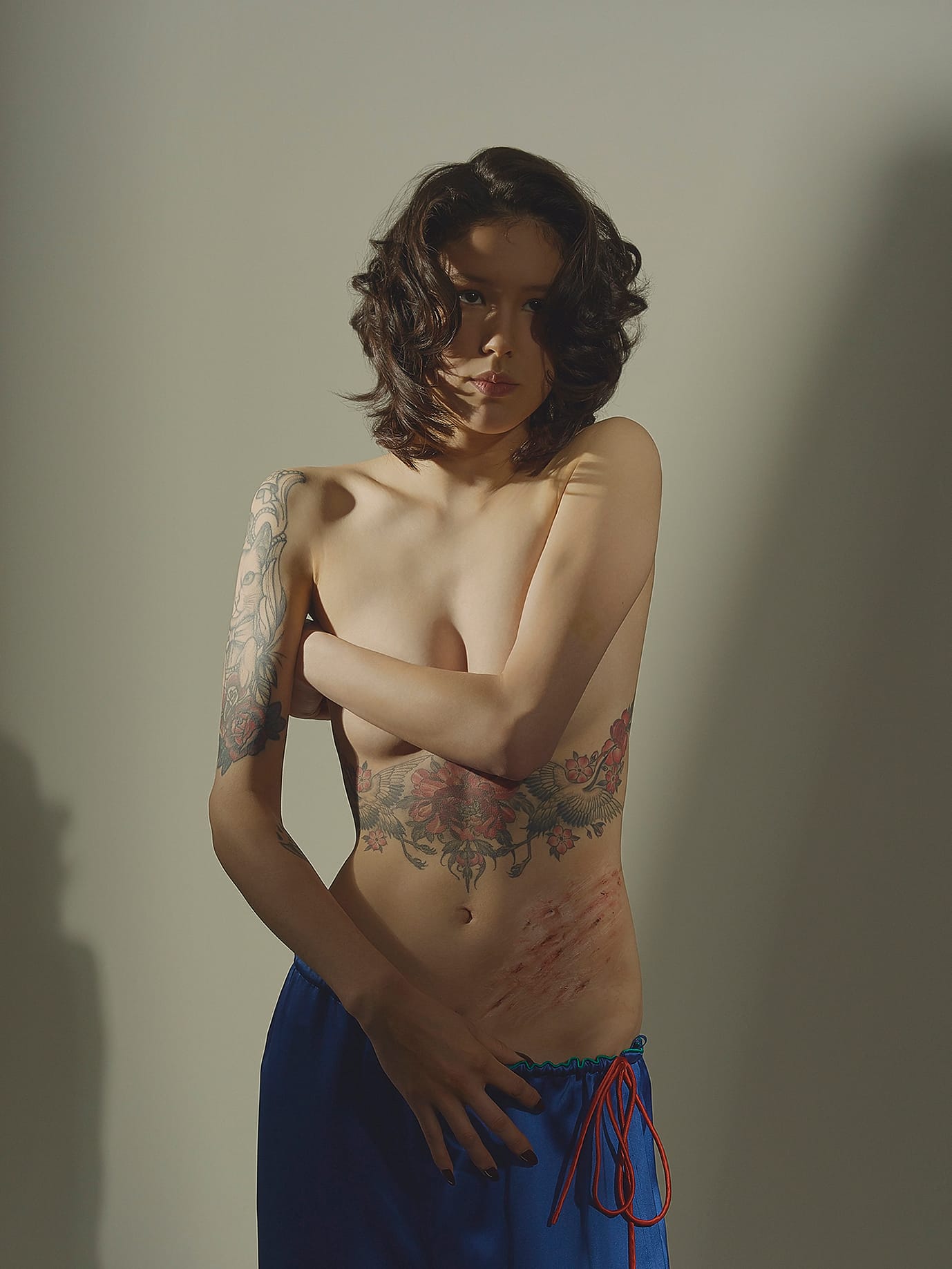
Shadow Creatures: From Spirit Photography to the Ghosts of the Algorithm
Until 11 October 2026
Spirit photographs by William H. Mumler and Helen F. Stuart from the nineteenth century open a line that runs to the figures artificial intelligence conjures today. Rea Grünenfelder and Marco De Mutiis have gathered Cihad Caner, Nina Davies, Tomokichi Fukurai, Sung Chi-Li, Trevor Paglen, Mario Santamaría, Janne Schimmel, Steph Maj Swanson, Shannon Taggart, Agate Tūna and Sheung Yiu, with interaction design students from SUPSI. Datasets, computer games and spiritualist practice sit side by side. The claim is that images summon beings that inhabit the personal, social and political unconscious, and that the algorithm has given them a new body.
To the Sun! To Freedom! Paths of Plein-Air Painting Around 1800
Until 25 October 2026
More than thirty previously unpublished oil studies join loans from France, Germany and Switzerland at the Reinhart am Stadtgarten for the first account of the Swiss contribution to painting outdoors in oil around 1800. Pierre-Henri de Valenciennes, Simon Denis, Johann Georg von Dillis, Heinrich Reinhold, Achille Etna Michallon, Carl Blechen and Camille Corot trace the movement from the discovery of Italian light to a genre in its own right, with Caspar Wolf among the Swiss pioneers of Alpine painting. Small oil sketches on paper are set against finished landscapes. David Schmidhauser and Florian Illies curated the exhibition.
🇬🇧 Exhibitions in the United Kingdom
John Constable: Views of Nature
Until 4 October 2026
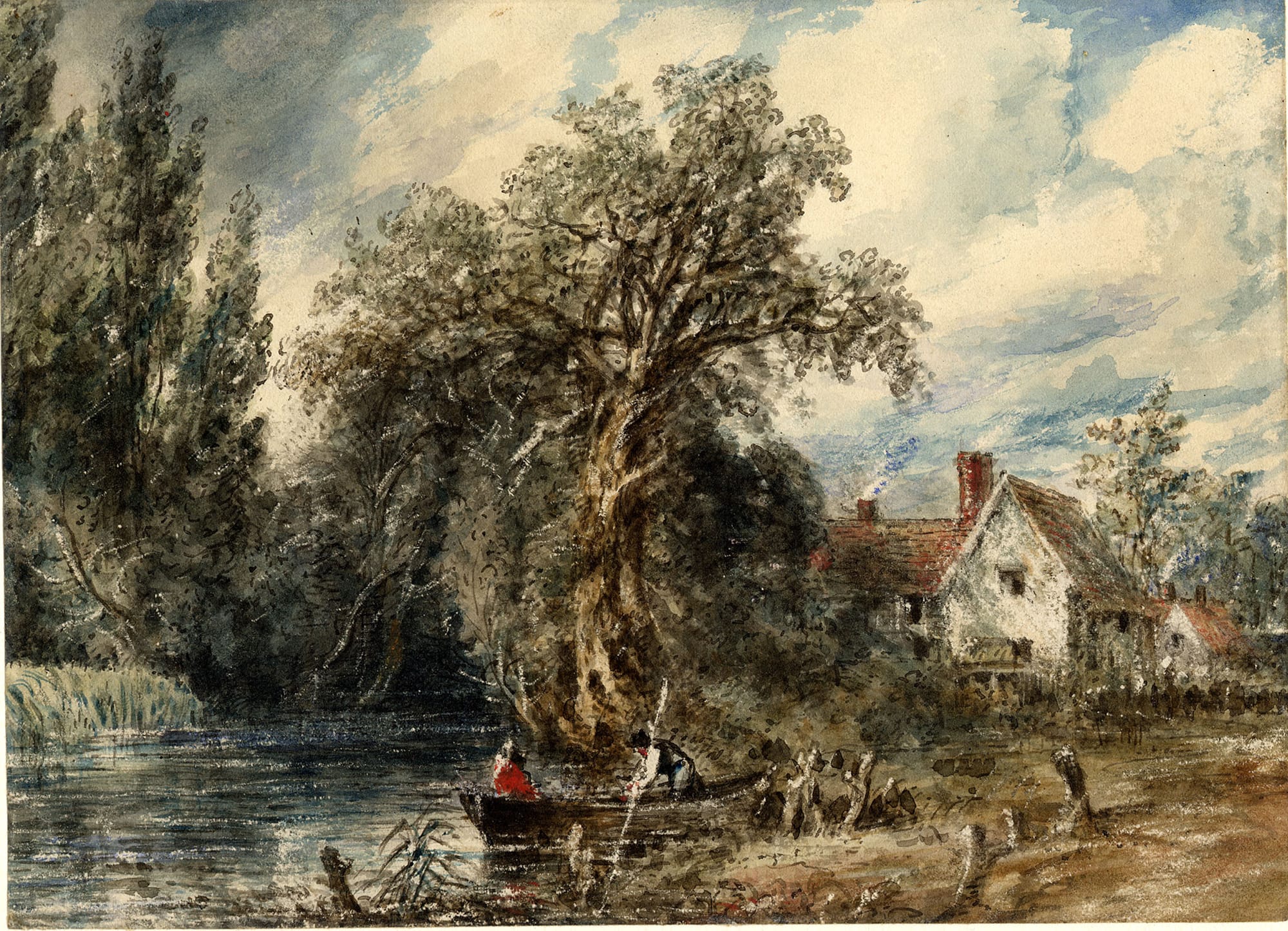
Room 90a marks the 250th anniversary of John Constable’s birth with the graphic work of his last two decades, most of it from the 1888 gift of his daughter Isabel. Finished drawings, studies for oil paintings and quick notes of cloud over Hampstead Heath hang with ten mezzotint plates from the English Landscape series he made with David Lucas. Willy Lott’s Cottage (1832) returns to the East Anglian waterways; the ruins of Cowdray House and Stonehenge show him reaching beyond them. Transience and the fragility of the countryside are the constant concerns. Admission is free.
Richard Dadd: Beyond Bedlam
Until 25 October 2026
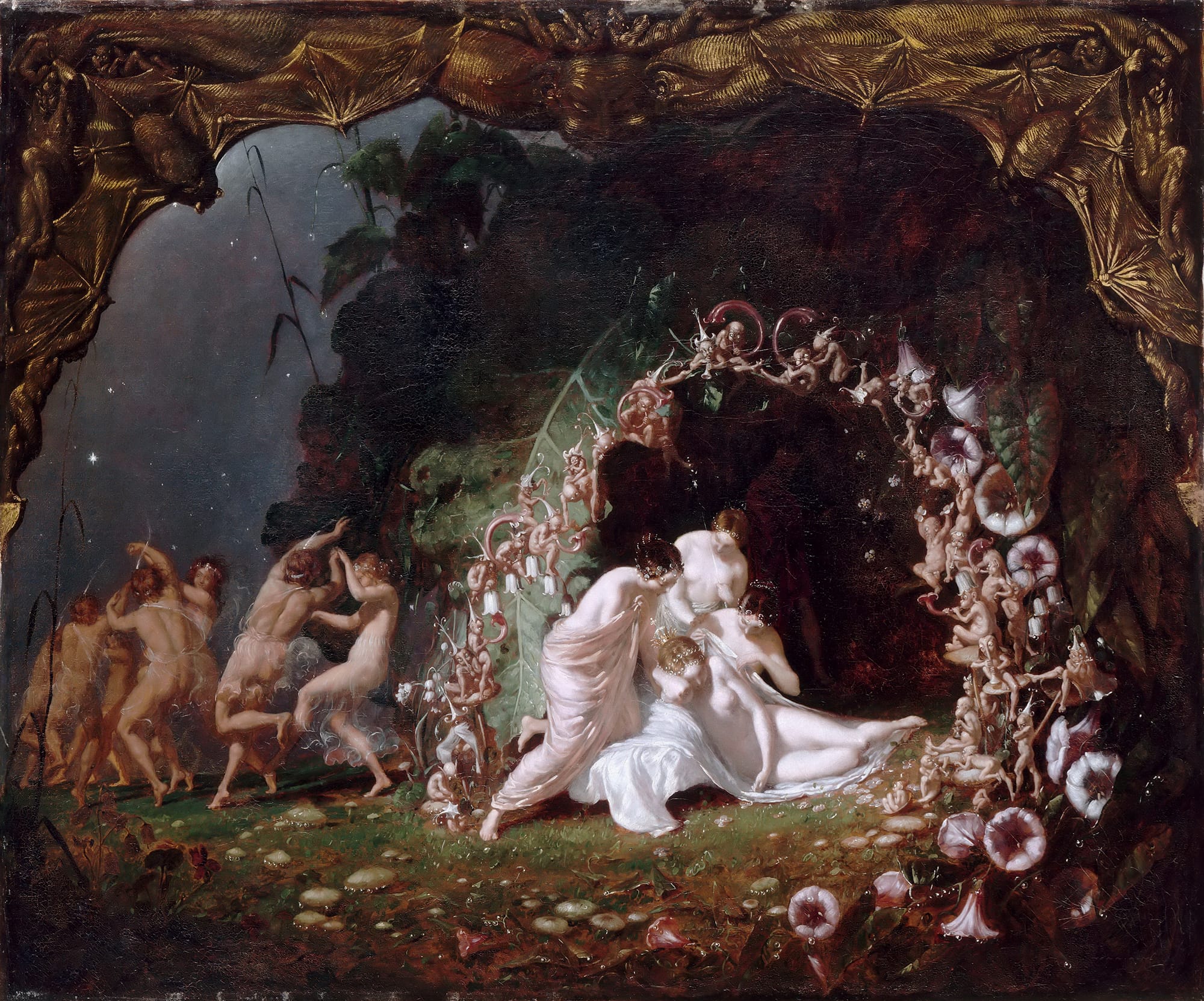
The Fairy Feller’s Master-Stroke, painted between 1855 and 1864 during his confinement, is the centrepiece of more than a hundred oils and watercolours at Burlington House. Richard Dadd (1817–1886) trained at the Royal Academy Schools, joined the Clique and made his name with Shakespearean fairy pictures such as Titania Sleeping and Puck, both from 1841. A journey through the eastern Mediterranean in the early 1840s ended in delusions and the killing of his father. Decades in Bethlem and Broadmoor followed. Contradiction. Oberon and Titania (1854–58) and Bacchanalian Scene (1862) were made there, from literature, legend and memory.
Wendy McMurdo: The Digital Mirror
Until 25 October 2026
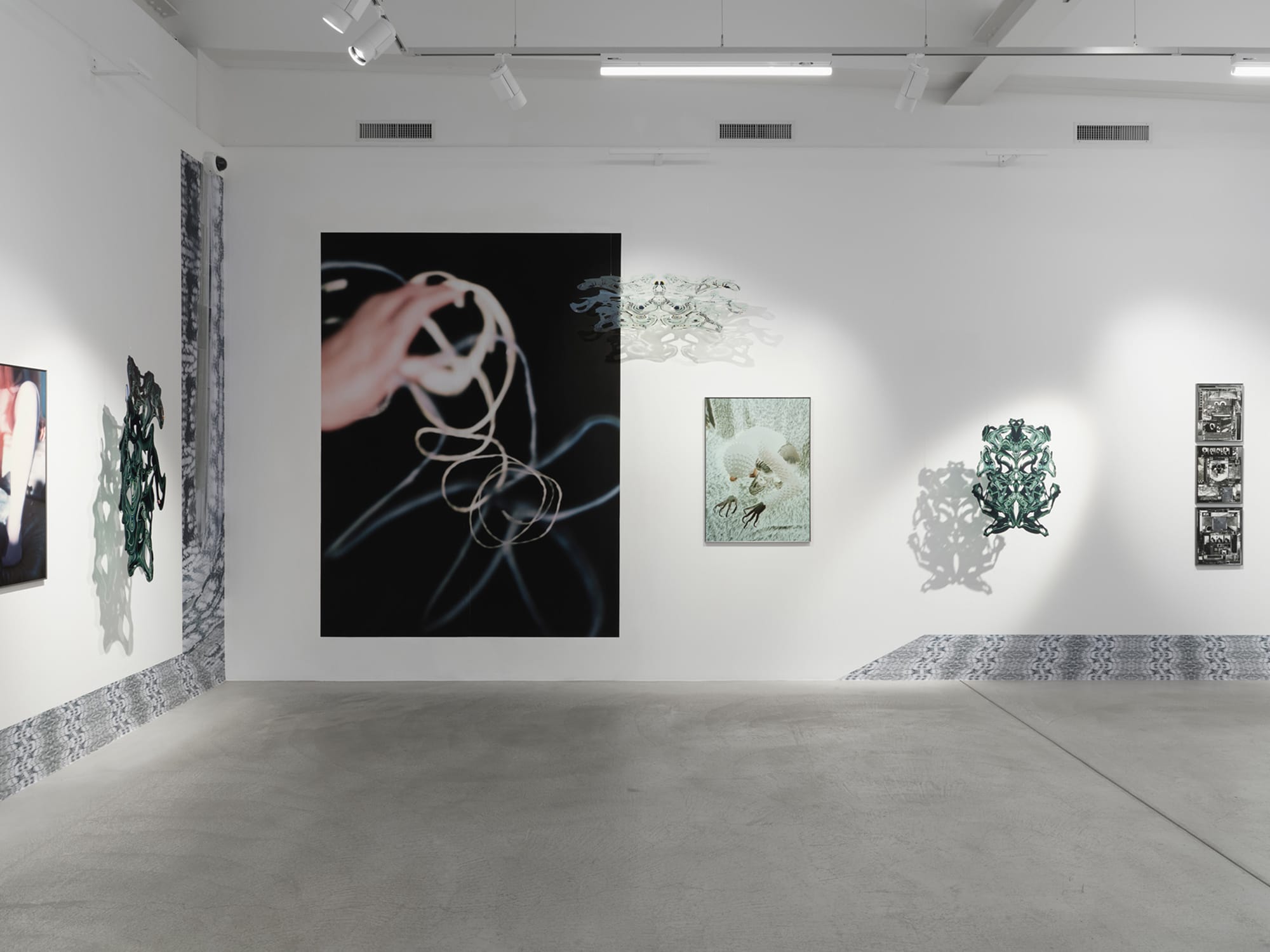
Raeburn’s Reverend Robert Walker Skating on Duddingston Loch and Eduardo Paolozzi’s Krokadeel keep company with twenty years of photographs by Wendy McMurdo at the Portrait gallery, along with early twentieth-century toys and a newly configured moving-image projection. Girl with Bears, Royal Museum of Scotland, Edinburgh, The Robot Workshop (ii) and The Somnambulist follow children from the first computers in classrooms to internet gaming, asking what changing technology has done to play, learning and imagination. McMurdo was the first woman photographer elected to the Royal Scottish Academy, whose bicentenary the show marks.
Michaela Yearwood-Dan: The Practice of Liberation
Until 18 October 2026
Fourteen newly commissioned paintings, six ceramic vessels and a score by the composer Alex Gruz make up Michaela Yearwood-Dan’s first major museum exhibition in Britain, built to recall the look and symbolism of a Catholic church. Colonial history and institutional religion are approached through her own memory and experience, with James Baldwin’s writing set beside her own reflections in abstract canvases that carry diary fragments and borrowed lyrics. Passio (2026) is among the new works. The Whitworth produced the show with Towner Eastbourne and Arnolfini in Bristol, to which it travels through 2027.
Aleksandra Kasuba: Shelters for the Senses
Until 4 October 2026
Shells, rocks, vegetation and marine life shaped seven decades of work by Aleksandra Kasuba, the Lithuanian-American artist who fled her country after the Second World War, settled in New York and later New Mexico. Tate St Ives gives her a first British museum exhibition, from paintings and mosaics to later sculptures and architectural designs, organised with the Lithuanian National Museum of Art. Her collaboration in the 1960s with Experiments in Art and Technology, the collective of artists, engineers and scientists, is given particular weight. A deeper connection between humanity and nature was the aim throughout.