115 art exhibitions around Europe closing in May 2026
Every two weeks, Kunsti Radar newsletter maps a different slice of the European exhibition calendar. This issue is devoted to exhibitions closing in May — a prompt to plan ahead, book a train, and see what is still on before the museums and galleries move on to the next thing.

Every two weeks, Kunsti Radar newsletter maps a different slice of the European exhibition calendar. This issue is devoted to exhibitions closing in May — a prompt to plan ahead, book a train, and see what is still on before the museums and galleries move on to the next thing.
The 115 shows covered here are spread across fourteen countries, and the range of subjects is wide. The Rijksmuseum’s Ovid-inspired Metamorphoses is in its final weeks in Amsterdam, alongside a sharp display of early photomontages from the museum’s own collection. Madrid offers two reasons to visit the Paseo del Arte: the Thyssen presents the first Spanish retrospective devoted to Hammershøi, while the Prado traces the collecting vision of Isabella Farnese across 45 works. At Tate Modern, the most ambitious presentation of Nigerian modernism yet staged outside Nigeria is drawing to a close. Bridget Riley has shaped an exhibition around the act of seeing itself at Turner Contemporary in Margate, while Ndidi Dike’s installation at the Secession in Vienna connects cobalt mining in the DRC to the longer histories of colonial extraction. A recently donated archive of Ian Hamilton Finlay prints at the British Museum brings his lifelong preoccupation with the French Revolution into sharp focus.
There is also a lot more besides: terracotta warriors in Budapest, Basquiat’s private drawings in Humlebæk, Marlow Moss’s newly acquired sketchbook in The Hague, the photographic history of Rotterdam across nearly two centuries, and in Edinburgh — an exhibition made by artists with learning disabilities in response to works from Scotland’s national collection, staged for the first time in the storage facility where those works are kept. The full list follows.
🇦🇹 Exhibitions in Austria
Sandra Mujinga: Skin to Skin
Until 31 May 2026
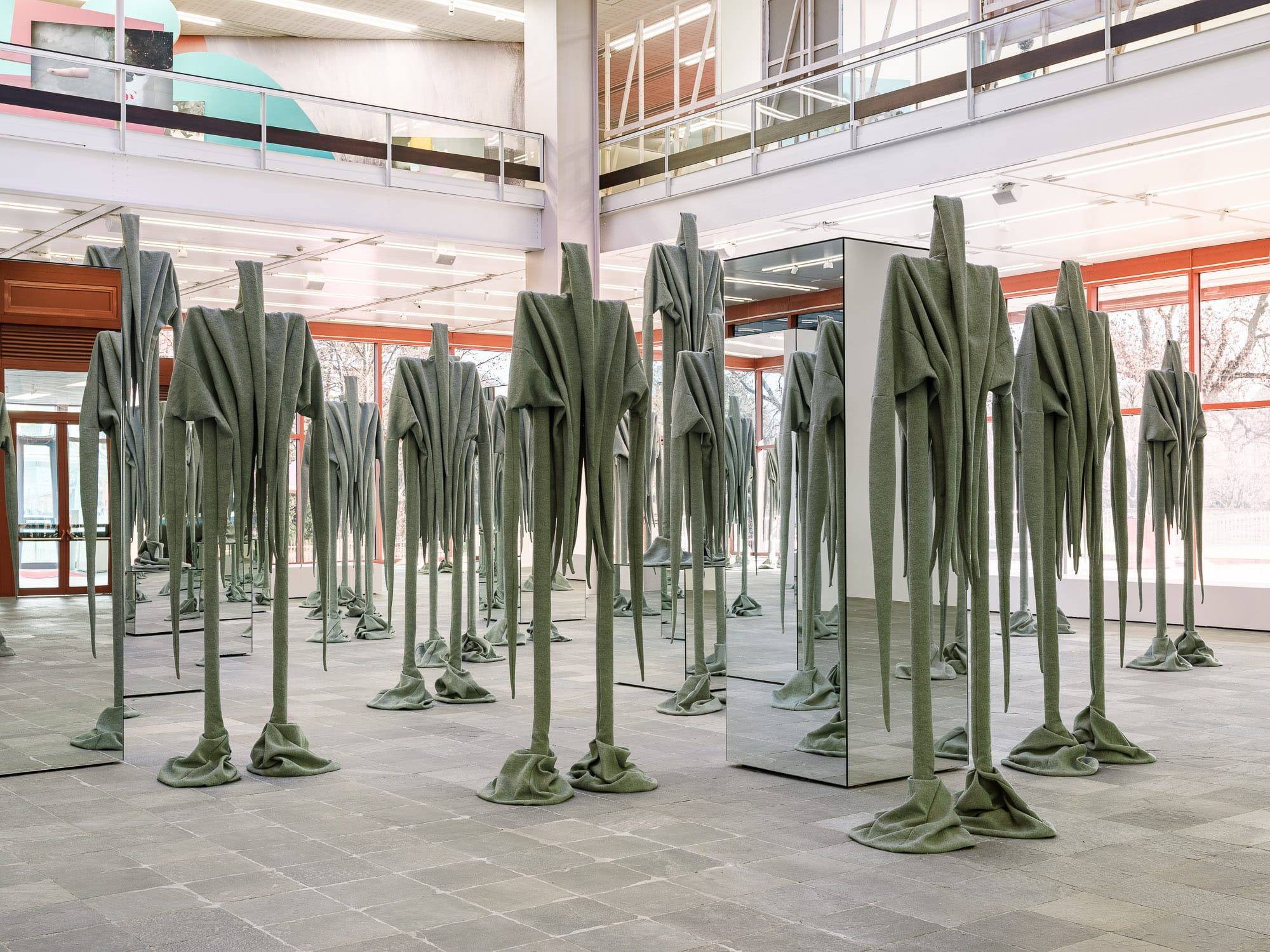
Fifty-five larger-than-life figures, ghostly and hybrid, fill the central hall of Belvedere 21 in Vienna for Skin to Skin, the first Austrian museum show by Norwegian-Congolese artist Sandra Mujinga. The figures draw on animal survival strategies such as camouflage and nocturnality, as well as ideas from Afrofuturism and science fiction. Mirrored objects and an electronic soundtrack amplify the sense of multiplication, while the work as a whole probes how repetition and abstraction allow bodies to elude visibility and resist surveillance. The exhibition runs until 31 May 2026.
Honoré Daumier: Mirror of Society
Until 25 May 2026
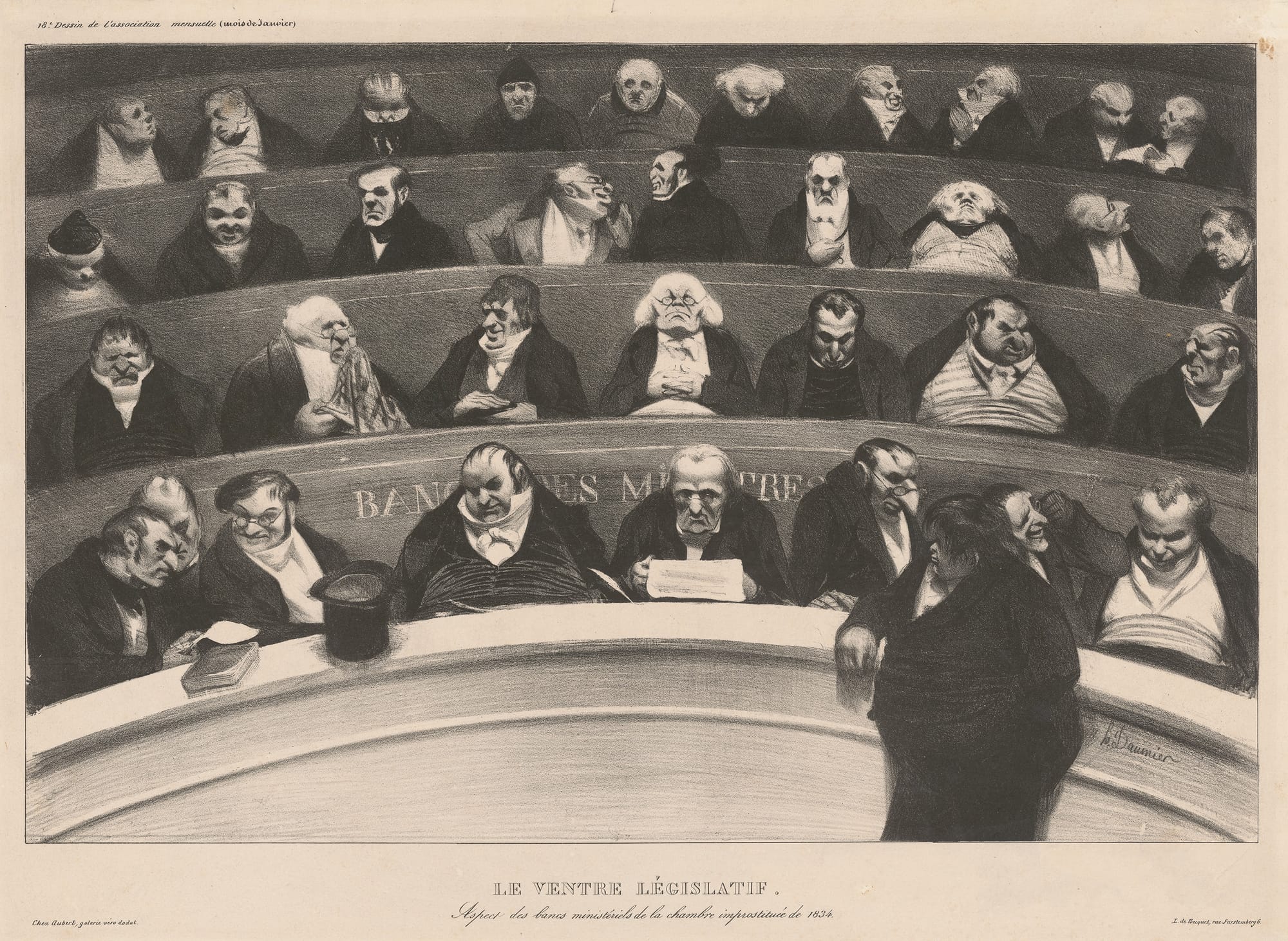
Honoré Daumier spent much of the 19th century skewering France’s ruling classes with a lithographer’s pen sharp enough to land him in prison, and the Albertina in Vienna is now making the case that little has changed since. Honoré Daumier: Mirror of Society brings together nearly 200 works, including lithographs, drawings, paintings, and sculptures, drawn largely from Frankfurt’s Städel Museum. It is the first exhibition of this scale dedicated to the artist in 90 years, and the result is a portrait of a society that looks uncomfortably familiar.
Tobias Pils: Shh
Until 17 May 2026
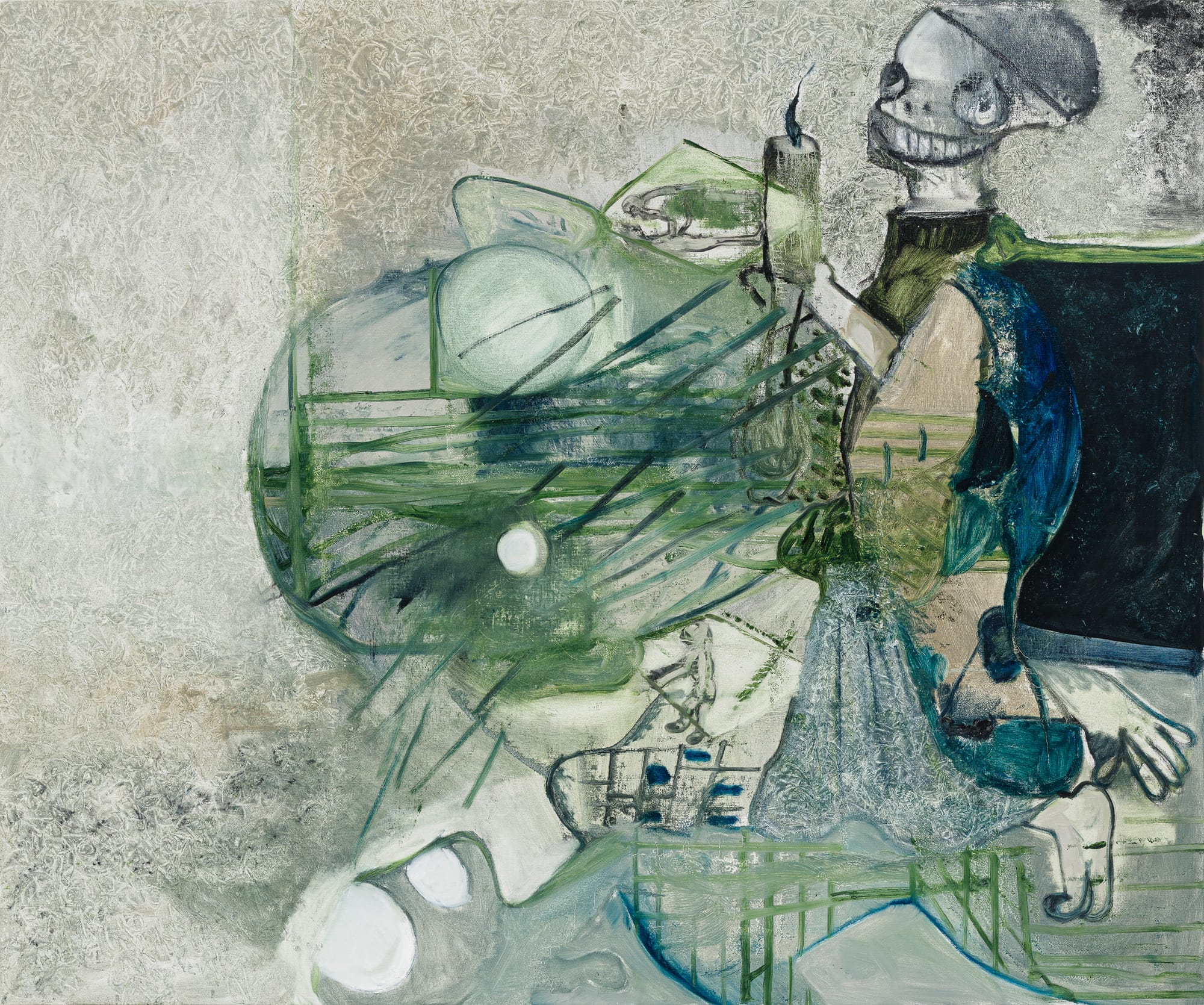
Vienna-based painter Tobias Pils works with a heavily reduced colour palette, and Shh at mumok gives his quietly insistent pictures the space they deserve. Paintings and drawings move between abstraction and representation without fully committing to either, building associative worlds where one mark seems to generate the next. The exhibition treats birth, death, and transformation not as fixed subjects but as recurring states of flux, suggesting that for Pils, painting is less a matter of depicting things than of thinking through them.
The World of Tomorrow Will Have Been Another Present
Until 17 May 2026
Five contemporary artists — Nikita Kadan, Barbara Kapusta, Frida Orupabo, Lisl Ponger, and Anita Witek — were each invited to select works from mumok’s collection of classical modernism and build a large-scale installation around them. The result is five exhibitions operating within one, each probing how art from the early twentieth century speaks to questions of memory, the body, power, and representation that remain very much alive today. History, in this show, is not a backdrop but an active and contested presence.
Never Final! The Evolving Museum
Until 3 May 2026
mumok turns the lens on itself with this exhibition examining the museum’s transformation under director Dieter Ronte between 1979 and 1989. It was a decade that reshaped the institution’s collection through strategic loans from Peter and Irene Ludwig, the founding of the Austrian Ludwig Foundation, and acquisitions that brought Pop Art and Photorealism into the holdings. The show uses an open, participatory format with interactive furniture and dialogue spaces, framing the museum not as a fixed institution but as a place that is always, in the words of former science minister Hertha Firnberg, “never final.”
Ndidi Dike: Rare Earth Rare Justice
Until 31 May 2026
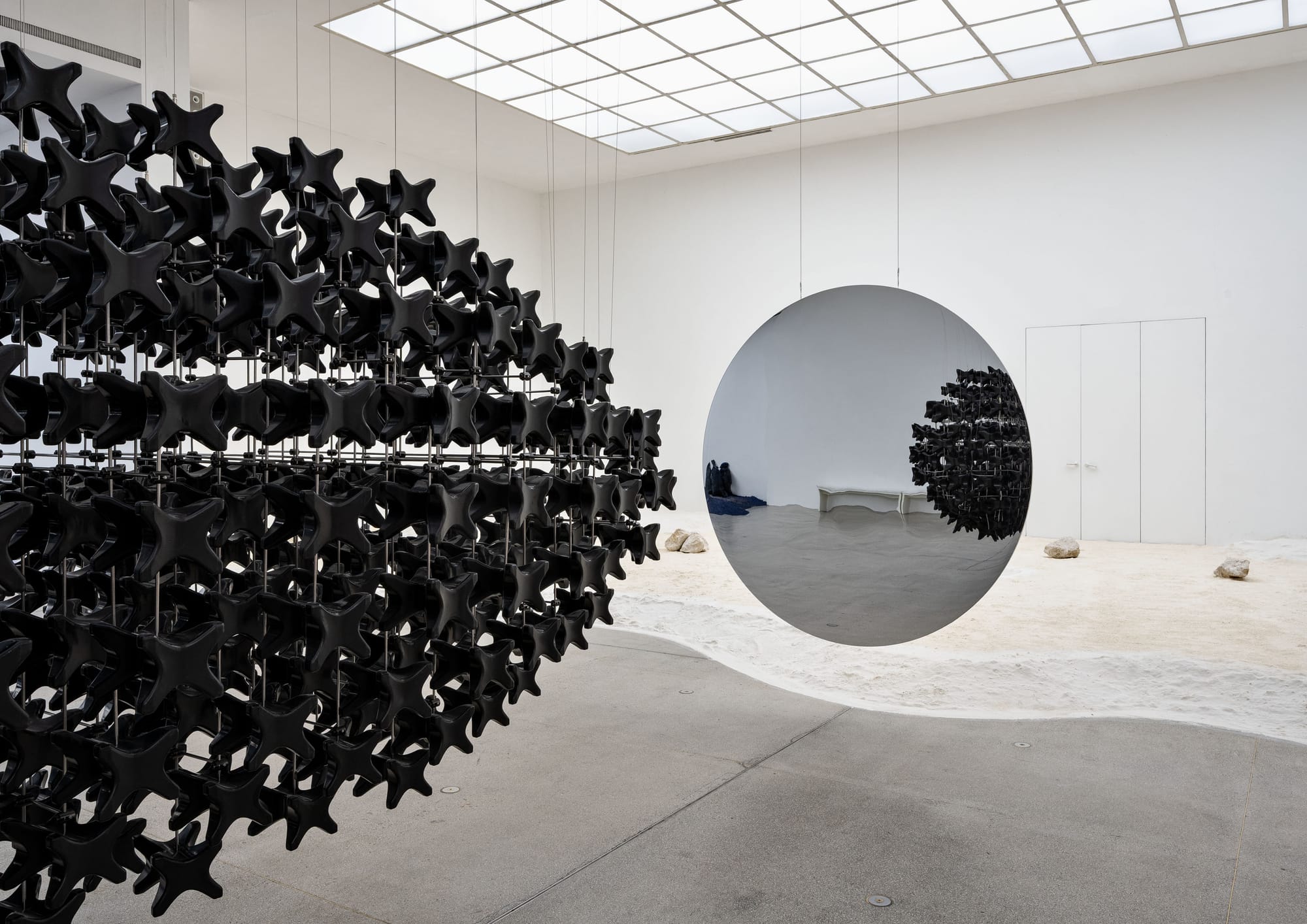
Around 900 autopsy neck braces, arranged in the shape of a bullet and suspended before a circular mirror, form the centrepiece of British-Nigerian artist Ndidi Dike's first major institutional show in Austria, at the Secession in Vienna. The installation connects the cobalt mining industry in the Democratic Republic of Congo to longer histories of racial violence and colonial extraction. Colour, sound, and material carry the political argument throughout — artificial landscapes in white, red, and blue spread across the floor, while an invisible loop of money-counting machines fills the room with a cold, unrelenting pulse.
Marianna Simnett: Circus
Until 31 May 2026
Light, sound, and sculpture combine in Marianna Simnett’s exhibition at the Secession, where the works draw on the artist’s Yugoslav heritage, her grandfather’s survival of the Holocaust, and female figures from Balkan folklore. A glowing neon figure, a spinning illuminated skirt, and pulsing LED panels each use physical extremity as their subject matter. Fainting, uncontrollable laughter, and bodily exposure become tools for examining who gets to control the body and who is controlled by it. Pleasure and dread are kept in close, uncomfortable proximity throughout.
Reba Maybury: I Come in Peace
Until 31 May 2026
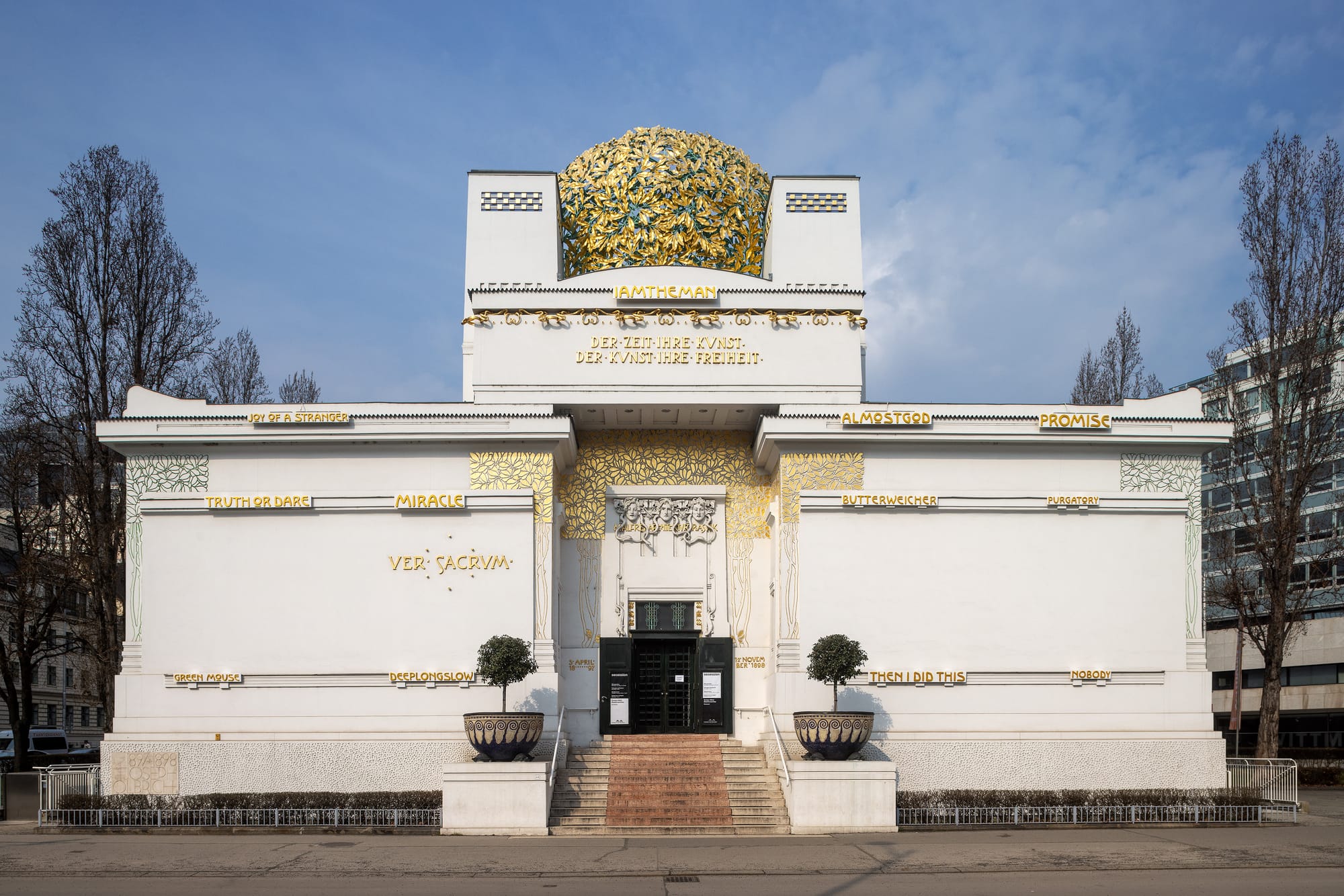
Reba Maybury is an artist, writer, and political dominatrix, and her show at the Secession puts all three roles to work simultaneously. Twelve usernames collected from websites where men review encounters with sex workers in Vienna are inscribed on the building’s façade in the same gold Art Nouveau lettering that already decorates it. Their number deliberately mirrors that of the institution’s twelve founding fathers. Inside, a glass ceiling bears lipstick marks left by one of Maybury’s submissives, paint-by-numbers reproductions of Klimt’s Beethoven Frieze fill a scale architectural model, and piles of clothes shed by other submissives cover the gallery floor.
Helmut Lang. Séance de Travail 1986–2005
Until 3 May 2026
Drawn from the MAK’s own Helmut Lang Archive, the largest and only official public archive of his work, this exhibition at the Museum of Applied Arts in Vienna is the first comprehensive survey of the Austrian designer's output across two decades. It deliberately sidesteps the conventions of a fashion show, organising the material around thematic chapters including identity, space, media presence, artist collaborations, and backstage process. The aim is to make the case that Lang's work was as much a cultural project as a commercial one, and that he consistently arrived early to ideas the rest of the industry would catch up with years later.
The World Without Us
Until 10 May 2026
Lentos Kunstmuseum in Linz gathers works by more than twenty artists around two ideas borrowed from philosophy and speculative fiction: “deep time,” in which human history shrinks to a barely visible sliver of geological duration, and “cosmic horror,” the vertiginous feeling of encountering an indifferent universe that operates entirely outside human categories of meaning. The show draws on artists including Katharina Sieverding, Alfred Kubin, H.R. Giger, and Albrecht Dürer to build a picture of existence as neither empty nor alive, but strangely, unsettlingly in between.
🇧🇪 Exhibitions in Belgium
Marie Zolamian: Confabulations
Until 10 May 2026
Paintings, assemblages, drawings, ceramics, video, and site-specific murals fill WIELS in Brussels for this survey of Belgo-Lebanese artist Marie Zolamian’s two-decade career. Her canvases weave together landscapes, figures, and ornamental forms drawn from sources ranging from medieval miniatures and prehistoric paintings to ex-votos, building visual worlds that sit between observation and imagination. A newly commissioned sound installation brings together fragments of multiple voices, languages, and stories into what the artist describes as a polyphonic record of her “chosen exiles,” treating dissonance itself as a form of togetherness.
Biblioteca Nacional
Until 24 May 2026
Over six years, Spanish artist Elsa Paricio placed glass cylinders filled with India ink and water across landscapes, abandoned factories, and deserted buildings throughout Spain, leaving them to slowly evaporate in contact with light and air. The resulting objects, their surfaces marked with lines of ink and dust, form the centrepiece of this exhibition at the Boghossian Foundation's Villa Empain in Brussels, presented as part of Europalia España. Together they compose what Paricio calls a fragmented national library, where personal memory and collective identity are held in the same quiet, unhurried space.
ARTEFICTION. Imagining the Collection
Until 31 May 2026
The Art & History Museum in Brussels invited second- and third-year Illustration students from LUCA School of Arts to spend several days drawing freely from the collections, then develop their observations into personal series of images. The results, now on show in the museum's Mercator Aisle, range from precise observational studies to screen prints and poster designs, including works that pair collection objects with creatures from Jorge Luis Borges’ The Book of Imaginary Beings. It is a refreshingly unpretentious exhibition, and a reminder of what happens when a museum simply hands its objects over to young imaginations.
The Fall of Alba’s Citadel. Image and Memory in Turbulent Times
Until 31 May 2026
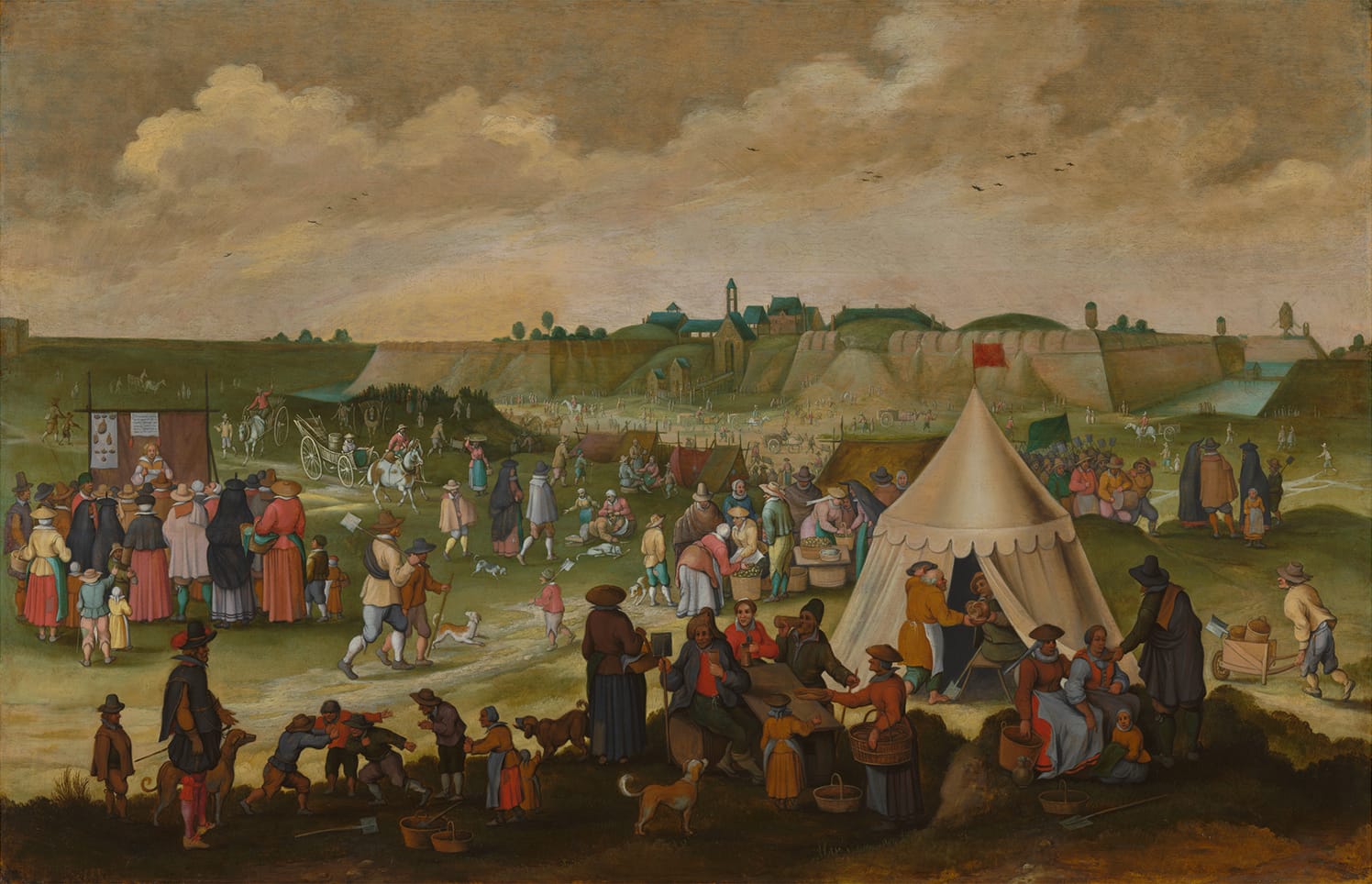
A recently restored painting from the KMSKA’s own collection, made around 1620 in the circle of Sebastiaen Vrancx, forms the starting point for this focused exhibition at the Royal Museum of Fine Arts in Antwerp. The work depicts the partial demolition of the city’s Spanish-built citadel in 1577, an event that carried very different meanings depending on who was telling the story. Research carried out during restoration revealed that the painting was reworked from an earlier, celebratory composition: fighting children and a deceitful quack were added later, quietly redirecting its message from triumph to mockery.
Stef Van Looveren: COSMIC BODY — First Incision
Until 31 May 2026
M HKA in Antwerp hosts this site-specific installation by Belgian artist Stef Van Looveren, who treats the museum space as a hybrid of temple, body, and alchemical laboratory. Organ-like sculptures, bell forms, and silvered surfaces produce shifting reflections as light moves through the room, while sound built on repetition and the artist's own voice functions as a kind of mantra. The work draws on alchemical ideas of dissolution and transformation as metaphors for fluid identity, queerness, and the refusal of fixed categories. The installation is kept intentionally in a state of flux throughout its run.
Nueva Visión. Print as Artistic Practice, 1940–1976
Until 24 May 2026
Curated by designer Jelle Jespers, this archival presentation at M HKA traces how graphic design and print culture became a space for artistic and political experimentation in Argentina between 1940 and 1976. Catalogues, magazines, publications, and posters show how typography evolved from a craft into a carrier of new ideas. What gives the show an unexpected local dimension is Antwerp's recurring presence in the story: the abstract forms of Georges Vantongerloo fed into Argentine modernism, while figures such as poet Paul De Vree and artist-publisher Edgardo Antonio Vigo exchanged ideas across continents during the same period.
Carla Arocha & Stéphane Schraenen — 20 Years and More: Works from the Collection
Until 24 May 2026
Twenty years of collaboration between Venezuelan-born Carla Arocha and Antwerp-based Stéphane Schraenen is the occasion for this collection presentation at M HKA. The show opens with earlier individual works and shared experiments before moving into the museum’s circular gallery, where the new commission Landscape (Antwerp) (2026) fills the space with reflective structures that capture and redistribute light, colour, and movement. Across their practice, the duo consistently returns to the same set of questions: who is looking, what shapes the act of seeing, and how much of what we perceive is the space itself rather than the work within it.
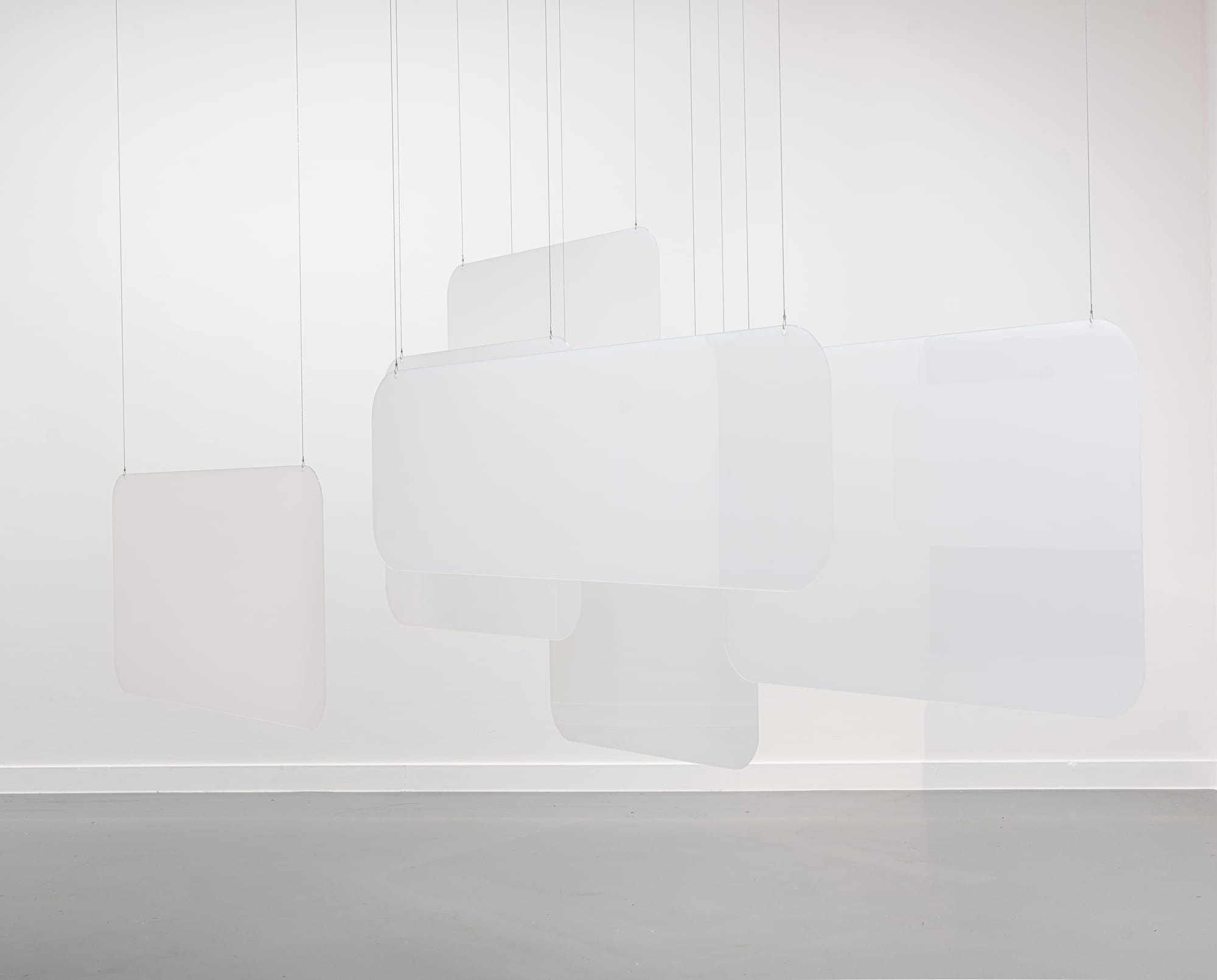
Tenderly There
Until 10 May 2026
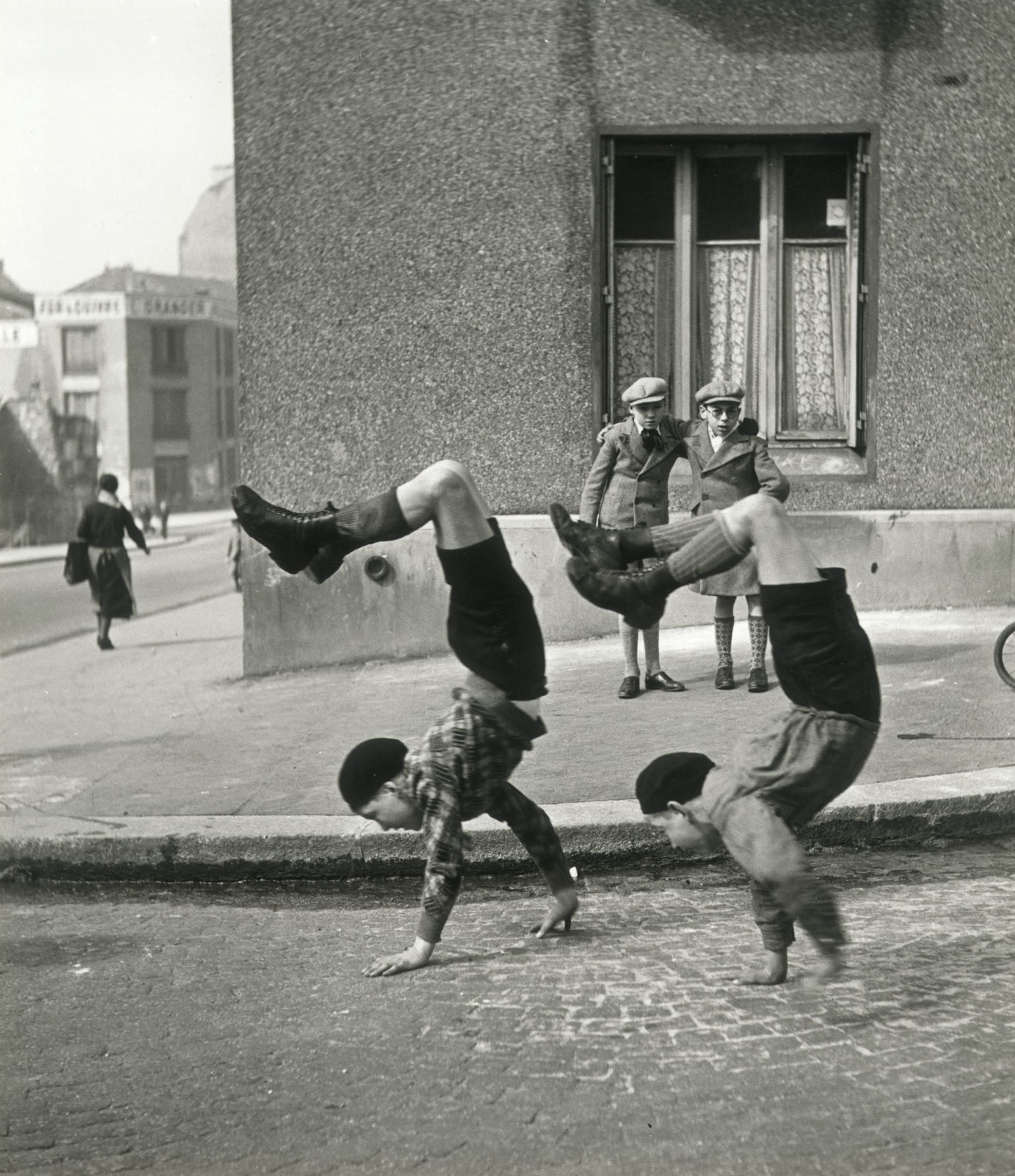
Tashattot is a Brussels-based collective that supports artists and cultural workers from the SWANA region who have been displaced or are building lives in Europe, and FOMU in Antwerp has handed the collective curatorial control for this exhibition. Archival photographs from the Arab Image Foundation sit alongside contemporary works by Jeanne et Moreau, Kader Attia, and Mohamad Abdouni, together exploring queer intimacy as it is lived and remembered across South-West Asia and North Africa. The dialogue between past and present allows for a quiet, unhurried journey through daily life and private moments.
Families
Until 10 May 2026
More than 200 photographs from the FOMU collection in Antwerp are brought together around a single, deceptively simple question: who do you consider to be your family? The works range from historical photo albums and anonymous portraits to contemporary series by artists including Diane Arbus, Bieke Depoorter, Sunil Gupta, and Mous Lamrabat, with each finding its own way to complicate or gently subvert the conventions of the family picture. Author Niña Weijers has contributed ten personal texts for the occasion, and visual artist Ugo Woatzi has created a new series of portraits for the museum’s 1905 Kaiserpanorama.
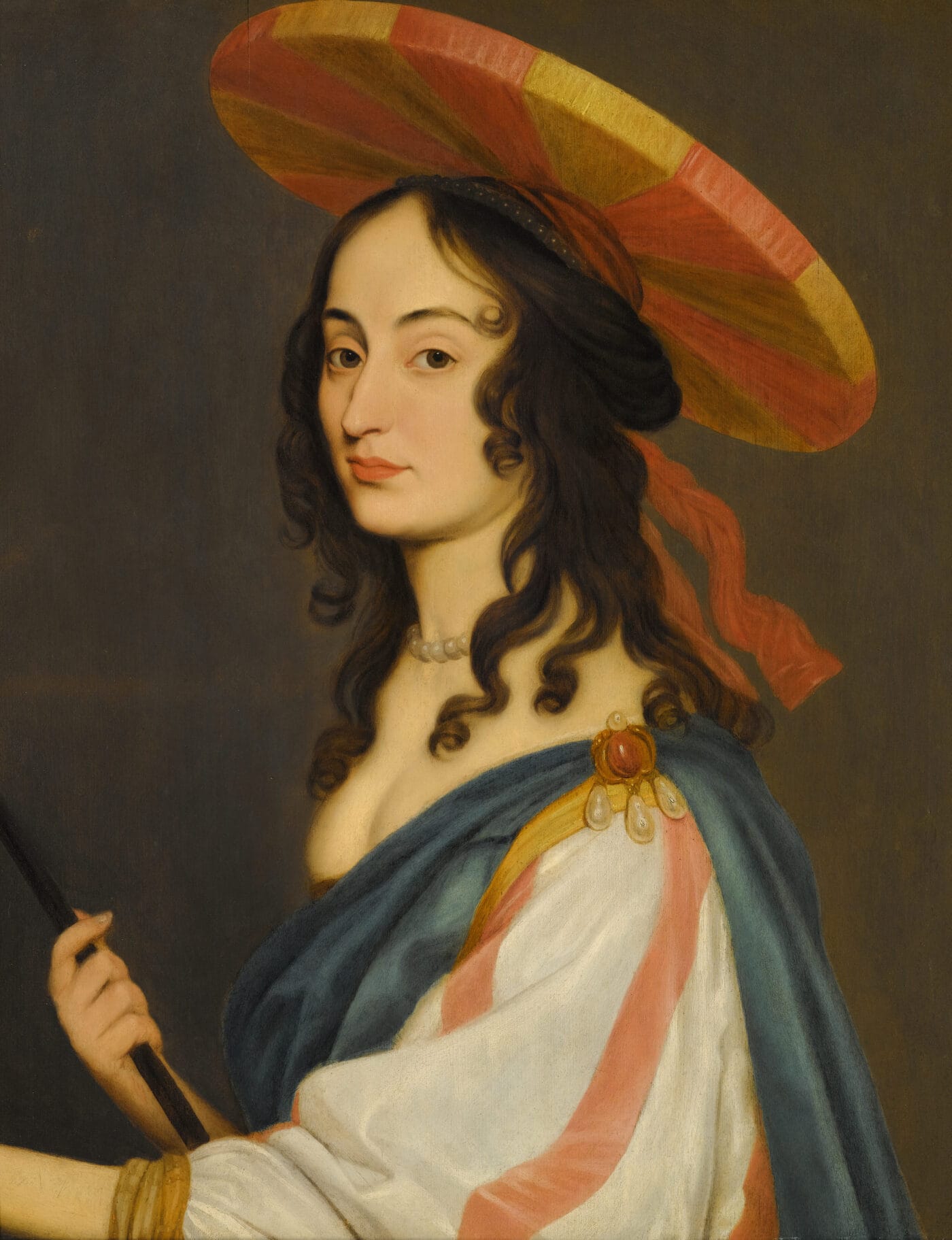
Unforgettable. Women Artists from Antwerp to Amsterdam, 1600–1750
Until 31 May 2026
Women were active across virtually every artistic discipline in the Low Countries during the long 17th century, yet art history has largely written them out of the story. MSK Ghent sets out to correct that with works by more than 40 artists, including Judith Leyster, Clara Peeters, Rachel Ruysch, and Maria Sibylla Merian, covering painting, printmaking, sculpture, textiles, and paper cutting. Developed in collaboration with the National Museum of Women in the Arts in Washington D.C., the exhibition also asks why artists so celebrated in their own time became so poorly remembered in ours.
10 Years of S.M.A.K. Moves
Until 3 May 2026
S.M.A.K. Moves is the Ghent museum’s participatory programme, and its tenth anniversary is marked with an exhibition that is less a retrospective than a continuation of the work itself. Community partners rotate through two dedicated rooms, presenting projects and using the space as a workplace. Elsewhere, a selection of collection works chosen by Cultureghem’s volunteer “Dreamteam” shares space with a mobile pavilion by artist Nico Dockx and flags from the 2019 Road of Change project, which visitors are invited to add to. The result is an exhibition that keeps changing shape throughout its run.
🇩🇰 Exhibitions in Denmark
Alia Farid — A Sounding of the Earth
Until 31 May 2026
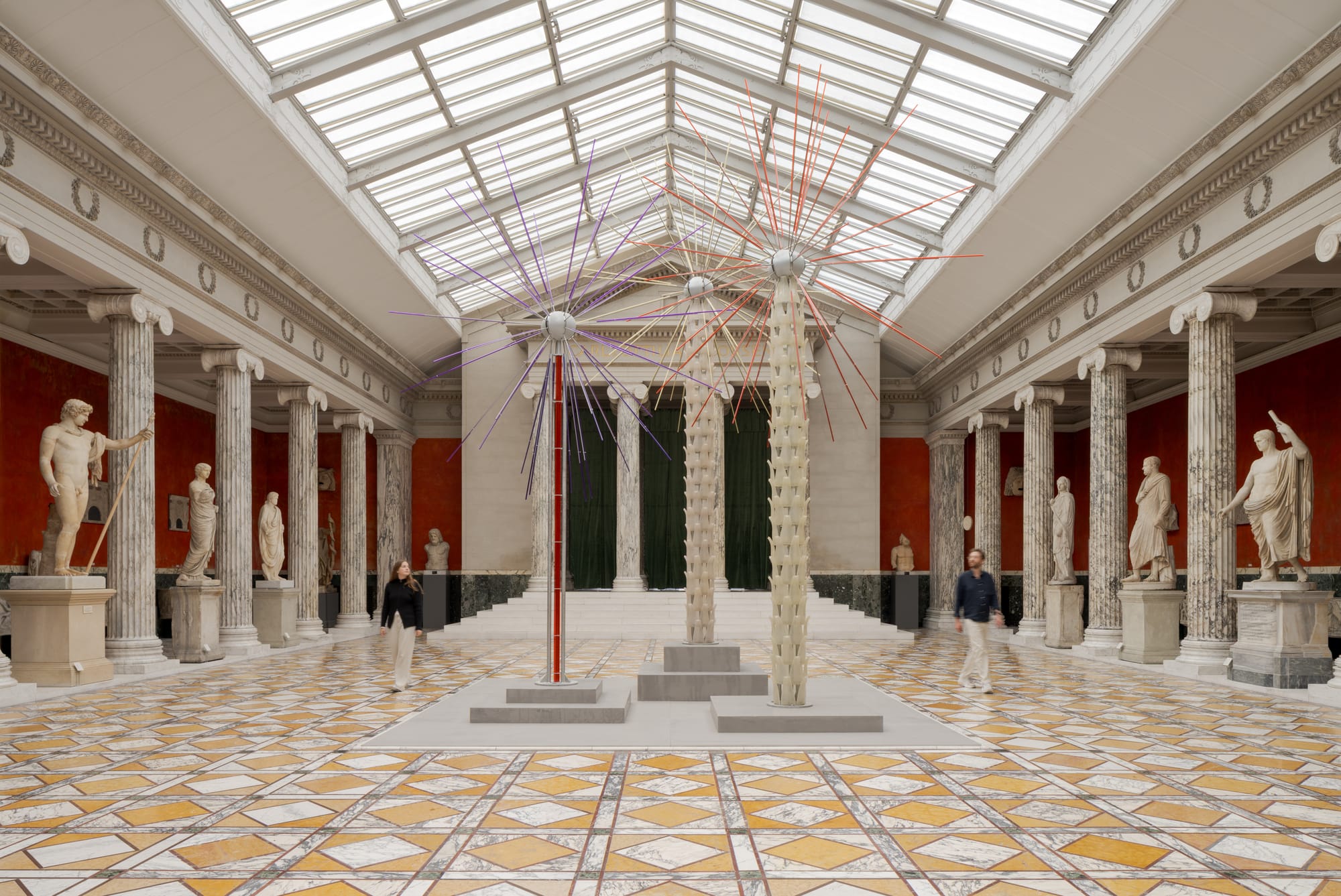
The Glyptotek in Copenhagen presents large-scale sculptures and installations by Kuwaiti-Puerto Rican artist Alia Farid, whose work traces the entangled histories of the Persian Gulf, from ancient civilisations to the modern oil industry. Blue faience with a 6,000-year history sits alongside polyester resin, a by-product of petroleum, the contrast between them reflecting a landscape where archaeology and extraction share the same terrain. Placed among the Glyptotek's own ancient collections, the works raise questions about the forces that determine how objects, species, and bodies move across borders and through time.
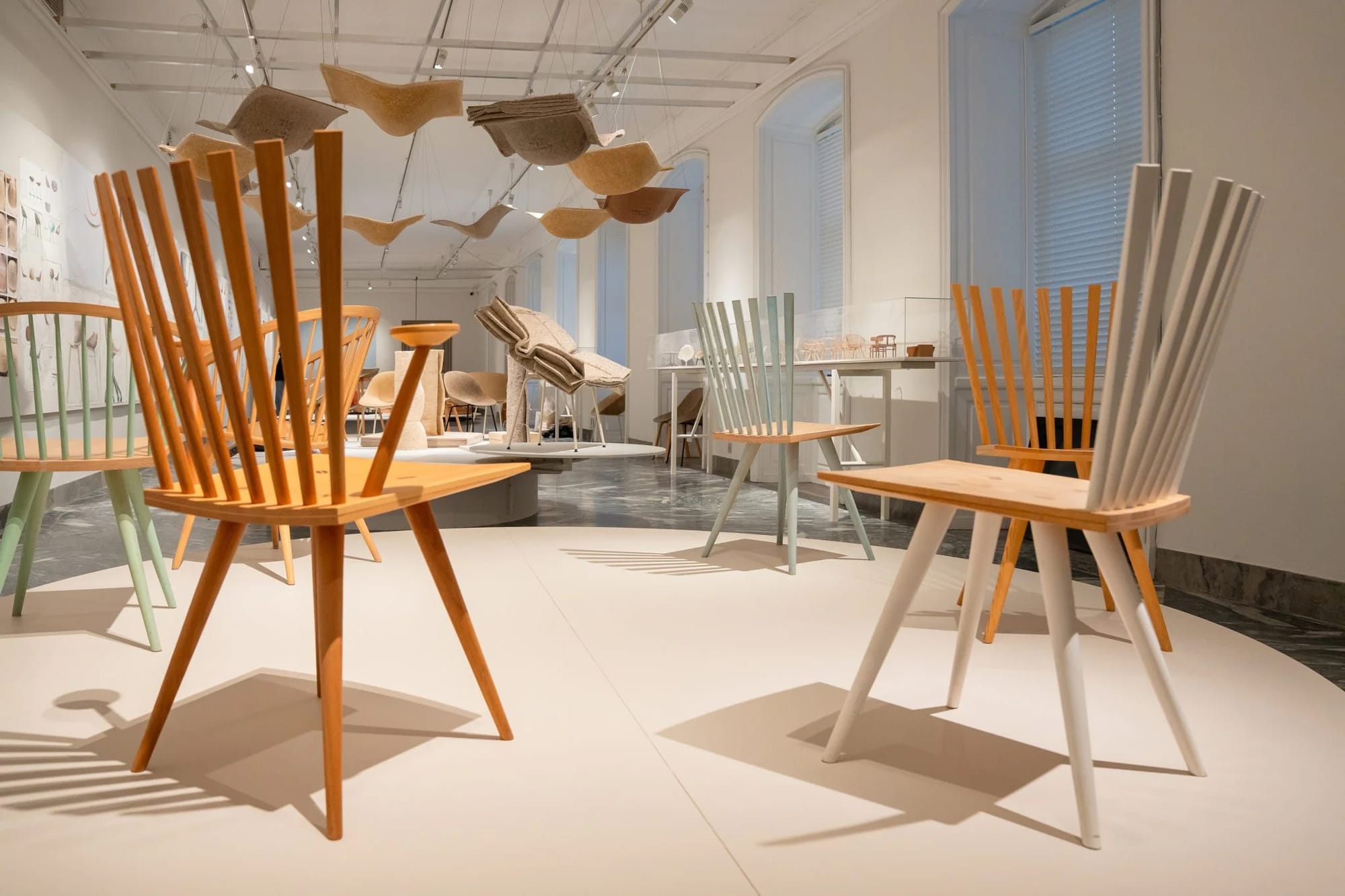
Foersom & Hiort-Lorenzen
Until 17 May 2026
Johannes Foersom and Peter Hiort-Lorenzen trained as a cabinetmaker and a ship’s carpenter respectively before becoming furniture architects, and their work has shaped Nordic design for over half a century. Designmuseum Danmark opens their studio to visitors in this third chapter of its Laboratorium series, presenting full-scale working drawings, scale models, prototypes, and material experiments alongside finished pieces. The show also traces their long-running research into sustainable production, from early experiments with cellulose shells to current work with hemp fibre. The exhibition coincides with the duo receiving the Danish Design Council Award 2026.
Belongings: Affection as a Design Strategy
Until 31 May 2026
The starting premise at Designmuseum Danmark in Copenhagen is straightforward: we take better care of things we are emotionally attached to. Developed in collaboration with the Danish Design Center and artist Cecilie Waagner Falkenstrøm, the exhibition unfolds as a sensory installation inviting visitors to bring a personal object and enter into conversation with it. Using AI technology, the object is given a voice and a character, so that the encounter takes shape as something close to therapy. A growing digital archive collects the personal stories that emerge, building a collective memory of relationships between people and things.
Charlottenborg Spring Exhibition 2026
Until 10 May 2026
Running for the 169th time, the Charlottenborg Spring Exhibition at Kunsthal Charlottenborg in Copenhagen remains one of the few genuinely open, juried platforms in Scandinavia where emerging and established artists can submit work across visual art, crafts, architecture, and design. This year's jury selected 27 artists and groups, among them Ruby Mariama, Mads Hilbert, Natural Material Studio, and the Association of Emblematic Art. The result, as always, is a show that resists a single curatorial logic and offers a useful, unpredictable snapshot of where Danish and international art currently stands.
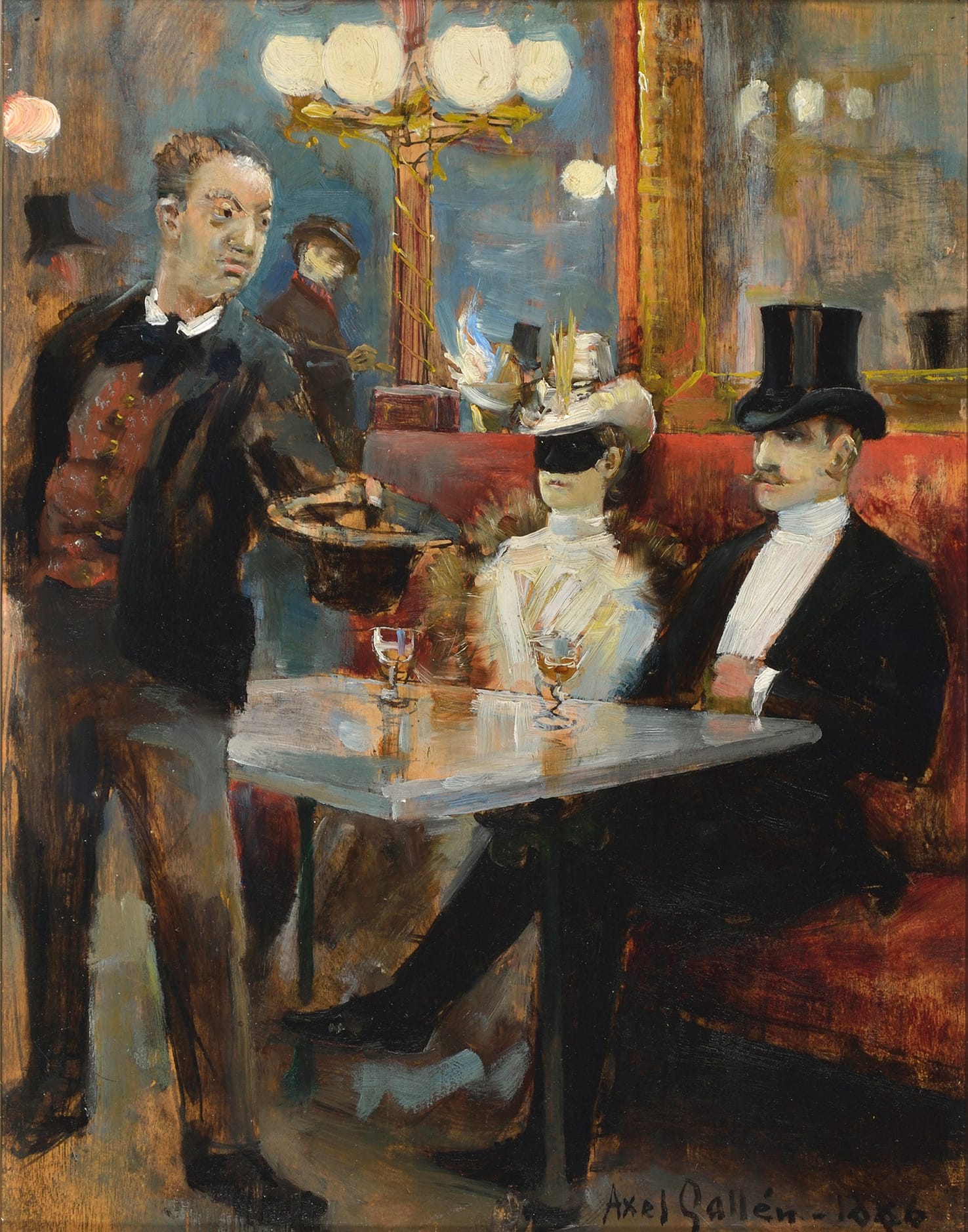
Café Society: Art and Sociability in Belle Époque Paris
Until 31 May 2026
Ordrupgaard north of Copenhagen explores the Parisian café as a social and artistic institution, tracing how venues once frequented by Van Gogh, Picasso, Vuillard, and the cubists also drew a steady stream of Scandinavian visitors. Edvard Munch, Anders Zorn, J. F. Willumsen, and others came to depict modern city life, replacing the historical and mythological subjects that had dominated painting for centuries with the immediacy of café tables, newspapers, and conversation. Organised in collaboration with two American institutions, the exhibition treats the café not merely as backdrop but as an active generator of artistic ideas and alliances.
Isaac Julien — Once Again... (Statues Never Die)
Until 31 May 2026
A half-hour film installation presented across two back-projected screens surrounded by panels of mirror, Once Again... (Statues Never Die) (2022) is both a recent acquisition by ARoS in Aarhus and its Scandinavian premiere. British artist Isaac Julien reconstructs the relationship between Harlem Renaissance philosopher Alain Locke and art collector Albert C. Barnes, using their exchange to explore how African material culture has been acquired, displayed, and misrepresented by Western institutions. The work frames itself as a form of what Julien calls “poetic restitution,” entering directly into contemporary debates around colonial looting and the return of cultural objects.
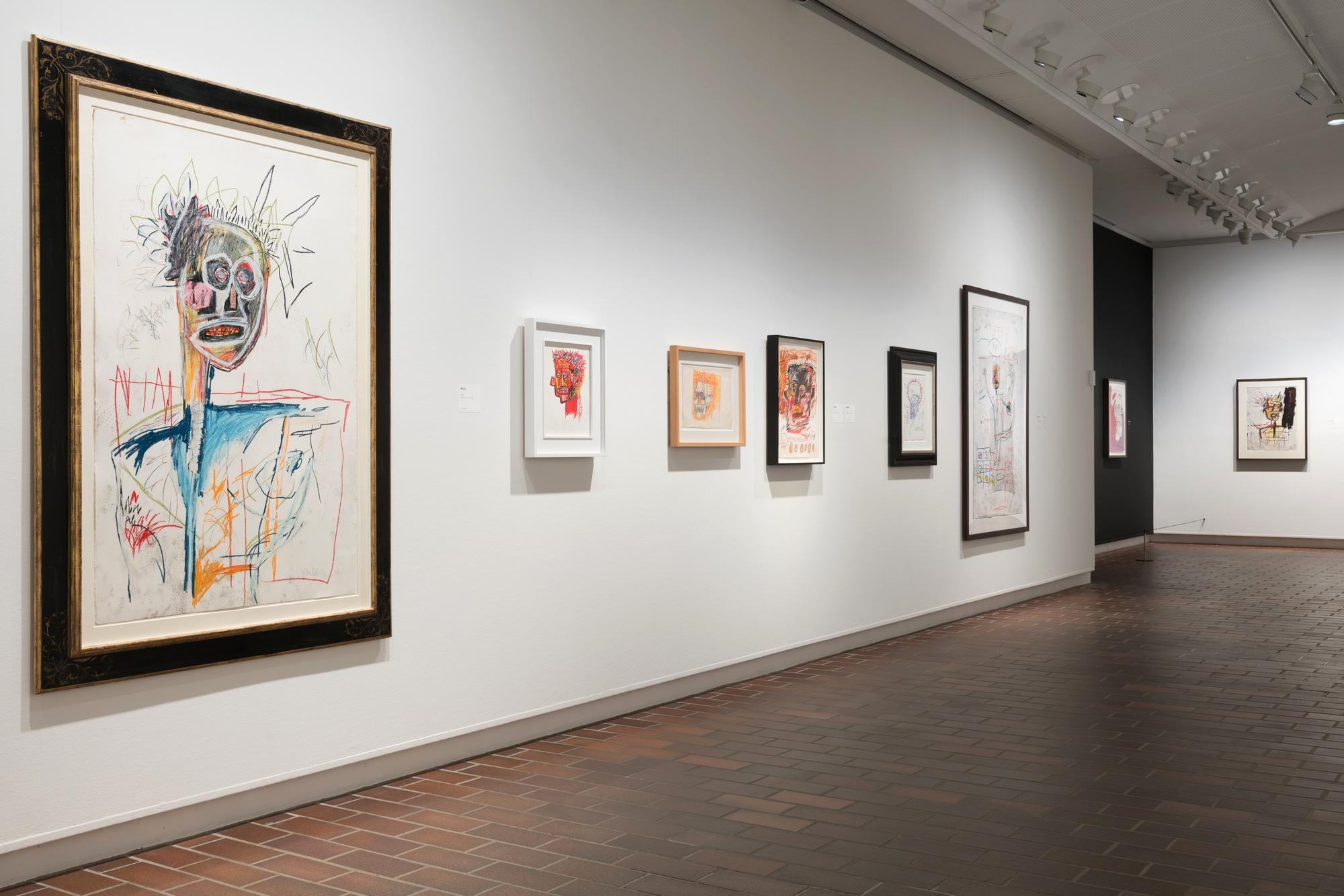
Basquiat — Headstrong
Until 17 May 2026
Louisiana Museum of Modern Art north of Copenhagen presents the first solo showing of Jean-Michel Basquiat’s work at a Scandinavian museum, with a focused presentation of a group of drawings that were largely unknown during his lifetime. The works, mostly oilstick on paper from 1981 to 1983, revolve exclusively around the human head and are notably free of the symbols and text that characterise so much of his output. Basquiat kept them to himself, and their posthumous emergence gives the exhibition an intimate quality, as though what is on show is less a public statement than a private conversation the artist was having with himself.
Memoryscapes
Until 17 May 2026
The second instalment of Louisiana’s architecture series Architecture Connecting brings together two studios with closely related approaches to the past. Chinese architect Xu Tiantian of DnA_Design and Architecture works through what she calls “architectural acupuncture,” revitalising traditional rural buildings and production landscapes in China without wholesale renovation. Japanese architect Tsuyoshi Tane of ATTA follows his self-described “archaeology of the future,” excavating the memories embedded in specific places and materials to generate new spatial possibilities. Both treat history not as a constraint but as the primary source of creative energy.
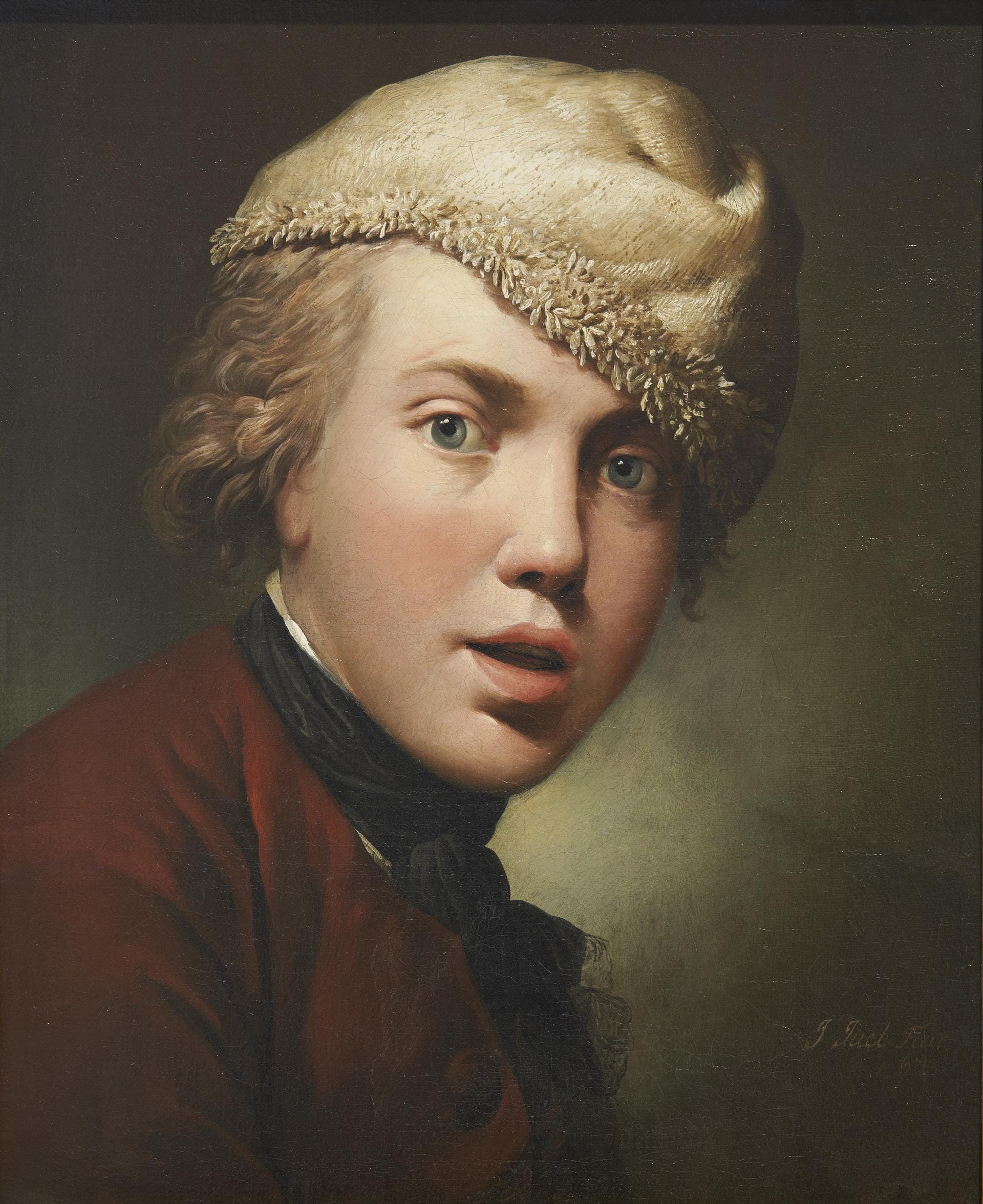
Jens Juel. Under the Skin
Until 25 May 2026
The last stop of a touring exhibition devoted to Jens Juel, the most sought-after portrait painter in 18th-century Denmark, is Ribe Kunstmuseum, where around 75 works on loan from major Danish and international collections are gathered. Juel painted the country’s elite with a gift for making his sitters appear dignified and fully human at once, and the show uses that quality as a way into broader questions. Contemporary themes including freedom of expression, gender equality, and the staging of the self are traced back to the Enlightenment world in which he worked, inviting a more searching look at who these people were and what they represented.
🇫🇷 Exhibitions in France
Northern Light: Scandinavian and Dutch Drawings from the Musée d’Orsay
Until 10 May 2026
Presented in the graphic arts cabinet of the Musée d’Orsay in Paris to mark the museum’s 40th anniversary, this focused display draws on the collection’s holdings of Scandinavian and Dutch drawings, bringing together well-known watercolours by Carl Larsson, Peder Severin Krøyer, and Anders Zorn alongside recent acquisitions that have filled significant gaps. Nordic symbolist landscapes, long absent from the collection, now sit next to intimate domestic scenes, while figures such as Axel Törneman and Karl Nordström make their first appearance in the museum’s graphic arts holdings.
Myra Albert Wiggins and her time. Around a recent donation of photographs
Until 3 May 2026
A photographer largely unknown outside institutions in the northwestern United States, Myra Albert Wiggins was nonetheless a member of Alfred Stieglitz’s Photo-Secession group and one of the leading women practitioners of pictorialism at the turn of the 20th century. This focused display at the Musée d’Orsay in Paris marks the public debut of ten prints donated to the museum in 2023, showing her work in portraiture, landscape, still life, and Dutch-master-style genre scenes alongside works by fellow pictorialists. The acquisition brings into the French national collections an artist whose geographical isolation in Washington State kept her at the edges of art history for over a century.
A Total Art: Drawings from the Vienna Secession
Until 17 May 2026
Built around a 2023 acquisition of a drawing by Josef Hoffmann, this focused display at the Musée d’Orsay in Paris examines the idea of “total art” that animated architects of the Vienna Secession. The show draws on the museum's holdings of over forty drawings by pupils of Otto Wagner, including Emil Hoppe, Marcel Kammerer, and Otto Schönthal, acquired in 1997, and places the newly acquired Hoffmann work among them for the first time. Together the drawings reveal how Viennese Modernism treated architecture not as a discipline separate from the decorative arts but as an overarching unity of form, ornament, and function.
Pierre Huyghe: Camata
Until 22 May 2026
In the Rotunda of the Bourse de Commerce in Paris, Pierre Huyghe’s film Camata (2024) unfolds around a human skeleton discovered in Chile’s Atacama Desert, the driest place on earth and also the site of some of the world's most powerful astronomical instruments. Robotic arms powered by solar panels move slowly around the skeleton in a repeating, self-directed choreography governed by machine-learning algorithms, assembling objects into shifting configurations that suggest funerary ritual and surgical autopsy at once. The work produces no fixed meaning and no conclusion, only an ongoing, strange transaction between the disappeared and the non-human.
Linda Sanchez: Les Bousillés
Until 17 May 2026
During a 2024 residency at the Saint-Louis crystal factory in Alsace, artist Linda Sanchez became absorbed by the rotational movement that runs through every stage of glassblowing. Working closely with the factory's artisans, she developed a collection of crystal spinning tops in various shapes, which are now set in motion within La Capsule at Centre Pompidou-Metz. The show is free to enter and unfolds as both an exhibition and an open invitation to think about circularity as a way of making and a way of seeing.
The Collection
Until 25 May 2026
The Musée Matisse in Nice presents a new chrono-thematic display of its permanent collection, one of the most comprehensive groupings of Matisse’s work anywhere in the world. Formed above all through the artist’s own generosity and that of his family, the holdings cover every medium he worked in, from paintings and drawings to sculptures, ceramics, cut-outs, and illustrated books. Situated steps from his former studio in the Hôtel Régina, the display also highlights recent acquisitions, including Nature morte à la statuette africaine (1907), and offers what the museum describes as the experience of visiting Matisse's studio rather than a clinical institution.
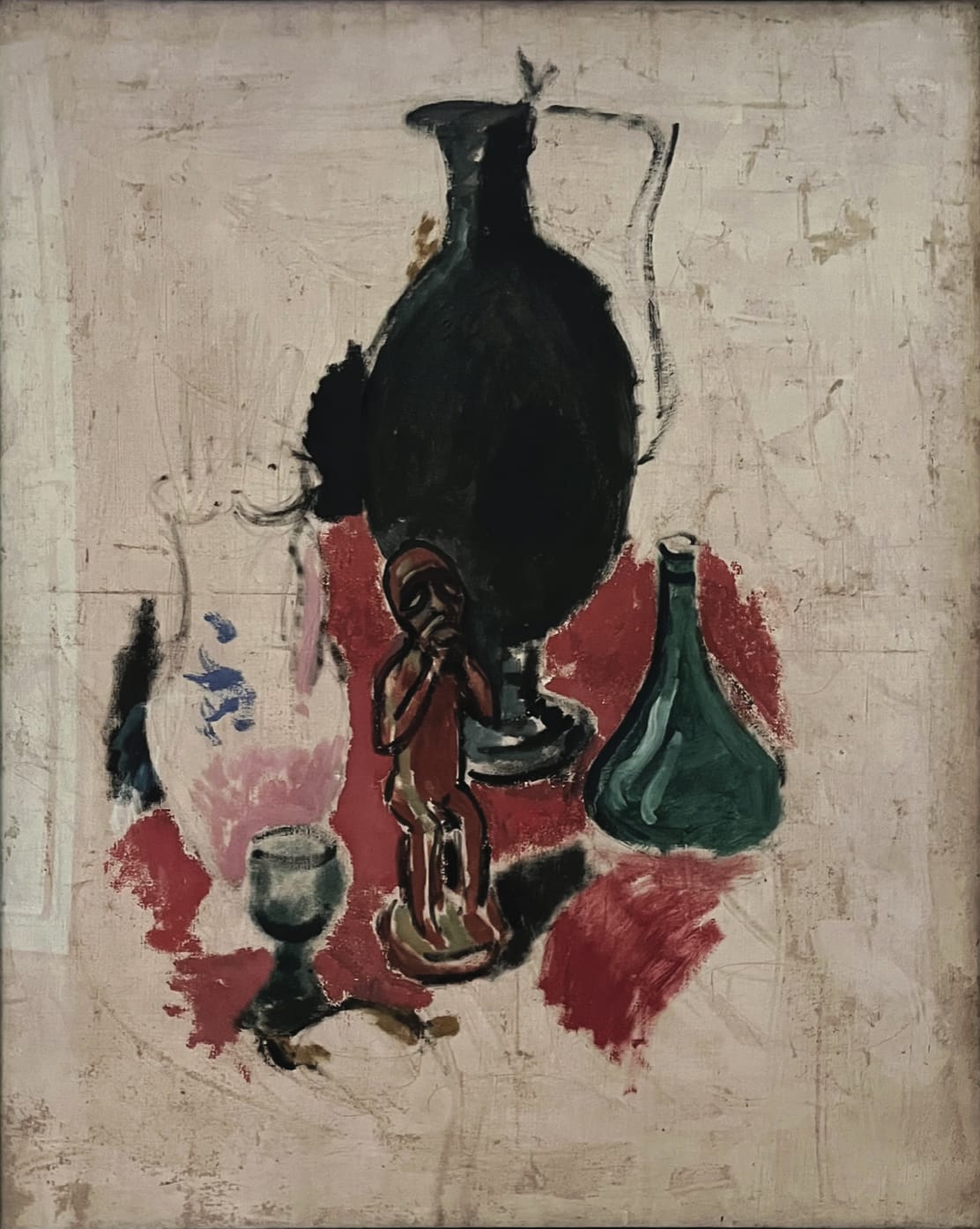
Chagall at work: An exceptional loan to the museum
First volume of the exhibition: until 25 May 2026
In 2022 and 2023, Chagall’s granddaughters Bella and Meret Meyer donated 141 works to the Centre Pompidou in Paris, and a selection from that gift is now on show at the Musée National Marc Chagall in Nice in two consecutive volumes. The first, running until 17 May 2026, presents sketches for the ceiling of the Opéra Garnier, costume and curtain designs for the 1945 ballet The Firebird, ceramics, sculptures, and paper-and-fabric collages. A second volume, with a new rotation of works, follows from 23 May.
Baya
Until 3 May 2026
Born Fatma Haddad in Algeria in 1931, Baya taught herself to draw in the earth before being encouraged to work in gouache, and her work was already being shown at Aimé Maeght's Paris gallery by the age of sixteen, with a catalogue text by André Breton. Fondation Maeght in Saint-Paul de Vence now presents her vivid, joyful world of birds, female figures, and dense vegetal forms in an exhibition that traces a career shaped by encounters with Picasso and the Surrealists but ultimately driven by its own freely invented logic. She remains one of the most distinctive voices in 20th-century Mediterranean and Algerian art.
🇩🇪 Exhibitions in Germany
Bosporus Beats: Views of Istanbul from 1500 to 1800
Until 31 May 2026
Drawings, prints, and books from the Kupferstichkabinett in Berlin form the core of this exhibition, which traces three centuries of European fascination with Istanbul and its inhabitants. Works by Pollaiuolo, Dürer, Rembrandt, and Liotard sit alongside rare costume books and the intimate city views of Antoine Ignace Melling, who lived in Istanbul for years and worked for the Ottoman court. The exhibition is organised around five themes: contact, curiosity, conflict, propaganda, and prejudice. Contemporary works by artists including Nevin Aladağ and Esra Gülmen respond to questions of stereotyping and identity that the historical material continues to raise.
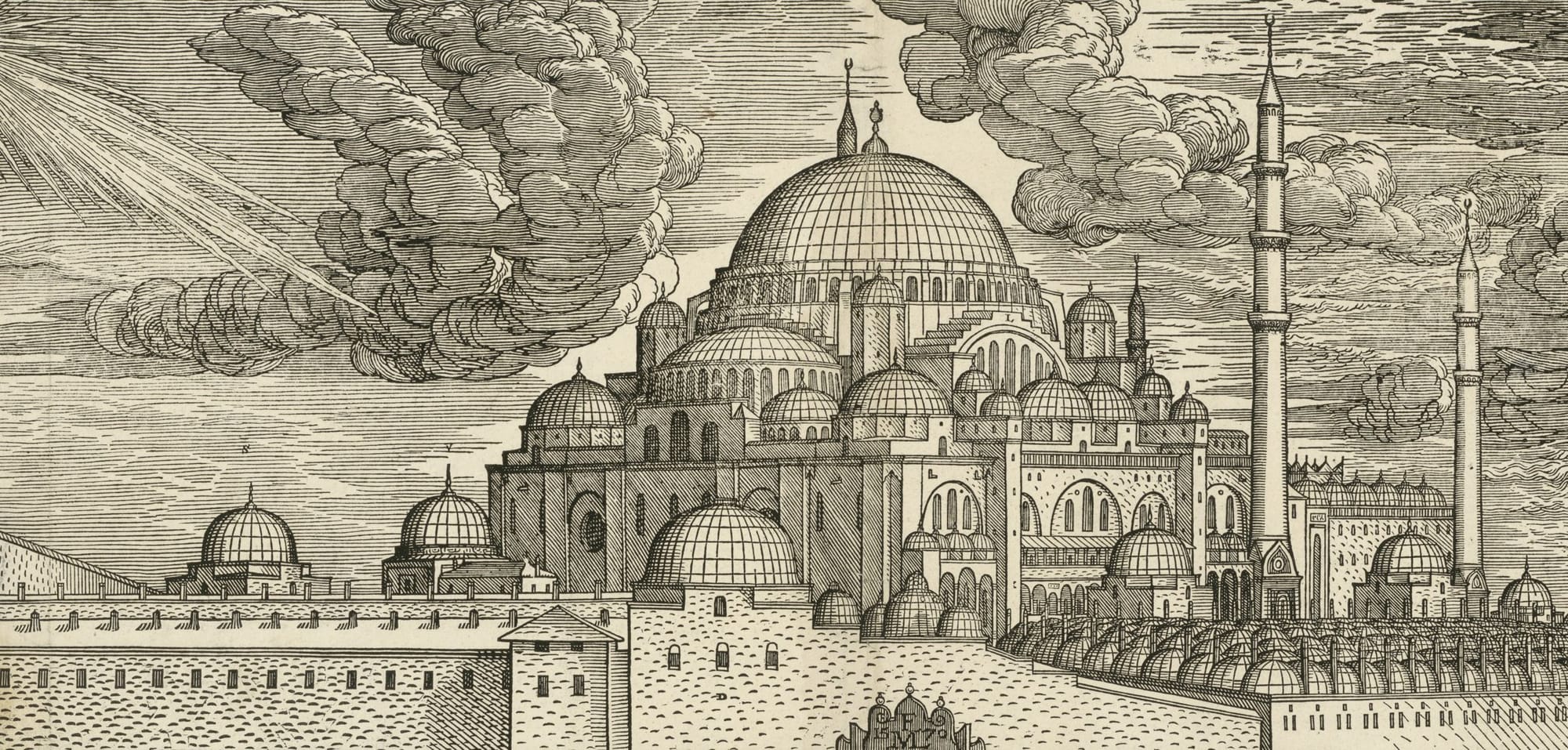
Gallery Looks. Fashion Staging at the Gemäldegalerie
Until 31 May 2026
The Gemäldegalerie in Berlin places Old Master paintings in direct dialogue with contemporary fashion design across three distinct sections. The first presents photographs and a film by Florian Azar from a fashion shoot staged among the collection during the 2025 BERLINER SALON. The second documents how Dior creative director Jonathan Anderson used the Gemäldegalerie as inspiration for his 2026 summer show in Paris, going so far as to recreate its halls as a backdrop. The third presents new garments by four designers developed in response to specific paintings, treating the art historical collection as both source material and creative prompt.
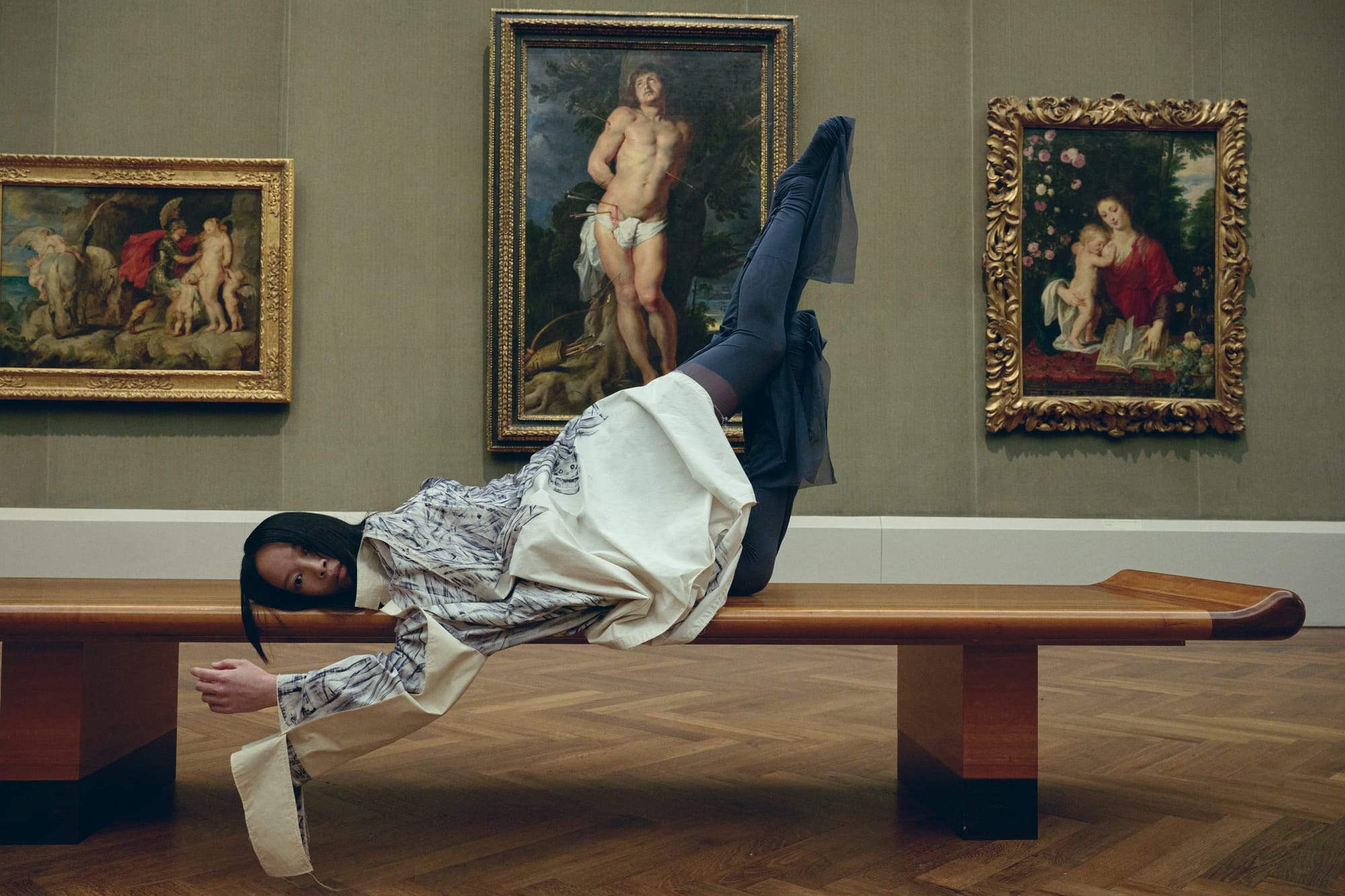
Fashion × Craft: Echoes of Tomorrow
Until 31 May 2026
Five young designers spent a year learning traditional crafts including natural dyeing, weaving, bobbin lace-making, basket weaving, and metalwork, through residencies in Berlin and at The King’s Foundation in Highgrove, England. The resulting 24-piece collection, made entirely from deadstock fabrics, is now on show at the Gemäldegalerie in Berlin. Rather than presenting the finished garments as polished product, the installation frames them against a raw studio wall with visible plaster and paint residues, collages, and sketches, bringing the process of making into the institutional space of the museum.
Possibilities of an Island: Thinking in Images from Gerstenberg to Scharf
Until 3 May 2026
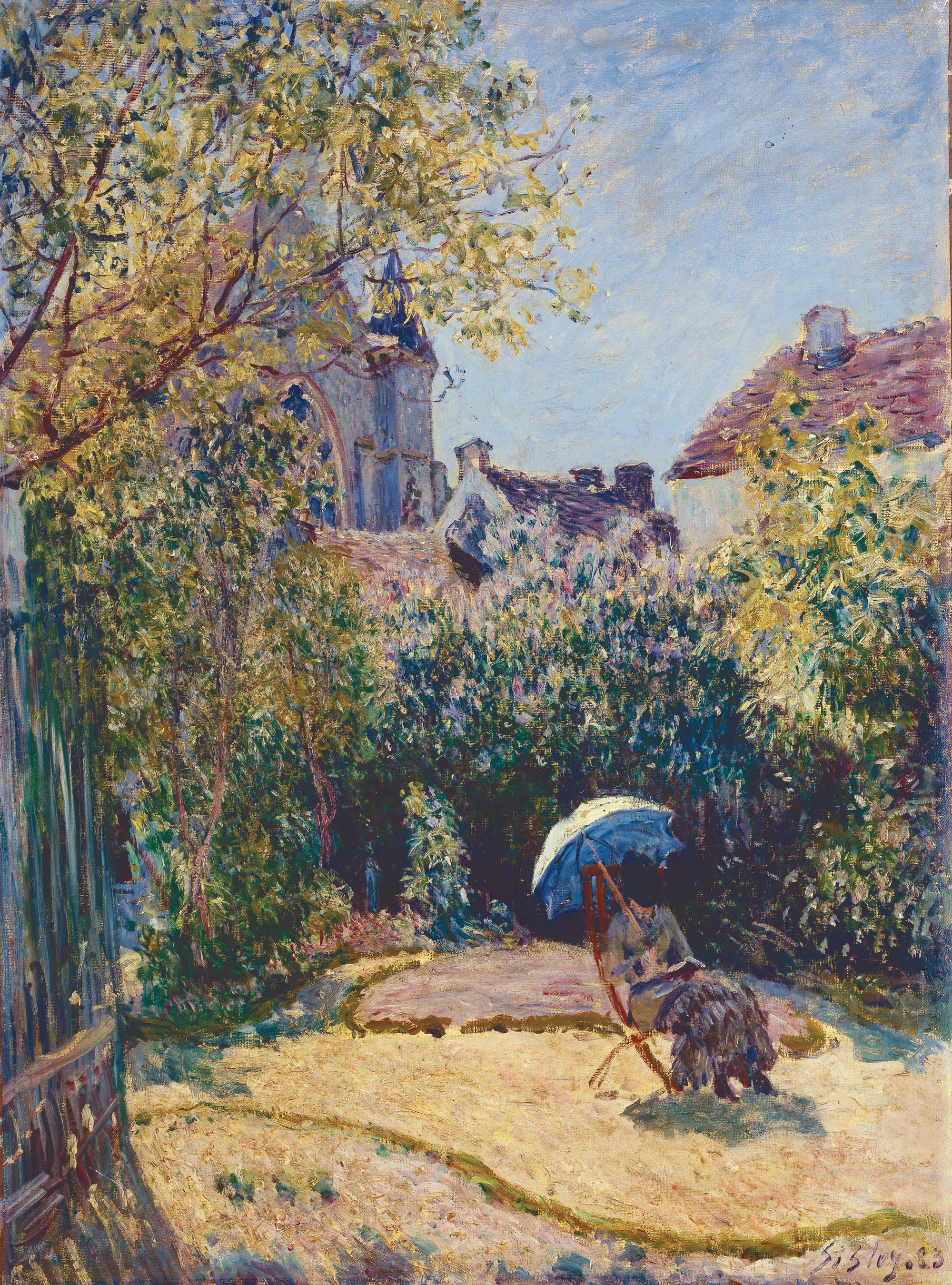
Timed to mark the hundredth birthday of collectors Dieter and Hilde Scharf, this exhibition at Sammlung Scharf-Gerstenberg in Berlin presents around 150 works from the private holdings of the Scharf family that have never before been publicly shown together. The selection ranges from Goya, Piranesi, and Redon to Sisley, Renoir, Schiele, and Dubuffet, with the thread running through the whole being an expanded notion of Surrealism and its precursors. Organised into twelve thematic chapters, the show treats art collecting itself as a form of island-making: a personal retreat, shaped by individual vision rather than institutional logic.
All Under Heaven. Harmony in Family and State
Until 25 May 2026
Photography, video, and printmaking are brought together at the Humboldt Forum in Berlin to examine how state power has shaped family life in 20th-century China and Korea. He Chongyue’s photographs make propaganda slogans from the One-Child Policy era in rural China visible, while Mao Tongqiang’s series traces how Chinese family structures shifted from collective production units to smaller, more mobile households. Jane Jin Kaisen’s video addresses transgenerational trauma in Korean women shaped by colonial domination and transnational adoption, and Mirae kate-hers Rhee reflects autoethnographically on her own adoption from South Korea to the United States.
Back in Berlin. A Bust of the Virgin Mary and the Benoit Oppenheim Collection
Until 25 May 2026
A small lime-wood Maria lactans bust from around 1520 has had a long and troubled journey before arriving at this cabinet exhibition in the Bode-Museum. Originally part of the collection assembled by Berlin banker Benoit Oppenheim, it later passed to Jewish banker Jakob Goldschmidt, whose collection was forcibly auctioned under National Socialist persecution in 1936. Restituted to Goldschmidt’s heirs in 2023 and repurchased the following year with support from the Friede Springer Foundation, the bust now returns to the Bode-Museum alongside other major works from the Oppenheim collection, and will join the permanent display after the exhibition closes.
Annika Kahrs: OFF SCORE
Until 25 May 2026
More than ten video works, sound installations, and live performances from the past fifteen years fill Hamburger Bahnhof in Berlin in the most comprehensive presentation of Annika Kahrs’s work to date. The German artist investigates music not as an aesthetic object but as a social force, tracking how it functions in an abandoned church in Lyon, in the parade of a cross-generational village band in Italy, and in Berlin department stores. The show extends beyond the museum walls through a performance series held at venues across the city, including the Musikinstrumenten-Museum and the Medizinhistorisches Museum der Charité.
Petrit Halilaj: An Opera Out of Time
Until 31 May 2026
Kosovo-born, Berlin-based artist Petrit Halilaj has developed his first opera in collaboration with the Kosovo Philharmonic, an orchestra founded in the aftermath of the Kosovo War in 2000. The work draws on Syrigana, a three-thousand-year-old village near Halilaj’s hometown of Runik, now protected as an archaeological site. Presented as a site-specific installation in the Rieckhallen at Hamburger Bahnhof in Berlin, the opera is surrounded by five further large-scale installations from across the artist’s career, together forming a reflection on memory, belonging, and the possibility of imagining other worlds.
Founded on Antiquity: Berlin’s First Museum
Until 3 May 2026
To mark the 200th anniversary of Museum Island, the Altes Museum in Berlin looks back at its own beginning. When Karl Friedrich Schinkel’s building opened in 1830, it was the first structure in Berlin conceived solely as a public art museum, and it quickly became a destination for the educated middle classes of Prussia and beyond. The exhibition on the upper floor reconstructs the museum’s first permanent display through a selection of the original sculptures, vases, bronzes, and terracottas, alongside a large-scale architectural model and historical images that show how radically the building's interior has changed since then.
Manatunga — Artistic Interventions by George Nuku
Until 31 May 2026
Māori artist George Tamihana Nuku has created three large-scale installations inside the Oceania galleries of the Ethnologisches Museum at the Humboldt Forum in Berlin, placing new works directly alongside historic objects from the collection. A Plexiglass waka steered by the demigod Māui and his brothers sits atop a coral reef display case, its passengers pulling plastic sea creatures from the depths. Ancestor figures made of transparent Plexiglass stand upright in a second room, presented as active presences rather than specimens lying flat in cases. The plastic waste incorporated throughout the work was transformed during community workshops, treating pollution itself as material for meaning.
Reflexion. Light Mirror Transparency
Until 31 May 2026
The four museums housed under one roof at the Pinakothek der Moderne in Munich have curated a joint exhibition for the second time, bringing together works and objects from fine art, architecture, graphic design, and applied design around a single shared theme. Reflection is taken in both its literal and its figurative senses, as optical phenomenon, as symbol of thought, and as artistic strategy. The exhibition moves across time from early Modernism to the present, and its specially designed architecture divides each gallery into one white and one black half, making the interplay of light, shadow, visibility, and concealment a physical condition of the visit itself.
Impressionism: Franco-German Encounters
Until 31 May 2026
Originally opened in 2021 and since extended twice, this long-running collection presentation at the Hamburger Kunsthalle has clearly found its audience. The five central halls of the Lichtwark Gallery are given over to the museum’s own Impressionist holdings, arranged to draw out the exchanges and tensions between French and German artists in the movement. Manet, Monet, and Degas are placed alongside Liebermann, Corinth, and Slevogt, making the case that Impressionism was a European rather than a specifically French phenomenon. The works are organised around five themes: portrait, landscape, staged figure, city and leisure, and still life.
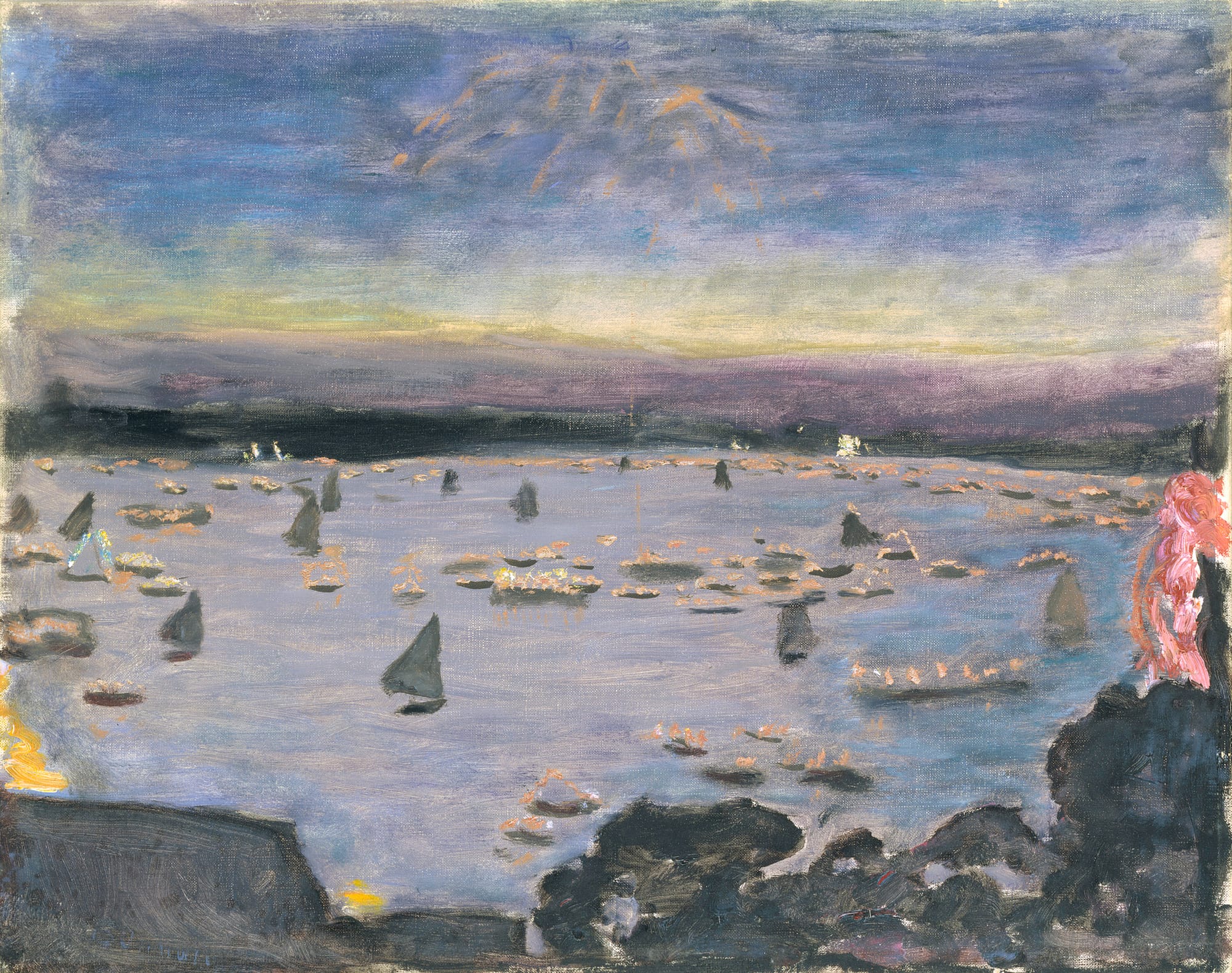
Thomas Bayrle: Be Happy!
Until 10 May 2026
Thomas Bayrle trained as a machine weaver before moving into commercial print graphics, and both inform his art in ways that have never quite left him. His characteristic “superforms,” developed in the 1960s and 1970s, weave repeated single elements into larger composite images, a method that traces a line from the analogue logic of industrial production all the way through to digital culture. The SCHIRN Kunsthalle Frankfurt presents 55 works across painting, print, sculpture, sound installation, and video, exploring how mass consumption, popular religion, urbanity, and labour shape the conditions of modern life.
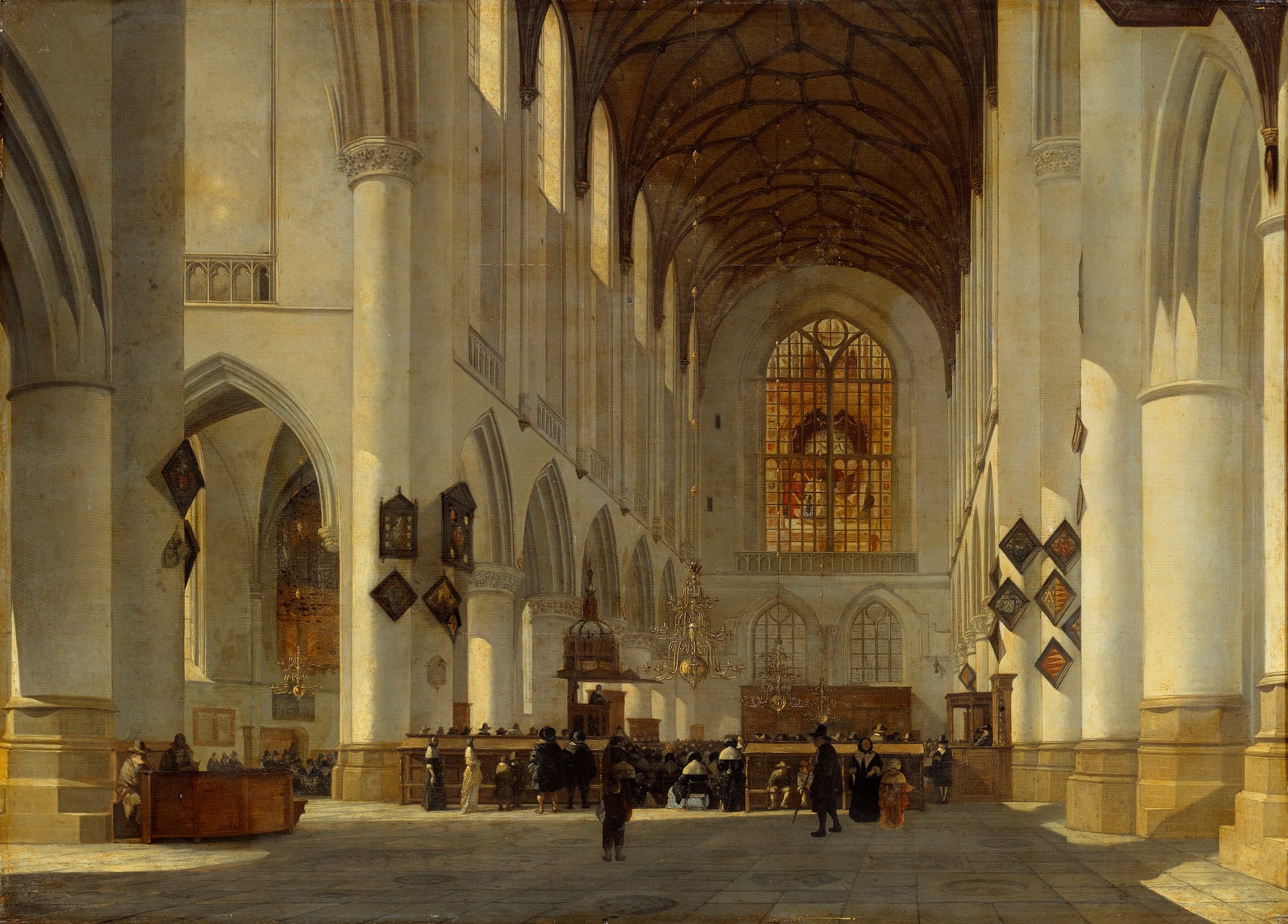
Bojan Šarčević and Netherlandish Depictions of Church Interiors
Until 3 May 2026
In the Gemäldegalerie Alte Meister in Dresden, a single 1999 video work by Bojan Šarčević is placed in dialogue with 17th-century Netherlandish paintings of church interiors by Emanuel de Witte, Gerard Houckgeest, and Job Adriaenszoon Berckheyde. The paintings show Reformed churches as open, communal spaces where people stroll and converse and where dogs wander freely among the congregation. Šarčević filmed the interior of Amsterdam’s Westerkerk with three dogs roaming through it, quoting Georges Bataille in his title while quietly questioning the philosopher's separation of nature and culture. The dog in the church turns out to be the unexpected thread connecting five centuries of images.
🇭🇺 Exhibitions in Hungary
The Civilization of the Qin and Han Dynasties: The First Chinese Emperor’s Terracotta Warriors
Until 25 May 2026
The largest exhibition of terracotta warriors in Central Europe in twenty-five years has taken up residence at the Museum of Fine Arts in Budapest, bringing more than 150 artefacts on loan from museums in Shaanxi province. Ten original figures from the First Emperor's army are among them, individually modelled and still bearing distinct facial expressions and armour details. The exhibition traces over a millennium of history, from the rise of the Qin state through the consolidation of the Han Dynasty, and includes two reconstructed tomb environments presented through spatial display and projection.
The Great Wall of China: Within and Beyond
Until 25 May 2026
Running concurrently with the Terracotta Warriors exhibition at the Museum of Fine Arts in Budapest, this companion display in the Michelangelo Hall explores the art of the nomadic peoples who lived along China’s northern border during the first millennium BC. At its core are the so-called Ordos bronzes, a body of objects including belt decorations, clothing attachments, weapons, and harness fittings that bear unmistakable Chinese influences while remaining distinctly their own. Close to 300 objects are on show, tracing the cultural exchanges between China and the Asiatic Huns whose westward migration would eventually shape the history of Europe.
Tihamér Gyarmathy: Cosmos in the Studio
Until 25 May 2026
Forty years after a 1986 exhibition at the same venue helped establish Tihamér Gyarmathy as a canonical figure of Hungarian abstraction, Kunsthalle Budapest returns to his work with a reexamination that places him in dialogue with international contemporaries including Hans Arp, Paul Klee, Max Bill, and Joan Miró. The four-hall presentation moves from his early figurative roots through the bioromantic vision influenced by László Moholy-Nagy and Lajos Kassák to the cosmic, syncretic paintings of his mature period. A reconstruction of Gyarmathy’s studio and object collection anchors the final hall, readable as a model of the universe the artist spent his life trying to make visible.
Ádám Urbán: The Secret Life of the Botanical Garden
Until 25 May 2026
Hungarian photographer Ádám Urbán spent a year working regularly inside the National Botanical Garden in Vácrátót, photographing its scientists, maintenance staff, and seasonal rhythms across all four collections: dendrology, taxonomy, perennial and rock garden, and greenhouse. The resulting series, now on show at Kunsthalle Budapest, follows the approach Urbán has developed over many years of long-term documentary work in enclosed institutions, from circuses to zoos. Rather than presenting the garden as a static backdrop, the photographs focus on the human labour and careful attention that keep its 13,000 plant species and a 200-year-old landscape alive.
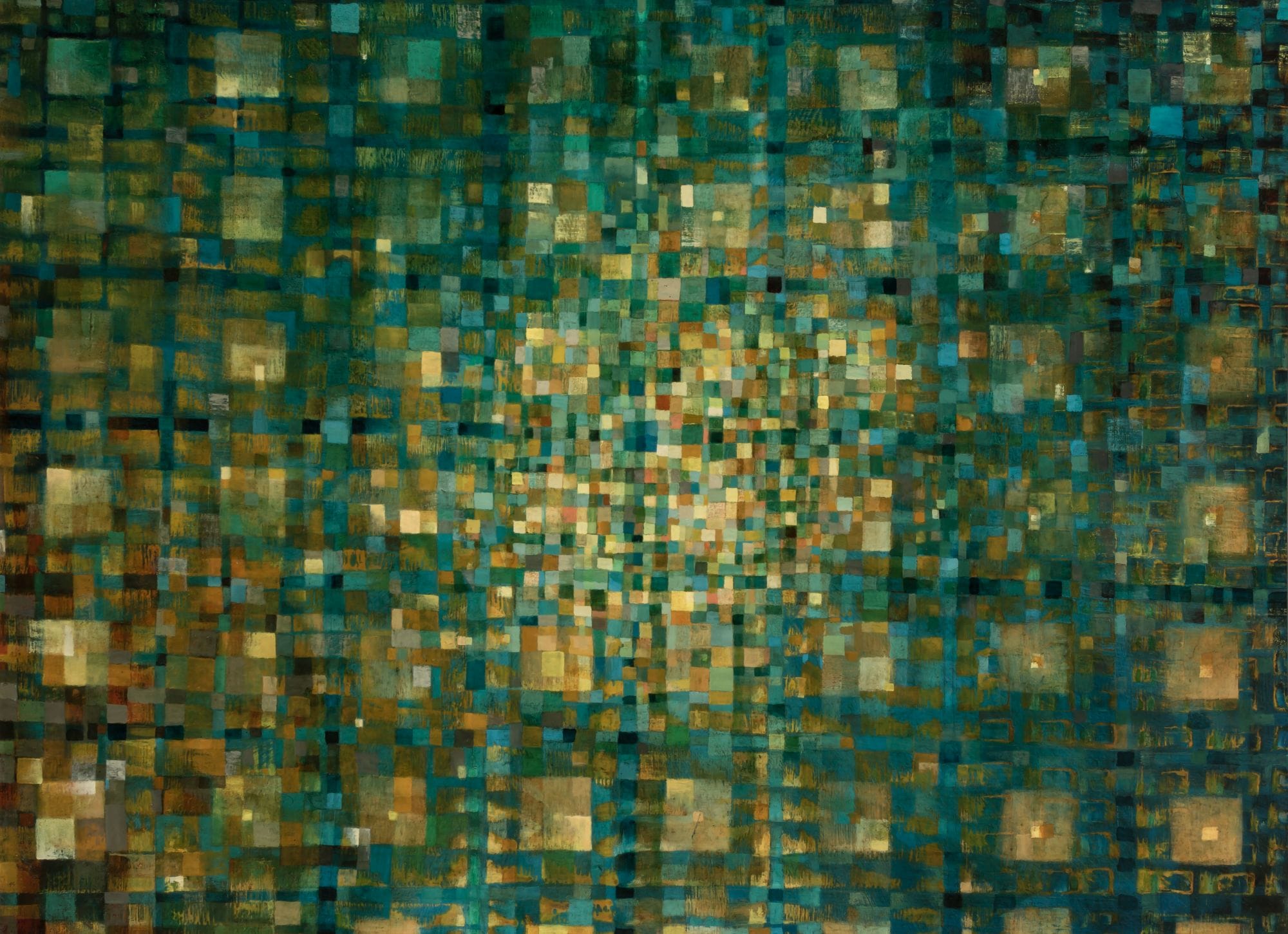
Formula to Form: The Art of Dataism. Albert-László Barabási’s Exhibition
Until 10 May 2026
Network scientist Albert-László Barabási has spent the past five years translating data into paint. Working with the Barabási Atelier, a collaborative studio he assembled around him, he has produced large-scale abstract paintings whose starting point is always a dataset or an act of data analysis. The exhibition at Kunsthalle Budapest presents those paintings alongside the twelve custom-designed paint rollers developed by the Atelier as dataism’s visual tools, a documentation of the Lab’s working methods, and a personal thread tracing his grandfather’s work as a house painter in Transylvania, which first introduced him to the roller as a medium.
🇮🇹 Exhibitions in Italy
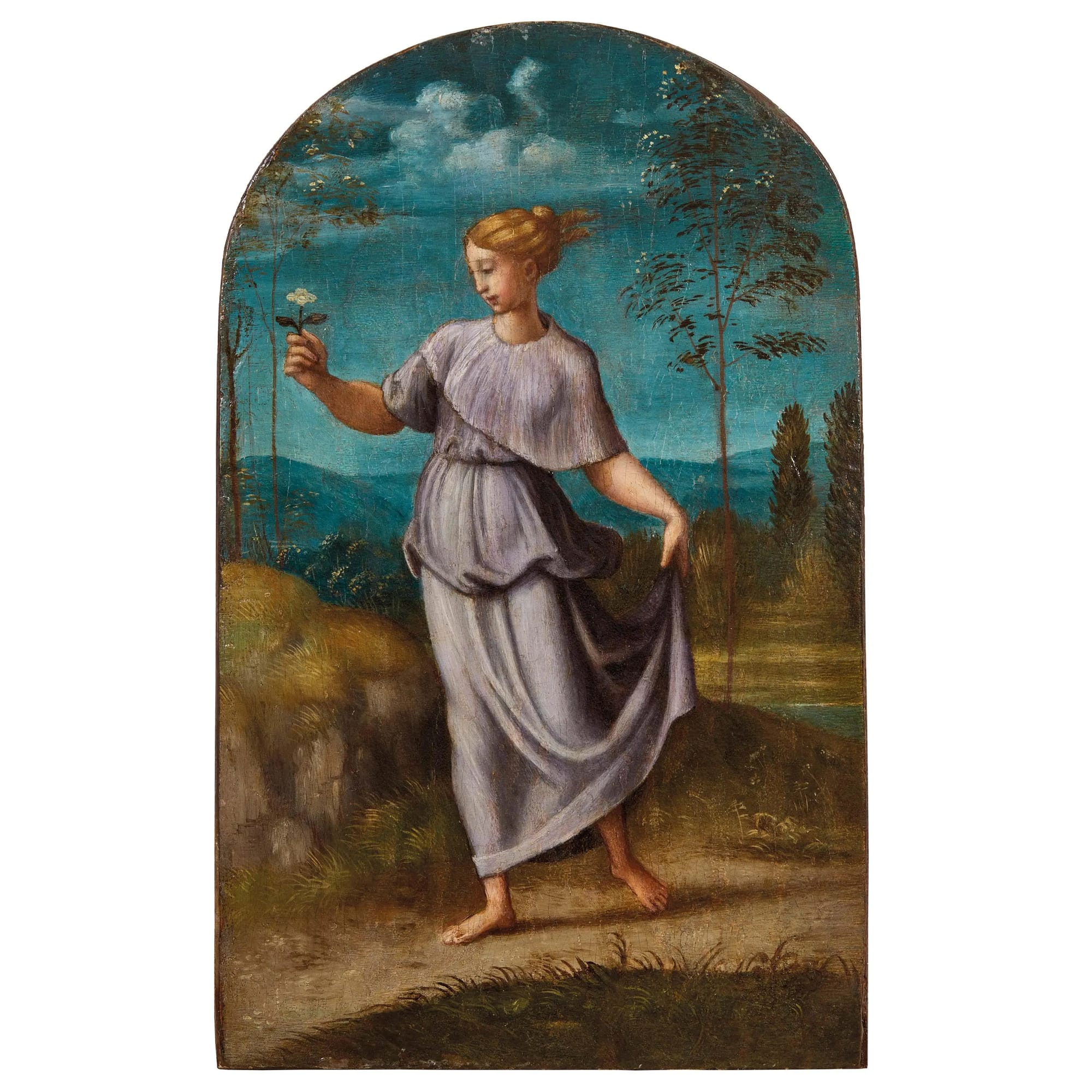
Return to Galleria Borghese. Giovan Francesco Penni and Raphael’s Workshop
Until 10 May 2026
In May 2025, the Galleria Borghese in Rome acquired at auction the Allegory of Good Hope, an arched panel attributed to Giovan Francesco Penni and documented in 17th-century inventories as a Raphael. The work is now reunited with its pendant Charity, held in a private collection, reconstituting a diptych separated since the late 18th century, when Napoleonic pressures drove the dispersal of numerous Borghese works through the Ottley sales. Displayed in the room dedicated to Renaissance painting, the two panels are shown alongside a rare securely attributed work by Penni, offering a close study of how Raphael’s workshop functioned as a shared creative enterprise.
Marcello Provenzale from Cento. A Genius of Baroque Mosaic in Borghese Rome
Until 10 May 2026
Marking the 450th anniversary of his birth, the Galleria Borghese in Rome dedicates a focused dossier exhibition to Marcello Provenzale, the artist who, working on the construction sites of St. Peter's Basilica from 1600, transformed mosaic into a medium capable of rivalling painting. His key innovation was the technique known as mosaico filato, which allowed half-tones and chromatic gradations of extraordinary delicacy. The gallery holds the largest group of his surviving works, including Madonna and Child, Orpheus, and a Portrait of Paul V, and the exhibition builds around these to argue for his central role in Counter-Reformation visual culture, where incorruptible glass became both an instrument of faith and a vehicle for dynastic memory.
Metamorphoses. WU Jian’an
Until 17 May 2026
Beijing-born artist Wu Jian’an brings his first solo exhibition in an Italian museum to the Baths of Diocletian in Rome, where the ancient halls provide a historically layered setting for his exploration of change. Working across hand-blown Murano glass, paper-cutting, leather carving, and large-scale collage, he weaves together Ovid’s Metamorphoses and its insistence that no being retains its form with the Taoist concept of generative transformation, huàshēng. Rather than holding Eastern and Western traditions apart, Wu synthesises them into a single visual language in which myth, medium, and narrative are continuously reconfigured — a process that the monumental architecture of the ancient baths mirrors in its own historical layering.
Giorgio Armani. Milano, per amore
Until 3 May 2026
Garments rather than paintings greet visitors as they move through the Pinacoteca di Brera in Milan, where over 120 of Giorgio Armani’s creations have been installed directly within the permanent collection galleries. The exhibition marks fifty years of his career and draws on the designer’s long personal connection to the Brera neighbourhood, where he has lived and worked. By placing fashion alongside Old Masters rather than staging a separate show in a neutral space, the Pinacoteca invites unexpected comparisons between dress and paint, cloth and canvas. Originally closing in January 2026, the exhibition has since been extended until May 3.
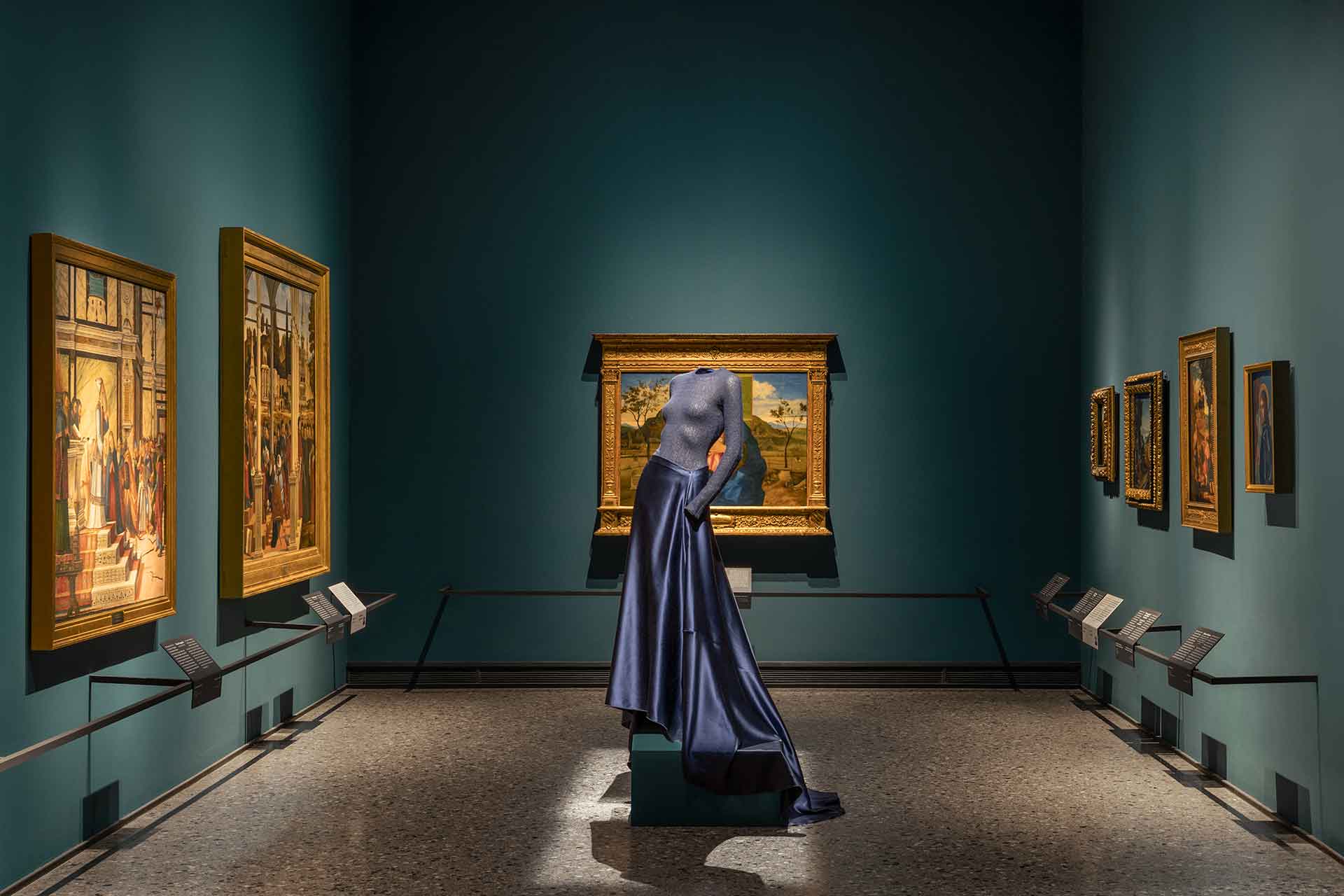
Beauty and the Ideal / Pinacoteca Viaggiante
Until 17 May 2026
Room 1 of the Pinacoteca di Brera in Milan has been reorganised around the figure of Count Giovanni Battista Sommariva, the foremost Neoclassical collector of the Napoleonic era. Twelve Canova plaster busts, restored by Banca Ifis and presented in Milan for the first time, anchor the display, joined by the marble Vestal returning to Brera after more than a century. Alongside these sculptures, 99 enamel-on-copper miniatures commissioned by Sommariva between 1810 and 1825 complete the picture: a portable replica of his collection that he carried across Europe as a personal calling card, made by five leading miniaturists of the period.
Dean Chalkley: Back in Ibiza and other stories
Until 10 May 2026
Presented at the Circolo del Design as part of the third edition of the EXPOSED Torino Photo Festival, this exhibition gathers three distinct bodies of work by British photographer Dean Chalkley. The first draws on his career-long engagement with British music culture, with portraits of figures including Amy Winehouse, Oasis, and the White Stripes from the 1980s and 1990s. Never Turn Back takes a quieter, more intimate form — a reportage built around a group of young people travelling along the coast of Norfolk. The third series documents the hedonistic world of turn-of-the-millennium Ibiza, shot for Mixmag between 1998 and 2003, as a direct participant rather than a detached observer.
🇱🇮 Exhibition in Liechtenstein
Clara Oppel: Beneath. An Oscillating Network of Sound and Spatial Drawing
Until 17 May 2026
Working at the intersections of sculpture, installation, and sound, Austrian artist Clara Oppel has created a new site-specific work for the Kunstraum Engländerbau in Vaduz. Beneath takes the hidden world of soil as its subject: the root networks, sound zones, and slow processes that unfold underground, mostly at night, beyond the reach of human perception. A large cluster of wires and cables drawn through the exhibition space forms a three-dimensional line drawing, embedded with small speakers that play a seven-channel composition of recorded ground noises. What lives beneath the surface grows upward into the room.
🇱🇺 Exhibitions in Luxembourg
Bienvenue à la Villa ! (3)
Until 17 May 2026
Villa Vauban in Luxembourg City dedicates its current exhibition to Luxembourg art from the classical modern period through to the turn of the millennium, drawing on a mix of recent acquisitions and donations. The display opens with the “secessionist” painters of the early 20th century — Kutter, Rabinger, Schaack, and Klopp — before moving through artists working across figuration and abstraction, including Henri Dillenburg, Wil Lofy, and the collagist Roger Bertemes. From the 1950s onwards the show reflects an increasingly prominent place for women artists, among them Jacqueline Hentges and Coryse Kieffer, and closes with works from the 1990s and early 2000s by Moritz Ney, Marie-Paule Feiereisen, and others.
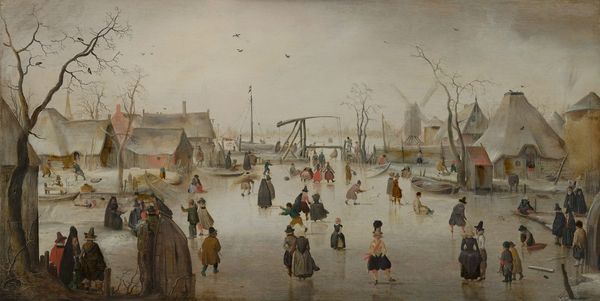
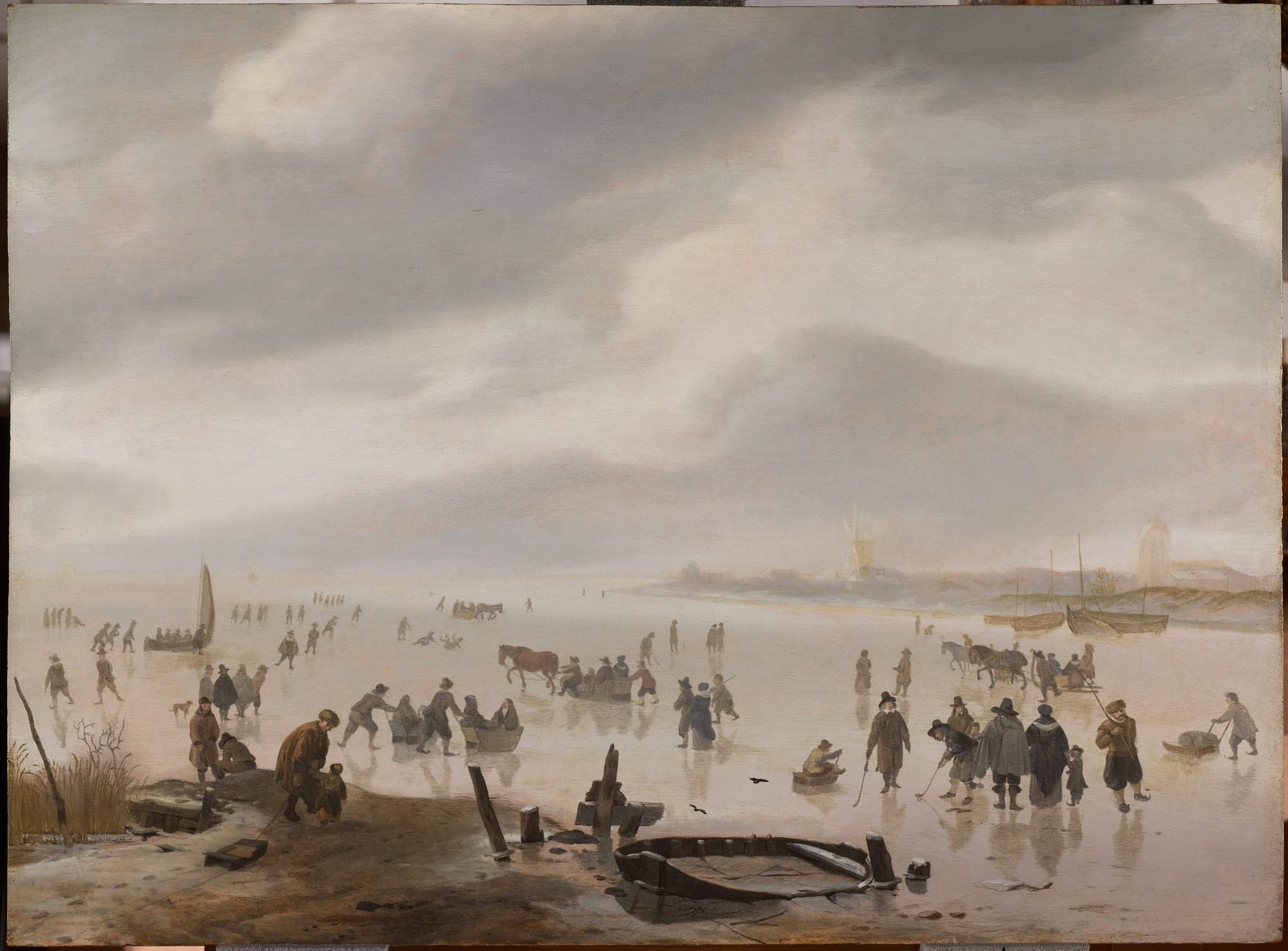
Pleasures on the ice: Dutch winter landscapes, 17th-19th centuries
Until 17 May 2026
Three newly acquired Dutch paintings, all being shown publicly for the first time, are the occasion for this small but well-contextualised display at Villa Vauban in Luxembourg City. A large-format winter landscape with skaters by Jacob Esselens, donated by a private collector, represents the Golden Age genre in its original 17th-century form. Andreas Schelfhout’s Winter Landscape with Windmill and Skaters on the Ice, donated by the Amis des Musées Luxembourg, reflects the 19th-century revival of interest in the old Dutch masters. A third work, by Andries Vermeulen and acquired by the museum, completes the group. Together they offer a glimpse into the so-called Little Ice Age, when frozen canals gave rise to an entire culture of winter leisure.
🇲🇨 Exhibitions in Monaco
Le Sentiment de la Nature: Contemporary Art in the Mirror of Poussin
Until 25 May 2026
Nicolas Poussin spent most of his career in Rome despite being French, and his lyrical, increasingly sensitive way of looking at nature has shaped how landscape has been understood in art ever since. Villa Paloma in Monaco takes this as its starting point, pairing classical paintings by Poussin, Gaspard Dughet, and Joseph Vernet with contemporary works by Giuseppe Penone, Andreas Gursky, Nan Goldin, and Latifa Echakhch, among many others. The show is organised into six sections. Each takes a different natural subject: storms and nights, forests and gardens, seascapes and waterfalls, deserts and volcanoes, mountains, and flowers and butterflies.
Flore Saunois — Le temps d’un ciel bleu
Until 25 May 2026
Eight identical flags fly at Villa Paloma in Monaco, each printed with shade number 21 from the cyanometer invented by scientist Horace Bénédict de Saussure at the end of the 18th century. The cyanometer was designed to measure atmospheric density and comprised 53 gradations of blue. French artist Flore Saunois has selected one of those shades and printed it on flags, placing a quiet wager on the probability that the colour of the flags and the colour of the Monaco sky will, at some moment during the exhibition's run, coincide. The work is titled Certitude n°21 (bleu ciel) and forms part of the museum's satellite programme exploring how art relates to the temporality of its materials.
🇳🇱 Exhibitions in the Netherlands
Metamorphoses
Until 25 May 2026
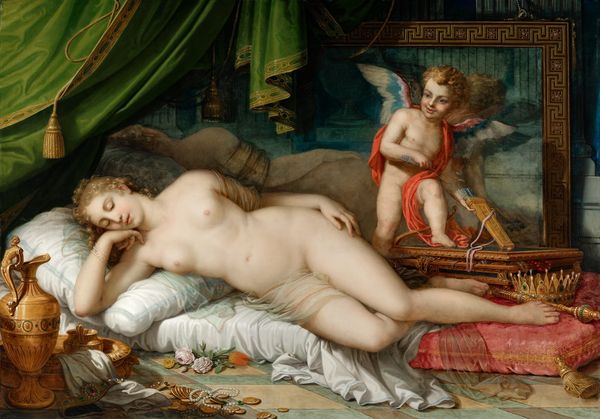
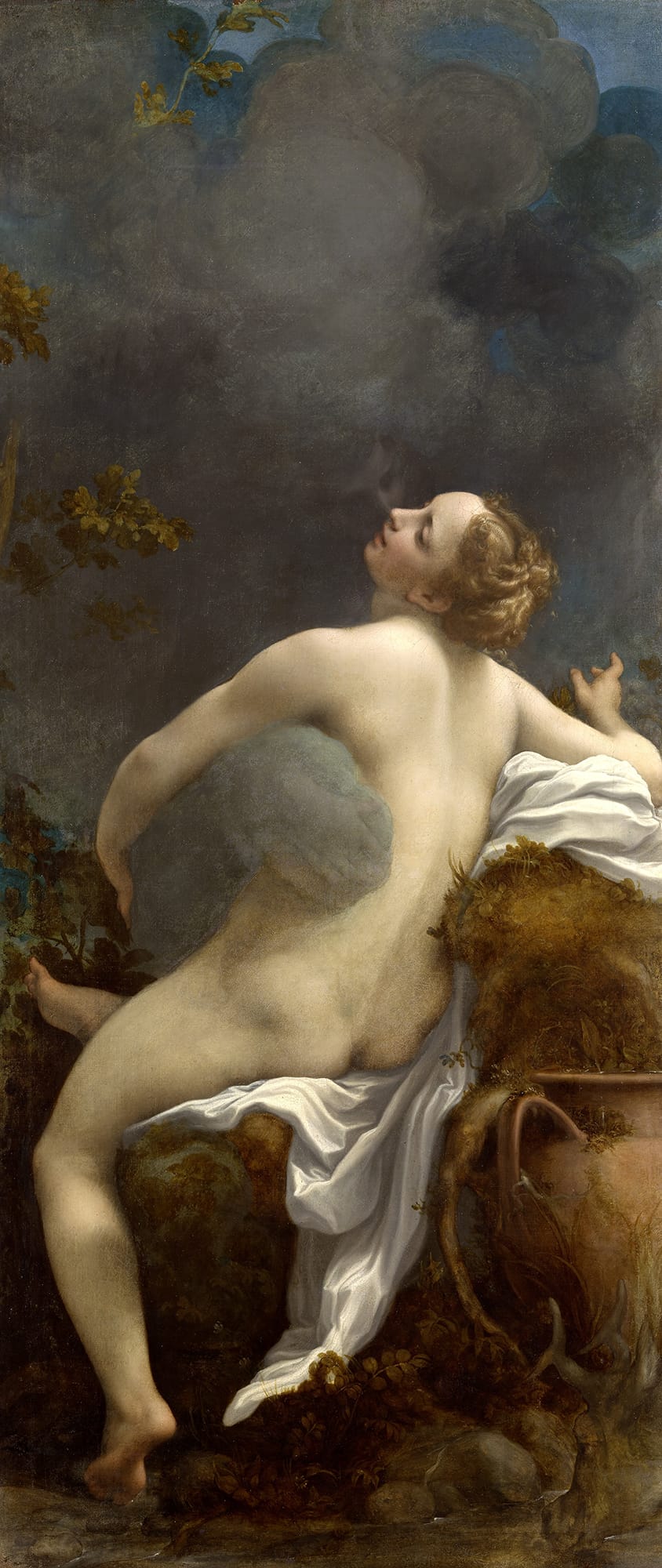
Over 80 works from museums and collections across the world have been brought together at the Rijksmuseum in Amsterdam around a single ancient text: Ovid’s Metamorphoses, written around 8 AD. Paintings, sculptures, goldsmith’s work, and ceramics by Bernini, Titian, Correggio, Caravaggio, Cellini, Rodin, Brancusi, and Bourgeois chart how artists have read and reinterpreted the poem across two thousand years. Contemporary photography and video art extend that lineage into the present, including a video installation by Juul Kraijer inspired by the myth of Medusa. The exhibition is a collaboration with the Galleria Borghese in Rome, where a different configuration of the same project will open later this year.
FAKE! Early Photocollages and Photomontages
Until 25 May 2026
Images have been manipulated since the earliest days of photography, and the Rijksmuseum in Amsterdam gathers 50 historical examples from its own collection to show just how inventive that tradition was long before digital tools existed. Drawn from the period 1860 to 1940, the works were made using scissors, glue, ink, and pencil: photocollages built by cutting and pasting, photomontages combining multiple photographs into a single re-photographed image. The range is wide. American postcard publishers created absurdist scenes of gigantic vegetables and animals, while John Heartfield used the same techniques to produce sharp political critiques of the Nazi regime. Some of the manipulations are immediately obvious; others only reveal themselves under close inspection.
Yellow. Beyond Van Gogh’s Colour
Until 17 May 2026
The Van Gogh Museum in Amsterdam devotes its spring exhibition to a single colour and what it has meant to artists, writers, and musicians across time. The show opens with Van Gogh’s Sunflowers before widening to explore how yellow was used around 1900 to signal modernity, daring, and decadence in literature and fashion, and to express emotion and spiritual meaning in painting, by artists from Turner and Chagall to Kandinsky and Hilma af Klint. Two light installations by Olafur Eliasson extend the exhibition into sensory experience, and students from the Amsterdam Conservatory have composed new music inspired by works on display, which visitors can listen to during their visit.
An Ode to Printmaking
Until 17 May 2026
Published between 1893 and 1895 in nine quarterly instalments, L’Estampe originale was one of the defining projects of the fin-de-siècle printmaking revival. Each album contained ten prints by avant-garde artists who had to be personally involved in every stage of production, with editions limited to one hundred numbered impressions. The Van Gogh Museum in Amsterdam holds one of only six complete copies in the world, and this small-scale exhibition draws on that holding to show around 35 works by contributors including Bonnard, Pissarro, Toulouse-Lautrec, and Gauguin. Colour lithography, long considered inferior, comes through as the medium through which artists around 1890 expressed something genuinely new.
Rembrandt’s Masterclass
Until 25 May 2026
What made Rembrandt so good, and how did he get that way? The Rembrandt House Museum in Amsterdam takes that question seriously, structuring its new exhibition around five practical chapters: looking, technique, emotion, experimenting, and selling. Alongside etchings, paintings, and a drawing, visitors are invited to draw an elephant, practise posing for a self-portrait, and try to identify a genuine Rembrandt from copies. The exhibition ends in a slow-watching room devoted to The Anatomy Lesson of Jan Deijman (1656), a painting on loan from the Amsterdam Museum while that institution undergoes renovation. Though partially destroyed by fire, the surviving fragment brings together every quality the show sets out to explain.
Verena Blok: Love Shit
Until 25 May 2026
Dutch-Polish photographer Verena Blok spent two and a half years working simultaneously at a Dutch abortion clinic and photographing pregnant women, children, and couples across several countries, including Poland, one of the most restrictive abortion contexts in Europe. Her first museum solo exhibition at Foam in Amsterdam weaves together portrait photographs, close-ups, abstract imagery, scenes of children at play, and fragments of her clinic diary into a deliberately messy whole. At the centre of the room, her written testimony from the clinic sparks a direct dialogue between word and image. The show moves between tenderness and unease, arguing that reproduction encompasses vulnerability, grief, and discomfort as much as love and joy.
Jasmijn Vermeeren: You Don't Look Sick
Until 25 May 2026
Vermeeren’s first solo exhibition at Foam in Amsterdam centres on a question that is both personal and political: what does it mean to live in a body whose illness is invisible to others? Working with photography, video, and sculpture, she reflects on her experience of chronic pain and on the gap between how her body is perceived and how it is actually lived. A self-portrait sculpture, a video of a recurring conversation, and a series of self-portrait collages together examine the competing gazes that meet at the surface of the body. The exhibition argues for greater visibility of hidden and invisible disability, a subject that discussions of inclusion often leave underaddressed.
Julia Kochetova: War is Personal
Until 25 May 2026
Ukrainian photojournalist Julia Kochetova belongs to a generation of image-makers documenting Russia's war of aggression against Ukraine from within, living the same reality they photograph. Her solo exhibition at Foam in Amsterdam presents work made since the full-scale invasion began, functioning less as news coverage than as a visual diary of how the war enters the home, the body, and the language of those who remain. Where international media reduce atrocity to statistics, Kochetova insists on names, faces, and specific places. The show forms part of Foam’s ongoing research series The Camera as a Weapon, exploring what photography can do in times of conflict.
NN Art Award 2026
Until 25 May 2026
Four finalists from a pool of over forty submissions are presented at the Kunsthal Rotterdam as part of the annual NN Art Award, given each year to a talented artist trained in the Netherlands. Tina Farifteh’s documentary photography follows a man through the Dutch asylum system after months in immigration detention. Mandy Franca draws on cross-cultural memory, combining painting, printmaking, photography, and installation in an exploration of everyday significance. Fiona Lutjenhuis translates the esoteric and theosophical beliefs of the sect she grew up in into folding screens, drawings, and murals that blend New Age aesthetics with comic books and medieval painting. Kyra Nijskens examines biofouling and the unnoticed ways marine organisms travel the world's shipping routes.
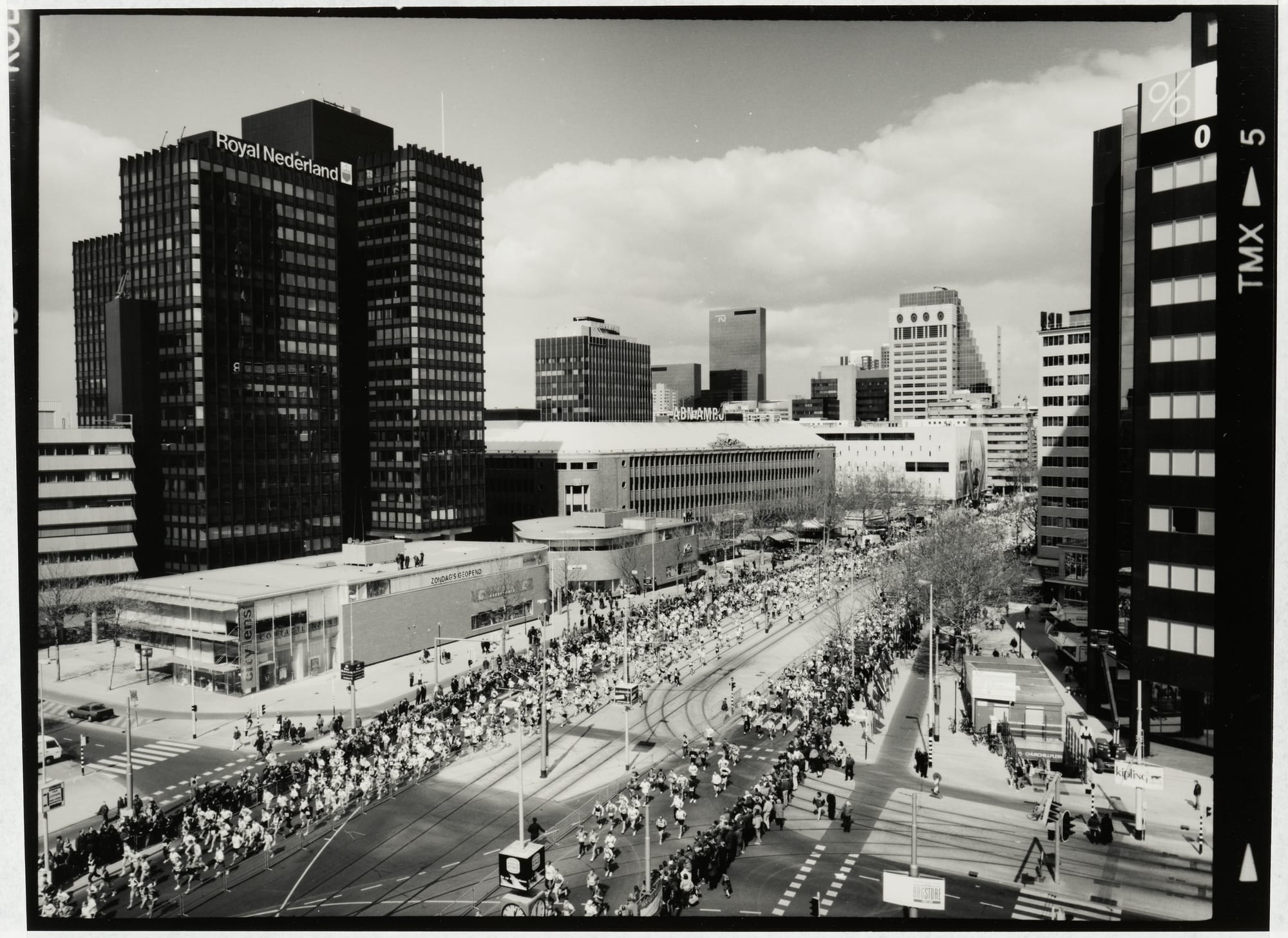
Rotterdam in Focus
Until 24 May 2026
Nearly two centuries of photography are gathered at the Nederlands Fotomuseum in Rotterdam to trace how the city has been seen and made visible across different eras. Post-war photographers such as Cas Oorthuys and Aart Klein pictured a rational, optimistic city where cleared spaces signalled progress. The 1960s and 1970s introduced colour and social complexity, while the 1980s and 1990s shattered that ordered myth in favour of industrial estates, vacant lots, and forgotten edges. Contemporary photographers including Lou Muuse and Janine Schrijver turn to the spectacular new skyline and ask who the city belongs to. Many works are shown publicly for the first time, including 42 rare stereoscopic images from a private collection and a six-metre panorama by Siebe Swart.
Rotterdam in Focus
Until 24 May 2026
Nearly two centuries of photography are gathered at the Nederlands Fotomuseum in Rotterdam to trace how the city has been seen and made visible across different eras. Post-war photographers such as Cas Oorthuys and Aart Klein pictured a rational, optimistic city where cleared spaces signalled progress. The 1960s and 1970s introduced colour and social complexity, while the 1980s and 1990s shattered that ordered myth in favour of industrial estates, vacant lots, and forgotten edges. Contemporary photographers including Lou Muuse and Janine Schrijver turn to the spectacular new skyline and ask who the city belongs to. Many works are shown publicly for the first time, including 42 rare stereoscopic images from a private collection and a six-metre panorama by Siebe Swart.
Marilyn Nance: Spirit Faith Grace Rage
Until 3 May 2026
Marilyn Nance began photographing daily life in New York at eighteen and went on to document the Second World Black and African Festival of Arts and Culture in Lagos in 1977, creating one of the most vivid records of that Pan-African gathering. Her exhibition at Kunstinstituut Melly in Rotterdam draws five decades of work together under four words she uses to organise her practice: Spirit, Faith, Grace, and Rage. Reunions, church scenes, demonstrations, living rooms, and stages appear in an interconnected constellation, accompanied by sonic fragments collected over the years and arranged by artist Ali Santana. The show is as much an argument about archiving as it is a photographic retrospective — a case for keeping records, sharing them widely, and treating personal memory as a form of collective history.
TOOLSHED #2 : The Imaginary Stage
Until 31 May 2026
The second edition of Kunstinstituut Melly’s TOOLSHED residency in Rotterdam brings together two artists with distinct but complementary practices. Andrea Celeste La Forgia, based in Rotterdam, works across archival research, painting, prop-making, and performance, drawing on her ongoing collaboration with her mother, a lifelong factory worker in Italy, to examine how working-class knowledge and labour become artistic methods. Kerem Akar, based in Amsterdam, makes theatre with children, young people, and non-professional performers, dismantling conventional hierarchies in favour of vulnerability and shared learning. Together they explore how artistic and pedagogical practices can function as tools for emancipation. The space on the second floor of Melly remains publicly open throughout the residency.
Marlow Moss: A Suitcase Full of Sketches
Until 31 May 2026
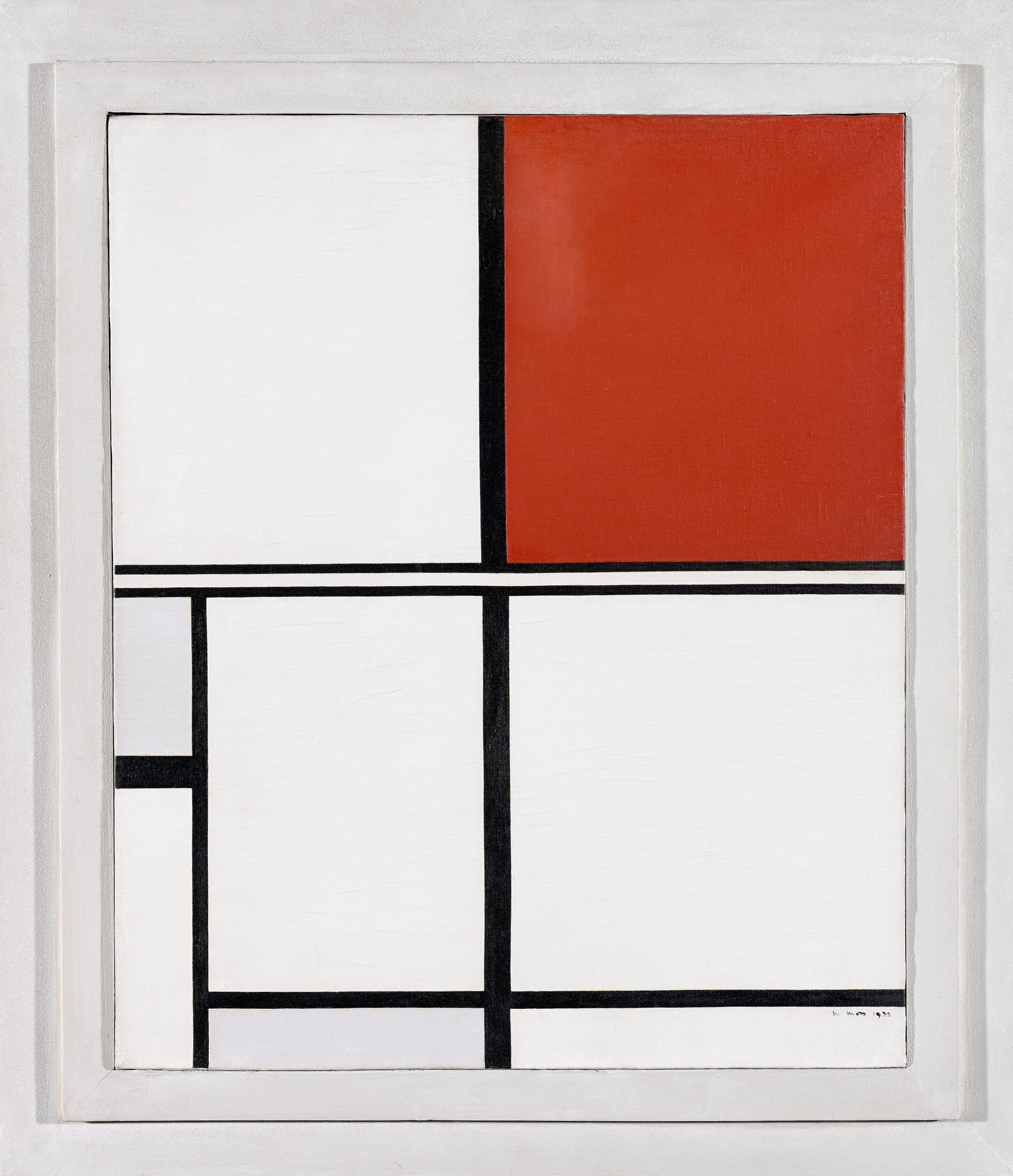
Kunstmuseum Den Haag recently acquired a suitcase containing more than a hundred preliminary studies by Marlow Moss (1889–1958), an artist who was a central figure in 1930s avant-garde circles and a close acquaintance of Piet Mondrian. The two admired each other’s work, and Moss has been credited with introducing the double parallel line that Mondrian subsequently adopted. A selection of these newly acquired sketches is now displayed alongside three Moss paintings from the museum's own collection, returning home after years of loans abroad. Born Marjorie Jewel Moss in London, she adopted a gender-neutral name in 1921 and moved to Paris, where she met her life partner, Dutch writer Netty Nijhoff. She died in Cornwall in 1958, having fled there from occupied Europe in 1940.
🇪🇸 Exhibitions in Spain
The Female Perspective III. Queen Isabella Farnese (1692–1766) and the Museo del Prado
Until 24 May 2026
Few collectors have shaped the Prado as decisively as Isabella Farnese, the Parma-born queen who arrived in Spain in 1714 as the wife of Philip V and spent over half a century building a collection of nearly a thousand paintings. Around 500 of those works are now in the museum, recognisable by the Farnese lily, and hang in half of its rooms. The exhibition traces her collecting vision through 45 works, including paintings by Velázquez, Ribera, Murillo, Correggio, Rubens, and Clara Peeters, as well as a recently recovered Murillo missing since the 19th century. Her preference for Flemish and Italian painting, and her acquisition of Queen Christina of Sweden’s antique sculpture collection, shaped the Prado’s character in ways still visible today.
Hammershøi: The Eye that Listens
Until 31 May 2026
Spain’s first retrospective devoted to Vilhelm Hammershøi (1864–1916) brings around a hundred works to the Museo Nacional Thyssen-Bornemisza in Madrid. The Danish painter enjoyed considerable success in his lifetime for his cold, silent interiors, and his appeal has only grown since: their ambiguity sustains many readings, and they have proved unusually open to connections with 17th-century Dutch painting as well as with later European artists. The exhibition is organised around several recurring themes, including the role of his wife Ida Ilsted in his creative process, the progressive refinement of his domestic interiors, and his interest in music, which gives the show its subtitle. After Madrid, the exhibition travels to the Kunsthaus Zürich.
Rauschenberg: Express. On the Move
Until 24 May 2026
To mark the centenary of Robert Rauschenberg’s birth, the Museo Nacional Thyssen-Bornemisza in Madrid devotes a special presentation to Express (1963), one of the artist’s most significant works and part of the museum’s own collection. The display focuses on a single painting but opens it out considerably: examining the complex sources of its iconography, situating it within Rauschenberg’s wider drive to dissolve boundaries between disciplines, and tracing the role it played in his international breakthrough when he won the Grand Prix for Painting at the 1964 Venice Biennale. That victory, at the time controversial, is documented here with photographs of his works being transported across the Venice lagoon by boat.
Irma Álvarez-Laviada. Inside and outside the Frame
Until 3 May 2026
Working with industrial materials designed for functional rather than aesthetic use, the Asturian artist Irma Álvarez-Laviada approaches geometric abstraction from a gender perspective. Her works occupy an in-between space, neither fully within the frame nor outside it, and use repetition and variation to question the binaries embedded in the Western modernist tradition: vertical and horizontal, essential and decorative, hard and soft. More than thirty works from the last decade are installed across several rooms of the Museo Nacional Thyssen-Bornemisza in Madrid alongside paintings from the permanent collection. The exhibition forms part of Kora, the museum's annual programme presenting work through a gender-critical lens, now in its ninth edition.
Open the Archive 07. L’Antitête
Until 24 May 2026
In 1949, Bordas éditeur in Paris reissued Tristan Tzara's anthology L’Antitête as a bibliophile’s edition in three volumes, with illustrations by Max Ernst, Yves Tanguy, and Miró respectively. Miró's volume, Le Désespéranto, was engraved at William Hayter's Atelier 17 in New York, and he described the aim as achieving a complete fusion between poet and illustrator. The Fundació Joan Miró in Barcelona holds part of the correspondence Tzara addressed to Miró during the project, as well as a significant body of proofs documenting the creative process. These materials are brought together in the Archive of the Foundation to illuminate a collaboration in which both men saw themselves making something at once despairing and hopeful.
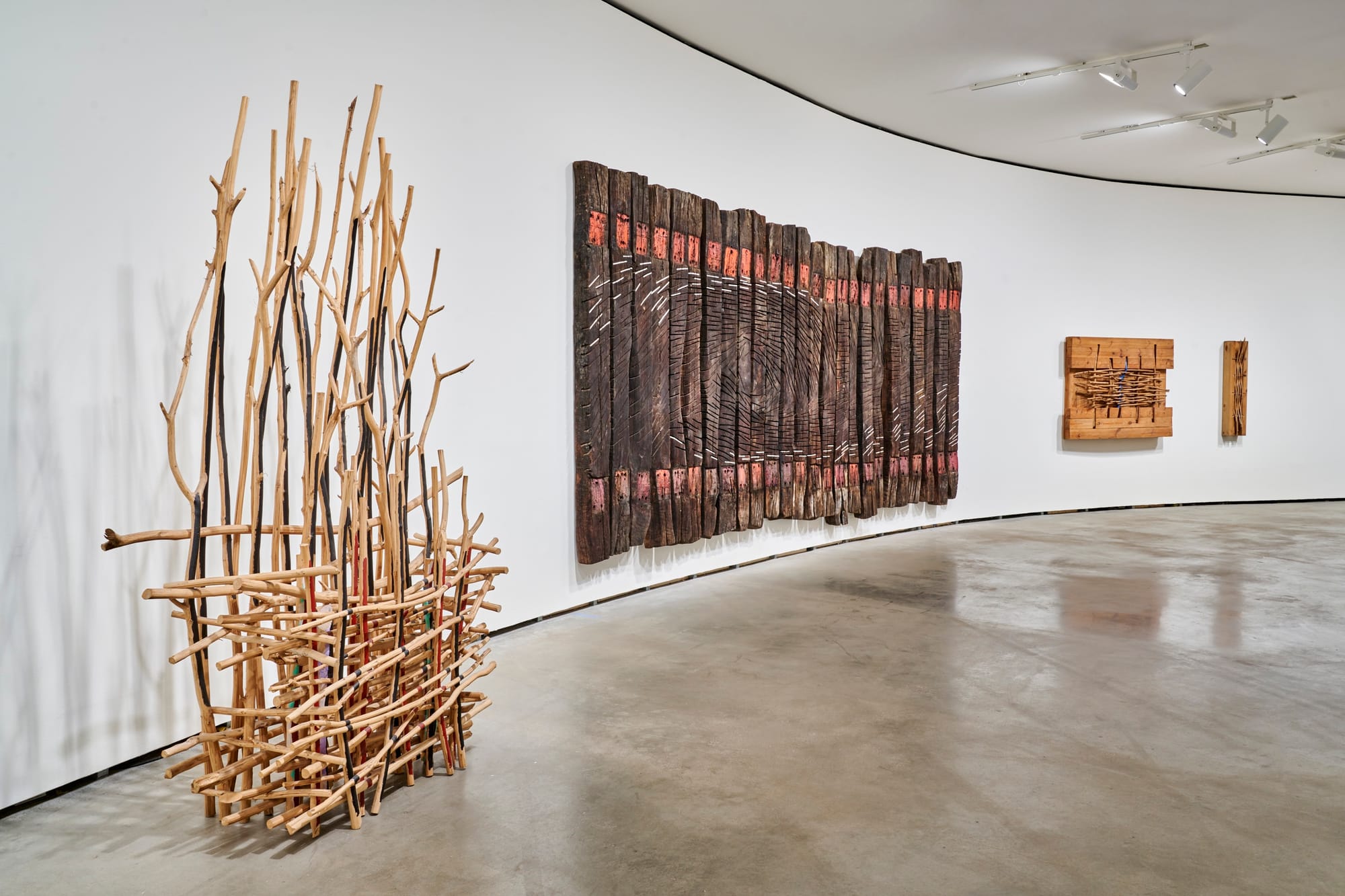
Arts of the Earth
Until 3 May 2026
Over a hundred works by more than forty artists and collectives fill the second floor of the Guggenheim Museum Bilbao in an exhibition that traces six decades of art made from and with the earth. Soil, wood, leaves, roots, and plants are its primary materials, and the show connects ancestral craft traditions with Land Art, living installations, and textiles, making no distinction between disciplines. Delcy Morelos’s monumental earthen ramp fills one entire gallery with the scent of forest, while Asad Raza’s grove of 26 trees will be replanted after the show ends. The exhibition's own logistics are subject to the same thinking: all signage and furniture were made from compostable or recycled materials, and no works were transported by air.
Elena Asins. “Antigone”
Until 3 May 2026
Presented on the tenth anniversary of her death, this exhibition at the Museo Picasso Málaga brings together the last major work of Madrid-born artist Elena Asins (1940–2015), whose practice fused mathematics, drawing, poetry, and programming into a language of exceptional formal rigour. Antigone is a sculpture formed from the Greek characters of the name Aντιγόνη, rendered in intense black: a word transformed into a structure in which form and meaning converge without illustration or narrative. Alongside it, the video Haemon uses voice, rhythm, and digital music to explore the ethical and temporal dimensions of the tragedy. Asins does not retell the myth but approaches it through structure and visual language, keeping faith with a conflict that has not dated.
Mariano Fortuny. Dibujos
Until 3 May 2026
Twenty-eight drawings and four prints by Mariano Fortuny y Marsal (1838–1874), on loan from the Musée Goya in Castres, make up this focused display at the Museo Carmen Thyssen Málaga, with 27 of the works shown in Spain for the first time. Working in ink, charcoal, and watercolour, Fortuny used paper as a space free from commercial pressures and the demands of his Parisian dealer, and it is in these works that his modernity is most legible. Landscapes, genre scenes, Orientalist subjects, and studies from life show a draughtsman whose interest in light and open-air observation anticipates the freedoms that Impressionism would formalise only after his death at thirty-six. The exhibition forms part of the international Fortuny Year programme marking the 150th anniversary of his death.
Tiempos Modernos
Until 3 May 2026
Valencia’s Museo de Bellas Artes is currently hosting Tiempos Modernos, a curated look at Spanish contemporary painting from the 1940s to the 1970s. This selection fills a historical gap by focusing on the artistic evolution that occurred after the Civil War. Visitors can explore three distinct sections covering new figuration, post-war abstraction, and still life. The displays feature works by collectives like Equipo Crónica alongside individuals such as Eusebio Sempere. These pieces illustrate how artists used expressive colours and geometric shapes to reflect on a changing society. It is an insightful study of local identity and modern transformation.
Mirar para ver lo ausente
Until 31 May 2026
To celebrate its 50th anniversary, Museo Vostell Malpartida presents Mirar para ver lo ausente, a collaborative exhibition with the MEIAC in Badajoz. This show explores the idea that aesthetic experiences continue beyond the physical objects on display. It features a diverse range of works by artists including Yoko Ono, Wolf Vostell, and Antonio Saura. Accompanying these visual pieces are interpretations from various poets, creating a dialogue between words and images. The curator, Jaime Covarsí, encourages visitors to engage in active thought to find hidden meanings. It is a thoughtful examination of art and perception.
🇨🇭 Exhibitions in Switzerland
Cezanne
Until 25 May 2026
The Fondation Beyeler is currently presenting a monographic exhibition dedicated to Paul Cézanne, focusing on the late and highly significant phase of his career. This selection of roughly 80 oil paintings and watercolours showcases his masterful control over light and colour. Key themes include his famous depictions of the Montagne Sainte-Victoire, enigmatic portraits, and idyllic scenes of bathers. By examining these works, visitors can see how he redefined painting to become a central figure of modern art. The display also highlights his studio practice in the South of France. It is an extraordinary opportunity to witness his revolutionary approach to form.
Carl Cheng: Nature Never Loses
Until 10 May 2026
The relationship between technology and environmental change is at the heart of Nature Never Loses, a survey of Carl Cheng’s career at Museum Tinguely. Working under the corporate pseudonym John Doe Co., the artist creates inventive sculptures that mimic natural processes such as erosion and growth. These Nature Machines and Art Tools use organic materials to challenge traditional ideas about the permanence of art. The exhibition traces six decades of work, from his early Californian experiments to large public installations. It is a witty and slightly foreboding look at how human industry continues to impact the planet.
Dominique White: All Great Powers Collapse from the Centre
Until 17 May 2026
Dominique White’s institutional solo debut in Switzerland, All Great Powers Collapse from the Centre, is now showing at Kunsthalle Basel. Her sculptural works interweave maritime mythologies of the Black diaspora with the concept of the shipwreck. Rather than viewing a wreck as a mere sign of doom, White presents it as a site for radical reorientation and hope. The galleries are transformed into environments that feel submerged, as if visitors are walking across an ocean floor. Corroded iron, rope, and fabric form fractured structures that resist simple classification.
Félicien Rops: Laboratory of Lust
Until 31 May 2026
Kunsthaus Zürich presents a bold exhibition of Félicien Rops, the Belgian artist who once scandalised nineteenth-century society. Titled Laboratory of Lust, the show features approximately 70 drawings and prints that highlight his career as a provocative illustrator. Visitors can observe his famous Pornokratès alongside various depictions of the macabre and the erotic. These images frequently challenged the middle classes of his time by blending religious motifs with worldly desire. It is a fascinating look at a creator who used sharp satire to critique social hypocrisy. The display reveals how he redefined the boundaries of acceptable art.
Colour: Art in the Park-Villa
Until 10 May 2026
The significance of colour in global art is the central theme of a new dual exhibition at Museum Rietberg in Zurich. Divided into two distinct parts at the Park-Villa Rieter, the show first examines the symbolic and aesthetic use of pigments in Indian painting from the eighteenth century. These delicate works illustrate how specific hues were chosen to convey religious or poetic moods. Moving into the photographic realm, the display also explores a century of colour imagery from Africa and Asia. By juxtaposing hand-coloured prints with early film, the curators highlight how technology has influenced our visual understanding of the world.
Disobedience Archive (Canopy for Broken Time)
Until 25 May 2026
Art and activism intersect in Disobedience Archive (Canopy for Broken Time), a significant video-based exhibition at Zurich’s Migros Museum für Gegenwartskunst. This presentation features fifty documentary and artist films that explore resistance and collective self-organisation across the globe. Curated by Marco Scotini, the display uses the shamiana — a traditional South Asian canopy — as a spatial and symbolic framework for community and protest. The works address urgent contemporary issues, including ecological crises and political polarisation. By inviting Raqs Media Collective to engage with the archive, the museum encourages visitors to reflect on time and togetherness in a fractured world.
Richard Paul Lohse
Until 10 May 2026
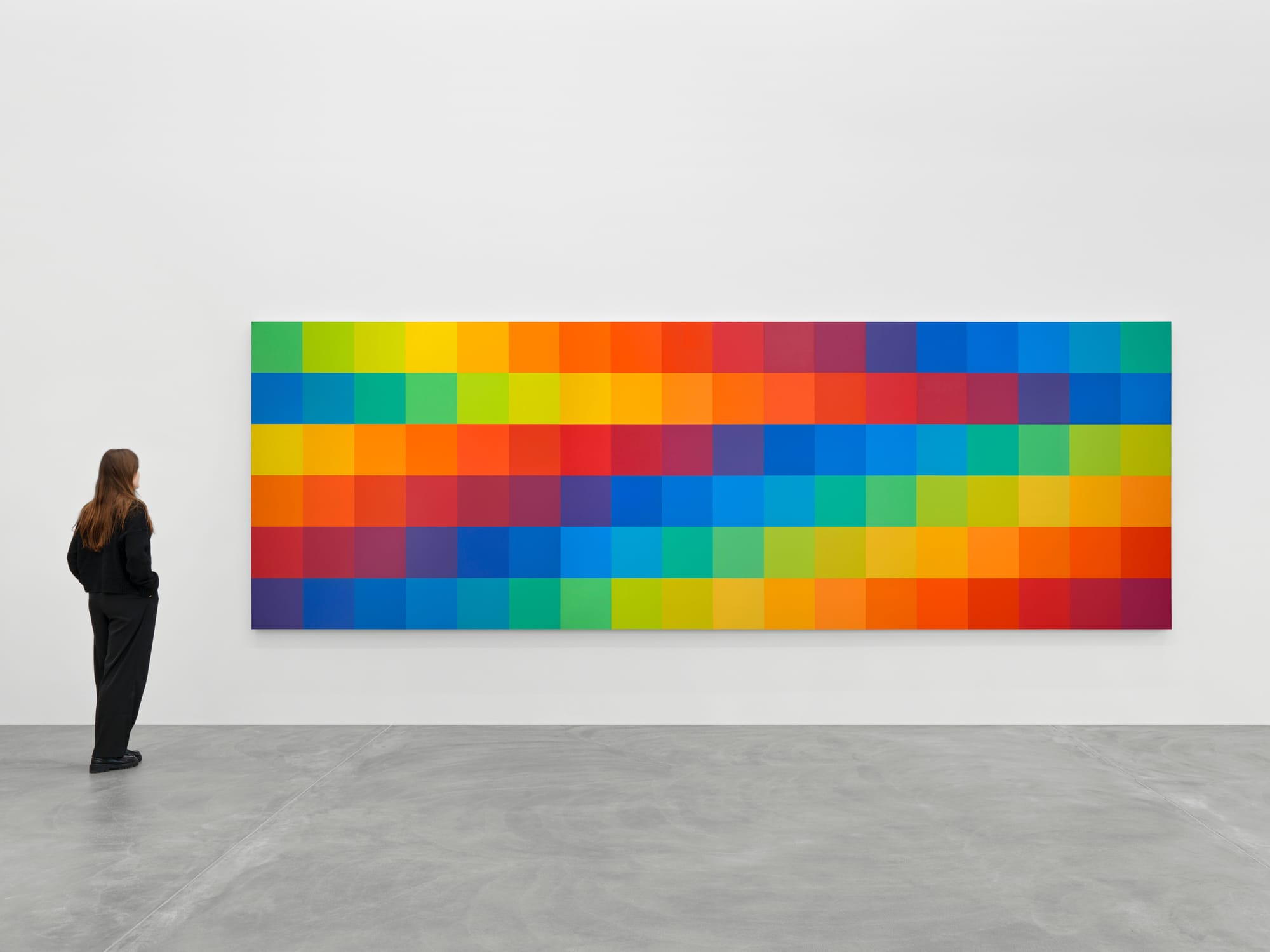
Constructivist art finds a rigorous and vibrant expression in the solo exhibition of Richard Paul Lohse at Museum Haus Konstruktiv. This presentation focuses on the Zurich painter’s output between 1942 and 1987, tracing his journey from early abstraction to a highly systematic visual language. More than fifty works are on display, showcasing his pioneering use of rational and serial systems that predated major international movements. Lohse viewed these geometric structures as reflections of social order, infusing his technical precision with a strong sense of civic commitment. It is a definitive look at a local master of modernism.
George Hantz
Until 24 May 2026
The career of Georges Hantz is currently under the spotlight at the Musée d’art et d’histoire in Geneva. An engraver, medallist, and scholar, Hantz was a leading figure in the decorative arts and industrial design during the late nineteenth century. The exhibition traces his journey from a master craftsman to the long-serving director of Geneva’s Musée des arts décoratifs. Visitors can discover his intricate metalwork alongside archival documents that reveal his commitment to elevating traditional savoir-faire. It is a meticulous tribute to a man who helped shape the city’s artistic identity. The display offers a rare glimpse into the intersection of industry and artistry.
MAMCO × GPS × Bains des Pâquis: Dial-A-Poem Switzerland
Until 10 May 2026
Geneva’s scenic Bains des Pâquis is currently transformed into a literary stage through Dial-A-Poem Switzerland, a collaboration between MAMCO and Giorno Poetry Systems. This outdoor project revives John Giorno’s 1968 concept by allowing visitors to hear verse through a vintage telephone booth. Recordings from a diverse group of Swiss writers and performers celebrate the spoken word in a popular public setting. Alongside this auditory experience, a jetty exhibition explores the legacy of the Beat Generation and the New York underground. It is a playful and accessible way to engage with the intersection of technology and contemporary poetry.
Fokus. Hans Fischli (1909–1989)
Until 3 May 2026
A three-month stint in prison for refusing military service provided the unlikely setting for Hans Fischli’s series Zellengebilde. Currently on display at the Zentrum Paul Klee in Bern, these intricate “cell formations” reflect the artist’s time in confinement through a rhythmic, disciplined visual language. The exhibition traces his journey from a student of the Bauhaus to a significant Swiss architect and thinker. By pairing these personal drawings with his later architectural projects, the curators explore the tense political atmosphere of the 1930s. It is a thoughtful examination of how a master of modernism translated restricted physical space into a broad artistic legacy.
Jean Tschumi Designer
Until 31 May 2026
Lausanne’s mudac is inaugurating its new experimental space, Le carré, with a focus on the furniture of Swiss architect Jean Tschumi. This presentation highlights his 1950s designs for the Vaudoise Assurances headquarters, a building regarded as a total work of art. On display are both original pieces and contemporary reissues by studio BIG-GAME, showcasing armless chairs and marble tables. Archival photographs and films provide context, tracing the evolution from technical drawings to finished products. It is a meticulous study of how functional objects can achieve harmony within a rigorous architectural framework. The show celebrates local design heritage and craftsmanship.
Salvatore Vitale: SABOTAGE
Until 31 May 2026
A transition from sterile corporate corridors to the grim reality of electronic waste defines the physical journey through SABOTAGE at Photo Elysée. In this ambitious presentation, Italian artist Salvatore Vitale scrutinises the human cost of digital capitalism and the gig economy. The exhibition marks the first complete showing of his Death by GPS project, which uses film, photography, and textiles to document the lives of South African freelancers. These workers find their daily existence governed by opaque algorithms and invisible power structures. It is a striking critique of how technology reshapes contemporary labour and resistance.
Luc Delahaye: The Echo of the World
Until 31 May 2026
Confronting the chaotic dislocations of the modern world, Luc Delahaye presents The Echo of the World at Photo Elysée. This retrospective gathers forty large-scale colour works spanning twenty-five years, from harrowing scenes in conflict zones to the sterile halls of global summits. Delahaye’s approach blurs the line between documentary precision and artistic composition, often assembling fragments over months to capture a singular reality. His images of Haiti, Iraq, and Ukraine offer a silent, detached unity with their subjects. The exhibition also introduces a major new installation, marking a fresh direction for the French photographer. It is a powerful testament to the enduring weight of the photographic image.
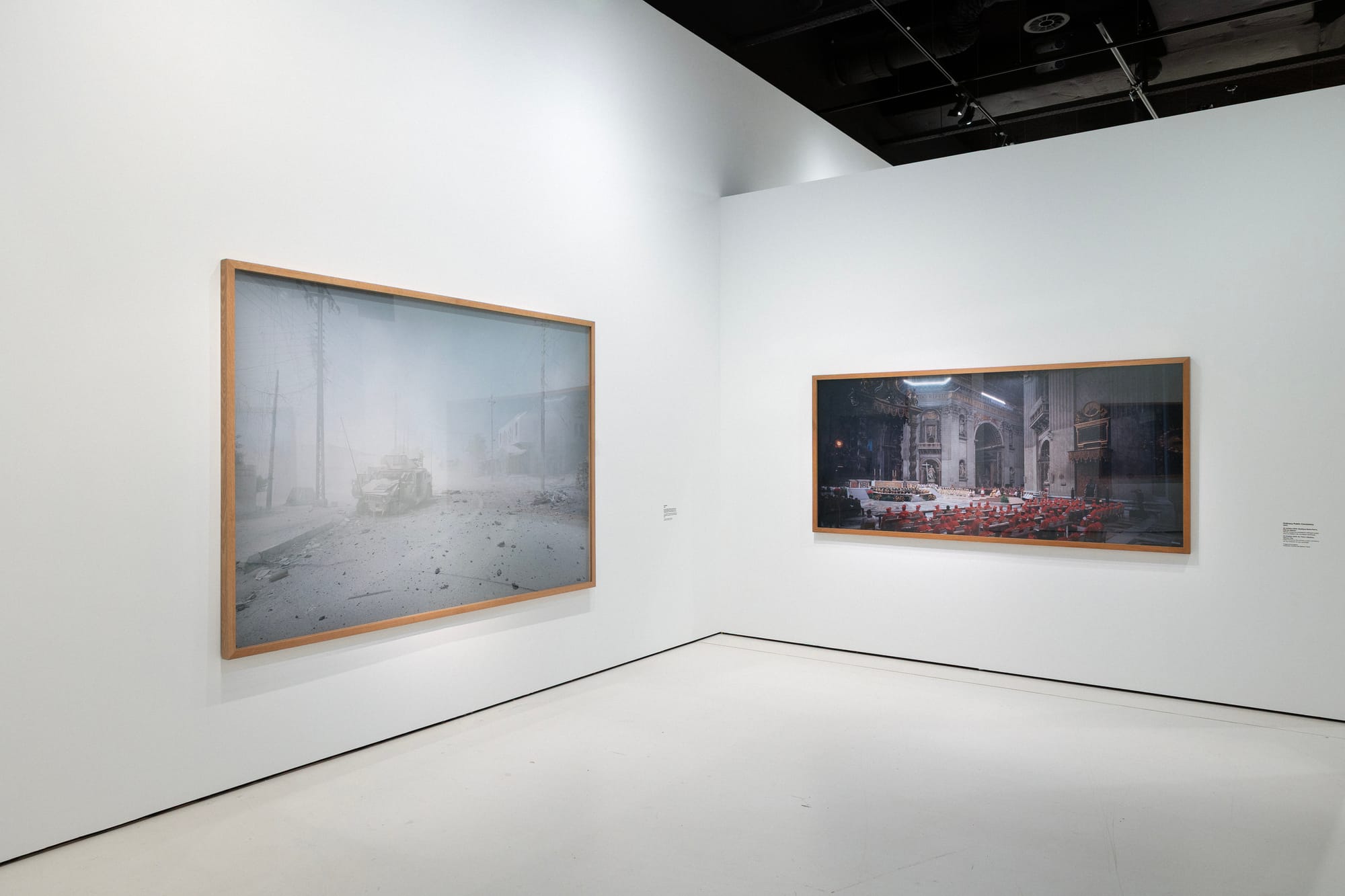
Jack Goldstein: Pictures, Sounds and Movies
Until 31 May 2026
A diver vanishing into a void serves as a haunting recurring image in the work of Jack Goldstein, now on display at Kunst Museum Winterthur. This representative selection of paintings, films, and sound pieces explores the mechanisms of media reproduction and the concept of transience. A key figure of the Pictures Generation, Goldstein often appropriated images from popular culture to create works that balanced spectacle with a sense of emptiness. The exhibition features his experimental 16mm films alongside large-format photorealist paintings executed by assistants to maintain a cool, technical distance. It is a meticulous survey of an influential career that remained largely overlooked in Switzerland during the artist’s lifetime.
🇬🇧 Exhibitions in the United Kingdom
Wright of Derby: From the Shadows
Until 10 May 2026
Joseph Wright of Derby (1734–1797) is best known for An Experiment on a Bird in the Air Pump (1768), which has hung in the National Gallery in London for over 150 years, yet the museum has never before devoted a focused exhibition to him. From the Shadows gathers more than twenty works from the years 1765–1773, the period in which Wright produced his extraordinary series of candlelit scenes. Seventeen paintings come from Derby Museums, which holds the world's largest collection of his work. The show challenges the conventional reading of Wright as a straightforward Enlightenment celebrant, arguing instead that his nocturnal compositions engage with death, melancholy, and moral unease. Also on display are mezzotint prints and historical scientific instruments, including an orrery and an air pump.
Stubbs: Portrait of a Horse
Until 31 May 2026
The centrepiece of this free exhibition at the National Gallery in London is Scrub, a Bay Horse Belonging to the Marquess of Rockingham (c.1762), the only life-size horse portrait by George Stubbs still in private hands and almost never before seen in public. Scrub rears in a landscape without a rider, and a short walk away hangs Whistlejacket, the equally monumental canvas from the same year, also commissioned by the Marquess for his two retired racehorses. Together they represent a turning point in British animal painting, in which the horse becomes the portrait subject in its own right. The exhibition traces this achievement back to its foundation: the eighteen months Stubbs spent dissecting horses in a remote Lincolnshire barn in the 1750s, resulting in his celebrated anatomical treatise of 1766.
Nigerian Modernism
Until 10 May 2026
Through paintings, sculpture, textiles, and poetry by more than fifty artists, Tate Modern in London traces the story of artistic networks that transformed Nigerian art in the decades surrounding independence from British colonial rule in 1960. Groups such as the Zaria Art Society and the Mbari Artists’ and Writers’ Club connected cities including Zaria, Ibadan, Lagos, and Enugu with London, Munich, and Paris, developing a practice that fused Nigerian, African, and European traditions into something distinctly its own. Key figures include Ben Enwonwu, Uzo Egonu, Ladi Kwali, and El Anatsui. The exhibition is one of the most ambitious presentations of Nigerian modernism yet staged outside Nigeria itself.
Ian Hamilton Finlay and the French Revolution
Until 31 May 2026
Twelve prints made between 1984 and 1992 by the Scottish poet and artist Ian Hamilton Finlay (1925–2006) are on display in this focused room display at the British Museum in London, drawn from a group of 26 works donated in 2025 by art historian Prof. Stephen Bann, who corresponded with Finlay for many years. Known first as a concrete poet and later as the creator of Little Sparta, his celebrated conceptual garden in the Pentland Hills, Finlay turned increasingly to the French Revolution as a subject from the 1980s onwards. What drew him was not nostalgia but the question the Revolution poses with lasting force: how readily high ideals tip into violence. The prints explore that tension through his characteristic fusion of language, typography, and image.
Reinvention and Revolution: Pierre-Alexandre Wille
Until 31 May 2026
Pierre-Alexandre Wille (1748–1837) was a pupil of Jean-Baptiste Greuze and built his early reputation imitating the sentimental genre scenes that made his teacher famous at the Salons of the 1760s. What makes him an exceptional witness to his age is that his career lasted from those years of the ancien régime all the way through to the 1830s, taking in the Revolution, the Terror, and their aftermath. The British Museum in London has been collecting his work since the 19th century, and its holdings have recently doubled through a bequest from the dealer and philanthropist Colin Clark (1935–2020), whose gift included some of Wille’s most arresting finished drawings, among them a portrait believed to show Charlotte Corday made in her prison cell days before her execution.
Artist Rooms: Louise Bourgeois | Helen Chadwick | Robert Mapplethorpe
Until 31 May 2026
Three separate displays at Modern One in Edinburgh, each devoted to a single artist, make up this free presentation drawn from the Artist Rooms collection jointly owned by Tate and the National Galleries of Scotland. The centrepiece of the Bourgeois room is her three-metre-high Spider (1994), a work in which the monumental and the fragile are held in an unsettling tension. Helen Chadwick is represented by her light boxes and by Piss Flowers (1991–92), a sculptural installation as playful as it is provocative. Robert Mapplethorpe's contribution focuses on self-portraiture, including his 1988 self-portrait with a death's-head cane, made the year before he died. All three artists approached identity, the body, and inner life from positions of striking individuality.
Ripping up the Rule Book
Until 7 May 2026
Granton Art Centre in Edinburgh, where thousands of works from Scotland’s national collection are stored, opens its doors this spring for a first-of-its-kind exhibition pairing those holdings with new work by artists from The Action Group, an organisation that campaigns for and supports people with learning disabilities, now in its 50th year. Fourteen artists — among them Joanne Rye, Victoria Miller, and Billy Mooney — made their works across three workshops with the National Galleries of Scotland and artist Sam Rutherford, responding to collection pieces including Eduardo Paolozzi's Zero Energy Experiment Pile (Z.E.E.P.) and Edward Bawden's The Dolls at Home, as well as photography by Viviane Sassen. The results hang alongside the works that inspired them.
Delaine Le Bas: Un-Fair-Ground
Until 31 May 2026
Following her Turner Prize nomination in 2024, Delaine Le Bas brings her first solo show to the Whitworth in Manchester, drawing on painting on calico, drawing, embroidery, video, and performance to create a sprawling mixed-media environment. Informed by her Romany heritage, her engagement with folklore and witchcraft, and her background in fashion design, the exhibition centres on the monumental mural Un-Fair-Ground (2024), originally made for Glastonbury Festival and now reconstructed at the Whitworth. Le Bas has also reorganised works from the gallery’s own collection in an unconventional display, placing artists from the Musgrave Kinley Outsider Art Collection alongside William Blake and Giorgio de Chirico, deliberately dismantling conventional hierarchies of reputation and medium.
Bridget Riley: Learning to See
Until 4 May 2026
The exhibition title comes from a letter Monet wrote late in his life, thanking Eugène Boudin for first teaching him to see and understand. It is a fitting frame for a show at Turner Contemporary in Margate that surveys Bridget Riley's career-long investigation into the sensory experience of sight. Developed in close collaboration with the artist, Learning to See brings together paintings from the late 1960s through to her most recent canvases, alongside wall paintings and preparatory works on paper, tracing how recurring motifs have been revisited and transformed across decades. Those motifs include the line, the curve, the circle, and the triangle. A new Intervals wall painting was designed specifically for the gallery, working with Turner Contemporary’s light-filled modernist architecture and the ever-changing skies and tides visible beyond it.