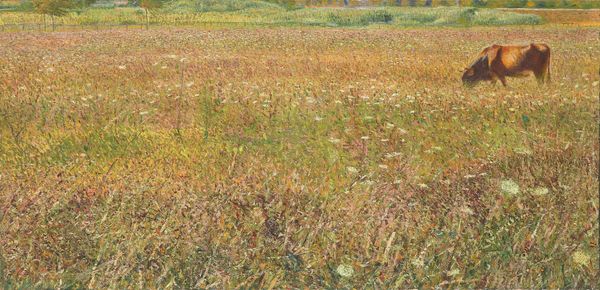
147 art exhibitions around Europe closing in September 2026
The world’s largest Mondrian collection has hung in one arrangement at the Kunstmuseum Den Haag since April 2020. That display comes down on 27 September. The other 146 exhibitions in this issue, the longest Kunsti Radar has yet compiled, close across thirteen countries through September.

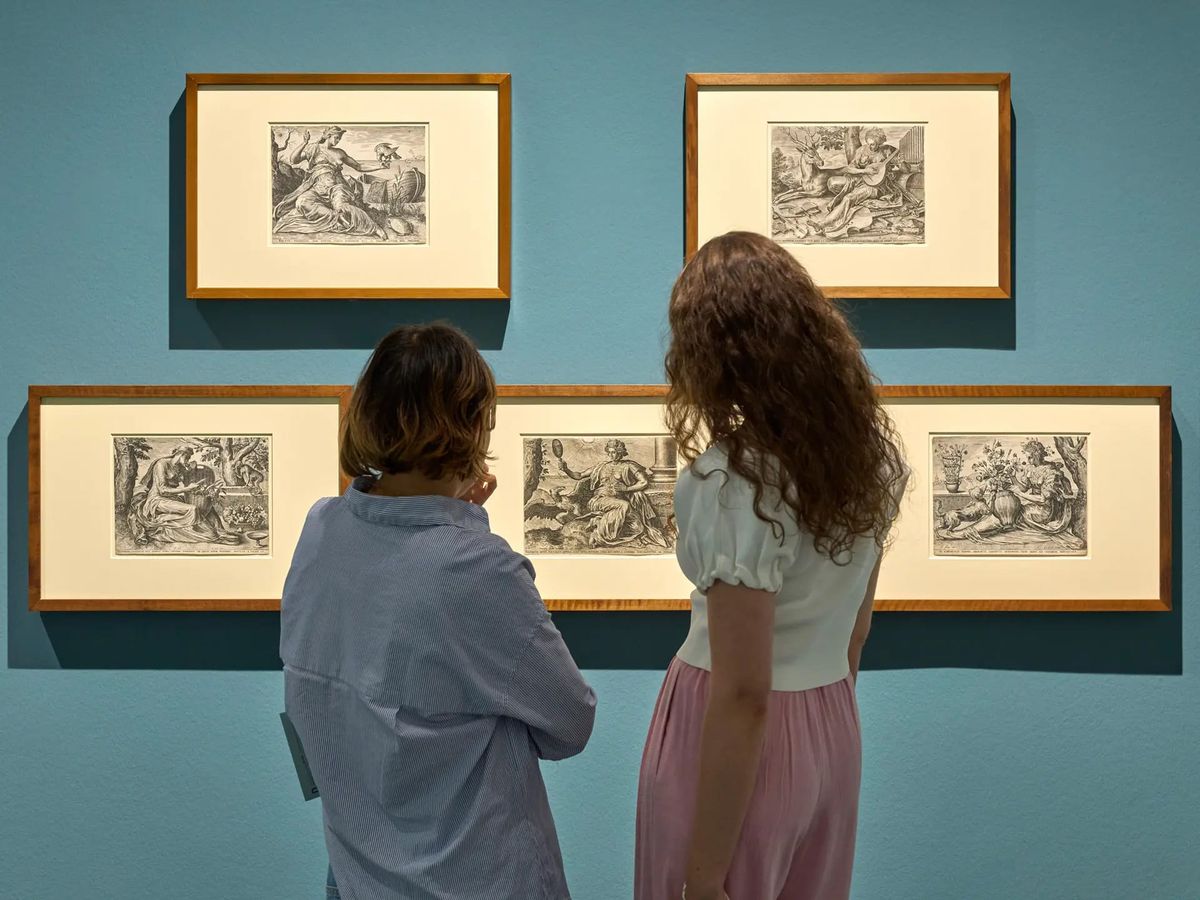
The world’s largest Mondrian collection has hung in one arrangement at the Kunstmuseum Den Haag since April 2020. That display comes down on 27 September, with a rebuilt presentation to follow from October, so the familiar route can be walked a few more times yet. The other 146 exhibitions in this issue, the longest Kunsti Radar has yet compiled, close across thirteen countries through September.
The heavyweight among them is in Antwerp, where Antony Gormley’s Geestgrond, his largest solo exhibition in continental Europe, stands among the KMSKA’s old masters until 20 September. Two endings on 13 September are directly linked: Pierre Huyghe’s real-time simulations leave the Fondation Beyeler in Basel, and Ruth Asawa’s retrospective finishes its Bilbao run before travelling there to take over the galleries. Humlebæk’s Louisiana parts with three shows in a single month. Sophie Calle goes in the first week, Lucian Freud and Arthur Jafa in the last. In London, the National Gallery separates Monet and Renoir on 15 September, ending the free display that reunited the two views of La Grenouillère they painted side by side in 1869.
The first to go is Canaletto & Bellotto, closing at the Kunsthistorisches Museum in Vienna on 6 September; the last is SUPERFLEX’s The Bank, holding out at Mudam in Luxembourg until the 30th.
🇦🇹 Exhibitions in Austria
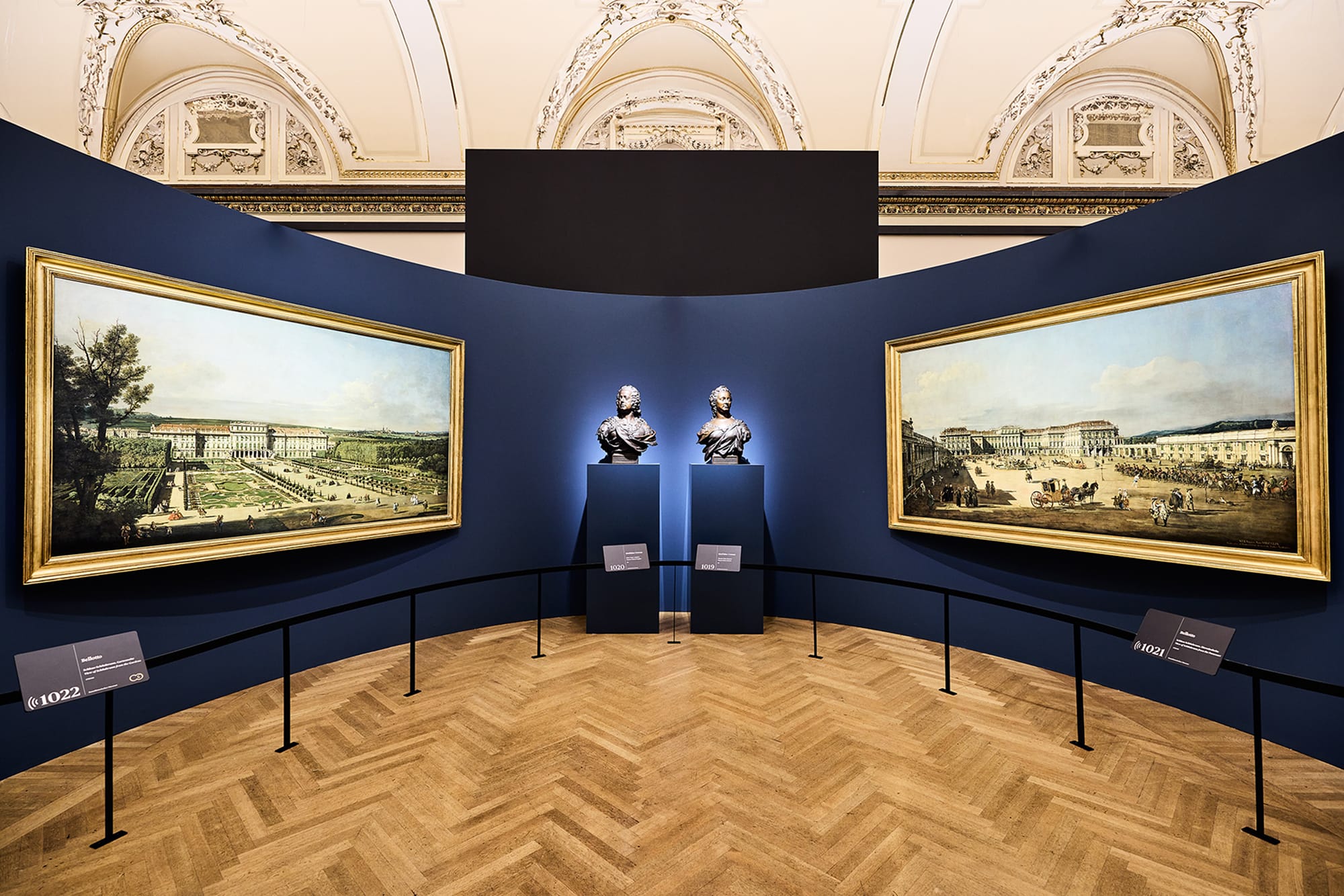
Canaletto & Bellotto
Until 6 September 2026
Two Venetians taught Europe how to look at its cities. The Kunsthistorisches Museum pairs Canaletto with his nephew Bernardo Bellotto, following their views of Venice, London, Dresden and Vienna and the camera obscura that helped produce them. Bellotto’s Vienna from the Belvedere of 1759–60 heads the roughly thirteen paintings he made during two years in the city, all of which entered the Habsburg collection. Loans from abroad, many shown in Austria for the first time, fill out the story of optical precision put to theatrical use.
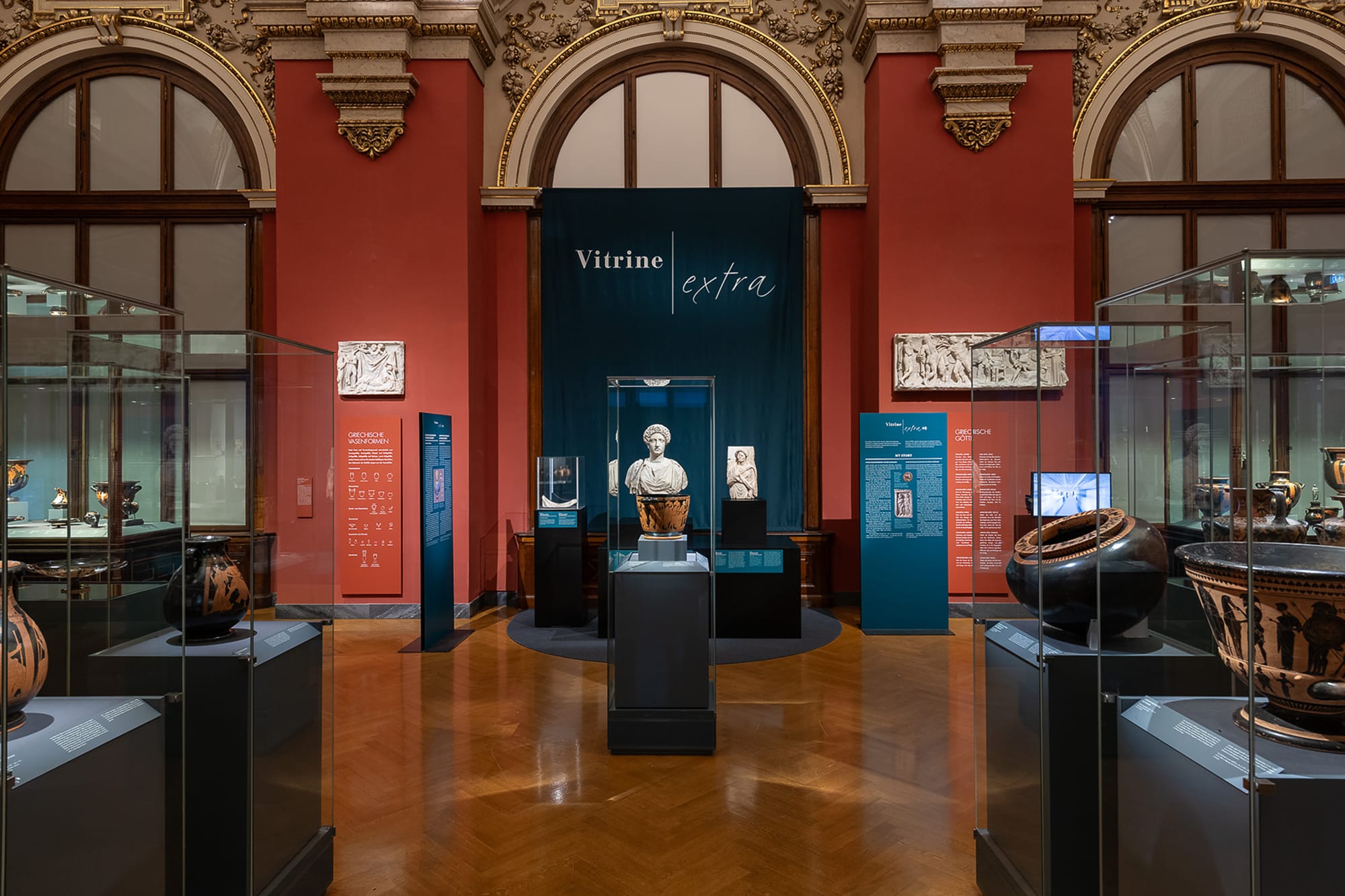
My Story — Ancient Female Portraits and Their Afterlife
Until 20 September 2026
Showcase EXTRA, the Kunsthistorisches Museum’s small-format series, gives its eighth edition to ancient portraits of women. Marble busts, coin profiles and tomb reliefs run from the late Republic to the Severan era, among them Julia Titi with sixteenth-century additions and a fourth-century recarving long known as Helena. Afterlife is the operating idea. The display shows how portraits were reworked, reidentified and physically altered as centuries passed and hairstyles changed, so that a single head can carry several successive identities. One vitrine holds the whole argument.
Carlone Contemporary: herman de vries
Until 13 September 2026
Under Carlone’s painted heaven of Apollo and Diana, the Upper Belvedere has spread 108 pounds of lavender flowers in an ellipse on the floor. The 1991 work gives herman de vries’s scent and colour a Baroque frame. Trained as a botanist and landscape gardener, the Dutch artist has held for over fifty years to the credo that nature is art, collecting, classifying and archiving what forests and travels yield. His works are held by MoMA and the V&A. The Carlone Contemporary series stages such single-work encounters in the frescoed hall.
Helga Philipp. Spaces of Movement
Until 20 September 2026
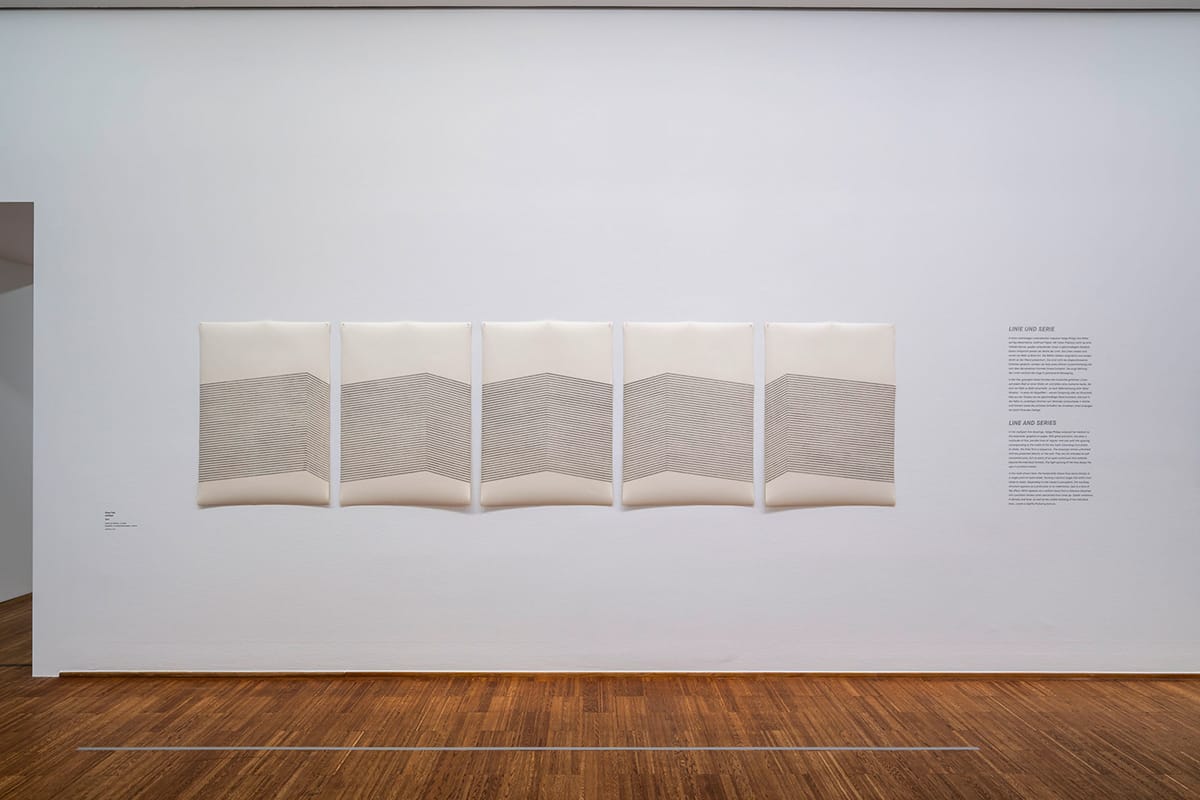
Austrian op-art had a central figure in Helga Philipp, and the Albertina makes the case with around fifty works from four decades. From the 1960s she built a precise visual language around perception and motion, moving between painting, drawing, printmaking and objects. Kinetic pieces in silkscreen, glass and wood from the early sixties stand beside a sixteen-part silkscreen from 2002, the year she died. Mathematics, serial structure and viewer participation hold the œuvre together. The show closes on 20 September, giving the autumn a reason to come early.
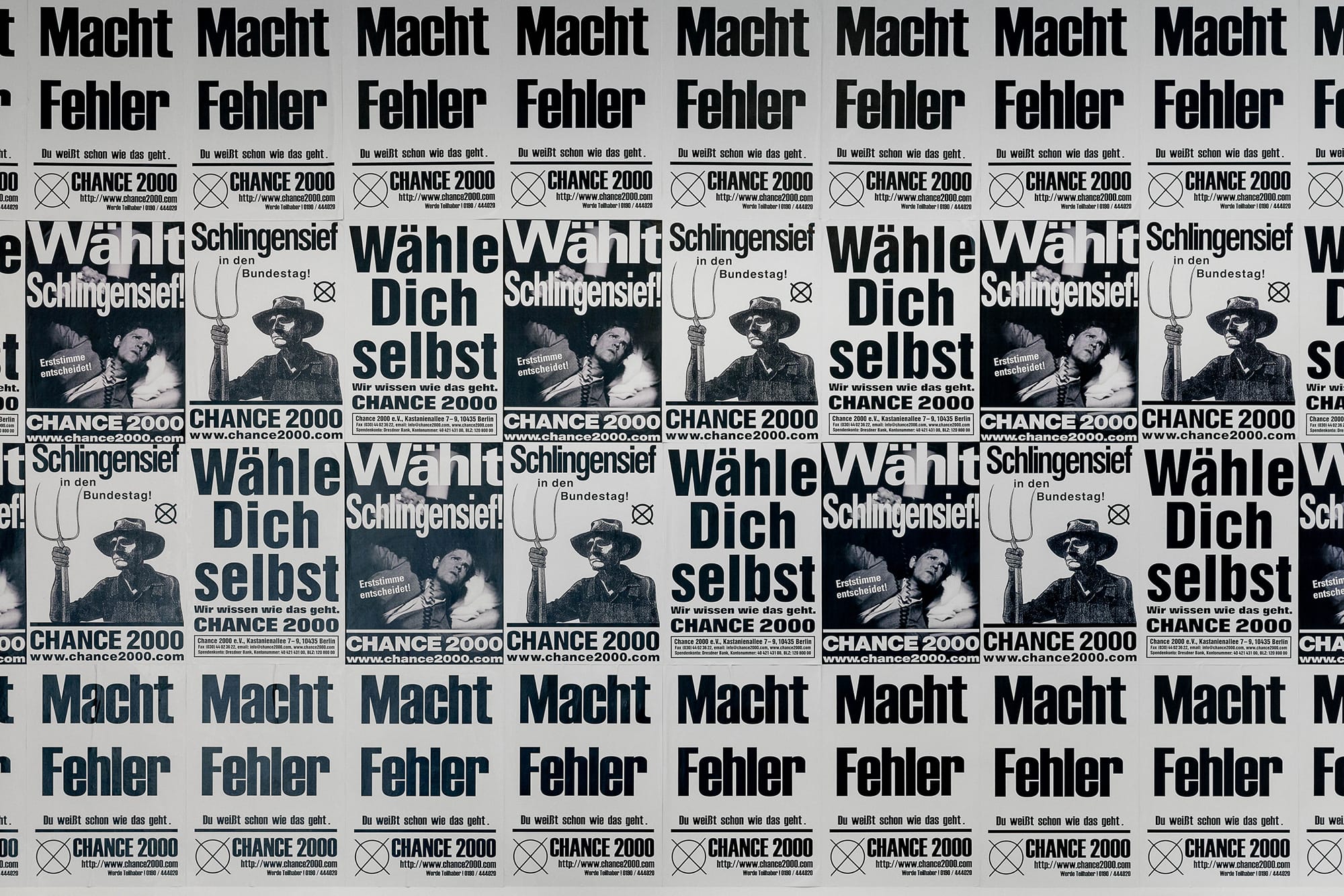
Christoph Schlingensief: It’s Not My Problem Anymore!
Until 13 September 2026
Belief in fear became dogma in Church of Fear, the installation Christoph Schlingensief premiered at the 2003 Venice Biennale. The MAK’s upper hall sets it at the centre and reads the German provocateur’s work in two directions from there: backwards to interventions such as Chance 2000 and Please Love Austria, forwards to cinema and opera including The African Twin Towers. Questioning, doubting and failing are treated as his method rather than his weakness. The Vienna Festival and the Gropius Bau in Berlin share the undertaking.
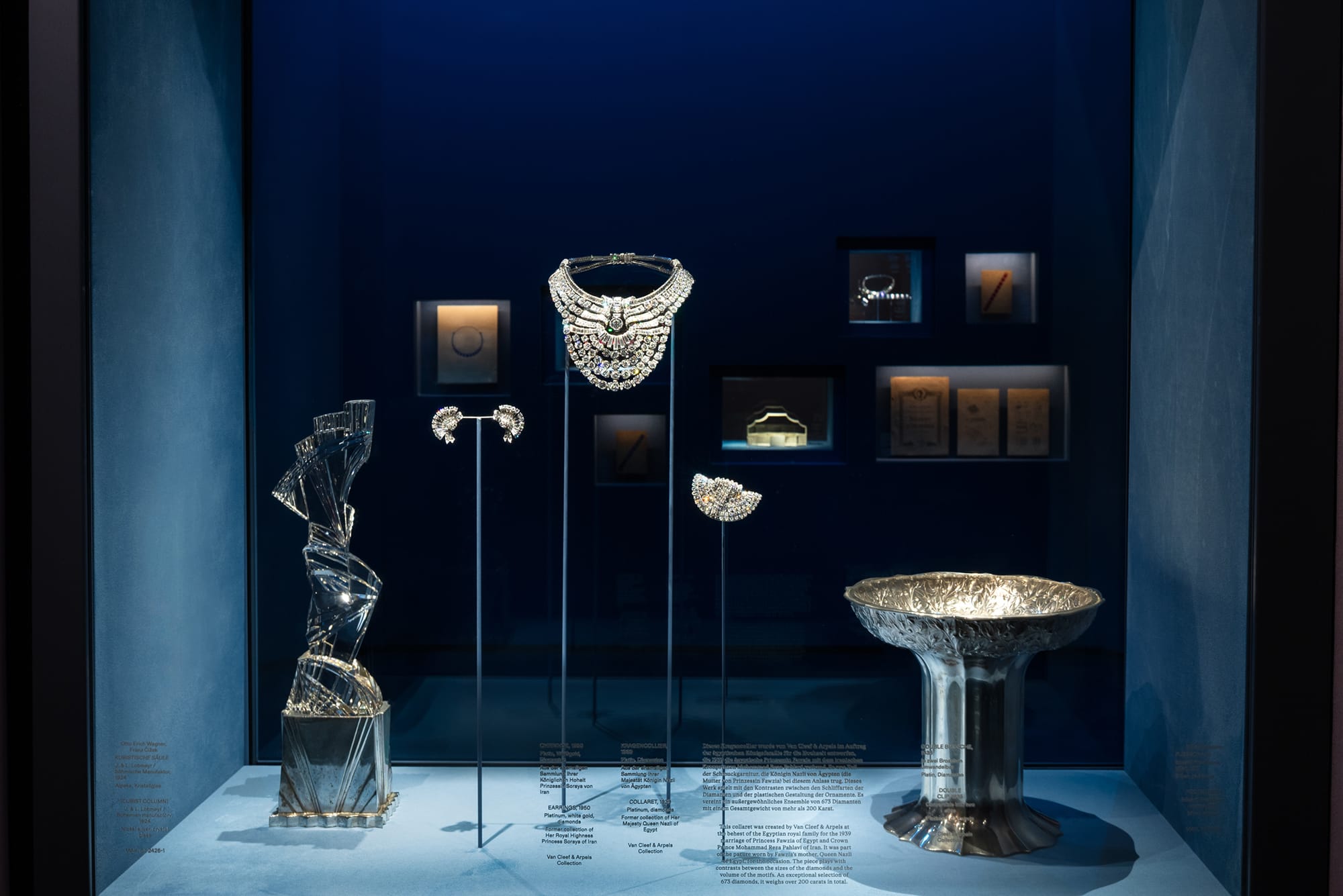
Glanzstücke. Van Cleef & Arpels High Jewelry × Masterpieces from the MAK Collection
Until 27 September 2026
A labyrinth by the Paris studio Atelier Tsuyoshi Tane leads through some 500 objects, over 300 of them from Van Cleef & Arpels’s own patrimonial collection and 200 from the MAK. Zip necklaces and Egyptian Pattern bracelets meet Wiener Werkstätte designs by Koloman Moser and Josef Hoffmann, works by Gustav Klimt and Central Asian textiles. Six themed sections trace shared motifs, from wanderlust and architecture to stage arts and the ephemeral. The point is parallel craftsmanship: jewellery and applied art answering one another in form, colour and pattern.
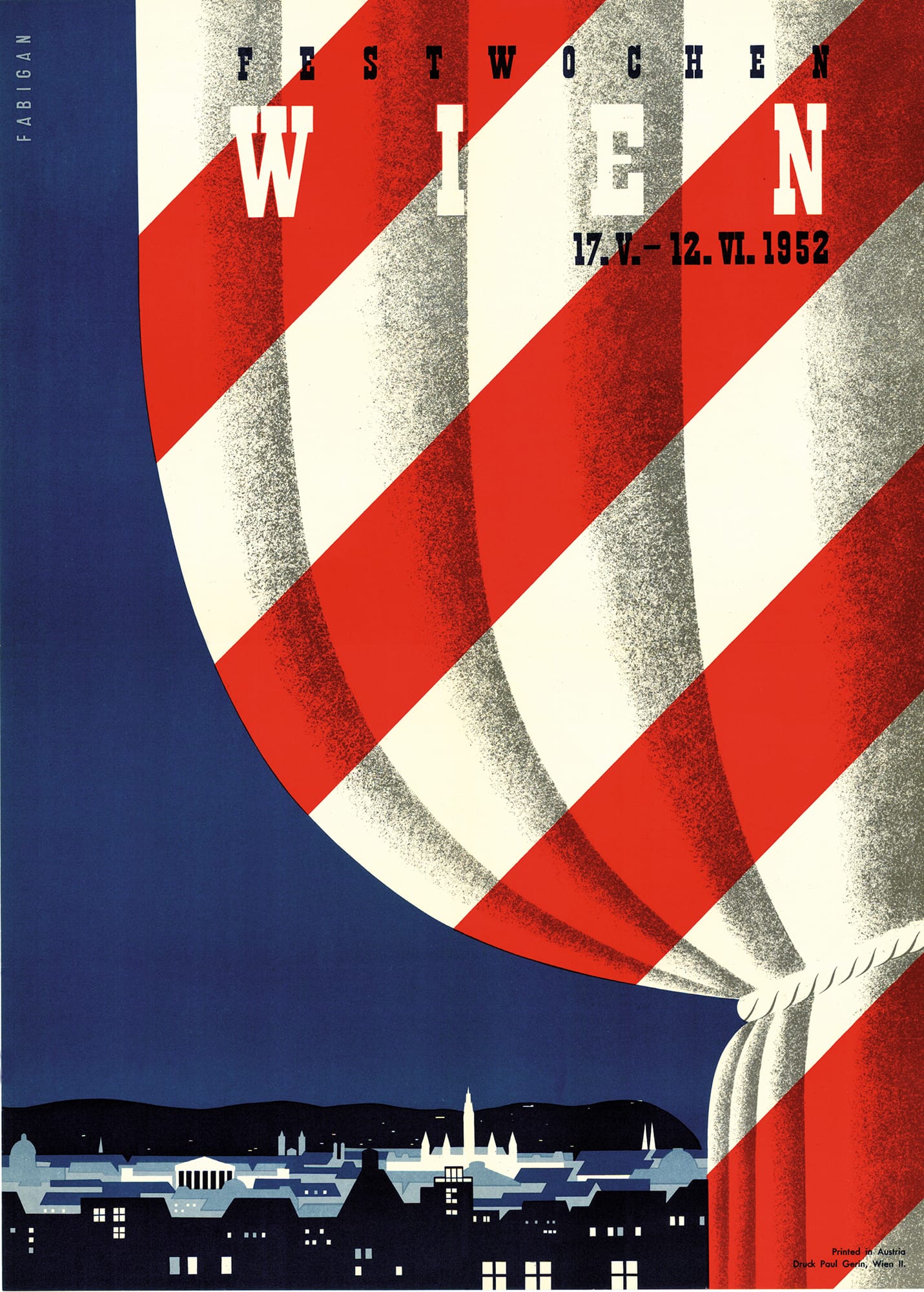
Hype and High Culture. 75 Years of the Vienna Festival in Posters
Until 20 September 2026
Seventy-five years of the Wiener Festwochen survive on paper in more than 1,000 posters held by the MAK and the Wienbibliothek im Rathaus, from which this selection in the Poster Forum is drawn. Designs by Hans Fabigan, Lawrence Weiner and Mariusz Jan Demner mark changing graphic languages, while flashpoints such as the 1976 Arena occupation and Falco’s 1985 opening concert anchor the timeline. The festival’s entire poster archive is being made accessible digitally alongside the show. It amounts to Vienna’s cultural politics, read at poster height from street level.
Charlotte Perriand. Living Modernism: Design, Photography, Architecture
Until 13 September 2026
Design, photography and architecture were a single discipline to Charlotte Perriand, and this first Austrian survey of her work keeps them together. The Mönchsberg galleries follow her decade in Le Corbusier’s studio, where she designed furniture now standard in histories of modernism, and her later turn to the camera, whose images fed back into her interiors. Organised with Kunstmuseen Krefeld and the Fundació Joan Miró, the show adds an audio guide built as a fictional interview with the designer. Whole environments, rather than single objects, were her aim.
Stephan Balkenhol. Là ci darem la mano …
Until 5 September 2026
Don Giovanni, Carmen, Turandot and Elektra stand about Salzburg in carved and painted wood. Stephan Balkenhol has peopled the Residenzplatz and the state rooms of the Residenz with figures from opera, joined by lithographs in the Throne Hall and Green Salon. The title quotes the duet from Mozart’s Don Giovanni, and the themes are opera’s oldest: freedom, power, guilt, jealousy, love. The outdoor cast leaves the square on 5 September, a month before the rooms close, so catching the complete ensemble together is strictly a late-summer affair.
Hybrid Pleasures: Helen Chadwick
Until 20 September 2026
Meat, chocolate, compost and bodily fluids all served Helen Chadwick as sculptural material. Kunsthaus Graz gives the British artist, who died in 1996 at forty-two, her first comprehensive showing in more than twenty-five years, from the graduation piece In the Kitchen to the bronze Piss Flowers. Beauty and the grotesque are kept deliberately close. Sculptures in latex and metal by Liesl Raff answer Chadwick from the present, and the whole forms part of BLOOM, the Joanneum’s year devoted to flowers. Co-produced with The Hepworth Wakefield.
🇧🇪 Exhibitions in Belgium
Room 54. Recent acquisitions
Until 27 September 2026
Room 54 is where the Royal Museums put their newest acquisitions on view. The present selection brings together Liliane Vertessen, Thomas Houseago, Chéri Samba and Thomas Verstraeten, whose Urbi et Orbi – Model of 2024 arrived with the Art Brussels Discovery Acquisition Prize. The room also explains the buying policy behind it. The museums want stronger representation of women artists, greater visibility for artists from outside Europe, and a way of thanking the patrons who have supported their video collection. Watching a national collection grow, one purchase at a time, is the point.
Art x Gender
Until 27 September 2026
Around thirty works drawn from the Belgian royal collections examine how art reinforces or unsettles ideas of masculine and feminine. The selection reaches from Lucas Cranach to Roger Raveel, whose Human Couple of 1968–1975 fronts the show, and takes in Fernand Khnopff, Cécile Douard, Marie Laurencin and Jane Graverol along the way. Several pieces are on view for the first time. The display belongs to the museums’ Collections in Question series. A guided trail extends the theme into the permanent galleries, joined by a participatory programme for visitors aged fifteen to twenty.
Saul Steinberg. The Americans – Part 2
Until 27 September 2026
For Expo 58, Saul Steinberg covered the walls of the American pavilion with The Americans, a collage running to more than seventy metres across eight thematic series. The Belgian State bought the panels when the fair closed, and the Royal Museums have now restored them in partnership with the leather house Delvaux. This second rotation follows the selection shown in spring 2025 and includes scenes such as Drugstore – Small Town, his wry inventory of the American way of life. The panels hang in the temporary room on level +1.
Call me gravity
Until 20 September 2026
Debt, in its social and emotional senses as much as its financial one, is the subject of this group show curated by Pauline Hatzigeorgiou. Six artists take part, among them Dora Budor, Georgia Sagri and Sung Tieu, whose works Inner Vampire, Breathing (5_1_5) and Rest In Power trace what owing does to bodies, labour and public space. Most pieces are sculptural and worked into the former brewery’s raw architecture. Performances, screenings and talks continue through the final weeks before the show closes on 20 September.
Antony Gormley. Geestgrond
Until 20 September 2026
A word gives this show its shape: geestgrond, the sandy soil formed after the Ice Age, which also carries the sense of an inner self. Antony Gormley takes it as licence to spread sculpture in lead and iron through the galleries, among the old masters and out of doors. KMSKA calls it his largest solo exhibition in continental Europe, curated by Carolyn Christov-Bakargiev. A section named the Heart gathers early works, notebooks, drawings, photographs and sources of inspiration in the manner of a cabinet of curiosities.
Bert De Leeuw. What appears, disappears
Until 20 September 2026
Before turning to art full time, Bert De Leeuw painted cinema posters and designed sets for Belgian television. The KMSKA print room retraces the Antwerp autodidact’s path from the G58 group onward, through experiments with glass beads and polystyrene and a move into three dimensions around 1965. Numbers and structures run through it all, as does a preoccupation with the transience of life. Similaun 3000 of 1995 nods to Ötzi the glacier mummy; six of its twenty-four bronze cubes stand in the museum garden. Entry comes with the ordinary museum ticket.
Jean Katambayi Mukendi — RATIO
Until 27 September 2026
Resource extraction and the unequal distribution of power supply the subject of RATIO, the first solo museum presentation of Jean Katambayi Mukendi. New drawings, paintings and large sculptures fill M HKA’s ground floor, assembled from recycled materials the Congolese artist gathered during a Berlin residency in 2025. His composite structures borrow and rewire machine functions from agriculture, robotics and the military, treating repair and repurposing as an ecological argument. The show is co-produced with KW Institute for Contemporary Art in Berlin, where an earlier version ran this spring.
Old Guard? Avant-garde!
Until 13 September 2026
What became of Belgium’s historical avant-garde after 1945 is the question behind this archive display on M HKA’s first floor. Eight parallel narratives, rather than one grand story, follow Paul van Ostaijen, Michel Seuphor, Paul Joostens, Jozef Peeters, René Guiette, Floris Jespers and ELT Mesens as post-war artists rediscovered them and the old guard turned avant-garde once more. Documents and artworks appear side by side, with a Joostens collage as the emblem. It opens a series of three archive exhibitions on the afterlife of Van Ostaijen’s art theory.
Jürgen Addiers. I Have No Idea What I Am Doing
Until 20 September 2026
Metal spheres hung from the ceiling spell out the title of this short exhibition in M HKA’s Inbox space, at once confession, irony and invitation. Jürgen Addiers works in paintings, video, neon and installation, and treats humour as a method for handling doubt rather than a way of escaping it. Not knowing, in his reading, is an open position from which experiment and imagination follow. It occupies the fifth floor for barely more than three weeks; entry is free, and a preview evening opens it on 27 August.
Francisca García & Mario Navarro. Unearthed Conversation
Until 13 September 2026
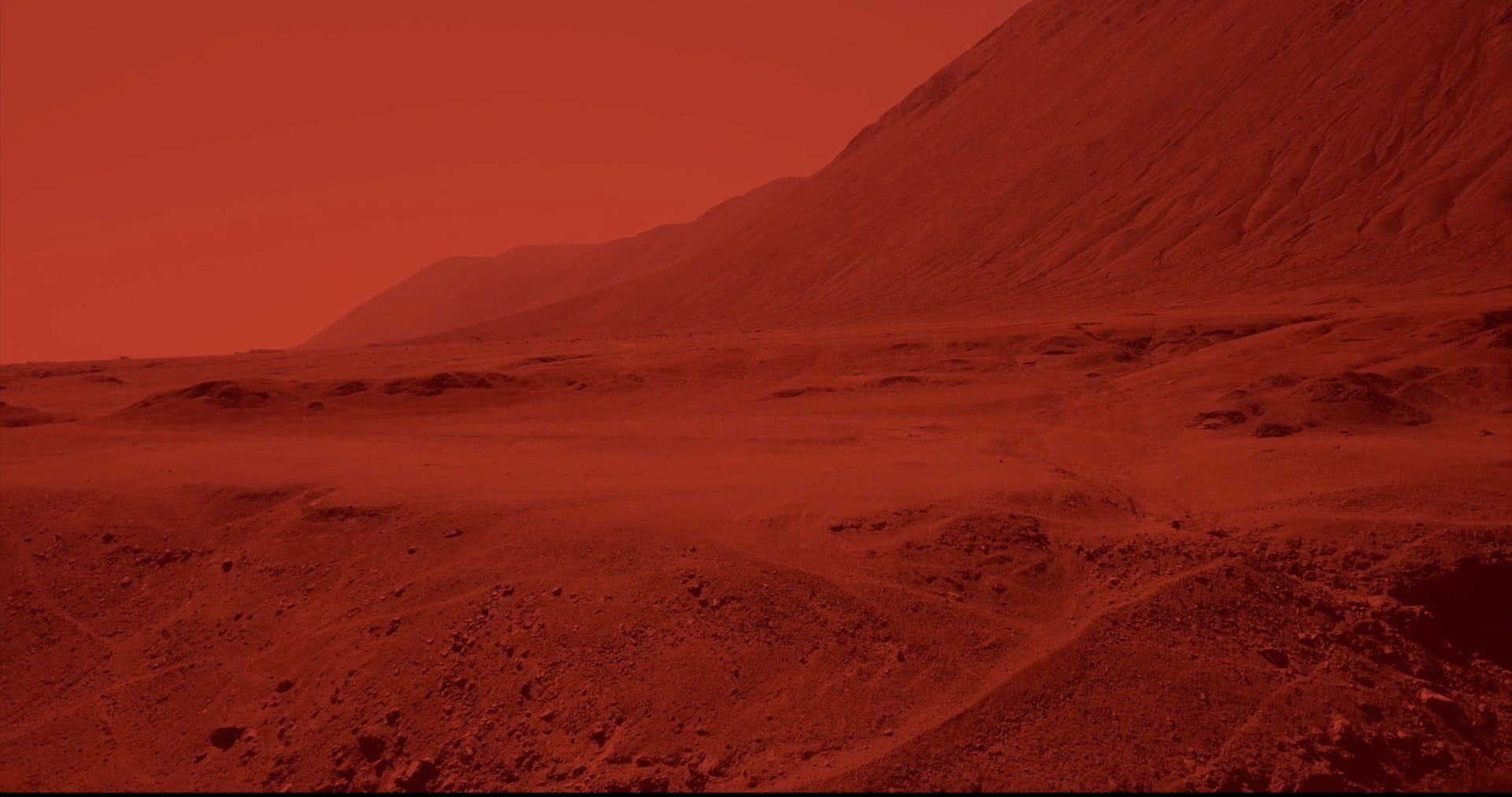
Where the Loa River meets the Pacific, the Atacama Desert holds ancient Chango sites, the world’s largest telescopes and terrain so dry it doubles for Mars. That landscape, and the traces the Pinochet years left on it, feeds this two-person show by the Chilean artists Francisca García and Mario Navarro. Sculpture, video, sound, textiles and watercolours consider the surface of the earth as a border between the exposed and the hidden. A 1964 documentary, Aquí vivieron, and imagery from NASA’s Perseverance rover supplied their starting points.
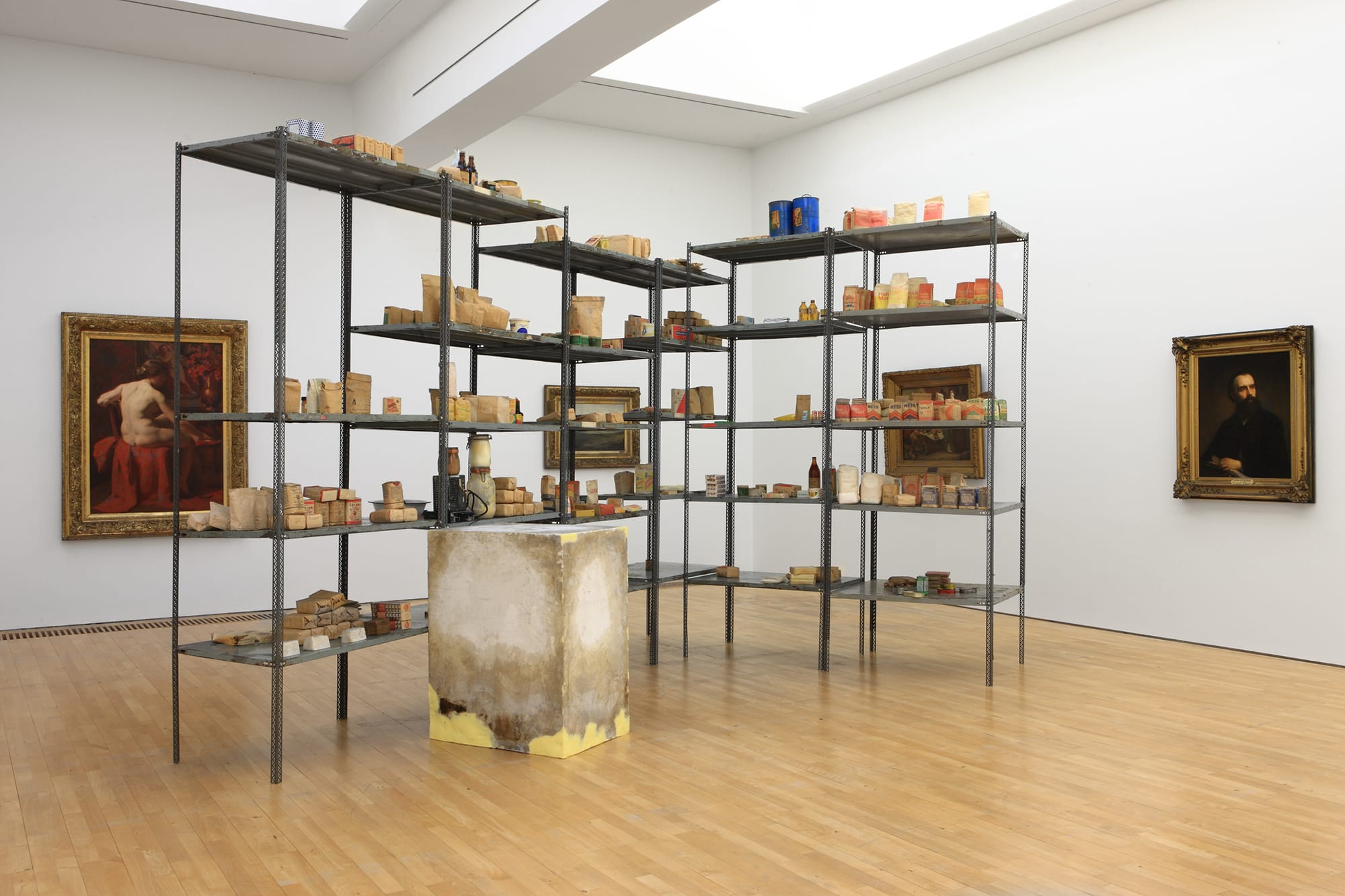
Joseph Beuys. Wirtschaftswerte: a conservation history
Until 13 September 2026
This exhibition is about keeping an artwork alive. Wirtschaftswerte, Joseph Beuys’s installation of 1980, lines metal shelving with foodstuffs from East Germany, sets them against nineteenth-century paintings and includes a block of plaster with butter, a comment on the Cold War’s divided economies. Preserving discoloured packaging and perishable fats has occupied conservators for decades. S.M.A.K. retraces their evolving methods, from historic interventions to current approaches to modern materials. The timing matches the International Institute for Conservation’s September congress in Ghent, which takes conserving ensembles as its theme.
En Piste! 2026
Until 13 September 2026
Galleries and art centres from across the Liège region, around thirty of them, converge on La Boverie for En Piste!, an annual survey now in its twelfth edition. Roughly a hundred artists are represented, and admission is free for the ten days it lasts. A separate gallery honours the Prix de la Création 2025, awarded for a career and body of work considered whole; the winner, Églantine Chaumont, shows alongside four finalists. Brief as it is, the event offers a quick census of what the province’s artists are making now.
🇩🇰 Exhibitions in Denmark
Nikoline Liv Andersen. The Eternal Smile
Until 27 September 2026
Pär Lagerkvist’s novel lends its title to this installation of light, embroidered and painted textiles by Nikoline Liv Andersen. The Danish artist puts slow handcraft, embroidery, weaving and knitting, to fast questions: the phases of a life, modern motherhood, mortality, decay and the first green sprout that follows it. Her hangings form a kind of spiritual landscape and converse with objects drawn from the design museum’s own collection. Politiken gave the show four hearts. It closes on 27 September, at the end of a run of nearly five months.
Rørbye & Bindesbøll. The Journey to Constantinople
Until 6 September 2026
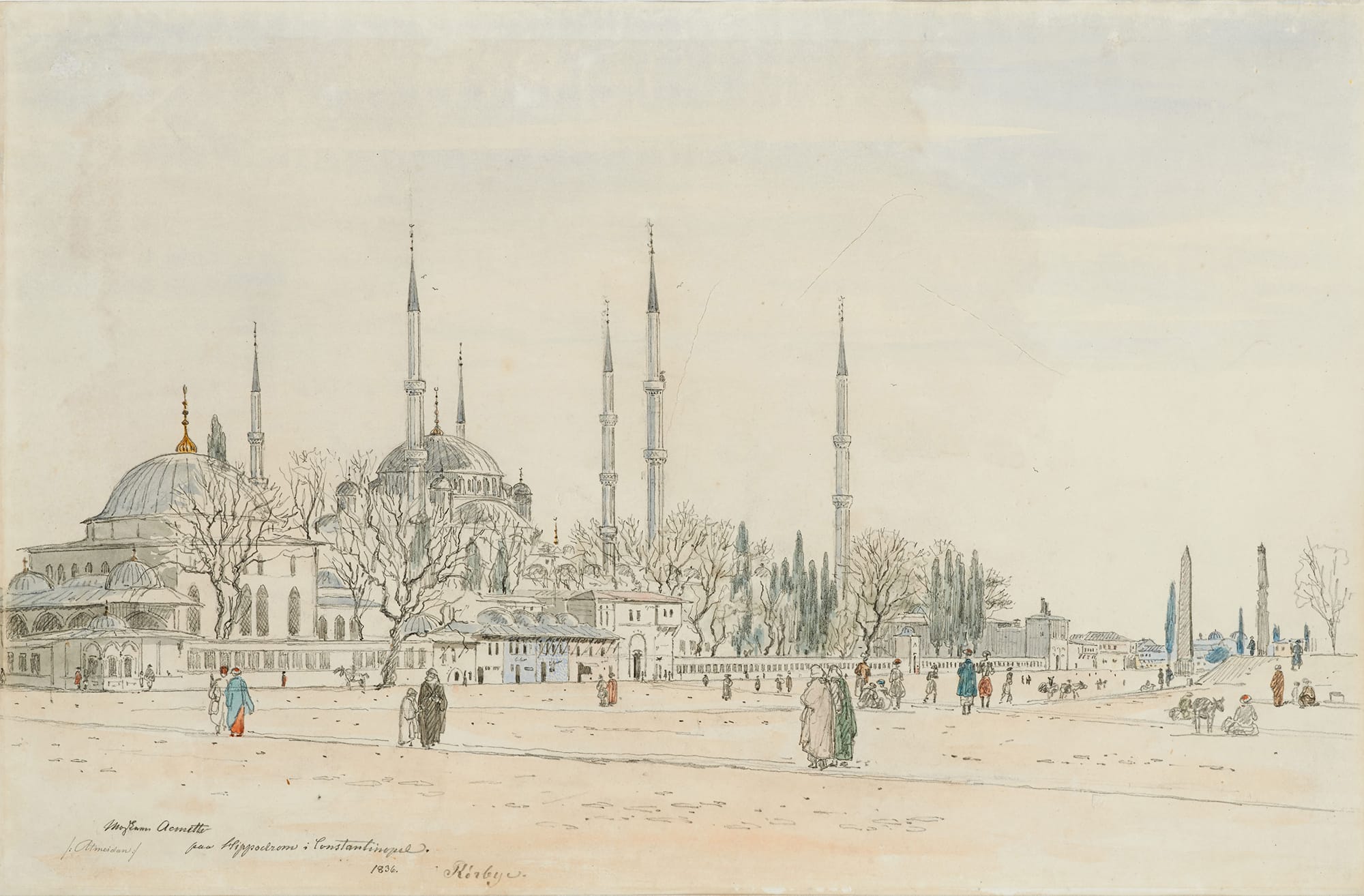
In mid-December 1835 the painter Martinus Rørbye and the architect Gottlieb Bindesbøll arrived in Constantinople, six weeks of drawing ahead of them. The sketches they brought home, mostly of everyday life and buildings, make up this display. Rørbye was the first Danish painter of his century to visit Greece and Turkey, and the journey fed his 1838 Academy piece Scene of Public Life in the Orient. Bindesbøll carried Byzantine lessons into his design for Thorvaldsens Museum. The show has been extended, but only until 6 September.
Oscar Eriksson Furunes. GLITRA
Until 13 September 2026
Snail shells filled with glittering green glass sit at the centre of GLITRA, a reference to the protective layers queer people have grown against marginalisation. At Møstings, the Norwegian-Swedish artist and architect Oscar Eriksson Furunes reworks photographic fragments from historical archives, faces, bodies and touches, behind coloured cast surfaces that both hide and hold the imagery. Green itself recalls a code once used by gay men for mutual recognition. Visibility and invisibility, pain and solidarity stay in tension throughout. Furunes finished at Malmö Art Academy in 2023.
ARoS Collection: 1960 – now
Until 27 September 2026
Six decades of art fill Level 6 at ARoS, starting from the moment classical painting broke down and art turned political and conceptual. Warhol, Rauschenberg, Jenny Holzer, Per Kirkeby, Olafur Eliasson and Sif Itona Westerberg all appear in a hang whose breadth, the museum argues, few Danish collections could match. Pop art, nouveau réalisme and Fluxus each get their turn along the way. After two and a half years on view the presentation closes on 27 September, ahead of new collection displays announced for late November.
ARoS Collection: Human Nature
Until 27 September 2026
Four permanent human concerns, nature, religion, philosophy and science, organise this reading of the ARoS collection on Level 8. Danish masterworks hang beside newer arrangements, with Jørgen Sonne among the names fronting it, and the aim is plainly stated: art history that leaves room to reflect on life. Århus Stiftstidende called it rock-solid art communication in a neat and varied hang. Ordinary admission or the museum’s annual pass covers the visit. Like the 1960-to-now display two floors below, it ends on 27 September.
Sophie Calle. Something Missing?
Until 6 September 2026
Sophie Calle has spent five decades mixing fact with fiction, cool distance with unabashed intimacy. Louisiana’s whole West Wing now follows her at it. Seven series bring together over 300 photographs, texts and videos, among them The Blind, in which 23 blind people describe beauty, and Voir la mer, which films Istanbul residents seeing the sea for the first time. The museum showed her Take Care of Yourself in 2010 and holds her work in its collection. Organised with Turner Contemporary and De Pont, the show runs to 6 September.
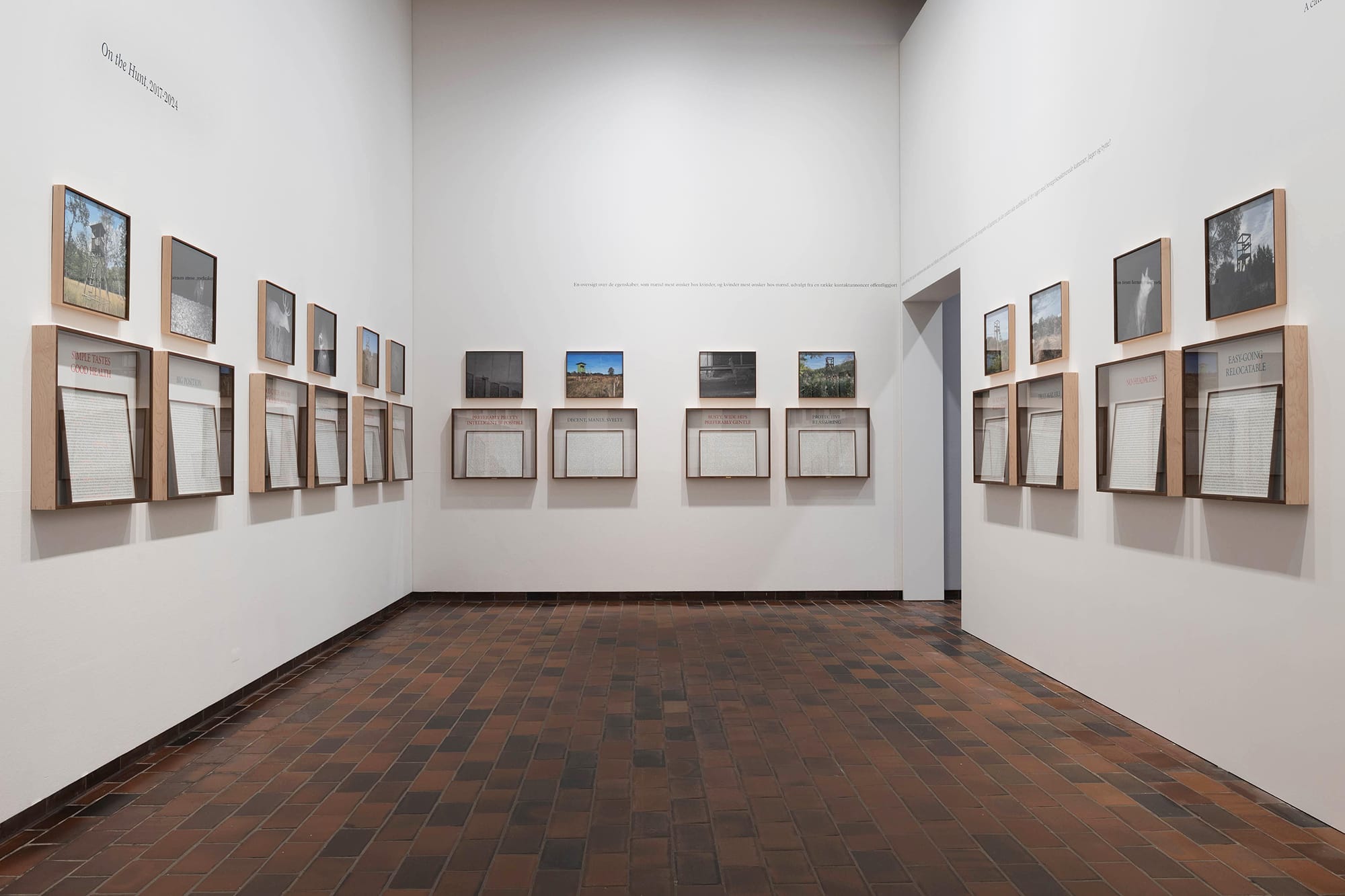
Lucian Freud. Everything is a Portrait
Until 27 September 2026
“Everything is autobiographical and everything is a portrait,” Lucian Freud once said, and Louisiana’s summer exhibition takes him at his word. Drawings in pencil, pen, ink, charcoal and etching stand beside paintings and archive material, following the British painter’s clinically raw studies of faces and bodies from the 1930s to the early 2000s. Self Portrait with Hyacinth Pot and the 1985 Reflection mark the two ends of a lifetime of self-scrutiny. Previously unseen works are included. The National Portrait Gallery in London organised the show with Louisiana.
Arthur Jafa: APEX
Until 27 September 2026
Hundreds of still images flash past to a 1994 electronic track in APEX, Arthur Jafa’s video in Louisiana’s Hall Gallery. Miles Davis, film monsters, microscopic organisms, animation and scenes of violence stream by in a montage that works through accumulation rather than narrative. Beauty and terror sit close together, as they do in the Black American experience Jafa has spent his career examining through music and the moving image. The work belongs to the Louisiana collection, acquired with help from the Museum Foundation and public donations.
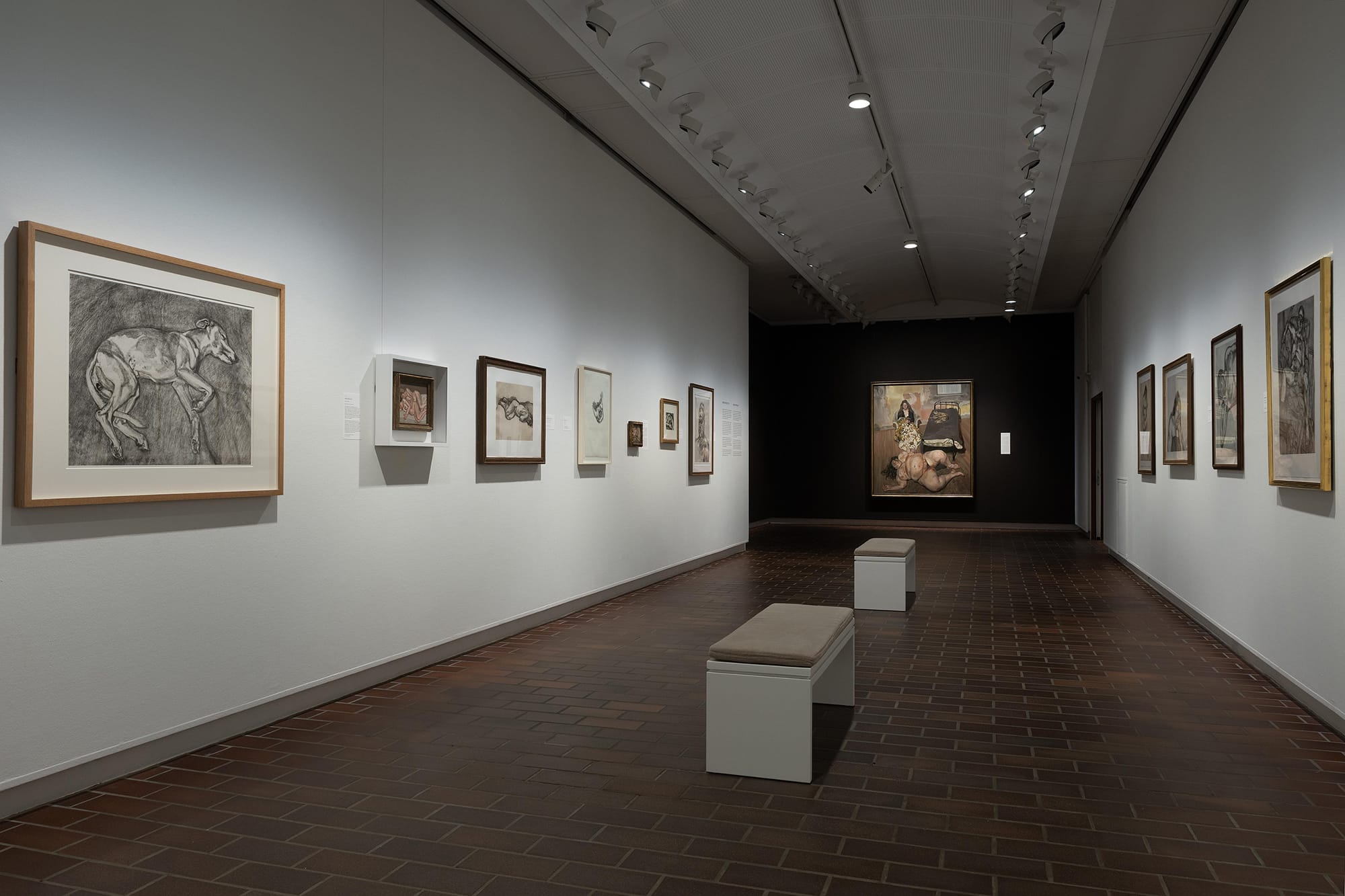
Late Picasso
Until 6 September 2026
More than sixty works from the 1960s and 1970s make this the largest Nordic showing of Picasso’s late period in forty years. Musketeers, self-portraits and entangled couples recur, painted in broad strokes and loud colour, circling old age, death, desire and the urge to keep making. Dismissed by many at his death in 1973, the late work has since been recast as a forerunner of much that followed. Kunsten organised the exhibition with PoMo in Trondheim, Moderna Museet in Stockholm and the Almine and Bernard Ruiz-Picasso foundation.
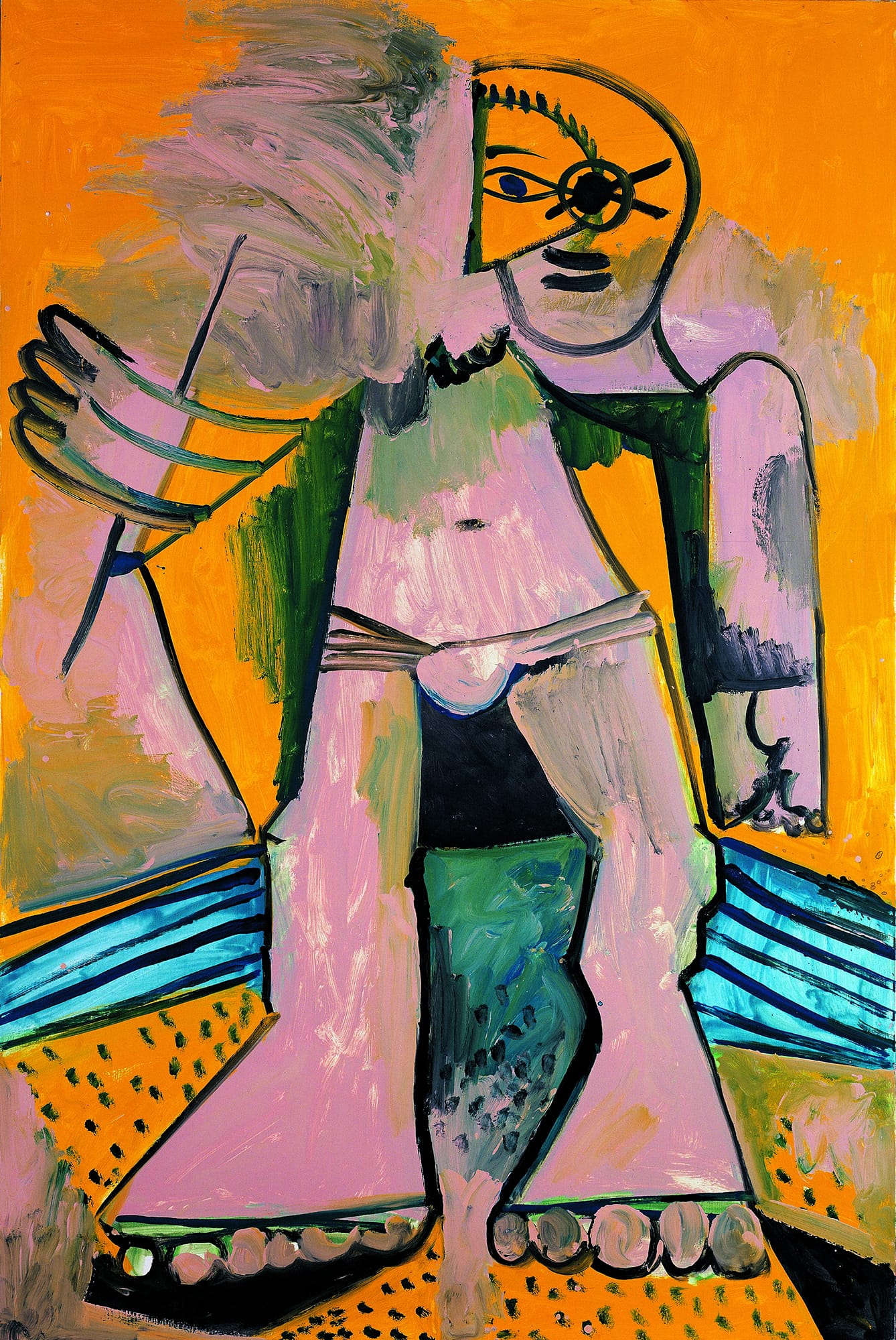
Maja Malou Lyse. Bombshell, Boom!
Until 27 September 2026
A pair of female eyes on a large screen meets, holds and returns the visitor’s gaze. Maja Malou Lyse built the work from research into Politiken’s photo archive and the near fifty-year history of Ekstra Bladet’s Page 9 girls, turning the once-photographed woman into the one who watches. Desire, objectification and power over one’s own image are the stakes. Lyse, born in 1993, became the youngest artist yet shown in the Danish Pavilion at this year’s Venice Biennale. Ny Carlsberg Fondet supported the making of the piece.
Spectacle Famoso. Asger Jorn’s Bronzes from 1972
Until 6 September 2026
During the final year of his life, in a ceramics workshop in Albisola, Asger Jorn made a troupe of bronzes full of humour and strong personality. All 23, with Italian titles such as Brutto scherzo (Bad Joke) and Spectacle famoso, are reunited here with their clay models for the first time since casting in 1972. Photographs by Bartoli and Mario Recrosio document the making and stage the sculptures around Milan. The display caps the museum’s long, foundation-funded campaign to complete its holdings of Jorn’s bronzes.
Mummenschanz. Clay Mask 1974
Until 30 September 2026
Two anonymous figures in soft clay masks reshape their faces as they silently interact, sliding from comic to unsettling, human to animal. Clay Mask of 1974, by the Swiss theatre group Mummenschanz, plays on a large screen in Museum Jorn’s inner courtyard. The company has performed wordlessly since 1972, drawing on mask theatre, silent film and ritual performance, and its transformations have left traces on later performers and filmmakers alike. A short dose of theatre inside an art museum, it runs to the end of September.
Lifetime. Mature Women in the Arts
Until 20 September 2026
How did the art world treat the women of the Modern Breakthrough once they grew old? Ribe Kunstmuseum follows Anna Ancher, Bertha Wegmann, Anne Marie Carl-Nielsen, Olivia Holm-Møller and others into late careers that brought thinner recognition, in a culture fixed on young female bodies. The paintings themselves show older women with empathy, value and work still in hand. The concept draws on the American art historian Alice M. Rudy Price, with a research catalogue attached. After 20 September the show travels to Viborg and Bornholm.
🇫🇷 Exhibitions in France
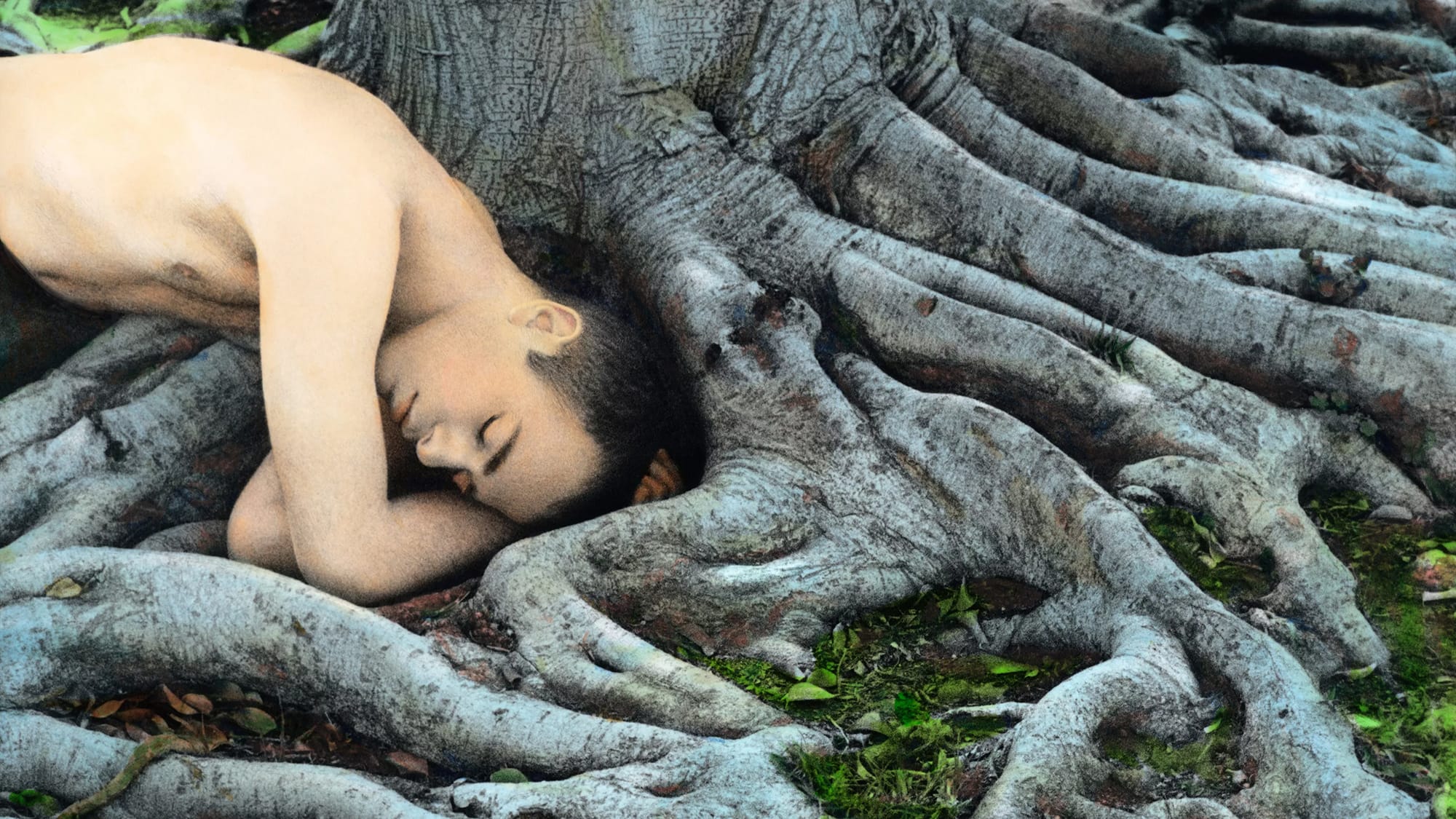
Youssef Nabil. To Dream Again
Until 13 September 2026
A first visit to the Musée d’Orsay in 1992 marked the young Youssef Nabil for good. The museum now hangs the Franco-Egyptian photographer in its Orientalist galleries, the first contemporary artist shown there, placing his hand-coloured silver prints beside nineteenth-century expedition photographs of Egypt and paintings by Puvis de Chavannes and Odilon Redon. Two of his videos join them. Dream, exile and an idealised Mediterranean without borders run through the work; The Dream of 2021 answers Puvis directly. The show forms part of the 2026 Mediterranean Season.
The cedar, the majestic green crown of Mediterranean mountain tops
Until 6 September 2026
A single tree species sustains this display in the graphic-art cabinet on level five. Nineteenth-century drawings follow the Mediterranean cedar from its thin conical youth to the flat-crowned silhouette that Lamartine and Mallarmé praised in verse. Guillaumet works in ink, charcoal and pastel; Lévy-Dhurmer sketches the cedars of the Atlas in blue crayon; Belly fills pages of his travel sketchbooks. Room 41 holds the selection, chosen by Géraldine Masson of the graphic-arts department. Modest in scale, it is the earliest of the museum’s September closings, on the 6th.
Decorating the Wall
Until 20 September 2026
Wallpaper, furnishing fabrics and murals carried the nineteenth century into its living rooms. The Musée d’Orsay’s architecture cabinet traces how mechanised manufacturing put decorated walls within reach of ordinary households, with factories turning out motifs to meet each shift in taste. Artists took the industrial techniques as an opening rather than a threat, folding their designs into mass production. Among the sheets on view is a Tassinari & Chatel fabric project for the couturier Paul Poiret from around 1910. Three of the museum’s documentary specialists assembled the display.
Sculpture and Ceramics around 1900
Until 13 September 2026
Fire and clay tempted the sculptors of the 1890s away from marble. For its fortieth anniversary the Musée d’Orsay devotes salle 33 to the decade’s experiments in faïence, porcelain and stoneware, when ceramists and sculptors borrowed from Japanese stoneware, Chinese monochrome porcelain, Islamic wares and European folk pottery. Colour is the connecting thread, as polychromy and surface effects entered sculptural thinking. Two recently acquired mask sculptures anchor the room, Jean Carriès’s Masque of around 1890 among them. Édouard Papet, the museum’s sculpture curator, arranged the display.
Henry Taylor. Where thoughts provoke
Until 6 September 2026
Thirteen galleries across two floors of the Hôtel Salé hold the first French retrospective of Henry Taylor. Around a hundred paintings, sculptures and installations picture friends, strangers and public figures with the directness that carried the American painter from Los Angeles to the Whitney. Taylor keeps art history close at hand, answering David Hammons, Philip Guston and Picasso himself while binding single lives to collective ones. The museum calls the result a living and deeply human vision of the era. Louis Vuitton sponsors the presentation.
The Metamorphoses of Guernica
Until 6 September 2026
Fifteen minutes in a virtual-reality headset take visitors from the Spanish Republican Pavilion of 1937 to the bombed town of Gernika, into the studio on the rue des Grands-Augustins and along the painting’s travels to its final home at the Reina Sofía. Two witnesses narrate: the writer Juan Larrea and Dora Maar, whose photographs documented Guernica taking shape. The auditorium experience runs in four languages, costs seven euros and admits visitors from age ten. Studies and archival material in the permanent galleries extend the story.
Károly Ferenczy. Hungarian Modernity
Until 6 September 2026
Famous at home and nearly unknown in France, Károly Ferenczy gets a Paris introduction of close to 140 works. The Hungarian painter, who died in 1917, absorbed Naturalism, Symbolism and Impressionism without settling into any of them, co-founded a rural artists’ colony and put the sun at the centre of his landscapes. Portraits, biblical scenes, nudes and caricatures widen the picture of a founding figure of Hungarian modern art. The Museum of Fine Arts in Budapest and the Hungarian National Gallery built the show with the Petit Palais.
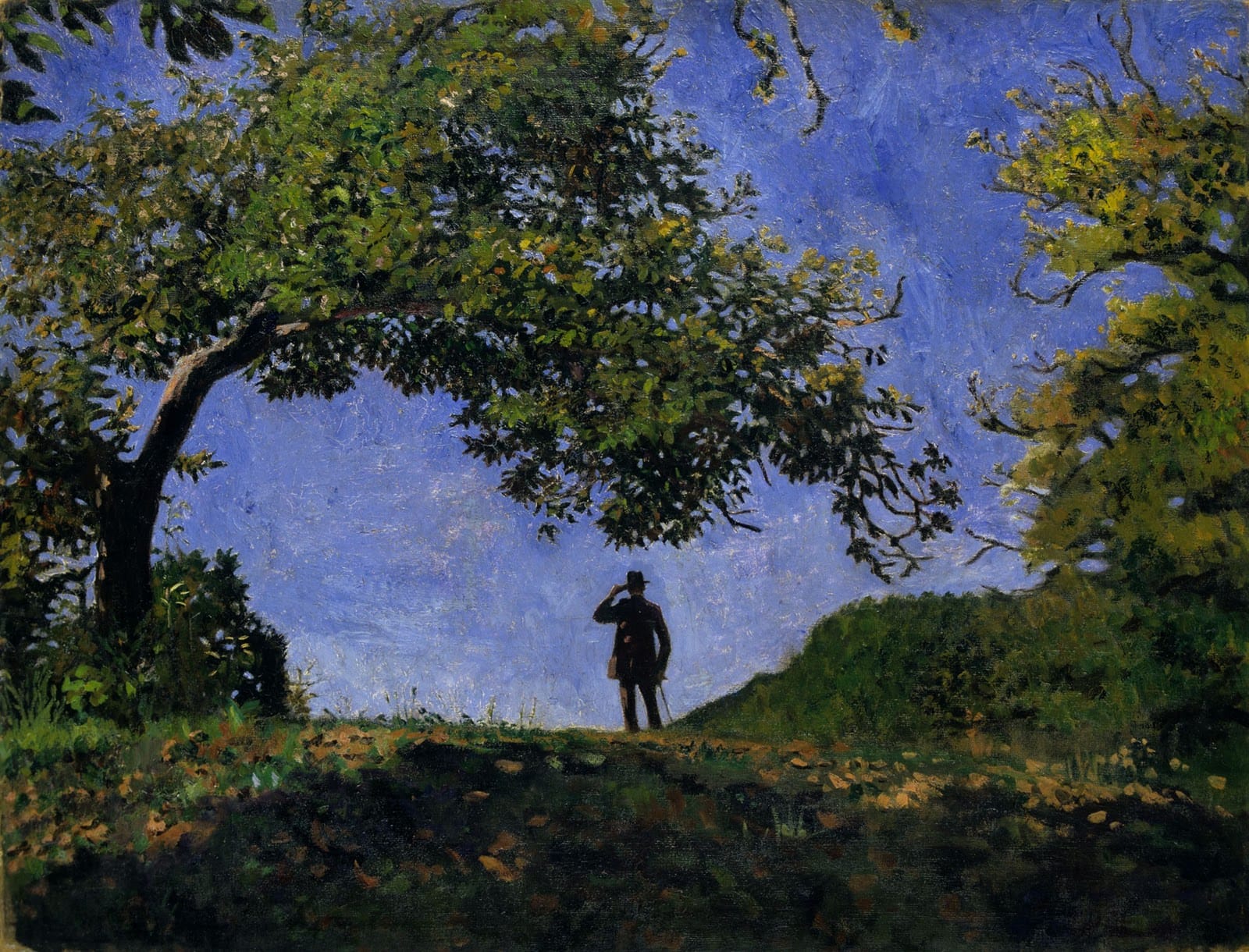
WE ARE [still] HERE
Until 20 September 2026
Street art returns to the Petit Palais two years after a first edition drew more than 600,000 visitors. Seventy-five artists from France and abroad, Shepard Fairey, Swoon, Invader, Miss Van and ROA among them, install over 200 works through the permanent galleries and the Salle Concorde, trading answers with the museum’s classical holdings. The hang revives the nineteenth-century salon habit of showing the artists of the day, and a mobile app threads the route. Admission is free throughout the run, which suits the movement’s street origins.
Fujiko Nakaya
Until 14 September 2026
A thick white fog fills the Rotunda of the Bourse de Commerce, produced by Japanese artist Fujiko Nakaya for her installation Cloud #07156. Nakaya, born in 1933, has sculpted fog since the late 1960s, when she devised a system of high-pressure pumps and nozzles that release droplets identical to those in natural mist. Visitors walk through the cloud as it forms and dissolves inside Tadao Ando’s concrete cylinder, appearing and disappearing along with it. A first-floor balcony offers a calmer vantage over the shifting scene.
Laura Lamiel
Until 21 September 2026
“They make a sound like wings, like leaves, like sand” — the title comes from Waiting for Godot, and the mood is similarly suspended. French artist Laura Lamiel, born in 1943, has filled the twenty-four display cases of the Passage and the Machine Room with installations built from found objects: children’s shoes, gloves, chairs, chalk dust, enamelled bricks, stacked missals with gilded edges. Fluorescent tubes and pockets of shadow do as much work as the objects themselves, structuring the space and drawing attention to what is fragile or barely visible. Certain forms recur from case to case like a musical refrain.
François Morellet. 100 per cent
Until 28 September 2026
Born in 1926, François Morellet would have turned one hundred this year, and Centre Pompidou-Metz answers with 100 works made between 1941 and 2016, the fullest survey of him yet mounted. Two chronological paths cross the 1,200 square metres of Galerie 3: one follows the systematic geometry that made his name, the other his optical mischief and Neo-Dadaist side, ending in the baroque neons of his last decade. Reason and unreason, Mondrian and Picabia, pull at the work throughout. Michel Gauthier of the Centre Pompidou curates.
2/4 Flea Market
Until 6 September 2026
Life-size flea-market stalls fill La Capsule, cut by a jagged line that splits the space into four quarters, two heaped with secondhand goods and two left bare. The Madrid-born sculptor Javier Carro Temboury, a 2021 honours graduate of the École des Beaux-Arts de Paris, builds the installation from found objects and deliberately unfinished tables. The friction between museum order and market disorder is the subject; where value comes from, and who assigns it, stays an open question. Entry to this one is free of charge.
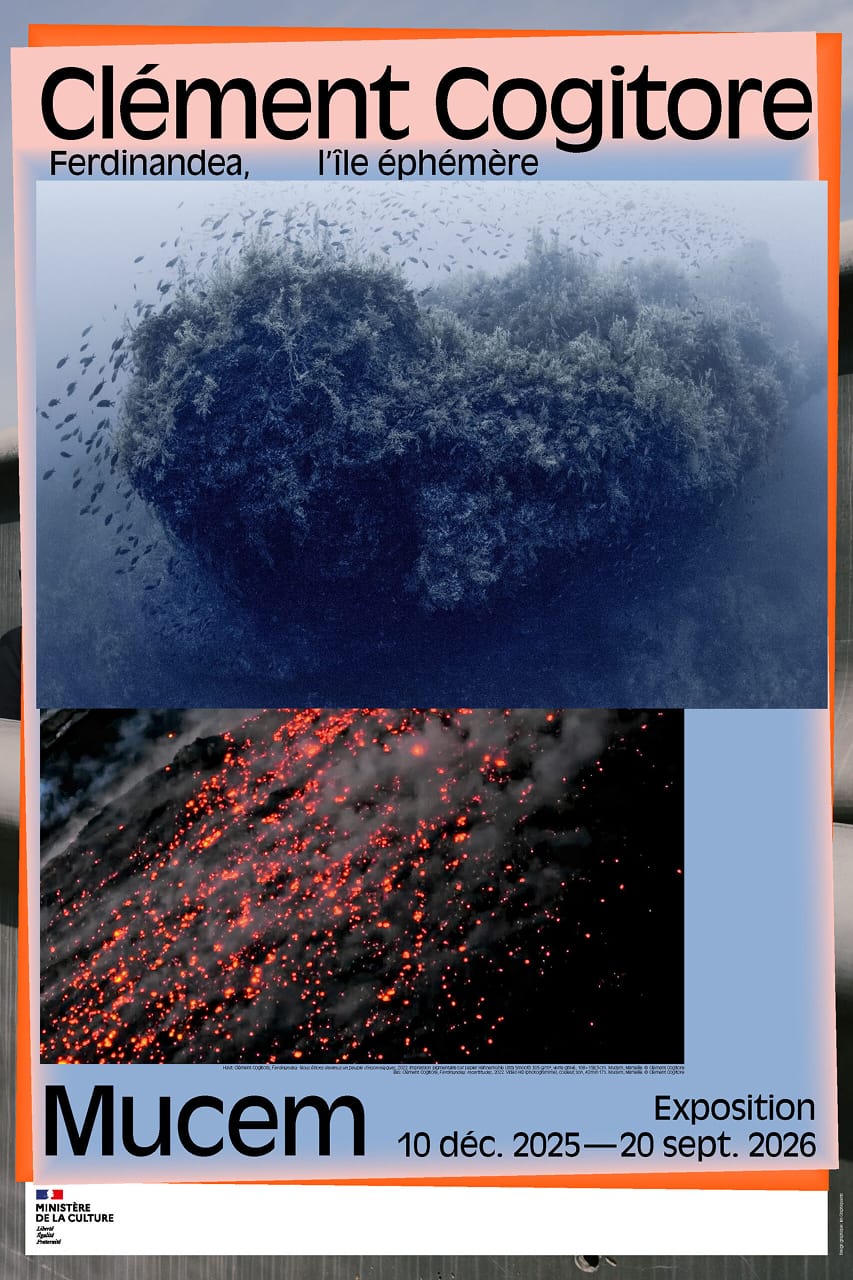
Clément Cogitore. Ferdinandea, the Ephemeral Island
Until 20 September 2026
For six months in 1831 there was an island between Sicily and Tunisia. Britain, France and the Kingdom of the Two Sicilies rushed to claim the volcanic newcomer, naming it Graham, Julia and Ferdinandea, before it sank back under the sea. At Fort Saint-Jean, Clément Cogitore reads the episode as a parable of colonial appetite, through a 16mm film, the video Incertitudes, pigment prints on engraved glass and an 1831 gouache by Camillo de Vito. Seismologists still watch the seamount, which keeps the parable current.
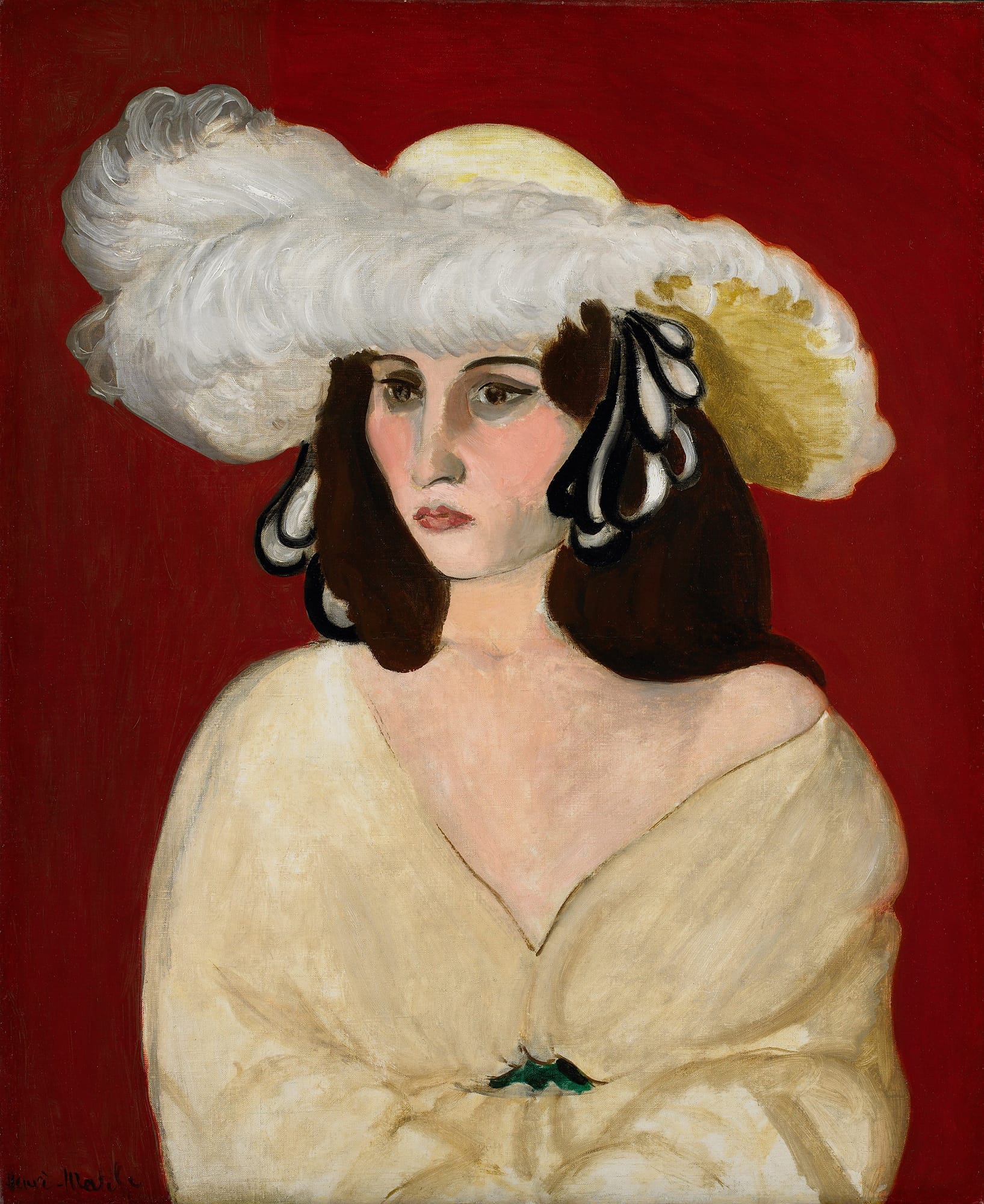
Henri Matisse – Yves Saint Laurent. Beauty, Fashion and Happiness
Until 28 September 2026
Henri Matisse and Yves Saint Laurent never met, yet both spent careers dissolving the border between fine and applied art. The Musée Matisse and the Musée Yves Saint Laurent Paris argue the kinship with 160 pieces: haute couture beside paintings and drawings, traditional costumes, textiles, accessories and archives. Line is treated as something drawn and sewn alike, decoration as a form of picture-making, clothing as sculpture in motion. Loans from French and international collections complete the pairing, staged in the seventeenth-century Genoese villa above Nice.
Chagall at work. An exceptional loan to the museum
Until 21 September 2026
When Bella and Meret Meyer donated 141 of their grandfather’s works to the Centre Pompidou in 2022–2023, they opened a window onto Marc Chagall’s working methods. Now in Nice, the collection shows the artist mid-process: forty-one sketches for the ceiling of the Opéra Garnier, sixty-four studies for the sets and costumes of Stravinsky’s The Firebird, plus ceramics, sculptures and collages from his experimental decades in the south of France. The second and final rotation of works is currently on view.
🇩🇪 Exhibitions in Germany
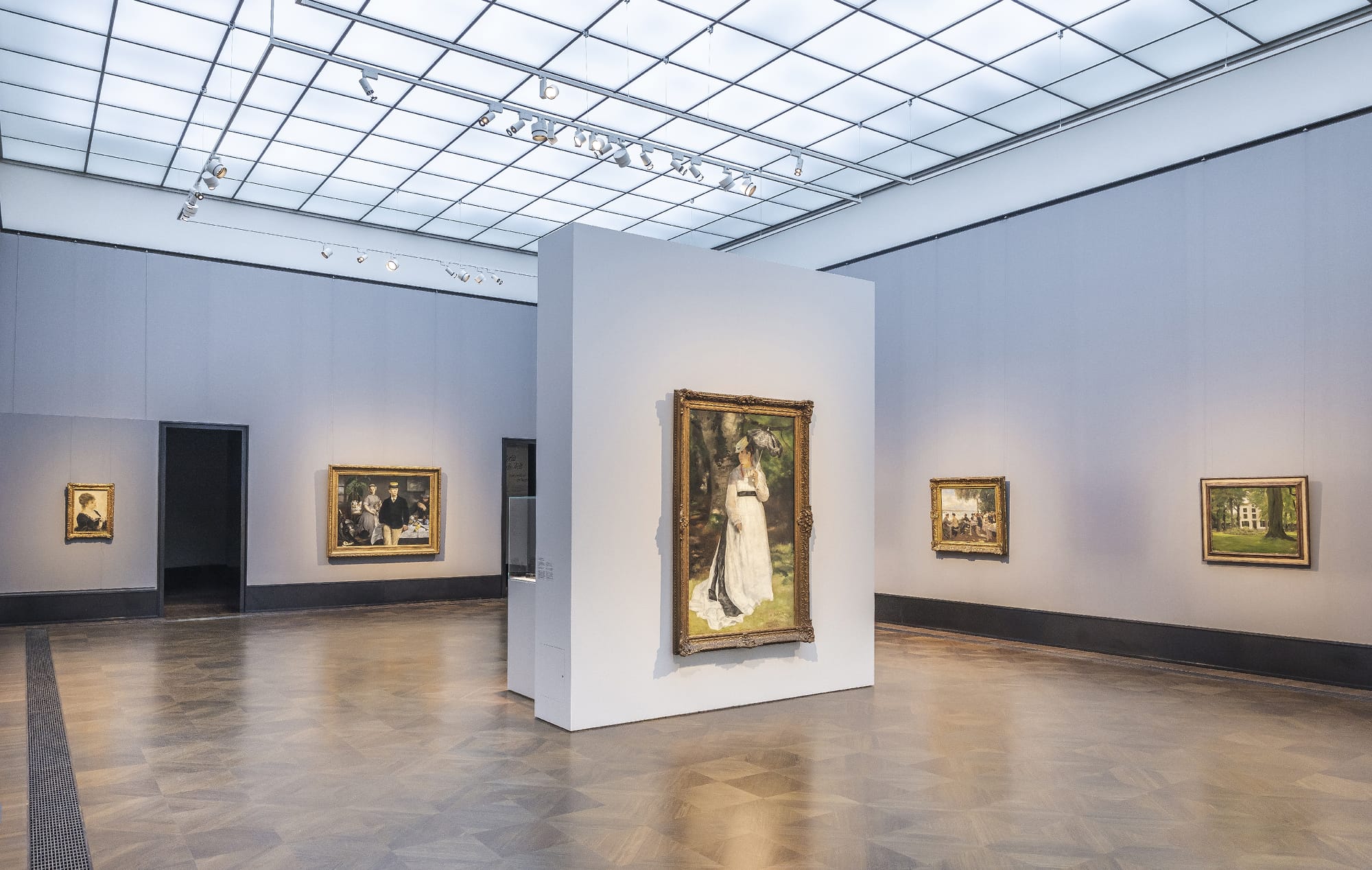
Cassirer and the Breakthrough of Impressionism
Until 27 September 2026
A Berlin dealer, not a painter, is the subject at the Alte Nationalgalerie. Paul Cassirer, who died a century ago in 1926, pushed Degas, Cézanne, Manet, Monet and Van Gogh into German collections through his gallery’s relentless exhibition programme. More than a hundred works retrace the campaign, from Degas’s Orchestra Musicians and Manet’s Le Déjeuner to the Berlin Secession painters Liebermann, Corinth and Slevogt he championed alongside. Munch, Barlach, Kirchner and Modersohn-Becker widen the arc towards early modernism. The show closes for good on 27 September.
Dorothy Iannone: The Berlin Beauties. In Dialogue with Alejandra Pombo Su
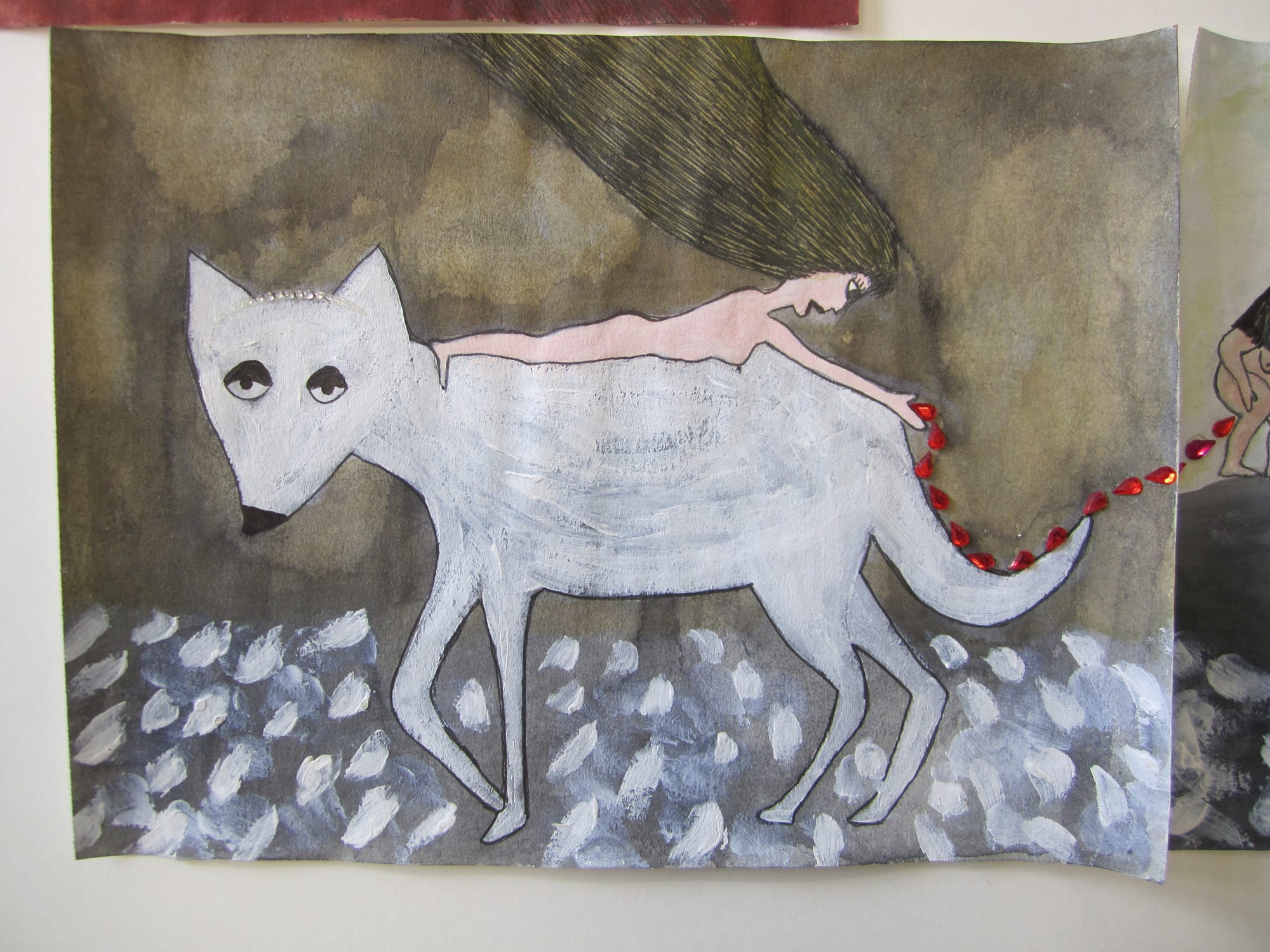
Until 13 September 2026
Moving to West Berlin in 1976 set off one of Dorothy Iannone’s most personal projects. The Berlin Beauties of 1977–78, seventy ink drawings threaded with lyrical texts on love, desire and attachment, is shown complete for the first time in the Kupferstichkabinett at the Gemäldegalerie. In dialogue hangs Ein Jahr der Hingabe, eighteen new mixed-media drawings by Alejandra Pombo Su that fold in butterfly wings and rhinestones. Both artists circle female autonomy and human connection across five decades’ distance. Iannone died in Berlin in 2022.
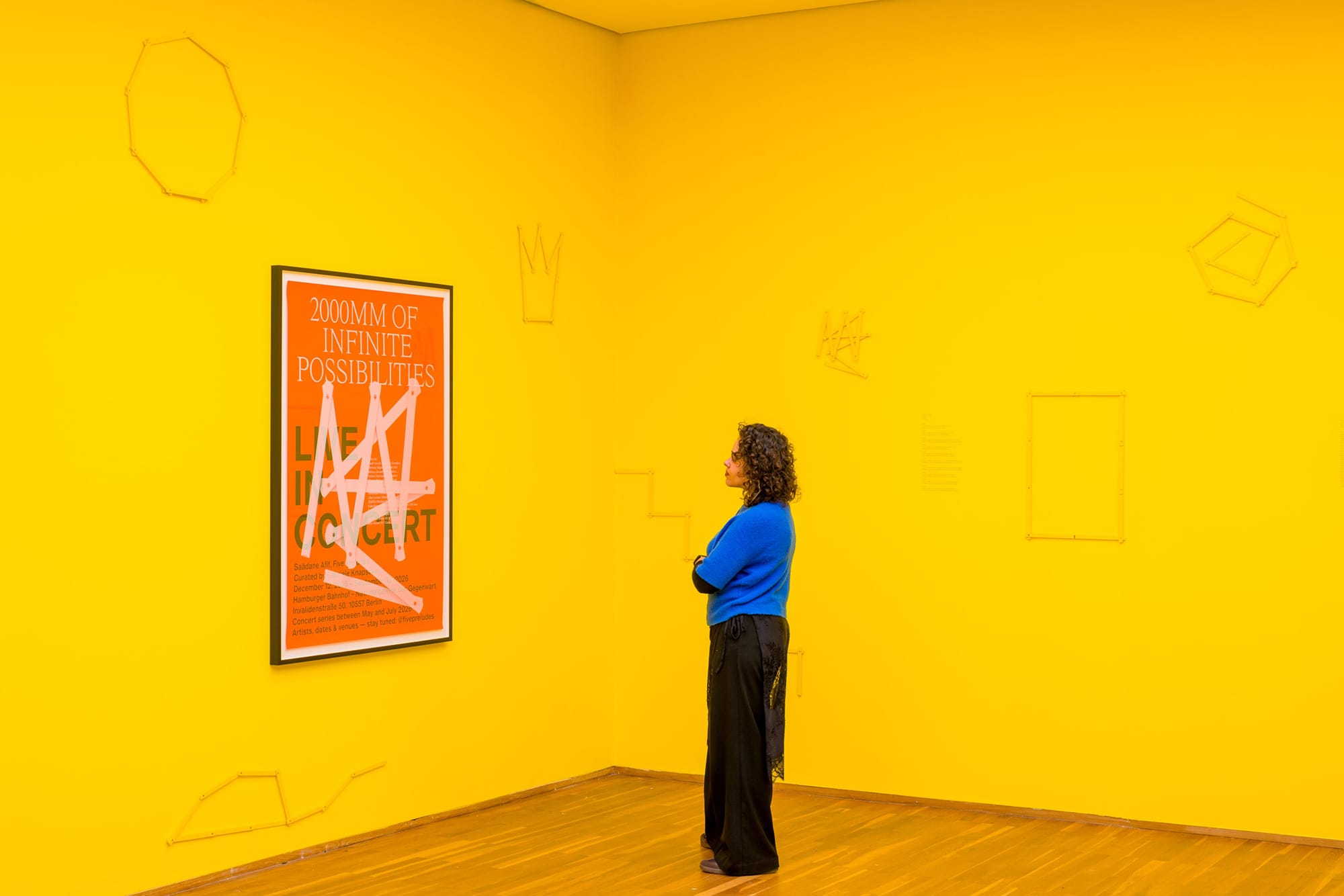
Saâdane Afif. Five Preludes
Until 13 September 2026
Marcel Duchamp’s Fountain trails a century of printed reproductions behind it. Saâdane Afif collected them from 2008 to 2020 as The Fountain Archives, given to the Hamburger Bahnhof in 2023 and now the centre of the French artist’s first institutional solo show in Berlin, his home since 2003. Around it stand L’Humour noir, a replica Centre Pompidou; The Old, answering Jeff Koons’s The New; and Live, event posters turned readymades. Performances with poetic texts by invited artists ran through early summer. Authorship and the museum itself are the material.
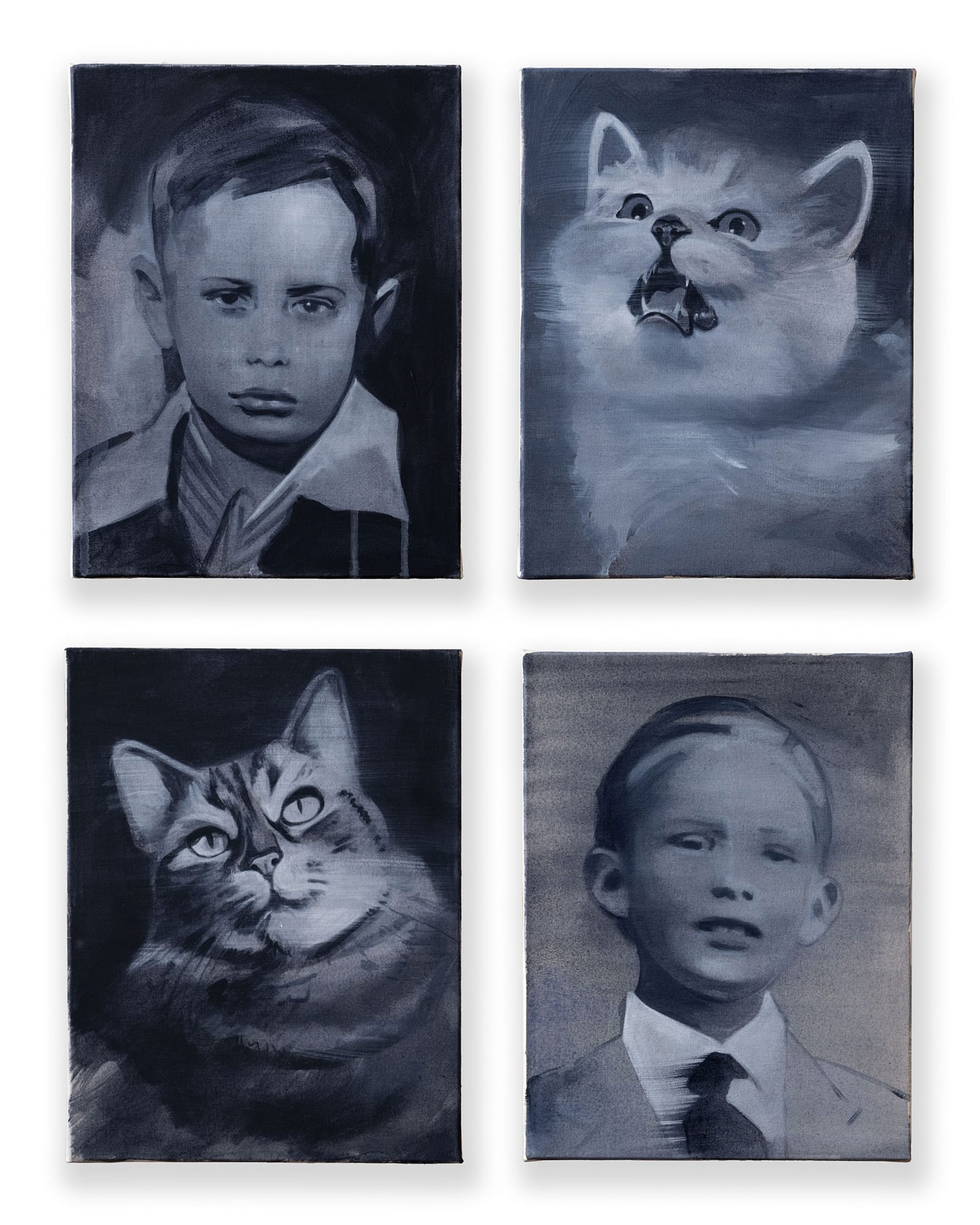
Giulia Andreani. Sabotage
Until 13 September 2026
Payne’s grey does most of the talking in Giulia Andreani’s paintings, which translate photographs from family albums and archives into monochrome history pictures. The Venetian-born painter, shortlisted for the Prix Marcel Duchamp in 2022, opens the Hamburger Bahnhof’s thirtieth-anniversary programme with her first institutional show in Germany. Her canvases hang among loans from the Antikensammlung, the decorative-arts and European-cultures museums and the Kupferstichkabinett, exposing fractures in official histories. The exhibition architecture nods to Sigmar Polke’s 1997 The Three Lies of Painting. A catalogue from Silvana Editoriale accompanies.
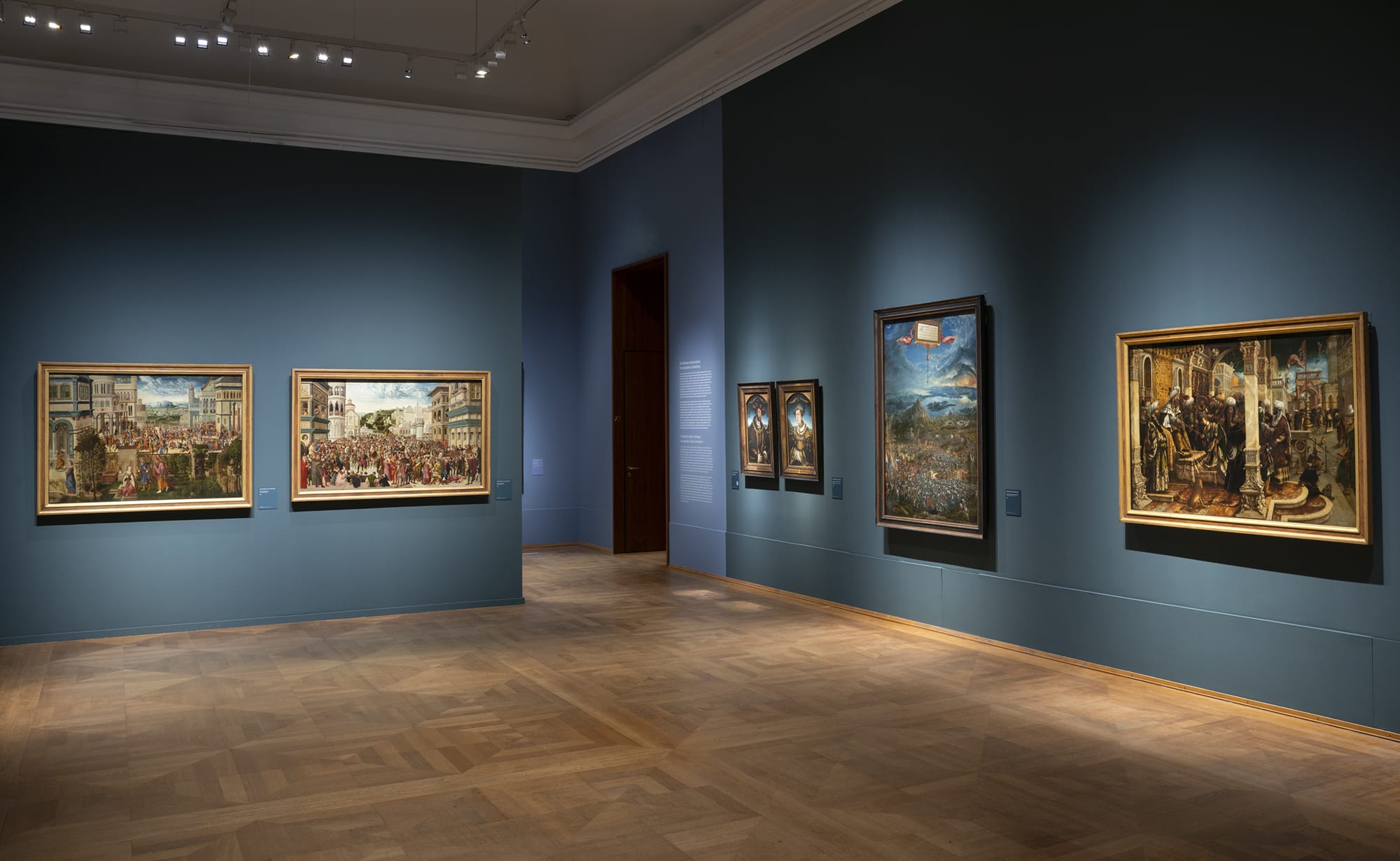
How Pictures Tell Stories. From Albrecht Altdorfer to Peter Paul Rubens
Until 13 September 2026
Storytelling is the thread through forty-odd early German, Netherlandish and Flemish paintings on the Alte Pinakothek’s ground floor west. Altdorfer’s The Battle of Alexander at Issus, Bruegel’s The Land of Cockaigne, Michael Pacher’s Altarpiece of the Church Fathers and Jan Brueghel’s The Temptation of Saint Anthony show who tells a story in paint, to whom and to what end. The curators warn that nothing is quite as it first appears, since some pictures mislead on purpose. After more than a year on view, it ends on 13 September.
Faded Future. Taiwan Photographs by Michael Nischke
Until 30 September 2026
Beside the Pinakothek der Moderne stands a FUTURO house, Matti Suuronen’s plastic flying saucer of a holiday home. Around it, fifteen photographs by the Munich photographer Michael Nischke document the UFO Village in Wanli, Taiwan, a resort of FUTURO and VENTURO replicas built in the early 1980s and undone by weather and a poor location. Nischke returned between 2020 and 2026 as demolition advanced. The open-air display keeps short hours, Thursday and weekend afternoons, and a catalogue of over ninety photographs extends the photographic record.
Confrontations. Pairings from the Collection
Until 27 September 2026
Pairs rule the ground floor of Museum Brandhorst: fifty-five works by thirty-nine artists, matched without obvious historical or formal connection. Philippe Parreno’s steel Christmas tree meets Robert Gober’s red child’s shoe; Arthur Jafa’s monumental Black Hulk faces Rosemarie Trockel’s winner’s podium. Jafa also chose a pairing of his own, setting Warhol’s Diamond Dust Shadow against Wade Guyton. The premise, borrowed from his notion of affective proximity, treats confrontation as a way of thinking rather than a quarrel. Nearly a year in, the display closes on 27 September.
Bruegel Printed
Until 20 September 2026
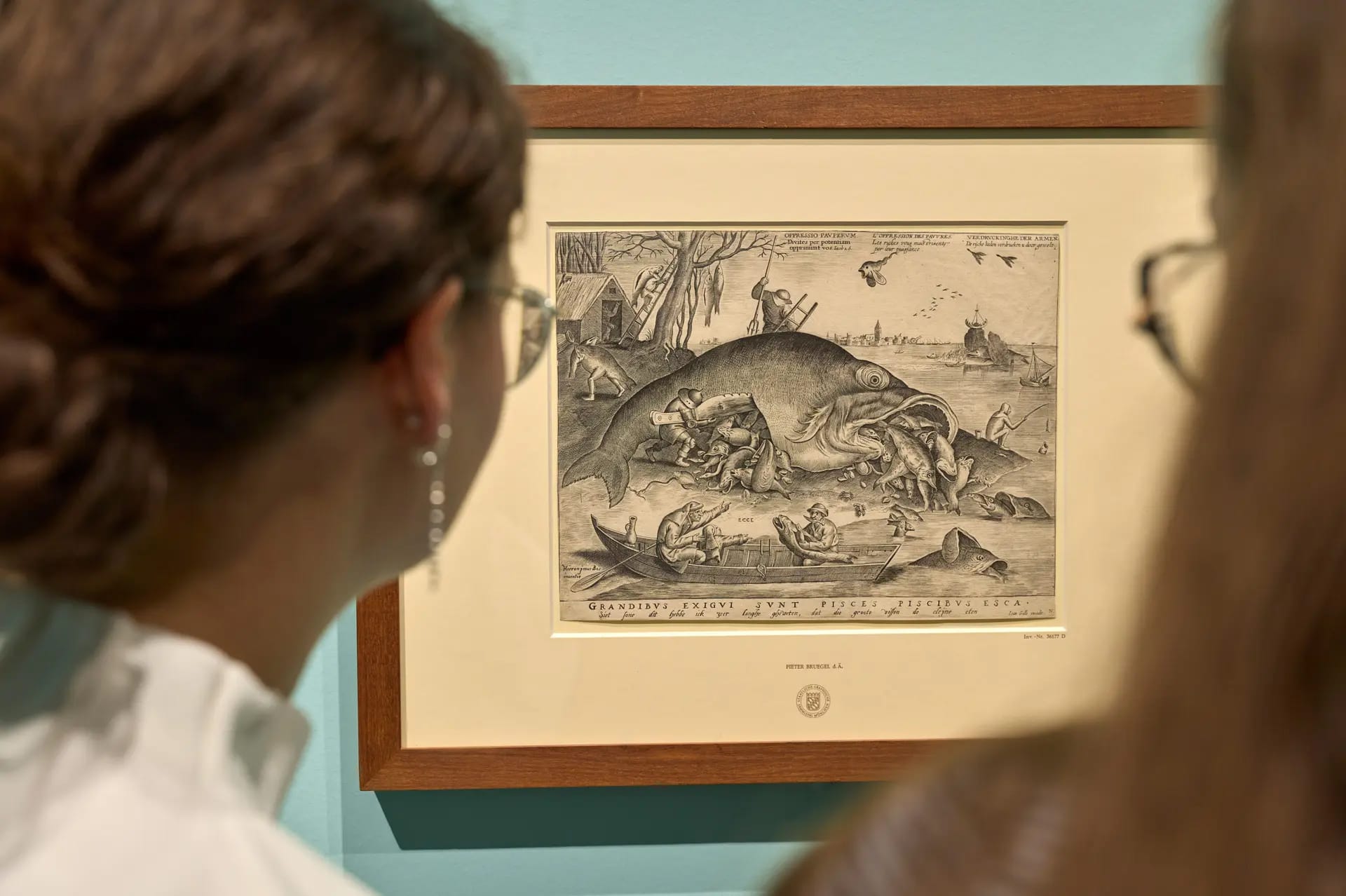
Most of Bruegel’s contemporaries knew him on paper, not in paint. The Städel gathers some sixty prints, around forty-five of them after Pieter Bruegel the Elder’s own drawings, engraved and etched by Pieter van der Heyden, Philipp Galle and the Van Doetecum brothers. Vast landscapes, allegories of virtue and vice and scenes such as The Big Fish Eat the Little Fish were in demand in his lifetime, prized as inventions rather than reproductions. The sheets show the sixteenth-century Netherlander as storyteller and social commentator at close range.
The World Through AI
Until 20 September 2026
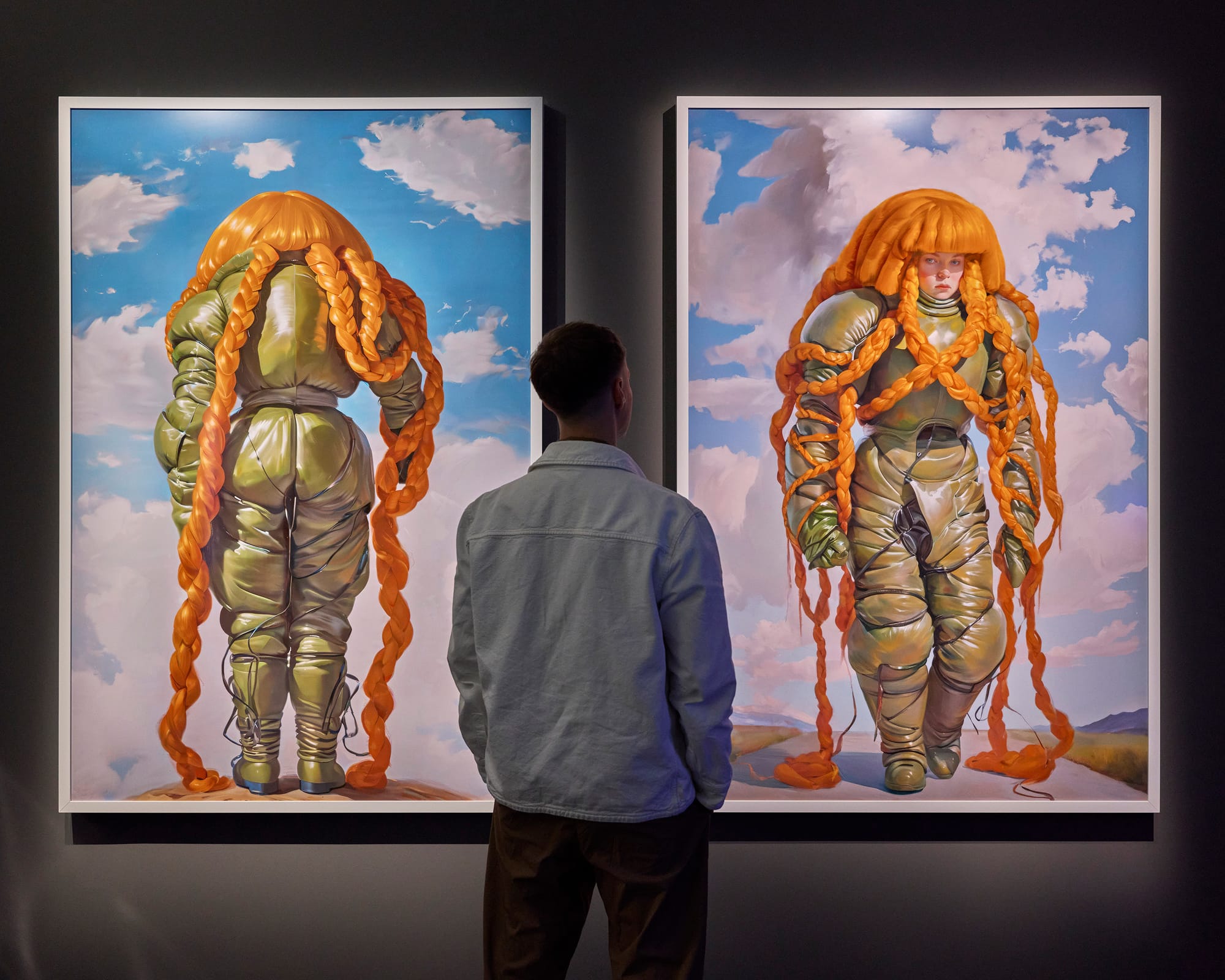
Some forty works made in the past ten years examine what artificial intelligence is doing to cognition, politics and the environment. The Schirn’s summer exhibition brings together around thirty artists, Hito Steyerl, Trevor Paglen, Joan Fontcuberta, Julian Charrière and the duo Holly Herndon and Mat Dryhurst among them, working in video, print, sculpture and photography. Small time capsules, arranged as cabinets of curiosities, tie the present rush to older histories of machine thinking. The run ends on 20 September, before the autumn programme takes over the halls.
Jon Rafman. Main Stream Media
Until 27 September 2026
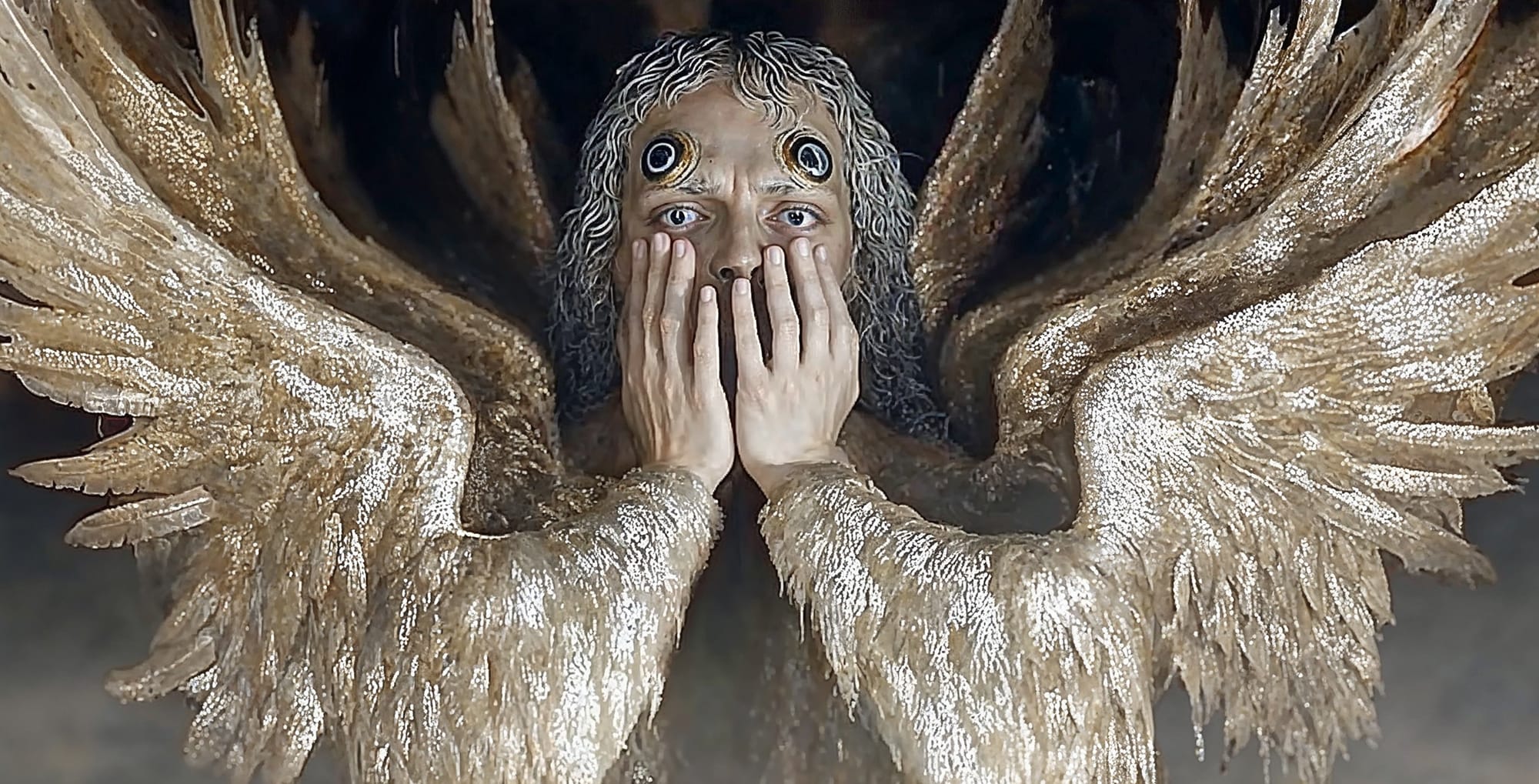
Internet subcultures, virtual worlds and AI-generated imagery supply Jon Rafman’s raw material. K21 gives the Montreal-born artist his first solo museum exhibition in Germany, with works from 2008 to the present, among them Dream Journal 2016–2019, shown at the 2019 Venice Biennale, and the new Main Stream Media Network, an MTV-haunted stream of AI music videos. Sincerity and irony, beauty and the grotesque, connection and alienation are kept deliberately unresolved. Some galleries carry a warning for violence and explicit content, with visitors under sixteen advised away.
Unordnung (Disorder)
Until 13 September 2026
Disorientation has its uses, according to this juried show in THE GÄLLERY, the Staatsgalerie’s space for photography. When an established order breaks down, stability goes, yet unexpected perspectives open up. Twenty-three artists, selected through an international competition, examine the theme of disorder in photographs where chaos is sometimes plainly visible and sometimes concealed beneath a strictly organised surface. The exhibition serves as the centrepiece of Fotosommer Stuttgart 2026, a festival that filled galleries across the city with work on the same subject during its July run.
🇭🇺 Exhibitions in Hungary
In the End There Will Be No End. Neo-Avant-Garde and Contemporary Artists from Art Fond Collection, Bratislava
Until 20 September 2026
Forty-one artists from the ART FOND Collection in Bratislava argue that the neo-avant-garde never really ended. The Ludwig Museum’s survey runs from Stano Filko and Milan Knížák to Roman Ondák and Kryštof Kintera, arranged not chronologically but topologically, in dialogues across generations. The body as political space, memory as resistance and transcendence as inner freedom recur as working strategies rather than history lessons. Curated by Katarína Bajcurová and Lucia Gregorová Stach with the Slovak Academy of Sciences’ art research centre, the show closes on 20 September.
Meeting Anew | 1976–2026 | Károly Hemző and the Hemző Prize Winners
Until 20 September 2026
Fifty years after Károly Hemző’s My Encounters was first shown, the Kunsthalle restages it. Vintage prints, many enlarged by the photographer himself, recall a career that ran from celebrated sports photography to photojournalism and, with Mari Lajos, cookery books sold in the millions. Beside the recreation hang works by the twelve winners of the Hemző Prize, the award for young Hungarian photographers established in 2013, from András D. Hajdú to András Zoltai. Klára Szarka curates this double portrait of a teacher who never formally taught.
Routes and Crossroads | 3rd National Salon of Photography 2026
Until 27 September 2026
More than a hundred Hungarian photographers fill the Kunsthalle for the third National Salon of Photography, a stocktake staged every five years. Six directions structure the hang: socially critical documentary, diary-like intimacy, conceptual work, manipulated images, archival practice and photography made with AI, which the curators call the fastest-moving strand. The selection draws on 300 Masters of Hungarian Photography, the Academy of Arts’ recent 600-image album. András Bán and Károly Kincses chose personally rather than encyclopaedically. The salon stays on the walls until 27 September.
Everything Not Saved Will Be Lost
Until 27 September 2026
This installation was made to disappear. Painted by Orsi Nyíri, born in 1995, directly within the permanent exhibition “Shifts — Updated!”, the four-part cycle traces an artwork’s conception, realisation and destruction as a parallel to human life. When the show closes, the piece ceases to exist in this form. Along the way, the Sleeping Venus and Bosch’s Garden of Earthly Delights share canvas space with a Jesus Lizard T-shirt, texts by William S. Burroughs and the shoes from Kill Bill. Nyíri applies her paint in thick, unapologetic layers.
Apocalypse. Biblical Prophecies from Dürer to Béla Kondor
Until 20 September 2026
Few biblical texts have kept printmakers busier than the Book of Revelation, and this show gathers around 100 proofs of it. Four graphic cycles form the core: woodcuts by Albrecht Dürer and Lucas Cranach the Elder, copperplate engravings by Jean Duvet and, centuries later, lithographs by Odilon Redon. Together they show how Dürer’s prints shaped apocalyptic imagery across Europe, and how religious disputes and politics pulled it in different directions. Twentieth-century Hungarian visions by Béla Kondor, Béla Stettner and Kálmán Csohány close the display. Note the limited opening days, Thursday to Sunday.
🇮🇹 Exhibitions in Italy
Metamorphoses. Ovid and the Arts
Until 20 September 2026
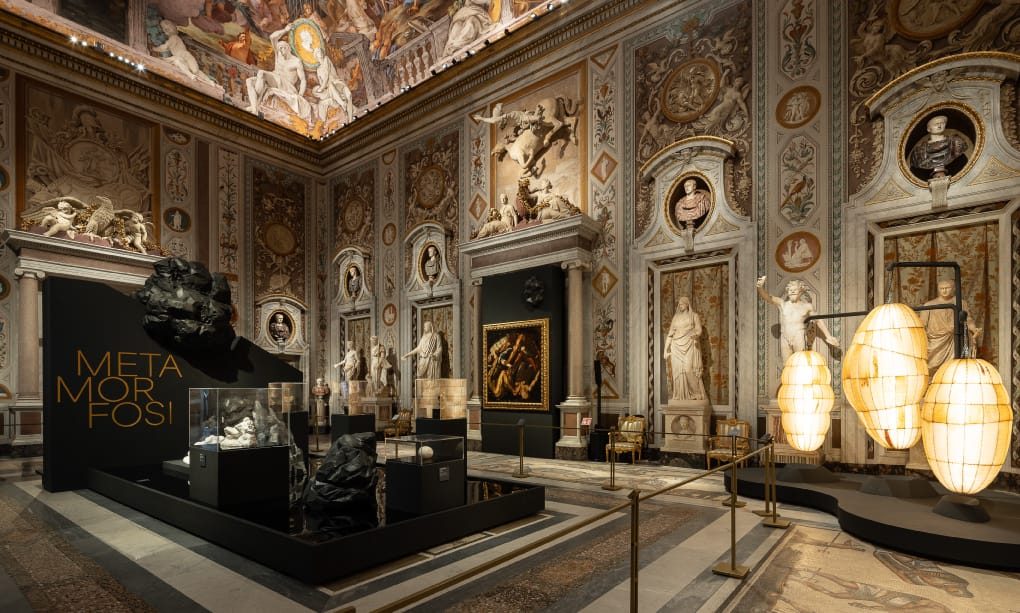
Ovid supplies the script at the Galleria Borghese, where Bernini’s Apollo and Daphne and Pluto and Proserpina anchor a show about transformation as the West’s favourite story. Organised with the Rijksmuseum and curated by Francesca Cappelletti and Frits Scholten, it moves from Michelangelo, Titian, Correggio, Rubens and Poussin to Rodin and Brancusi, with sections on love, the afterlife, creation and the moralised Ovid of the Middle Ages. Metamorphosis is treated as a generative principle of cosmos, matter and body. Booking, as always here, is compulsory.
Vasari e Roma
Until 6 September 2026
Palazzo Caffarelli’s Vasari survey has been extended once, from mid-July to 6 September, which leaves a final stretch to catch it. More than seventy drawings, prints, letters, medals, sculptures and paintings reconstruct Giorgio Vasari’s Roman sojourns in four chronological chapters, from his study of antiquity, Raphael and Michelangelo to his papal commissions. Loans include the Natività from Camaldoli of 1538 and a late Annunciazione of 1570–71. Alessandra Baroni curates this account of the painter, architect and biographer whose Lives effectively made art history a literary genre.
Roma in moneta. Arte e potere nella storia della città eterna
Until 27 September 2026
Money tells Rome’s story across three venues at once: the National Roman Museum, the Colosseum Archaeological Park and the Vittoriano with Palazzo Venezia. More than 160 works, from portraits of Caesar and Constantine to the ceremonial plate of Ardabur Aspar, Renaissance frescoes and contemporary installations, surround the coins themselves, treated as instruments of exchange, propaganda and art. Twenty-five thematic sections run from antiquity to the breach of Porta Pia and beyond. Four curators and several universities stand behind the undertaking, which closes everywhere on 27 September.
Mircea Cantor. Costellazioni dell’antico
Until 27 September 2026
Fifteen works by Mircea Cantor are placed among the ancient sculptures of Palazzo Altemps, some made for the occasion. The Romanian artist works on memory and the dualities of everyday life, and the site-specific arrangement seeks conversation with the antiquities rather than contrast for its own sake. Pier Paolo Pancotto and Federica Rinaldi curate, with backing from the Romanian Academy, the Romanian Cultural Institute and the National Museum of Romanian History in Bucharest. Like the coin show at the same museum, it runs to 27 September.
Tragicomica. Perspectives on Italian art from the mid-20th century to today
Until 20 September 2026
Tragicomica chases a single thread through more than 300 works by over 130 artists: the irony running through Italian art since the mid-twentieth century. Citing Giorgio Agamben’s notion of an anti-tragic intention that reaches back to Dante, it mixes Fontana, Manzoni, Boetti, Carol Rama, Penone and Cattelan with cinema, theatre, architecture and philosophy. Chronology is abandoned in favour of unexpected pairings of famous and rarely seen works. Andrea Bellini and Francesco Stocchi curate, across galleries 2 and 3. High and popular culture receive equal standing.
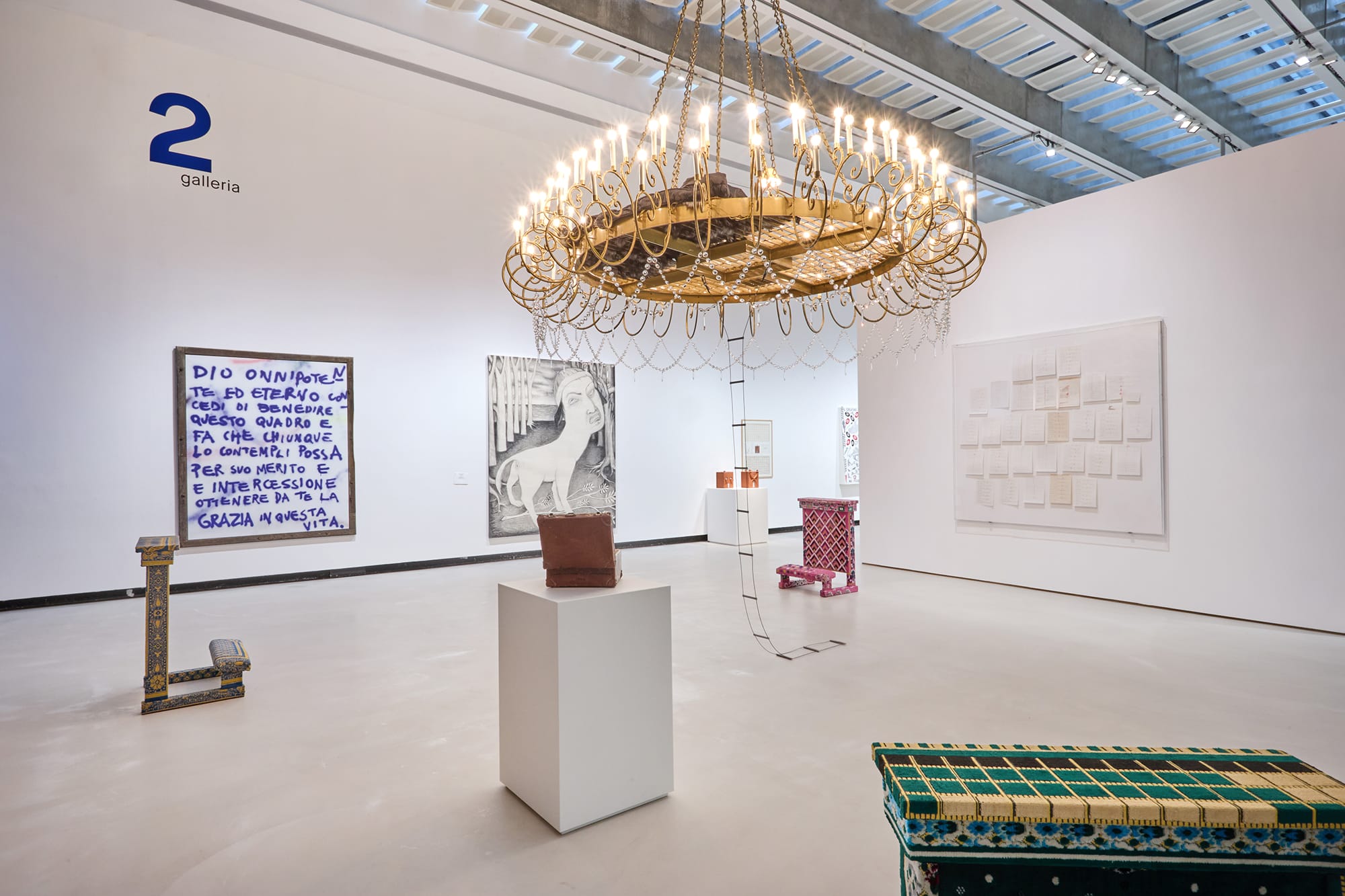
Creature, Creatori. San Francesco e l’arte contemporanea
Until 20 September 2026
Reread through the eyes of Saint Francis, Italian art since 1950 looks different. Beatrice Buscaroli’s selection of around thirty artists, Burri, Morandi, Manzoni, Maria Lai and younger names such as Nicola Samorì among them, takes the Canticle of the Creatures as its lens, favouring the saint’s ethics and feeling for nature over his familiar iconography. Works from the MAXXI collection hang beside commissions made for the occasion. Part of the extra MAXXI programme, the show shares its 20 September closing date with Tragicomica a few galleries away.
Ramak Fazel. Milan Unit 1994–2009
Until 27 September 2026
Between 1994 and 2009 the photographer Ramak Fazel worked inside the Milanese design world. His entire archive from those years now forms an installation at MAXXI: negatives, slides, prints, publications, notes and working tools sit together, errors included, treated as meaningful traces of how images are made, circulated and used. The years covered bracket photography’s shift from analogue to digital, which the display takes as a subject in its own right. A focus show rather than a full survey, it stays open until 27 September.
Giovanni Agostino da Lodi. An itinerant painter between Leonardo and Giorgione
Until 13 September 2026
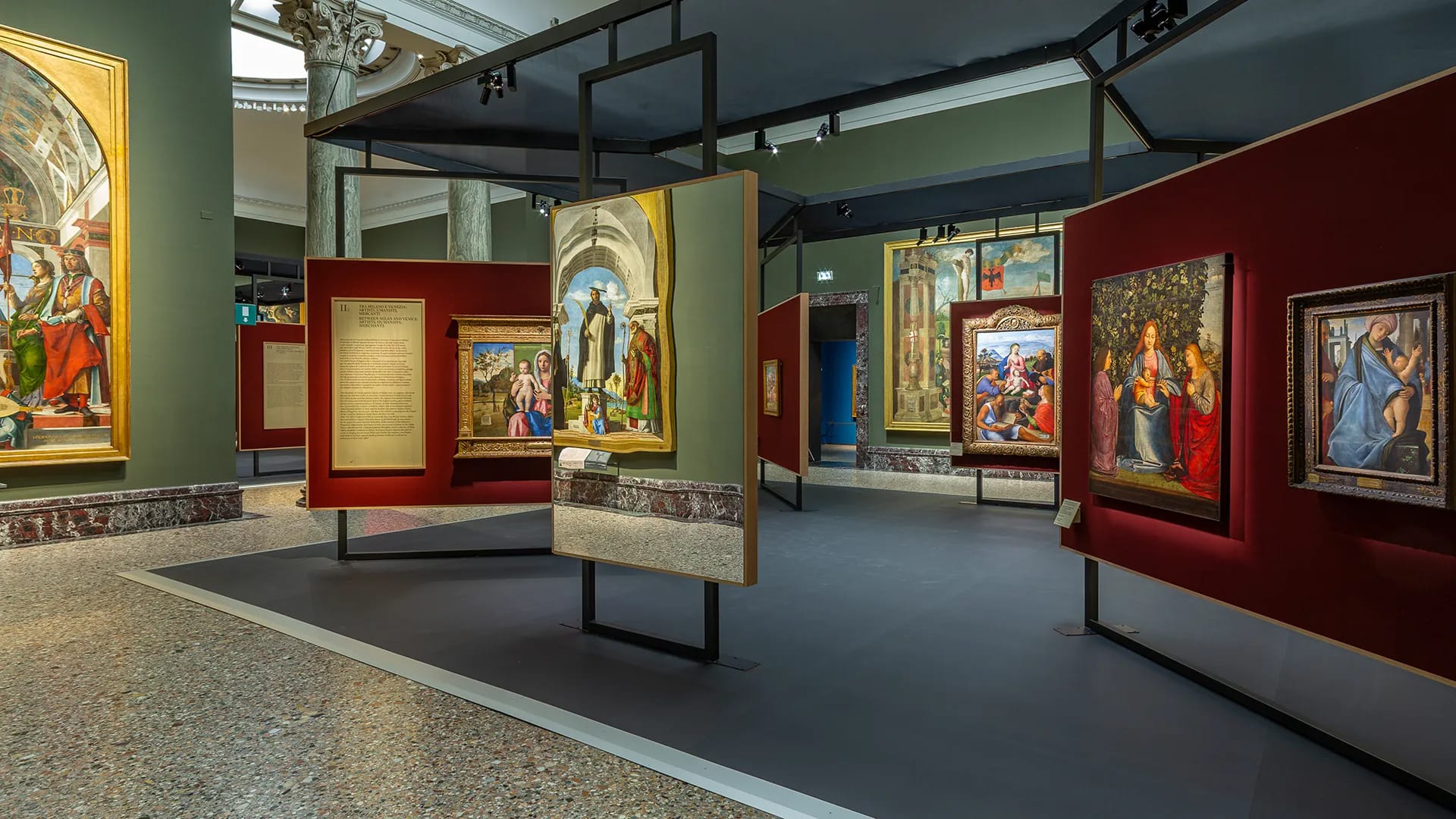
For a while art history could only call him Pseudo Boccaccino. Giovanni Agostino da Lodi, identified through a signed panel at Brera published in 1912, now receives his first exhibition anywhere. Forty-six works place the itinerant Renaissance painter between the Milanese and Venetian schools, near Leonardo on one side and Giorgione on the other, belonging fully to neither. Bramantino, Bellini, Giorgione and Dürer supply the company, with loans from the Louvre, the Kunsthistorisches Museum and the National Gallery in London. It closes on 13 September.
Cao Fei. DASH
Until 28 September 2026
Three years of fieldwork in the farmlands of China and Southeast Asia stand behind DASH, Cao Fei’s project on what smart farming does to land and people. Photography, video installation, virtual reality, documentary footage and archival material fill the Podium of Fondazione Prada, weighing algorithmic agriculture against inherited rural knowledge as climate change, water scarcity and labour shortages press in. The Chinese artist has examined technology’s human costs since Whose Utopia in 2006. A catalogue and a far cheaper pamphlet, the Dispensa, accompany the show.
Il primo Picasso di Milano. Un Moschettiere tra rivoluzione, antifranchismo e solidarietà internazionale
Until 27 September 2026
This focused exhibition is devoted to a single canvas: Homme assis (Le Fumeur), painted by Picasso in 1967 and part of his late Musketeers series, which travelled through Paris and revolutionary Cuba before reaching Milan. In 1972 mayor Aldo Aniasi had the city acquire it from “Amnistia”, an anti-Franco exhibition in the Sala delle Cariatidi that also featured Miró, Calder, Tàpies and Guttuso. Curator Roberto Pini uses photographs and period documents to reconstruct how the painting became a statement of the city’s anti-fascist commitments, alongside its status as art.
Etruschi e Veneti. Acque, culti e santuari
Until 29 September 2026
Water carried the sacred for the Etruscans and the ancient Veneti alike. The Doge’s Apartment follows it from Tyrrhenian port sanctuaries at Vulci and Pyrgi to healing springs at Chiusi and San Casciano dei Bagni, then east to the river goddess Reitia at Este and the lagoon shrine of Altino. Curated by Chiara Squarcina and Margherita Tirelli, the show ends in the present with We Are Bodies of Water, an installation on the Venetian lagoon’s ecosystem made with the Natural History Museum. It closes on 29 September.
🇱🇮 Exhibition in Liechtenstein
Eleanor Antin. A Retrospective
Until 27 September 2026
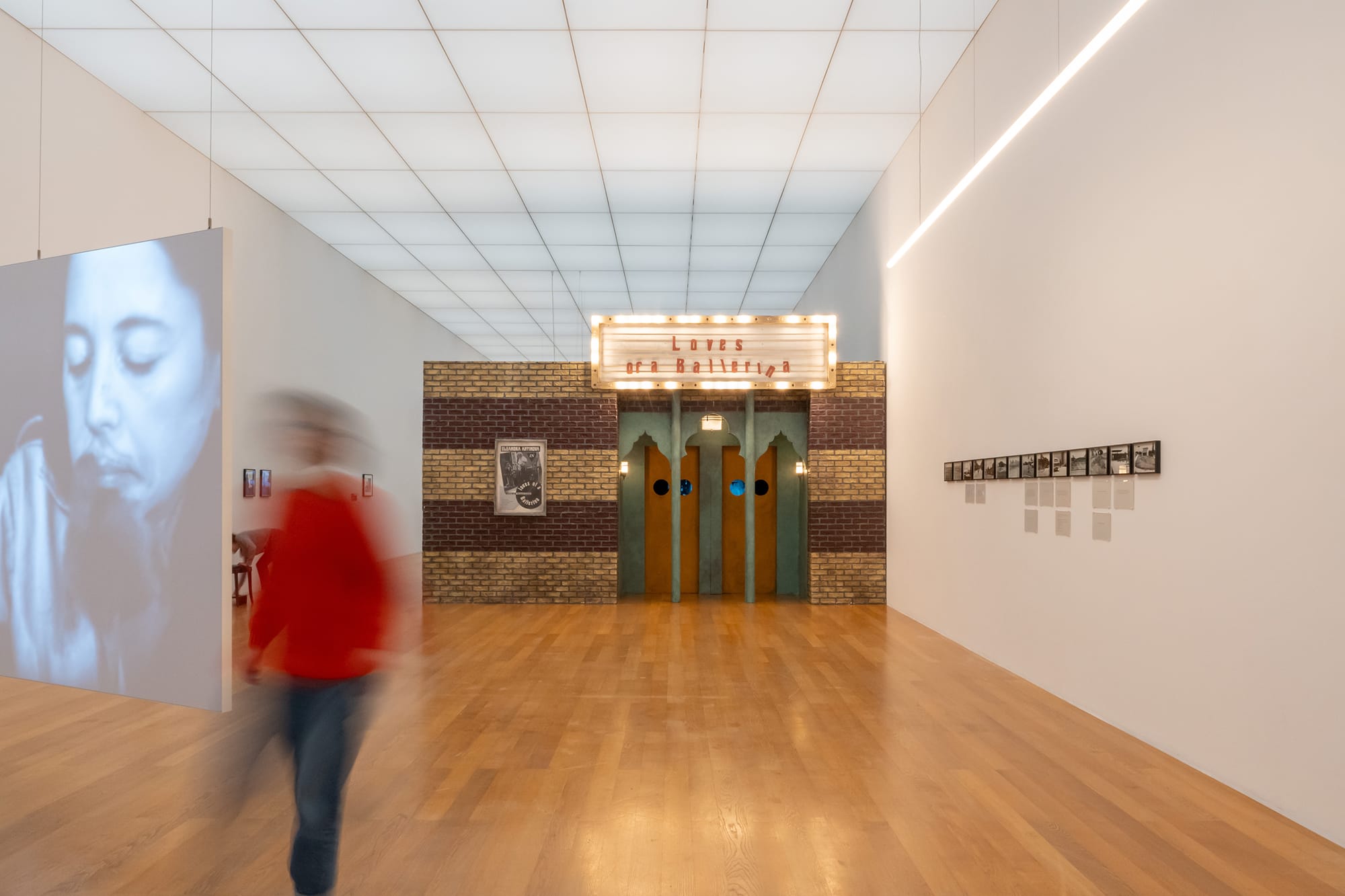
“I always tend to see the funny side of things,” says Eleanor Antin, and humour runs through this survey, her first retrospective in Europe. Born in New York in 1935, Antin helped shape conceptual and feminist art by inventing alter egos, among them the King, the Ballerina and the Nurse, through which she examines identity and power. Early works include 100 Boots, a staged journey of a hundred rubber boots from California to New York. Saâdane Afif performs at the closing event on 27 September.
🇱🇺 Exhibitions in Luxembourg
SUPERFLEX. The Bank
Until 30 September 2026
Clay is legal tender at Mudam this summer. SUPERFLEX, the collective founded in 1993, invites visitors, children above all, to mould their own banks from forms based on the museum’s architecture, then decide what such a bank should store for the future. The growing city of small clay banks weathers and returns to soil as the months pass. The ideas collected will shape a permanent SUPERFLEX installation for the Park Dräi Eechelen. António Mendes and Christophe Gallois curate the participatory project, which ends on 30 September.
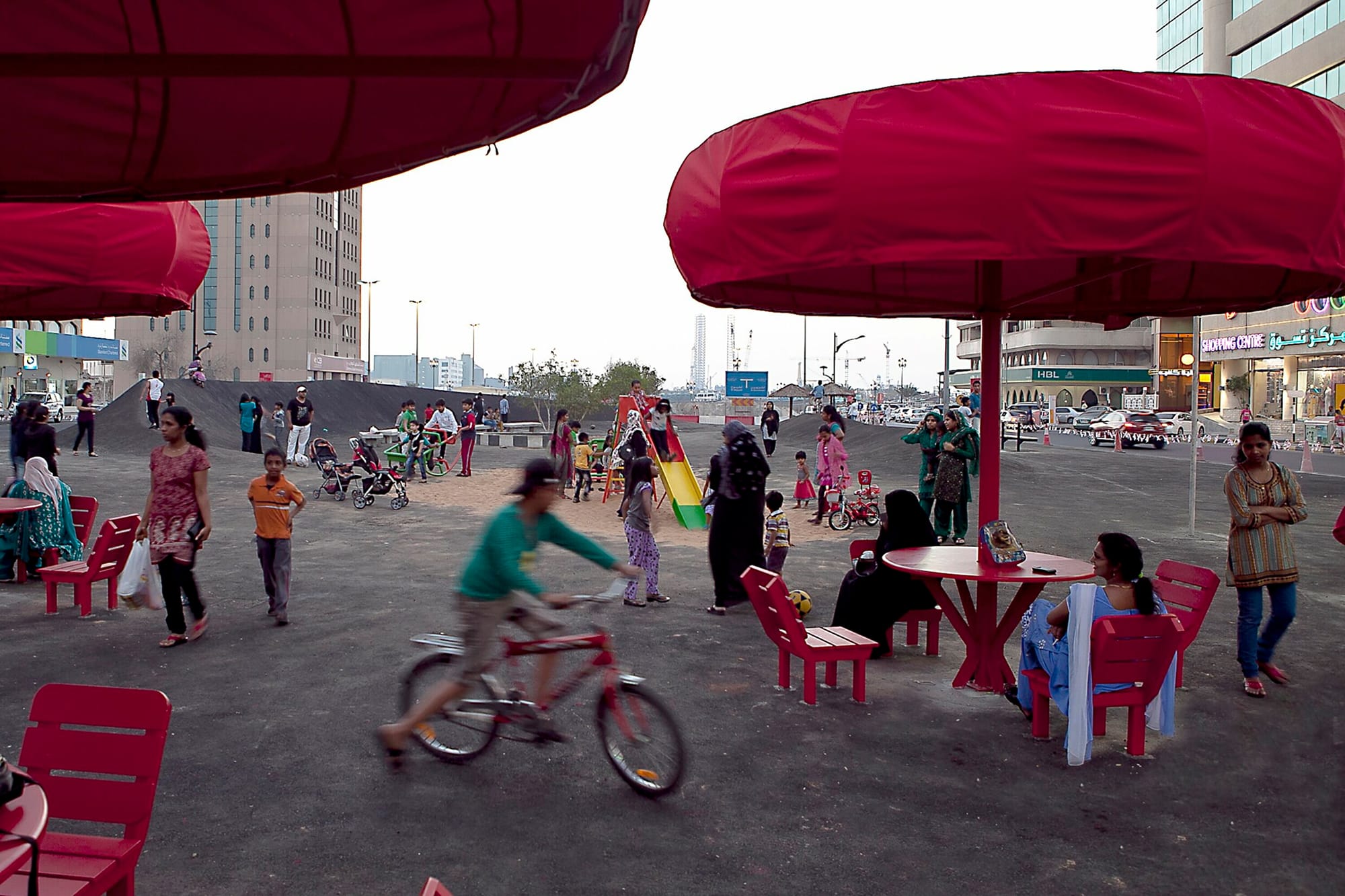
Since Tree Immemorial
Until September 2026
A copper beech grew in the courtyard of the Lëtzebuerg City Museum for centuries, twenty-four metres of shade over the terrace, until fungus worsened by drought forced its felling in March 2022. The museum kept the trunk and handed it to eight sculptors, Jhemp Bastin, Katarzyna Kot-Bach and Wouter van der Vlugt among them, whose works in the beech’s own wood now enter the municipal art collection. The display gathers the results in memory of the tree itself. The show closes for good on 13 September.
La somme de mon seum
Until 6 September 2026
A teapot coming to the boil is the only image in this film by Mehdi Zion, shown at Casino Luxembourg’s project space on rue de la Loge. Shot on analogue stock, it builds tension through accumulated pressure rather than release, a slow portrait of simmering anger. The accompanying text, in four parts, recounts experiences of racism at sixteen, twenty-one, twenty-six and thirty-one, dwelling less on each event than on its persistence in body and mind. The title borrows French slang for lingering resentment. Steam eventually escapes the frame altogether.
ETAT BRUIT
Until 20 September 2026
Sound, in its political registers as much as its sculptural ones, drives ETAT BRUIT at Konschthal Esch. Seven artists and collectives, Gabriela Löffel, Brognon Rollin, Aura Satz, Nika Schmitt, Tintin Patrone, Open Group and Nik Nowak, take a sounding of a world where economic, political and cultural signals clash and overlap. Works include Satz’s Preemptive Listening, Nowak’s Tracing A Ghost and Brognon Rollin’s 24h Silence, 2020. Charles Wennig curates the survey of channels, signals and background noise, on view at the former furniture store until 20 September.
Julia Beliaeva. White Shadows
Until 20 September 2026
Porcelain carries the weight in White Shadows, on Konschthal’s ground floor. Julia Beliaeva, born in 1988 in Ukraine’s Vinnytsia region and still keeping a studio in Kyiv, folds scanning, 3D printing and virtual reality into a medium that recalls her country’s diminished ceramics tradition. Mythological figures return as emblems of suffering and resistance; fragility, of objects and of people alike, is the constant. Christian Mosar curates the show, which shares its closing date of 20 September with the group show ETAT BRUIT in the same building.
🇳🇱 Exhibitions in the Netherlands
Ed van der Elsken. Up Close
Until 13 September 2026
Nine galleries follow Ed van der Elsken from his first reportages of the early 1950s to the making of his last photobook in the late 1980s. The Rijksmuseum pairs his best-known street photographs from Amsterdam, Paris, Tokyo and Cuba with the archive it has shared with the Nederlands Fotomuseum since 2019: handwritten notes, contact sheets covered in red marks, darkroom experiments and newly discovered book dummies, plus film fragments of the photographer talking. The portrait that emerges is of a maker who was never quite done.
Fiep Westendorp
Until 13 September 2026
Jip and Janneke, Pim and Pom and Pluk van de Petteflet all pass through the Rijksmuseum’s photography gallery in this show of 150 original drawings by Fiep Westendorp. The selection runs from her academy years and the mildly ironic drawings she made for Het Parool’s women’s page to the children’s book characters that shaped post-war Dutch childhoods. Sketches, scratched-out lines and corrections stay visible, showing how much patience her seemingly effortless figures required. A gallery trail and a drawing lab keep young visitors busy along the way.
American Identities: David Levinthal & Chicano Prints
Until 6 September 2026
Toy cowboys, baseball heroes and Barbie dolls, photographed in staged miniature, carry David Levinthal’s reading of how America builds its myths of power and heroism. H’ART pairs his first substantial Dutch presentation with Radical Histories, prints by Chicano artists who contest official versions of the same country, taking on whiteness, borders and gender roles. Both halves come from the Smithsonian American Art Museum, in its first European collaboration of this kind. Two views of one national story hang under a single title until 6 September.
Vincent’s Path to Fame
Until 6 September 2026
Nobody was clamouring for Van Gogh’s paintings when he died in 1890, and his brother Theo followed him within months. What happened next is the subject here. Theo’s widow, Jo van Gogh-Bonger, inherited hundreds of paintings, drawings and letters, and rather than sell the collection she set about convincing the world of Vincent’s genius through exhibitions, loans and publications. Her son kept it intact until the museum opened in 1973. Almond Blossom and The Harvest hang alongside posters, photographs and rarely shown archival material tracing the family’s campaign.
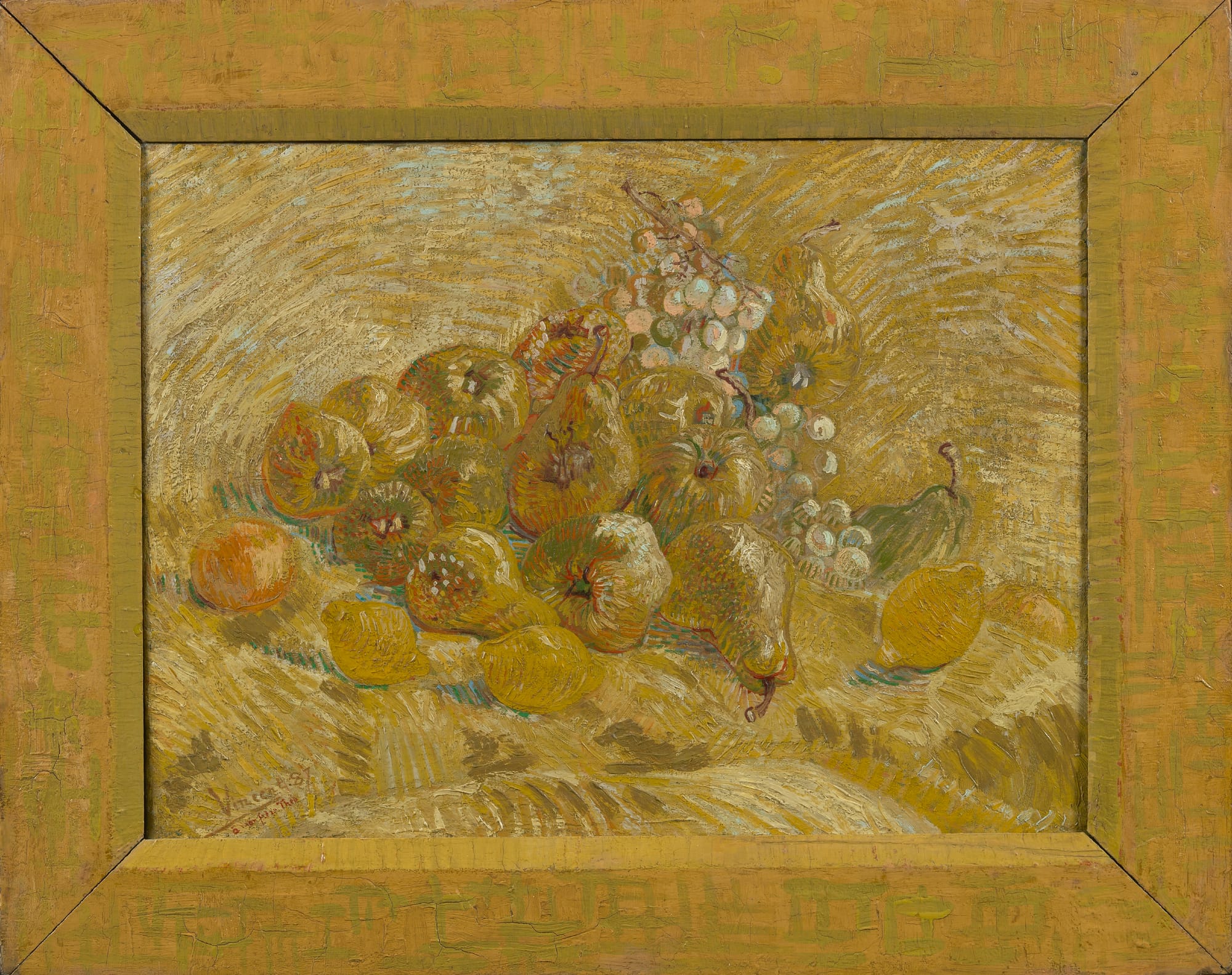
The ReFramers present: In Search of an Anchor
Until 20 September 2026
For this exhibition, the Van Gogh Museum handed curatorial control to three of its ReFramers, young adults who advise the institution on staying relevant to new audiences. Anna Crok, Kamelia Erich and Bintou Kourouma selected fourteen works by Van Gogh and designed the display themselves, around a question that occupied the painter and still occupies their generation: where to find grounding in life. Routines, relationships, faith and the act of making art all figure. New drawings by illustrator Rossel Chaslie, born in 1998, answer Vincent from the present day.
Peanut Butter Floor
Until 6 September 2026
Three hundred and ninety kilograms of Calvé peanut butter, spread over twenty-five square metres of hexagonal floor, honour Wim T. Schippers, who died in 2026. Specialist peanut-butter plasterers laid the surface at the Depot in early July, faithful to the artist’s preference for the brand because it spreads so nicely. The tribute keeps the matter-of-fact absurdism that ran through Schippers’s work as artist, programme maker and voice actor. Depot visits require a timed slot, and the sticky floor remains on view only until 6 September.
Pixel Pioneers
Until 13 September 2026
Digital art gets its first full exhibition at the Depot, pixel by pixel. Geert Mul’s restored interactive installation Horizons, unseen for nearly twenty years, projects over 200 collection works into a landscape that responds to visitors’ movements. Suzanne Treister maps technological power structures in her Hexen series, Claudia Hart reads cryptocurrency as a ruin, and Feng Mengbo restages Chinese revolutionary history as a playable video game in Long March: Restart. The fragility of such works, and how to preserve them, is a theme in itself.
Lost Charley Toorop Painting Comes Home After 100 Years
Until 6 September 2026
In the summer of 1926 Charley Toorop stayed at Rotterdam’s Victoria Hotel and painted six canvases of the city. Five were known; the sixth, Gezicht op de Maas, with the harbour’s contours against a dark evening sky, has only now resurfaced, acquired by Stichting Droom en Daad. The Depot shows the painting publicly for the first time, a century after it was made. It hangs near the museum’s other Toorops, among them the Self-Portrait of 1928. The homecoming display at the Depot lasts only until 6 September.
A Diary of Things
Until 20 September 2026
Before an artwork reaches a museum it has already lived, quietly or otherwise. This display on the Depot’s third floor follows those earlier lives through seven routes into the collection: donation, purchase, looting, sale, dismantling and discard among them. Adriaen van der Werff’s Diana and Callisto of 1704 arrives with an unusually complete paper trail; Abraham Hondius’s hunting scenes carry gaps and disappearances instead. Van Gogh, Kandinsky, Van Dyck, Carpaccio and the potter Lucie Rie also figure. Provenance, usually a footnote, becomes the whole story.
Salty Tears, a Bare Wall, and a Playful Emergency Button
Until 21 September 2026
How to remain human in complicated times is the question posed by this compartment display at the Depot. Eighteen artists answer it in different registers: introspective solitude, vulnerability, defiance and jokes. Mark Manders, Ai Ozaki, Matthew Monahan and Amalia Pica are among them, while Koos Buster contributes a ceramic World Peace button for anyone tempted to press their way out of the news. The selection hangs in compartment A4.04, one of the open storage spaces that make the building what it is, until 21 September.
Endless Reflections
Until 30 September 2026
Museum interiors were Willem van Veldhuizen’s lifelong subject: symmetrical rooms stripped of everything but art, a window onto garden or skyline, reflections pooling in marble floors. The Rotterdam painter, who died in 2025, spent up to seven of the nine months each painting took him simply looking. Works such as New York Icons and Museuminterior, Istanbul hold a balance between recognition and abstraction, with contours softened and details omitted. The Depot’s commemorative selection of his canvases occupies compartment A3.06 through to the very end of September.
Basel Abbas & Ruanne Abou-Rahme. Prisoners of Love: Until the Sun of Freedom
Until 27 September 2026
Writing, storytelling and song are treated as life-sustaining acts in this installation of moving image, sound and text by Basel Abbas and Ruanne Abou-Rahme. Built from study with former Palestinian prisoners, poets and revolutionary thinkers, the work samples and layers its sources into what the artists call new scripts, a poetics of resistance under impossible conditions. The show belongs to Melly’s Call & Response series and is co-commissioned with Brown University’s arts institute, MACBA Barcelona and Nottingham Contemporary. Gabi Ngcobo, Rosa de Graaf and Aïda Sidhoum curate.
Hajra Waheed. There Is a Fountain Even If Pale That Flows Beneath Us All
Until 6 September 2026
Humming becomes a language of resistance in Hum, the multichannel sound installation at the heart of Hajra Waheed’s solo show. The 2020 work, first of a trilogy, gives voice to imprisoned singers and songwriters whose music was censored, carrying melody where words were forbidden. Around it, guest curator Hera Chan arranges new and recent drawings, paintings, sound studies, hand-bound artist books and leporellos, many shown for the first time. Listening is proposed as a collective and political act. The whole show closes on 6 September.
Riet Wijnen. Suitcase Economy
Until 20 September 2026
A canteen has operated on Melly’s ground floor for nearly a year. Riet Wijnen’s Suitcase Economy takes its name from produce carried between countries in luggage, and its methods from fermentation and preservation. A yellow triangular structure divides the space into sixteen sections holding stackable ceramic tableware, fermentation vessels, ceramic clocks and paintings by the artist’s father. Workshops, study sessions and monthly brunches keep it in use. Informal economies and self-sustainability are the underlying subjects, argued through shared food and daily use rather than wall texts.
Can Love Be a Photograph. 40 Years of Inez & Vinoodh
Until 6 September 2026
Four decades of partnership, in work and in life, run through this survey of Inez van Lamsweerde and Vinoodh Matadin. The Dutch pair helped invent digitally manipulated fashion photography, shooting campaigns for Dior, Gucci and Chanel and portraits from Lady Gaga to Barack Obama, always poised between the familiar and the uncanny. Thematic galleries chase the tension between reality and artifice, with recent images made on an iPhone alongside the elaborate constructions. They call the whole thing a celebration of their love. It ends on 6 September.
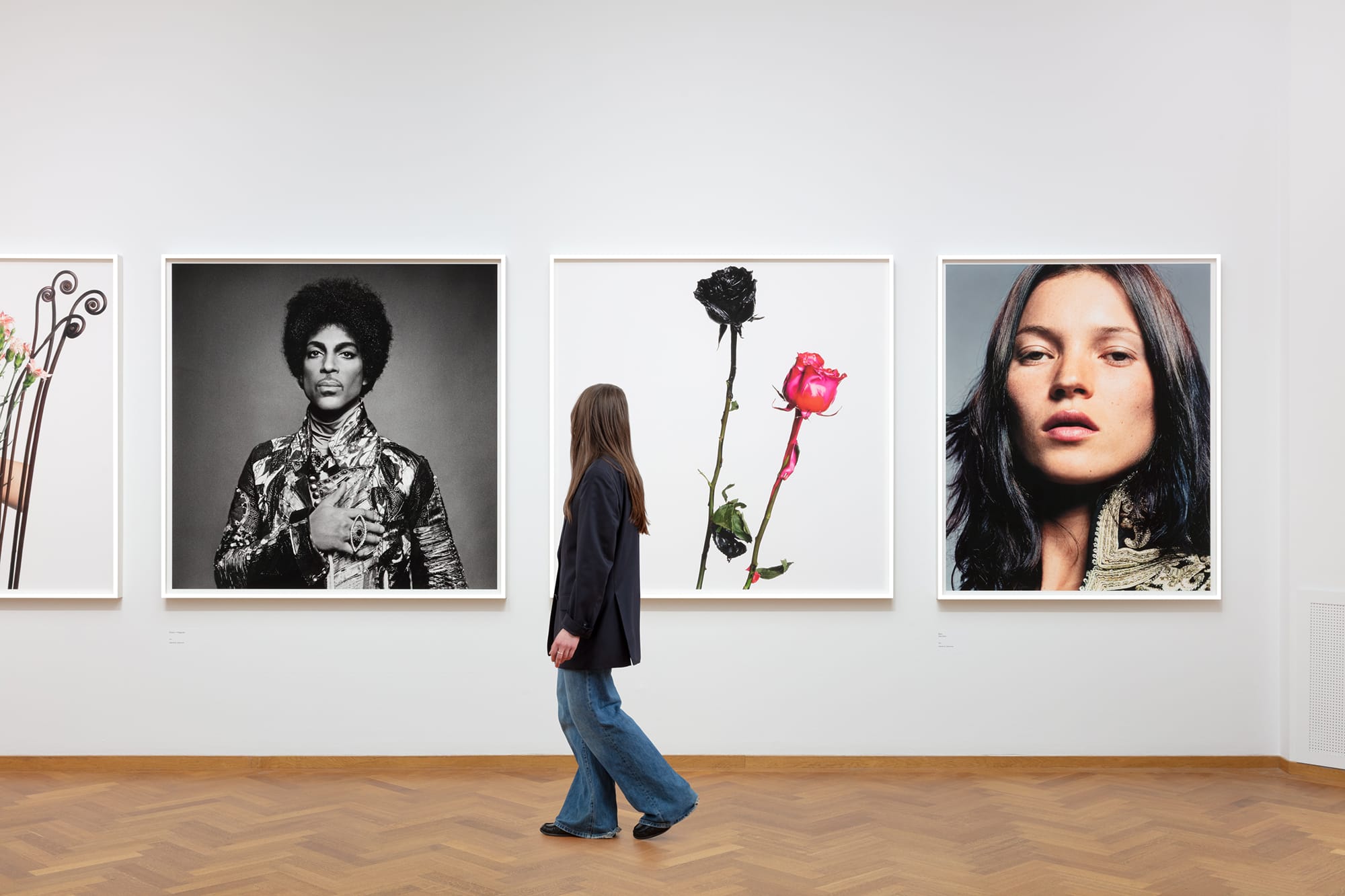
Marlow Moss. A Suitcase Full of Sketches
Until 13 September 2026
A suitcase holding more than a hundred sketches, recently acquired by the museum, opens a window onto Marlow Moss. Born Marjorie Jewel Moss in London in 1889, the artist took a gender-neutral name in 1921, moved through Parisian avant-garde circles as a friend of Mondrian, and fled to Cornwall in 1940 because of Jewish ancestry. The studies, mostly made after that flight, range from mathematically calculated compositions to organic watercolours. Three paintings from the collection anchor the display, which now stays up until 13 September.
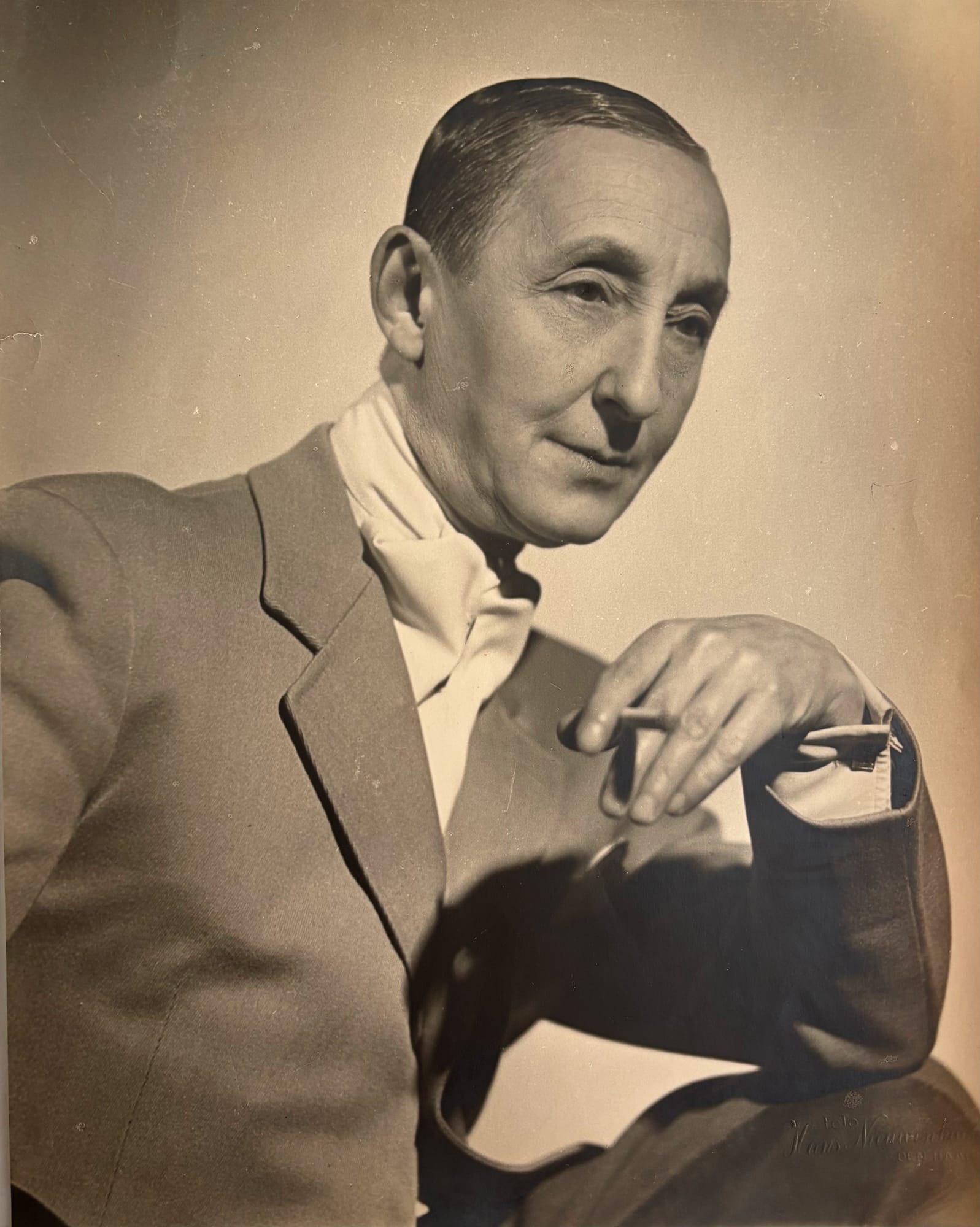
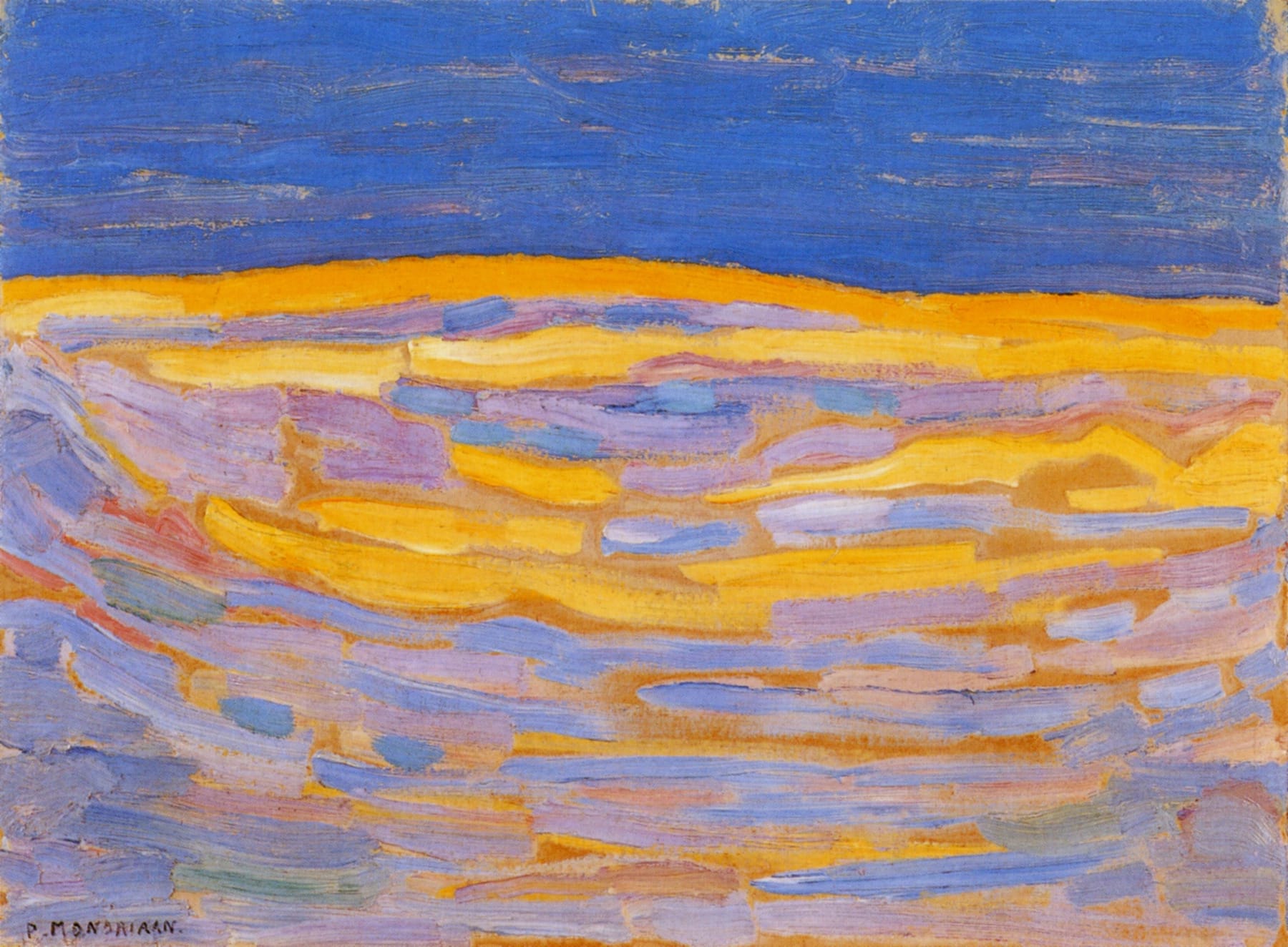
Mondrian & De Stijl
Until 27 September 2026
The world’s largest Mondrian collection has hung in its present arrangement since 2020, and 27 September is the arrangement’s last day. The display follows Piet Mondrian from atmospheric Dutch landscapes to Paris abstraction and the unfinished Victory Boogie Woogie, with Van Doesburg, Van der Leck, Huszár, Oud and Rietveld filling out De Stijl around him. From 10 October the museum promises the collection back in a revamped presentation. Anyone attached to the current hang, primary colours and all, has only until the end of September.
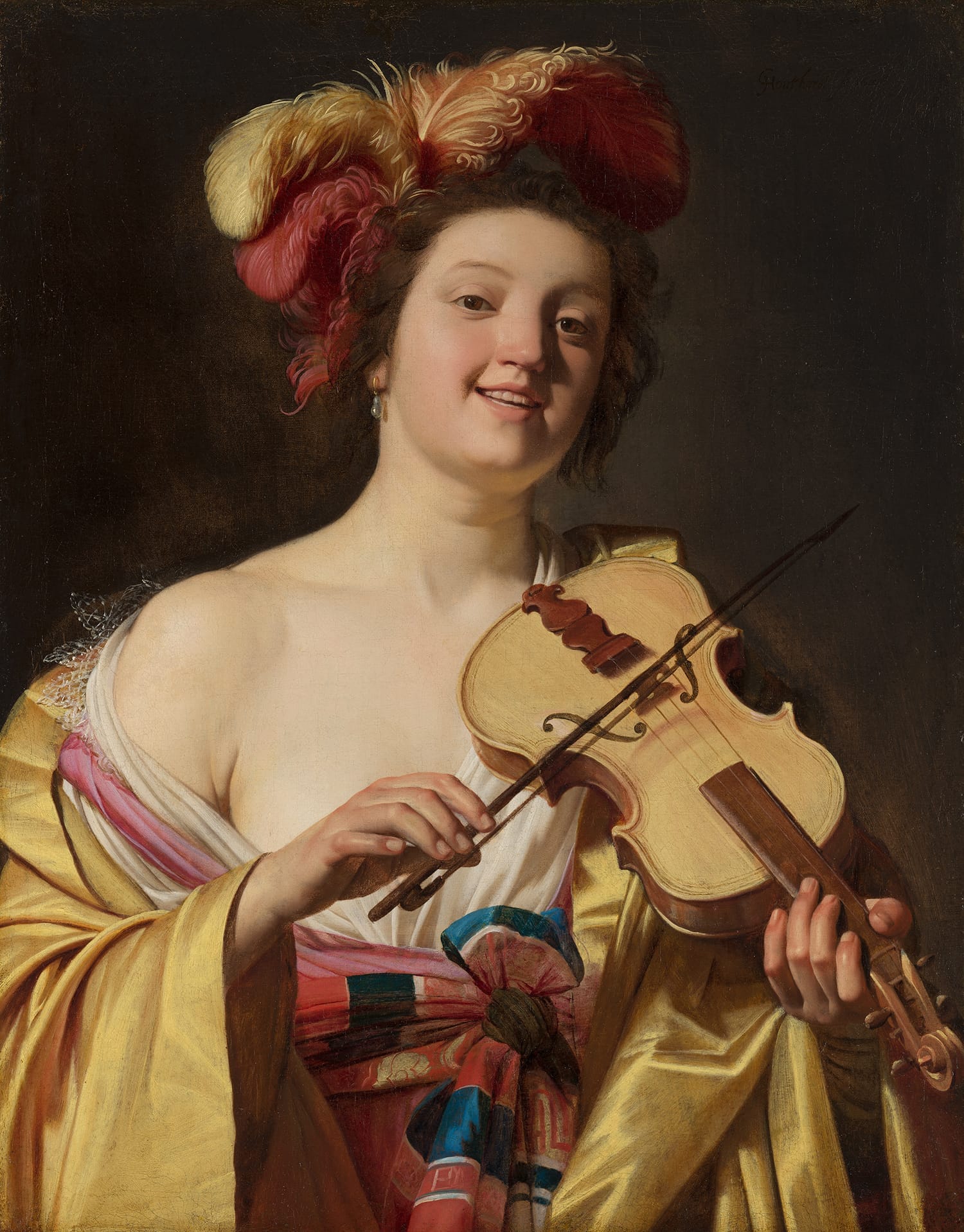
Gerard van Honthorst. Different to Rembrandt
Until 13 September 2026
Rome nicknamed him Gherardo delle Notti for his candlelit scenes in Caravaggio’s wake. Utrecht, his birthplace, now gives Gerard van Honthorst his first retrospective at home: roughly sixty paintings and thirty drawings in the old convent stables, with loans from the Louvre, the Royal Collection and the Galleria Borghese. The show follows his return north into genre scenes, musical parties and portraiture, and sets his choices against Rembrandt’s opposite path. Love, pleasure and vanity, coded in seventeenth-century symbols, get a patient decoding. A six-euro surcharge applies.
Annex: Mathias Poledna
Until 13 September 2026
Ten minutes of 35mm film, models walking barefoot to techno, make up My Favorite Shop, the 2024 work Mathias Poledna shows in the Annex at the end of the Honthorst route. The silk dresses take their colours from Italian Renaissance frescoes, folding the history of painting into a catwalk. The Viennese artist builds polished, precisely crafted images whose gloss hints at layered cultural and political meanings. Programmed as a counterpoint to the Honthorst retrospective next door, the film runs on the same dates, until 13 September.
Make Some Noise: Desire. Stage. Change.
Until 20 September 2026
The Van Abbemuseum treats itself as a stage in the ninth and final chapter of its Positions series. Twelve artists and collectives, Simon Fujiwara, Selma Selman, Tori Wrånes and New Theater Hollywood among them, work across performance, sculpture, sound, film and digital media on movement: of bodies, materials, emotions and technologies. One room operates as a sound chamber that gradually becomes a museum club with DJ sets. Zippora Elders curates the finale, which takes desire and transformation as its through lines and closes on 20 September.
Library exhibition: Simultané
Until 10 September 2026
A deck of playing cards prompted this display: the Jeu de cartes Simultané, designed by Sonia Delaunay-Terk and recently acquired by the museum’s library. Around it, publications and works from the library and museum collections are arranged under three themes, colour and research, the artist’s book, and everyday play. Delaunay-Terk, born in Ukraine in 1885, moved freely between painting, artist’s books, posters, costumes and interiors, treating colour as a carrier of emotion and ideas alike. The library keeps its own hours, Wednesdays and Thursdays only, so a visit takes some planning.
Join Vincent on his terrace
Until 13 September 2026
While Terrace of a Café at Night tours Japan, on loan for the first time in twenty years, the Kröller-Müller has filled its absence with something playful. Visitors step into a specially designed space recreating the atmosphere of Van Gogh’s nocturnal café on the Place du Forum, take a seat at the terrace and photograph themselves inside the painting. Around them hang interpretations of the canvas made by admirers worldwide, from embroidery and dresses to Lego models, and the museum still accepts submissions. The original returns to Otterlo in mid-September.
Anouk Griffioen. For as long as it lasts
Until 20 September 2026
It begins with a photograph taken by the artist’s father in Enschede on the day she was born. Working from the thousands of pictures he made over the years, Rotterdam artist Anouk Griffioen, born in 1979, revisited every place her family once lived, photographed them anew and translated the changes into monumental charcoal drawings. Some fill entire walls, so that visitors seem to stand inside them; others are grouped as triptychs, like condensed memories. Her father is hidden in one of the drawings. This is her first solo museum exhibition.
🇪🇸 Exhibitions in Spain
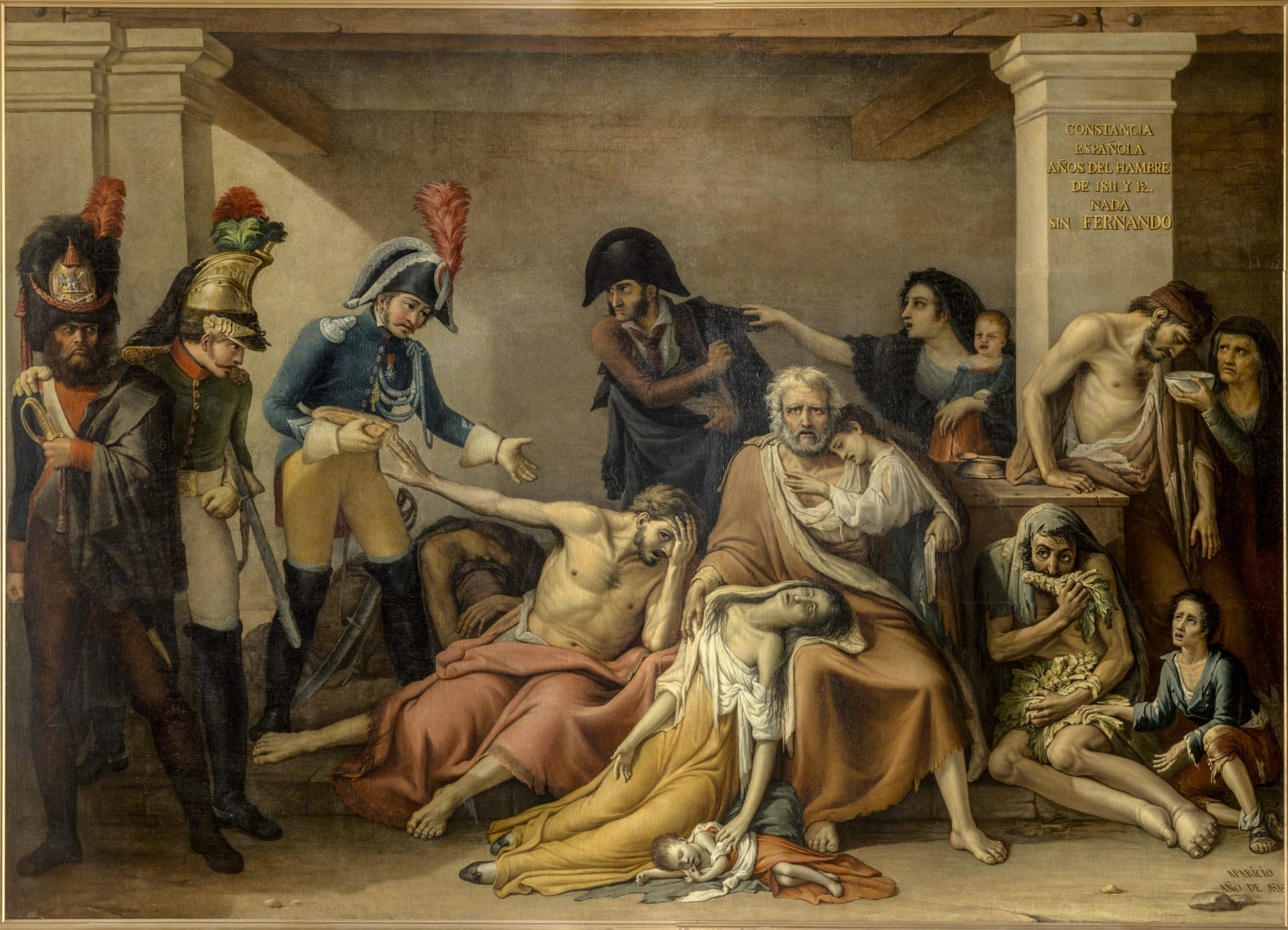
The Famine Painting
Until 13 September 2026
Once the most talked-about canvas in the young Prado, José Aparicio’s enormous The Year of Famine in Madrid returns to the museum after a century on deposit elsewhere. Painted in 1818, it shows starving Madrileños refusing bread from French soldiers, propaganda for Ferdinand VII’s restored absolutism, and at the 1819 opening it overshadowed Goya himself. Liberal Spain later banished it from the galleries. Newly restored and displayed alongside Goya’s unsparing famine drawings, the picture now prompts questions about taste, politics and how museums decide what deserves to be seen.
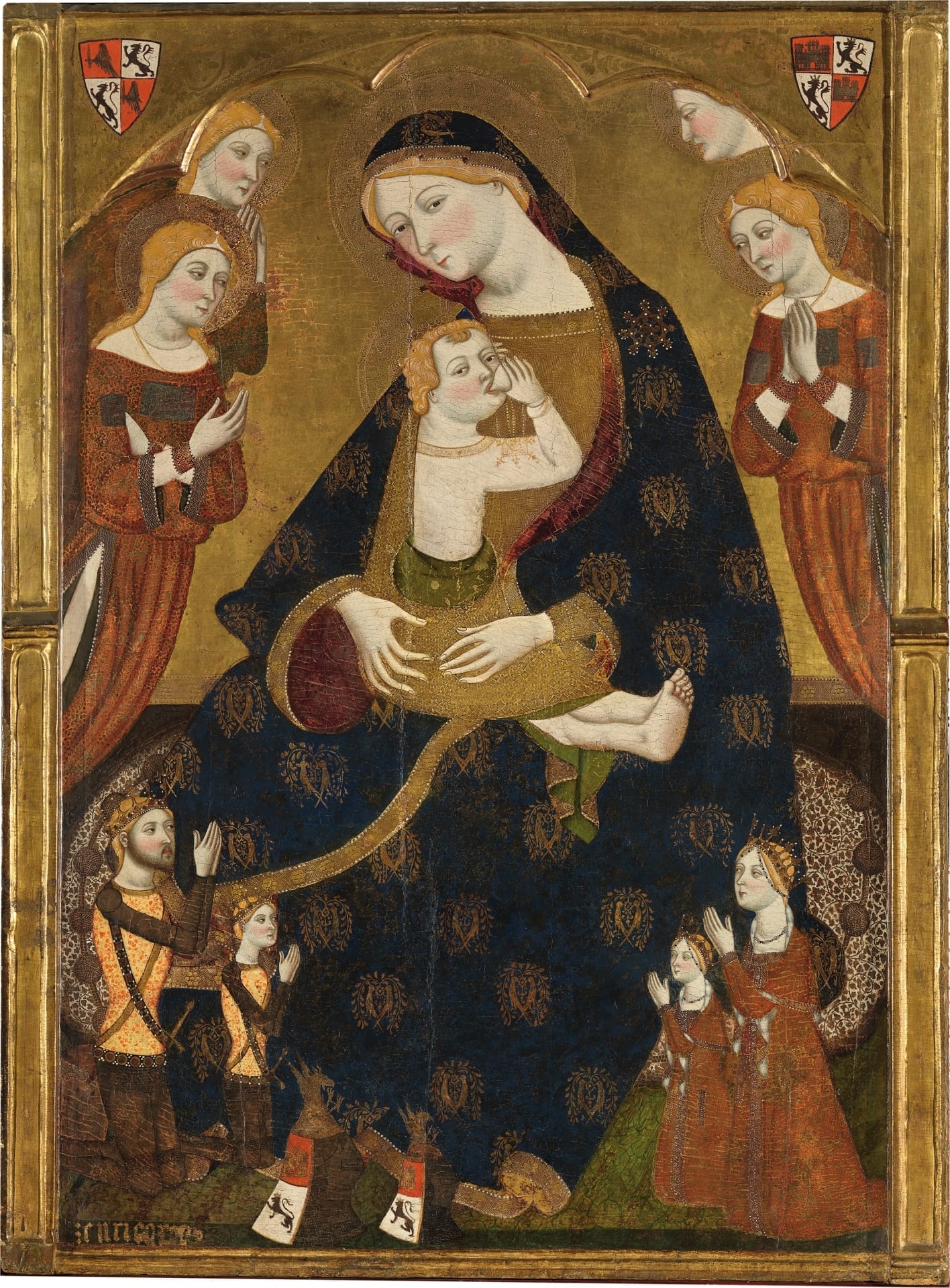
In the Italian Manner. Spain and the Mediterranean Gothic, 1320–1420
Until 20 September 2026
Spanish Gothic spoke with an Italian accent for a century, the Prado argues here. Over a hundred works in paint, sculpture, metalwork, illuminated manuscripts, drawings, embroidery and silk follow the traffic of artists and models across the Western Mediterranean between 1320 and 1420. Ambrogio Lorenzetti, Gherardo Starnina and Barnaba da Modena stand beside the Bassa and Serra brothers and Pedro de Córdoba, with hybridisation treated as the engine of the period. The show closes on 20 September, just before the autumn programme claims the galleries.
Prado. 21st Century
Until 27 September 2026
Nearly a thousand paintings have entered the Prado’s collection since 2000, and this exhibition is the museum’s account of that quarter-century. Ninety-eight of the additions hang in the Jerónimos Building, from a Roman marble bust to Velázquez’s Ferdinando Brandani, Bruegel’s The Wine of Saint Martin’s Day, Goya’s The Countess of Chinchón and a Picasso on long-term loan. Acquisitions of works by Sofonisba Anguissola, Rosa Bonheur and María Blanchard signal a deliberate widening of the canon. A scale model previews the future Prado Campus, including the still-unfinished Hall of Realms.
The Council of State and the Museo del Prado
Until 20 September 2026
Spain’s Council of State turns five hundred this year. To mark the anniversary, the Prado has threaded a route through its permanent galleries linking thirteen portraits of the council’s historical members. Titian’s Charles V, who founded the body, opens the itinerary; Rubens’s Duke of Lerma and Velázquez’s Count-Duke of Olivares follow on horseback, then Goya’s Floridablanca and Jovellanos speak for the Enlightenment. Lithographs and photographs join the paintings in the nineteenth-century rooms. Beyond the likenesses, the route traces how Spain has pictured power across five centuries.
Carmen Laffón. Variations
Until 27 September 2026
Baskets, cupboards, sewing machines and a doll named Marcelina recur through the 77 works of this survey, the first devoted to Carmen Laffón since her death in 2021. The Sevillian painter and sculptor, second woman ever admitted as a full member of the San Fernando academy, spent six decades observing light and time in the landscapes of Seville, Sanlúcar and the Doñana marshes. Nine thematic sections trace her drift from careful representation towards the edge of abstraction. Endless variation in ordinary things was her whole subject.
Ewa Juszkiewicz
Until 6 September 2026
Faces disappear beneath folded fabric, fruit, foliage and coiled hair in Ewa Juszkiewicz’s reworkings of historical female portraiture. The Polish painter, born in Gdańsk in 1984, renders the old conventions with refined technique and then subverts them, questioning the ideals of beauty and decorum the originals enforced. Guillermo Solana selects over twenty paintings for her first showing at the museum, hung in the Postpop rooms on level 1. Surrealism supplies the sensibility; the argument concerns who got painted, and how. It closes on 6 September.
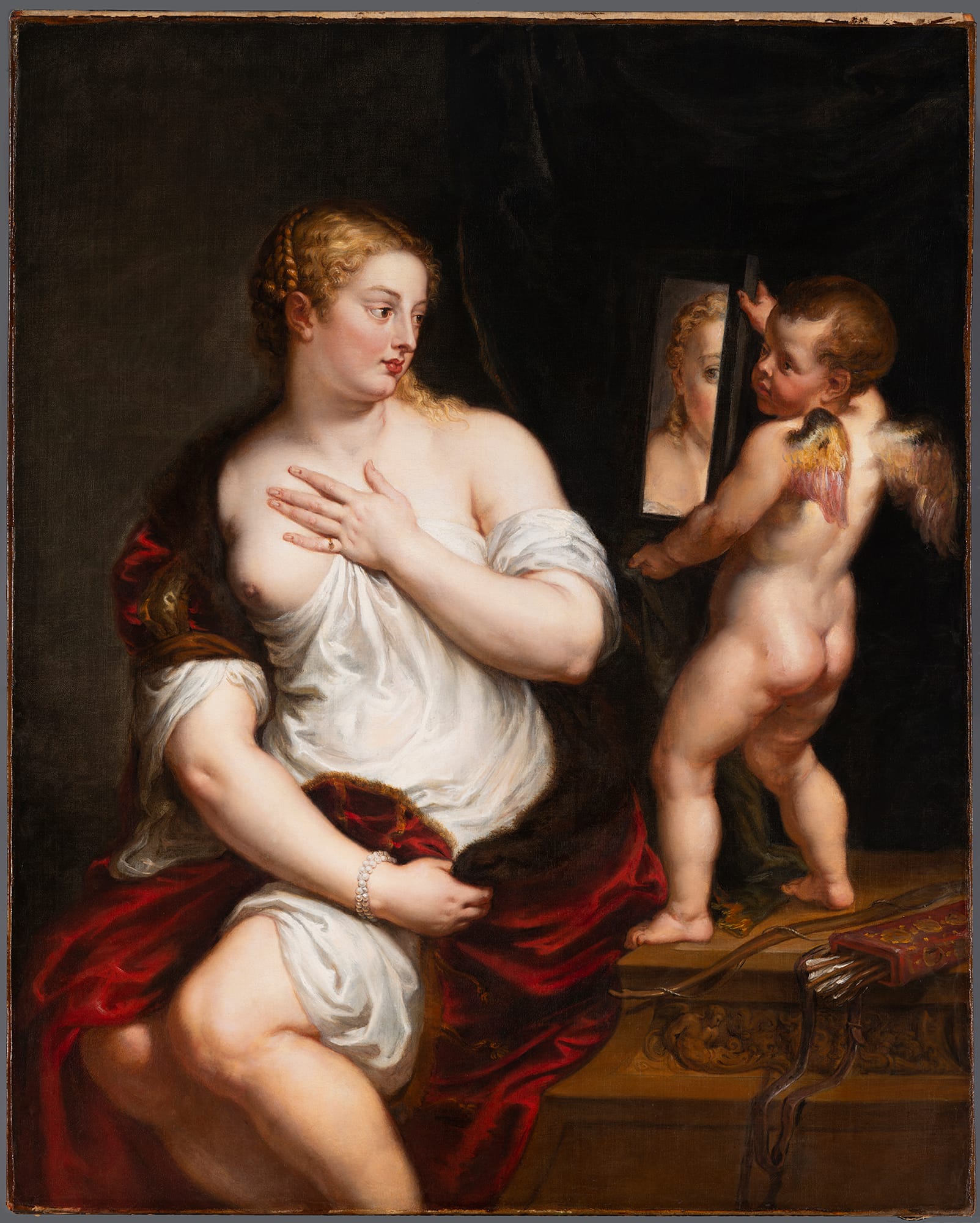
Rubens. The Restoration of Venus and Cupid
Until 13 September 2026
Decades of aged varnish had dimmed Rubens’s Venus and Cupid until cleaning brought back its intended light and colour. The Thyssen presents the restored canvas of around 1606–11 in Room 19 with the technical story alongside: analysis revealed the painter applying white with a knife beneath the figures’ skin to push their volume and glow. A viewer lets visitors page through the paint layers themselves. The display is installed within the permanent collection route, and Monday afternoons remain free of charge. It ends on 13 September.
Aurèlia Muñoz: Beings
Until 7 September 2026
A hundred years after her birth in Barcelona, textile artist Aurèlia Muñoz receives her most ambitious retrospective, with over 150 works across five decades, many never shown before. A figure of the Nouvelle Tapisserie movement and the Catalan Tapestry School, Muñoz pushed fibre well past craft: early Surrealist-tinged collages and large embroideries build towards macramé structures reunited from collections in Spain, Europe and the United States, plus her kite-sculptures and winged books. The “beings” of the title are her genderless figures hovering between human and animal. MACBA in Barcelona hosts the show from November.
Picasso Cyprus. Encounters with the Ceramics of the Mediterranean
Until 27 September 2026
Picasso never set foot on Cyprus, yet its ancient ceramics reached him through the Louvre and the specialist literature. The Museu Picasso sets his own clay work, Black Mask, Bullfight and Fish, Octopus and more, beside Cypriot pieces lent by European museums and the island’s Department of Antiquities. Hybrid creatures, fused human and animal forms and a shared playfulness carry the comparison across three millennia. Admission is free with advance booking, and guided visits, family activities and ceramic workshops accompany the run, which ends on 27 September.
Valérie Belin
Until 6 September 2026
Bodybuilders, mannequins and transsexuals filled Valérie Belin’s early black-and-white series; her later colour work she calls magical realism, figures held between flesh, icon and illusion. The French photographer, a Prix Pictet laureate elected to the Académie des beaux-arts this year, is placed in dialogue with Picasso’s legacy at the Barcelona museum devoted to his formative years. Identity, artifice and the boundary between reality and representation carry the conversation between the two media and eras. Serial and minimalist in method, maximal in effect, the show closes on 6 September.
Kapwani Kiwanga. Changing States
Until 13 September 2026
Winning the 2025 Joan Miró Prize brings Kapwani Kiwanga to Montjuïc for her first Spanish retrospective. Trained as an anthropologist, the artist reads power through materials, tracing how economic exchange, architecture and territory shape bodies and spaces, and stretching the timescale to the geological. Existing installations meet new works made for Barcelona, with contemporary farming and housing crises among the pressure points it names. Martina Millà curates, with support from the Stavros Niarchos Foundation and TBA21. The whole show departs from Montjuïc on 13 September.
Homes on the Move
Until 6 September 2026
Cameras went to people without homes for this project in Room 22 of the Fundació Joan Miró. In participatory sessions run by CLICme_Inclusió under Eugènia Ortiz Antoranz, homeless participants photographed their pasts, presents and imagined futures, treating home as an emotional fact as much as a physical one. The photographic prints hang beside an audiovisual record of the sessions in which they were made. Voice and visibility, rather than documentation imposed from outside, are the point of it. The display in Room 22 closes on 6 September.
Àngel Jové. De intactu
Until 27 September 2026
Spain’s first video artwork, Primera muerte of 1969, had Àngel Jové among its makers. The Catalan artist, who died in 2023 after decades of deliberately sidestepping museums, receives his first full retrospective at the Museu Tàpies. Drawings, photographs, poetry and sculptural objects from arte povera to conceptualism fill two floors, the upper a creative hub, the lower an archive. Minimal gesture and the fragility of being were his materials; Vinçon lamps and the Zeleste venue were his civilian life. Maria Josep Balsach curates until 27 September.
Antoni Tàpies. The Perpetual Movement of the Wall
Until 27 September 2026
Four exhibitions from the 1950s are reconstructed inside this one. Imma Prieto and Pablo Allepuz revisit how Antoni Tàpies’s work was selected, arranged and argued over in that decade, and what each hang owed to modern architecture, industry, graphic design and urban life. The approach treats exhibition-making itself as part of the artist’s œuvre rather than a neutral frame. A transformative decade in the painter’s career emerges from the differences between the four stagings. The show runs at the artist’s own museum until 27 September.
Ruth Asawa. Retrospective
Until 13 September 2026
Looped and tied wire, hung in air, made Ruth Asawa’s name. The Japanese-American artist, interned with her family during the Second World War and refused a teaching degree out of prejudice, found her method at Black Mountain College in 1946. Six decades of work fill ten sections in Bilbao: suspended sculptures, clay and bronze casts, paperfolds, drawings and sketchbooks, plus the public commissions and teaching she considered inseparable from art. SFMOMA and MoMA co-curated the touring retrospective, which continues to the Fondation Beyeler after 13 September.
Learning Through Art 2026
Until 20 September 2026
Children aged six to twelve made everything in this annual show at the Guggenheim Bilbao. Six artists, among them Zaloa Ipiña, Nerea Lekuona and Manu Muniategiandikoetxea, spent twenty sessions turning classrooms in five Basque schools into working studios. The results, from maps of fictional places to futuristic architecture and improbable creatures, fill five sections, built largely from recycled materials. The programme descends from one begun at the New York Guggenheim over 55 years ago. The young cohort’s work stays on the museum’s walls until 20 September.
Joana Vasconcelos. Transfiguration
Until 27 September 2026
Crochet, embroidery, tiles and ceramics grow to monumental scale in Joana Vasconcelos’s hands. The Portuguese artist fills the Palacio de Buenavista with sculptures and installations from the late 1990s onward, lent by the Fondation Louis Vuitton, MUSAC and the Colección Berardo among others. Domestic and folk techniques, long kept low in art’s hierarchies, are pushed to the front and made strange. She offers no answers, she says, only questions. Textile behemoths share rooms with the museum’s Picassos, an argument about hierarchy in itself. The transfigurations remain in Málaga until 27 September.
El Gesto y la Materia. Abstracciones internacionales (1945–1965)
Until 7 September 2026
Postwar Paris drew painters who attacked the canvas with gesture and matter, and about forty of their large-format works have come to El Cubo. Wols, Simon Hantaï, Antonio Saura, Judit Reigl, Pierre Soulages and Kazuo Shiraga head five sections that run from Michel Tapié’s art informel through transatlantic exchange, near-black palettes and the dialogue with Asia. Surrealist automatism stands behind the spontaneity; physical effort stands behind the surfaces. The Centre Pompidou collection in Paris supplies the loans. The show ends its Andalusian run on 7 September.
Archipiélago. Cartografía imaginaria de la Colección Suñol Soler (1960–1980)
Until 6 September 2026
The title describes the collection’s shape: rather than one continuous landmass, the holdings of Barcelona businessman Josep Suñol Soler form stylistic islands, where figuration, abstraction, geometry and conceptual art each keep their own coastline. Forty-five works by thirty-five artists, among them Picasso, Miró, Warhol, Braque, Arp and Tàpies, are arranged on the museum’s third floor in five thematic groupings. Assembled largely between the end of the dictatorship and the first years of Spanish democracy, the selection doubles as a portrait of the collector’s eye, his tastes legible in every choice and omission.
Tania Candiani. Radix
Until 20 September 2026
At the centre of the darkened gallery sits a rhizotron, a device for watching roots grow in real time. Around it, Mexican artist Tania Candiani has built the cross-section of an imagined plant: live vegetation, blown-glass sculptures, suspended organisms and an eight-channel sound composition fill a radial space modelled on a botanical illustration she found in a book from Valencia’s Botanical Garden. Historical prints from the university open the route, and the whole environment keeps changing as the plants do. First conceived for the Helsinki Biennial, the piece was expanded for Valencia and travels to LABoral in Gijón next year.
🇨🇭 Exhibitions in Switzerland
Pierre Huyghe
Until 13 September 2026
A real-time simulation with sound and sensors, Liminal, holds the centre of Pierre Huyghe’s exhibition at the Fondation Beyeler, conceived for the museum and shown alongside new and recent works. The Paris-born artist folds cinema, technology, biology and the digital into installations that keep changing while the visitor stands in them, letting new subjectivities emerge over time, as he puts it. Fiction and reality are left deliberately unresolved. The whole show closes on 13 September, before Ruth Asawa’s touring retrospective arrives from Bilbao in the autumn.
Shuang Li. Alliance
Until 13 September 2026
Storm chasers criss-cross the flat highways of the American Midwest, steered by radar and satellite forecasts towards weather they can never control. Chinese artist Shuang Li, born in 1990, takes their pursuit of tornadoes as the starting point for her first institutional solo exhibition in Europe, treating the storm as a metaphor for the algorithmic infrastructures that govern digital life. The centrepiece is the premiere of her most ambitious film installation to date, extending her ongoing interest in how technology shapes relationships, bodies and desire. She asks what a future beyond surveillance capitalism might look like.
Mohamed Bourouissa. Pour Noubia
Until September 2026
An aunt’s photographic archive set this exhibition in motion. Noubia Meyer migrated from Algeria to Germany; her nephew Mohamed Bourouissa builds Pour Noubia around her story, joining Blida, where he was born, the Parisian suburbs, where he lives, and Osnabrück. Films, photographs, objects and AI animations fill the rooms of his first Swiss solo exhibition, attentive to people whose lives usually stay unseen. Free to enter, co-curated with Museum Marta Herford and accompanied by a newly released album titled LILA, it runs to 6 September.
Katja Schenker. Caryatids Go for a Swim
Until 6 September 2026
Haus Konstruktiv opens its new premises in the western Löwenbräukunst complex with Caryatids Go for a Swim, a solo show by Katja Schenker. The Swiss artist, born in 1968, has spent over twenty years between performance, drawing, sculpture and installation, working natural materials for their tactile qualities and their impermanence. Density, weight and elapsing time are her recurring measures, with the works staged across the fresh galleries. Sabine Schaschl and Muriel Pérez curate the inaugural exhibition at the new address, and the caryatids swim on only until 6 September.
A Kind of Paradise. Colonial-Era Photography in Contemporary Art
Until 6 September 2026
Photographs taken in Africa and Asia over a century ago run through this group show, drawn from the Rietberg’s own archive. Around them, some twenty artists from Africa, the Americas, Asia, Australia, Oceania and their diasporas, including Sammy Baloji, Sasha Huber, Frida Orupabo, Rosana Paulino and Wendy Red Star, rework colonial-era imagery to recover the stories it concealed. Four sections move from transformation to confrontation, care and speculation. The title paraphrases Chimamanda Ngozi Adichie: rejecting the single story regains a kind of paradise. Zurich residents contributed their own family albums to a participatory section.
Anne Loch. Painting: So what?
Until September 2026
What first looks idyllic, alpine peaks, flowers, animals, turns uncertain the longer one looks. The Zentrum Paul Klee gathers some seventy works by Anne Loch, the German painter who lived partly in Switzerland from the 1980s until her death in 2014, most of them monumental in scale. Line, colour and plane, and what they owe one another, were her constant questions; figuration dissolves towards abstraction and back again. Amélie Joller curates the summer show, whose shrugging title is the painter’s own. It hangs until 20 September.
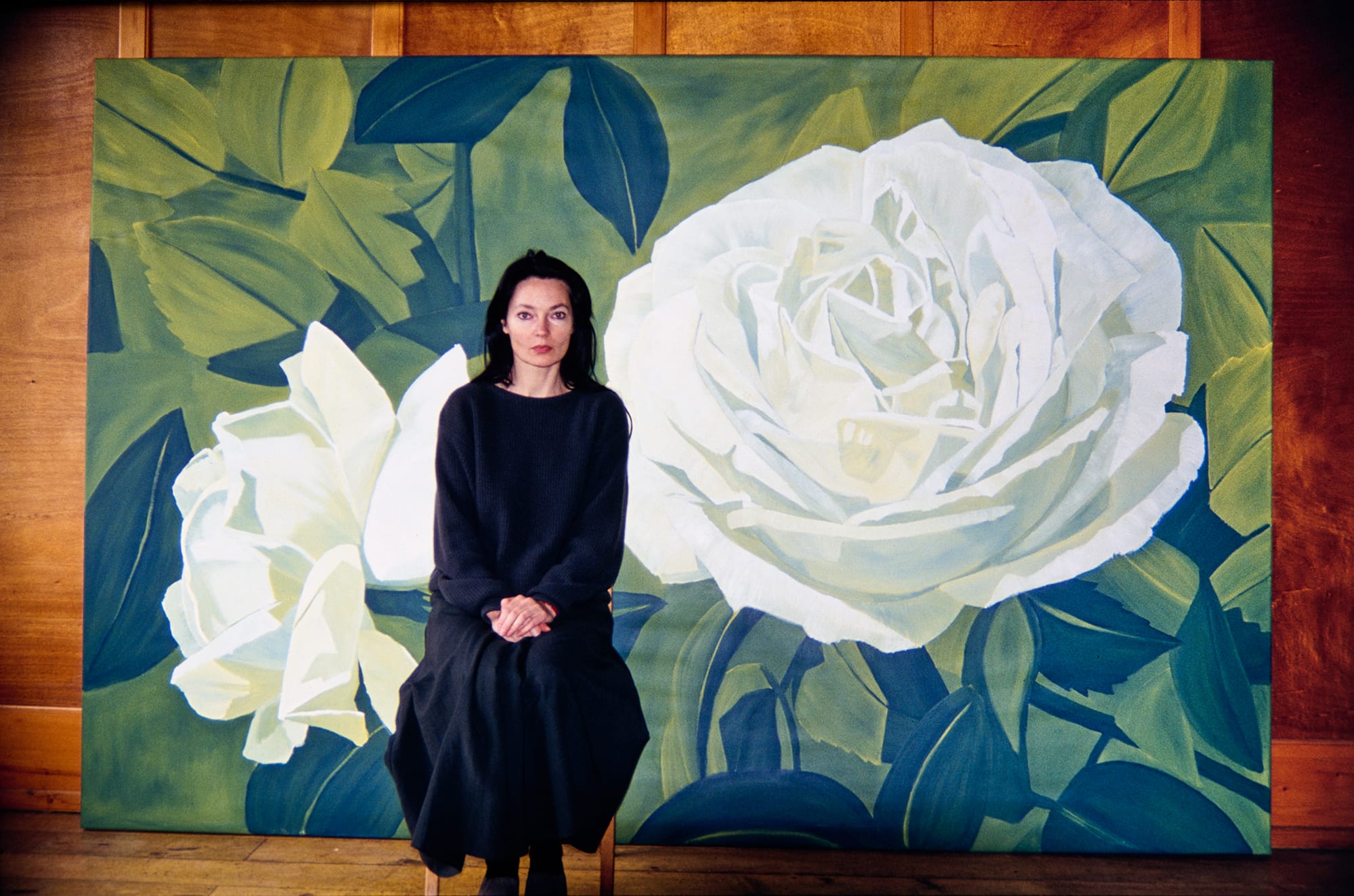
Life in Full. Old Masters from Duccio to Liotard
Until September 2026
Martyrdom meets grandstanding and asceticism meets opulence in the Kunstmuseum Bern’s tour of its old masters. Altar panels by the Bernese Carnation Masters of around 1500 hang near early Florentine and Sienese painting, with a devotional panel by Duccio, works from Botticelli’s workshop and Fra Angelico among them. Niklaus Manuel, painter, poet, reformer and city official in one person, holds the local end; Baroque still lifes by Albrecht Kauw and portraits by Johannes Dünz follow. The collection show runs in Bern only to 27 September.
Art Brut in Switzerland. From the Origins of the Collection to the Present
Until September 2026
Switzerland was where Jean Dubuffet went looking, through psychiatric hospitals, prisons and private collections, for the unschooled art he named art brut in 1945. The Collection de l’Art Brut marks fifty years since its 1976 opening with over 45 artists from its holdings, from Adolf Wölfli, Aloïse Corbaz and Louis Soutter to contemporary makers such as Pascal Vonlanthen. Drawings, embroideries, writings and assemblages picture mountains, trains and cows, the country’s own furniture. Sarah Lombardi, the collection’s director, curates the anniversary show, closing on 27 September.
What about us?
Until September 2026
More than 300 Murano glass animals from the collection of Pierre Rosenberg, once director of the Louvre, populate mudac’s What about us?. The display treats the menagerie as a question about our double relation to living things, curiosity on one side, control on the other, and subverts the conventions of the vitrine as it goes. A film made for the show tours Rosenberg’s Venetian palazzo, where the creatures lived scattered through the rooms. Amélie Bannwart curates the display. The glass zoo disbands on 27 September.
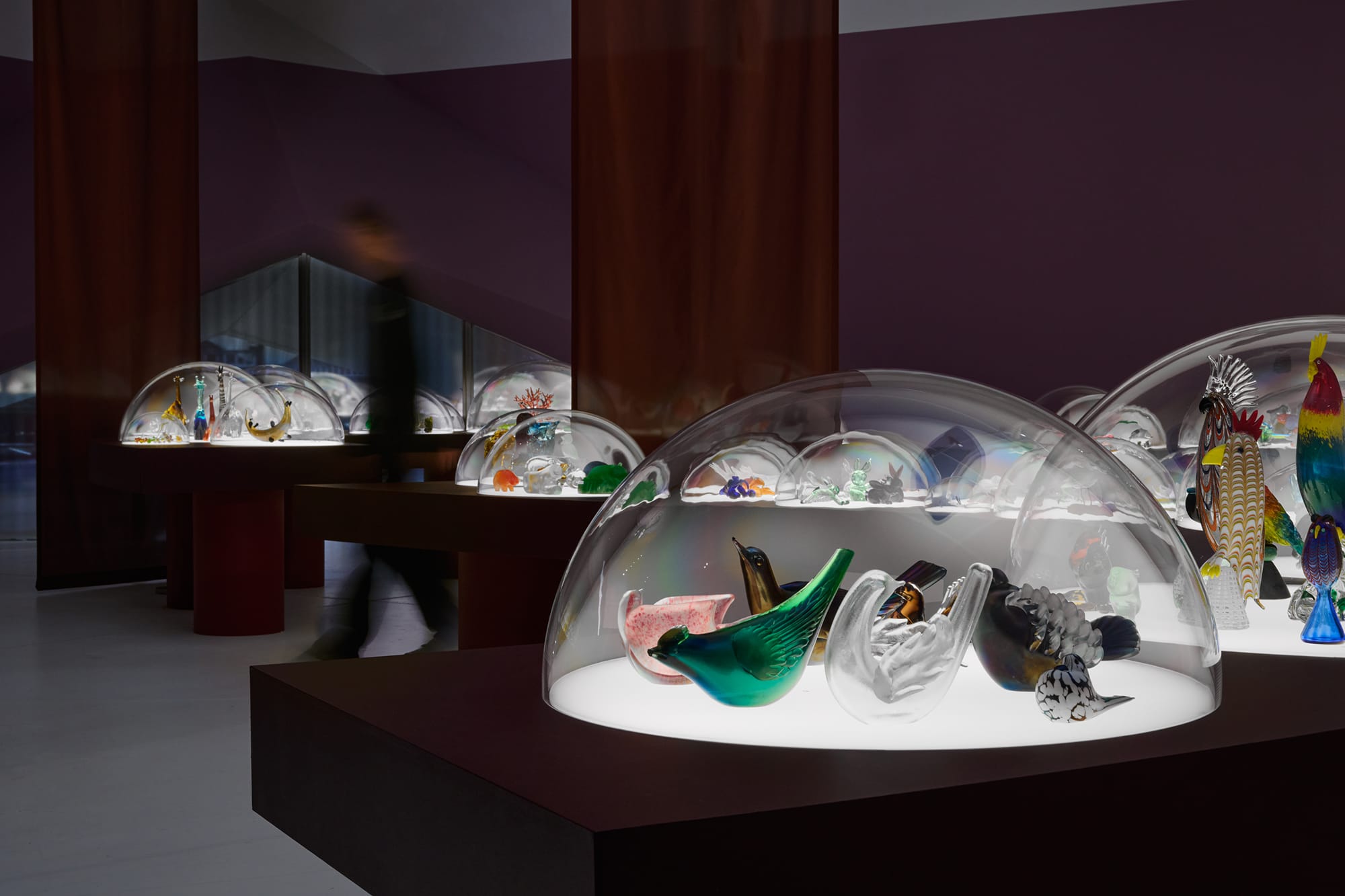
Isao Takahata. A Pioneer of Contemporary Animation
Until September 2026
Notebooks, storyboards, cels and original drawings retrace Isao Takahata, co-founder of Studio Ghibli and director of Grave of the Fireflies and The Tale of the Princess Kaguya. The mudac showing, the only one of its scope in Switzerland, follows the animator from Heidi, Girl of the Alps in 1974 to his late masterworks, with a section made for Lausanne on his ties to French-speaking culture and the European stories he adapted. Kazuyoshi Tanaka of Studio Ghibli is the global curator. It closes on 27 September.
Dialogues across time. Works from the Collection
Until 20 September 2026
Pairings drive this presentation of the MASI collection: across five rooms, around thirty paintings connected to Ticino meet contemporary photography, letting styles and genres answer each other across a century. Alpine landscapes by Ferdinando Ramponi and Leonardo Dudreville converse with photographs by Balthasar Burkhard and Axel Hütte, while a group of female portraits by Antonio Rinaldi, Luigi Rossi and their contemporaries faces Rineke Dijkstra’s photograph of a young student. Divisionist landscapes by Umberto Boccioni share a room with the industrial typologies of Bernd and Hilla Becher.
Self-Portraits from the Collection 1928–2021
Until 20 September 2026
Nearly a century of artists looking at themselves is condensed into this selection of over twenty works from the MASI collection. Documented performances by Marina Abramović and Gina Pane hang alongside photographic self-portraits by Ilse Bing and Florence Henri, both made in the interwar years, while Urs Lüthi’s retouched black-and-white images, videos by Silvano Repetto and works by VALIE EXPORT carry the genre towards the present. Cristina Sonderegger curates. Seen together, the works chart how ideas of identity and self-perception have shifted from 1928 to 2021, medium by medium.
🇬🇧 Exhibitions in United Kingdom
Monet and Renoir: Painting Side by Side
Until September 2026
In the summer of 1869 Monet and Renoir set up their easels side by side at La Grenouillère, a bathing spot on the Seine. Room 41 reunites the results: the National Gallery’s Monet and the Renoir lent by Stockholm’s Nationalmuseum, painted from the same bank at the same moment. Two young friends, one motif, two temperaments, and the pairing invites the closest possible comparison of brushwork before Impressionism had its name. Entry is free. On 15 September the Renoir moves into the gallery’s autumn show, Renoir and Love.
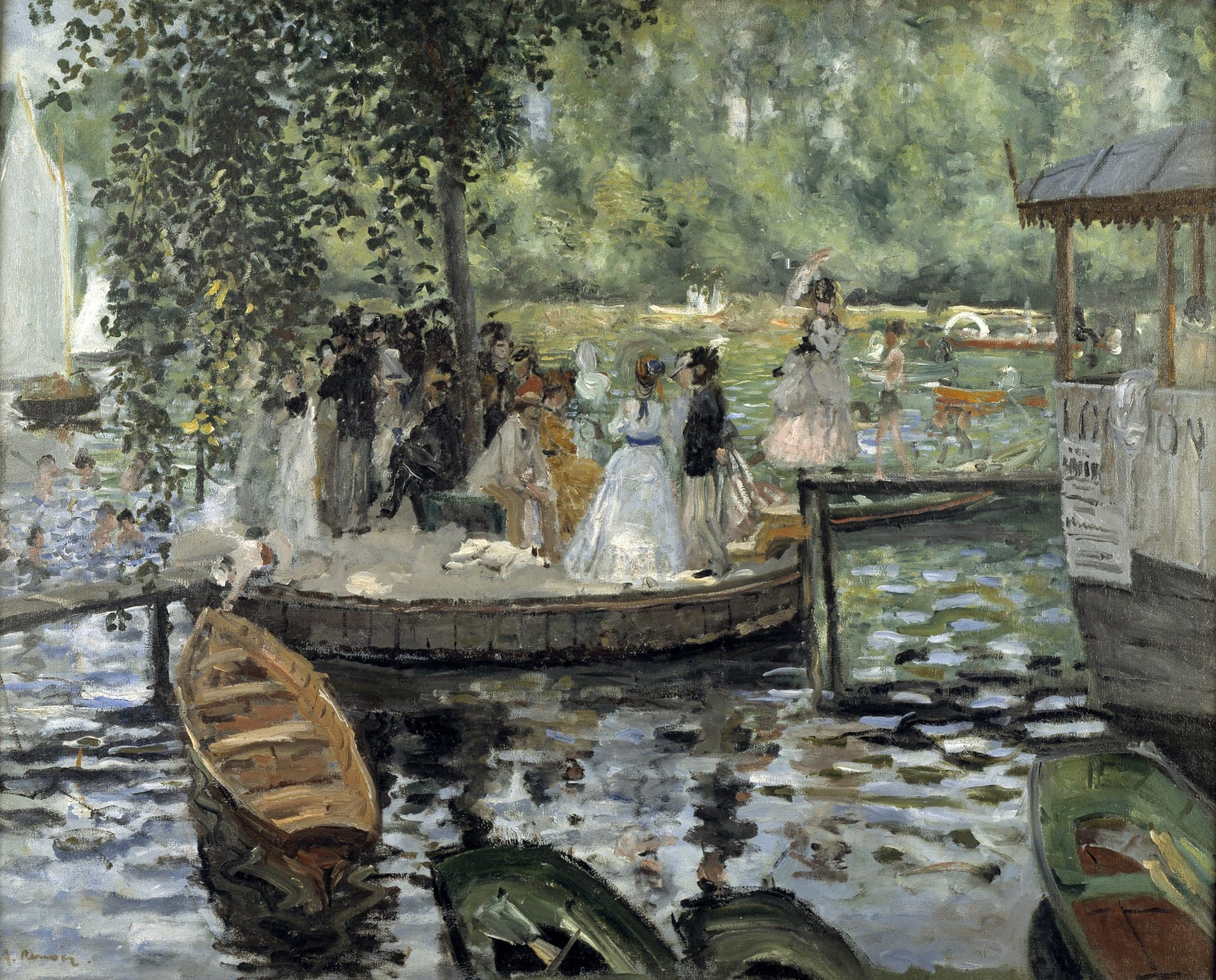
Waldmüller: Landscapes
Until September 2026
Austria ranks Ferdinand Georg Waldmüller among its greatest painters; Britain has never before shown his landscapes. The National Gallery’s free display in Room 1 follows him through the Prater’s forests, the lakes of the Salzkammergut and the hills and ruins of Sicily, with Large Prater Landscape of 1849, View of the Dachstein and an 1828 self-portrait among the works. His exact leaf-by-leaf brushwork and strong light invite comparison with the Pre-Raphaelites. Even aged trunks and bare branches earn his attention. It ends on 20 September.
James McNeill Whistler
Until September 2026
Thirty years have passed since Europe last mounted a full Whistler exhibition. Tate Britain repairs the gap with a retrospective running from the American’s teenage years in St Petersburg to late self-portraits, pairing famous canvases, Nocturne: Blue and Gold – Old Battersea Bridge, Symphony in White, No. 2, the 1871 portrait of his mother, with rarely or never exhibited works. Prints, drawings and designs round out the rule-breaker who unsettled Victorian convention in pursuit of beauty. Organised with the Van Gogh Museum and the Mesdag Collection, it closes on 27 September.
Lasting Impressions: Women Printmakers 1900 – Now
Until 27 September 2026
Twenty-five women printmakers, from Käthe Kollwitz and Laura Knight to Faith Ringgold, the Guerrilla Girls and the See Red Women’s Workshop, share the V&A’s Leighton Room. The free display follows a century and a quarter of the medium in women’s hands, from etching and lithography to screenprint and experiments with natural materials, political posters beside intimate domestic scenes. Emerging names such as Ky Lewis and Gal Leshem carry the line to the present. Around ten featured works anchor the survey, which stays up until 27 September.
Photopoetry
Until 20 September 2026
Books you may pick up and actually read make this V&A display unusual. Photopoetry, in Room 98 of the Photography Centre, looks at what happens when photographs and poems share a page, with publications chosen by the collector David Solo, a longtime advocate of the hybrid form. Handling is encouraged rather than merely tolerated, so the reading experience the genre depends on survives the museum setting intact. Entry is free of charge. The small show closes quietly at the end of the summer, on 20 September.
Early Netherlandish Drawings
Until September 2026
Drawings from the fifteenth- and sixteenth-century Low Countries rarely survive, since they were working tools rather than collectables. The British Museum gathers around 120 of them in Room 90, by Rogier van der Weyden, Lucas van Leyden, Pieter Bruegel the Elder and Hendrick Goltzius, tracing the moment sketches became artworks in their own right. Designs for tapestries, stained glass and prints show how widely the sheets travelled. New research reattributes several van der Weyden-circle drawings to workshop pupils practising. Free to visit, it ends on 20 September.
Jasmine Togo-Brisby. Liquid Land
Until September 2026
A full-scale thatched hut, rebuilt from family photographs of the artist’s ancestral Ni-Vanuatu home, stands at the heart of Jasmine Togo-Brisby’s Liquid Land. The Australian South Sea Islander artist, making her European debut at GoMA, works through sculpture, photography, video and mirrored illusion to confront blackbirding, the nineteenth-century kidnapping of Pacific Islanders for Australian sugar plantations. Home, belonging and retreat are examined inside histories of enslavement and domestic labour. Part of the Glasgow 2026 Festival programme, the free show closes for good on 6 September.
Halima Cassell
Until September 2026
Geometry does the work of colour in Halima Cassell’s carved sculptures at Tate St Ives. Born in Kashmir in 1975 and raised in north-west England, she cuts intricate patterns into clay, stone, wood and bronze, leaving each material its natural hue so that light and shadow articulate the forms. Cathedral, church and mosque carving feed her vocabulary, alongside the golden section, North African surface design and the optics of Bridget Riley and Escher. Barbara Hepworth, presiding spirit of St Ives, is a declared influence. It closes on 27 September.
Hulda Guzmán. Please awake – asked Nature kindly
Until September 2026
Nature acts rather than poses in Hulda Guzmán’s paintings, where family members, animals and mythical beings share dreamlike Caribbean scenes. Turner Contemporary gives the Dominican painter her first European institutional exhibition, a decade of work with new large-scale canvases alongside earlier pieces. Folk traditions and magical realism meet a method that begins in direct observation and passes through digital assembly before reaching paint. Her rainforest home in Samaná keeps climate change close to the surface of the work. Free to visit, the show runs to 13 September.