95 art exhibitions around Europe closing in April 2026
The following weeks present a final window to catch several discussed exhibitions across Europe before their galleries are cleared. Highlights include Messerschmidt’s sculptures in Vienna and the Turner and Constable rivalry at Tate Britain.

The following few weeks present a final window to catch some of the most discussed exhibitions across Europe before their galleries are cleared for the next season. For those moving through Austria, the clock is ticking on a diverse range of subjects, from the eccentric “Character Heads” of Franz Xaver Messerschmidt at the Belvedere to Hito Steyerl’s sharp digital critiques at the MAK. In Salzburg, a particular sense of urgency prevails; both the Residenzgalerie and the Cathedral Museum are set to begin extensive, multi-year redevelopments once these current displays conclude their runs in late April.
Our curated selection for this issue highlights a sophisticated mix of traditional mastery and contemporary experimentation. In London, the intense, career-defining rivalry between Turner and Constable at Tate Britain enters its final days, while the Royal Academy prepares to strike Rose Wylie’s exuberant, large-scale canvases. Meanwhile, Paris offers a last look at Mickalene Thomas’s rhinestone-studded reinterpretations of the Black female gaze at the Grand Palais. Each summary serves as a briefing for the discerning traveller looking to prioritise these fleeting cultural encounters.
As these presentations reach their conclusion, we recommend using this guide to finalise your spring itineraries across Belgium, Denmark, and Germany. Whether it is the study of “petroculture” at ARKEN or the rare display of fragile Belgian works on paper in Brussels, these exhibitions represent a significant closing chapter for the season. We suggest securing your tickets now to ensure a final viewing of these works before they return to the quiet of private collections and institutional archives.
🇦🇹 Exhibitions in Austria
Franz Xaver Messerschmidt: More Than Character Heads
Until 6 April 2026
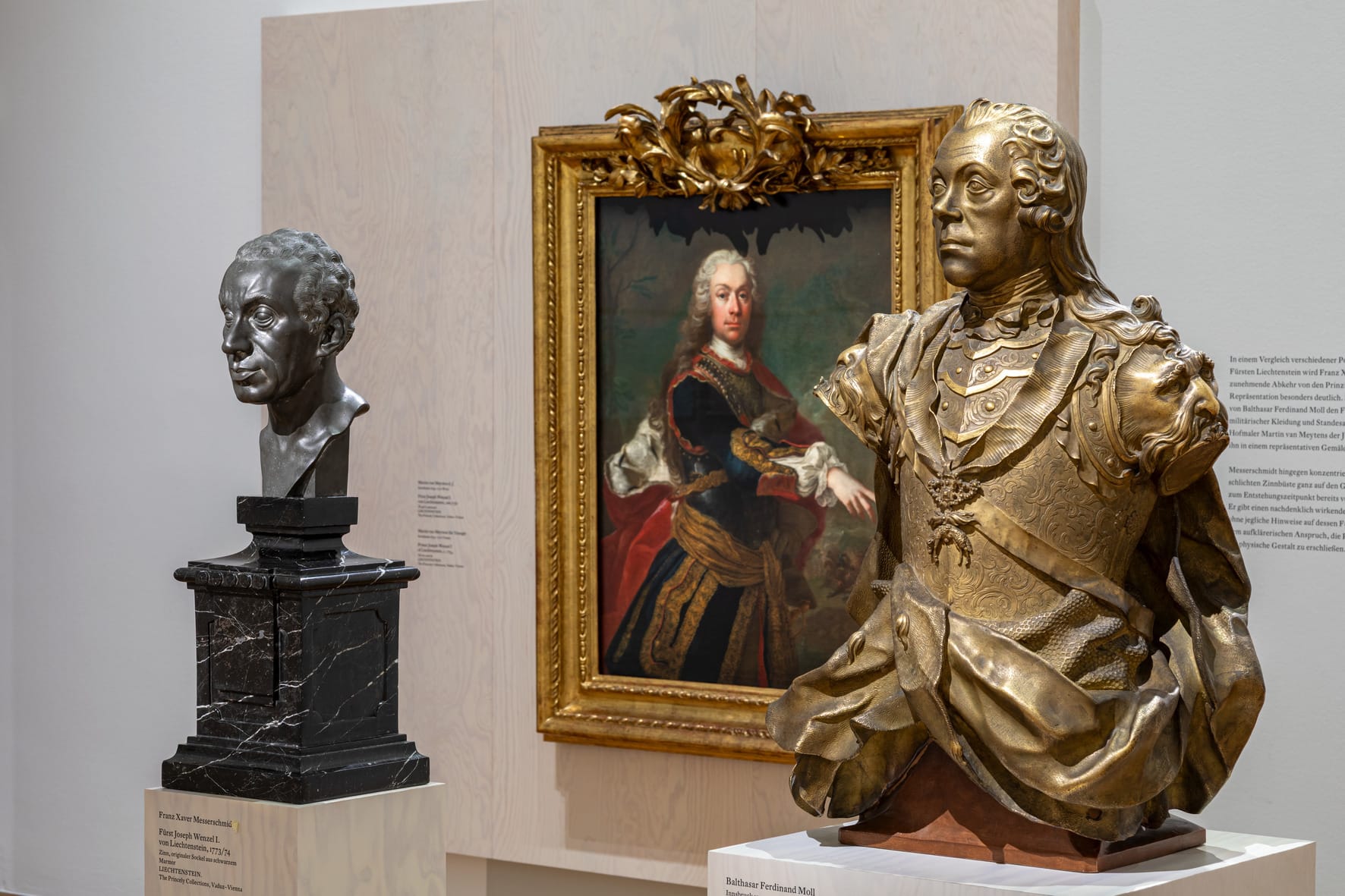
Franz Xaver Messerschmidt’s reputation often rests solely on his eccentric series of grimacing busts, but the Belvedere’s current presentation in Vienna seeks to widen that lens. By placing these “Character Heads” alongside his earlier, formal court portraiture, the exhibition explores how the sculptor navigated the shifting values of the Enlightenment. Visitors can examine his depictions of notable 18th-century figures, including Maria Theresia Felicitas von Savoy-Carignan and the physician Franz Anton Mesmer. This nuanced display investigates the scientific and social changes of the era, positioning Messerschmidt as a sophisticated observer of the human face.
Leiko Ikemura: Motherscape
Until 6 April 2026
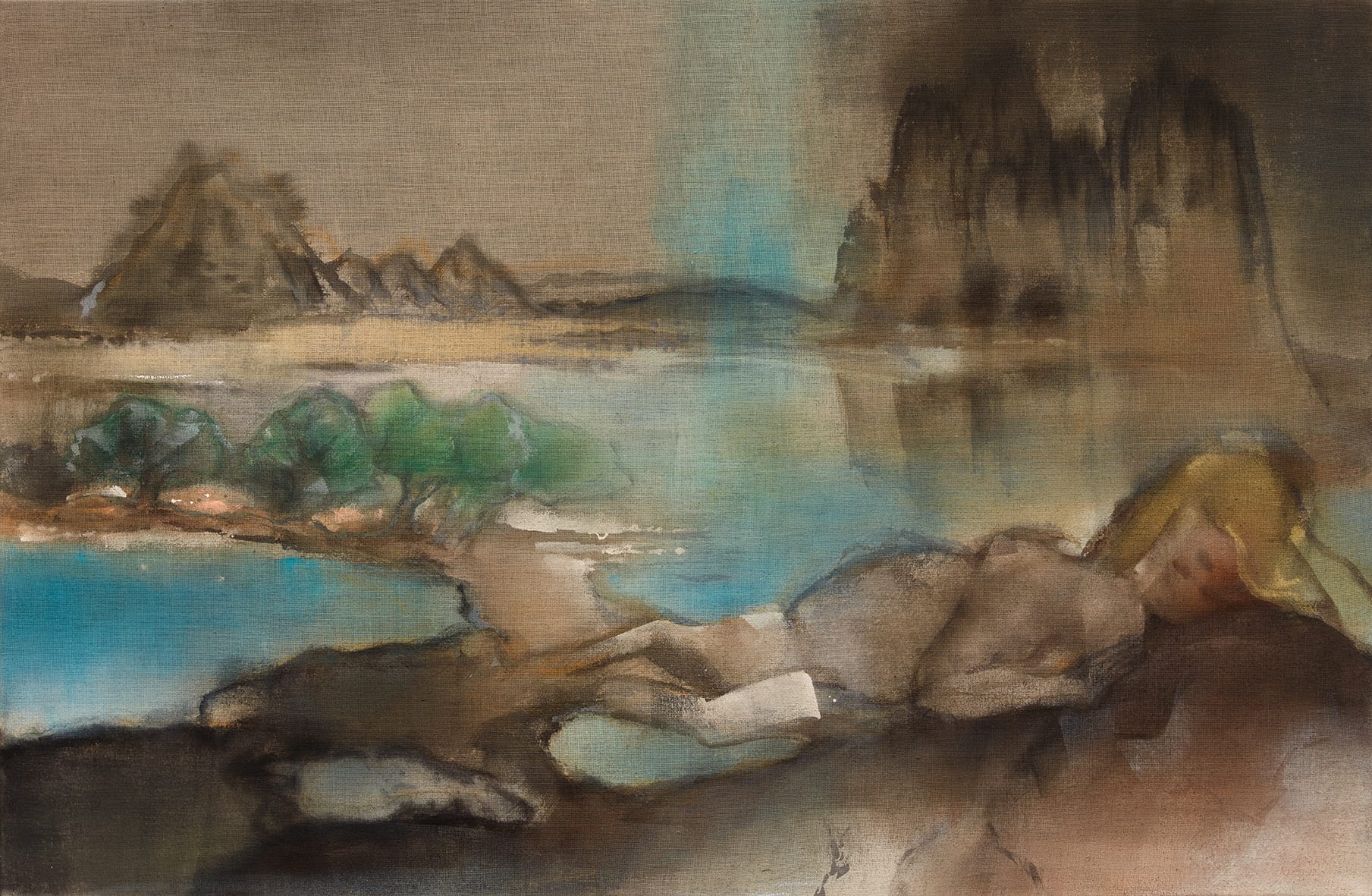
At the Albertina, Leiko Ikemura’s evocative works offer a dreamlike exploration of the intersection between Eastern and Western artistic traditions. This selection highlights her mastery across various media (including glowing tempera paintings on jute, charcoal drawings, and terracotta sculptures) to investigate the fluid boundaries of femininity and nature. Figures often merge with landscapes, such as in the triptych Tokaido, illustrating a unique surrealist vocabulary. Her art captures the delicate mystery of human existence through hybrid beings and ethereal forms, inviting a quiet meditation on identity and the constant state of transformation.
Claudia Pagès Rabal: Feudal Holes
Until 19 April 2026
In the exhibition Feudal Holes, Barcelona-born artist Claudia Pagès Rabal presents a multi-layered investigation into the historical and contemporary mechanisms of trade and control. Through a series of video installations, sculptures, and drawings, Pagès Rabal delves into the legacy of the Silk Road, tracing how knowledge and capital have flowed between East Asia and the Mediterranean for centuries. Her work frequently highlights the complexities of territorial appropriation and global migration, often mixing asynchronous elements to challenge traditional historical narratives. The result is a dense, intellectual landscape that invites visitors at mumok to consider the enduring impact of ancient trade routes on our modern, interconnected world.
Mapping the 60s: Art Histories from the mumok Collections Focus #2
Until 19 April 2026
How did the radical shifts of the 1960s change our understanding of traditional art? At mumok, Mapping the 60s — Focus 2 navigates this turbulent decade by highlighting movements like Fluxus, Nouveau Réalisme, and Viennese Actionism. This presentation of the museum’s permanent collection examines how artists turned to performance and the human body to challenge institutional hierarchies and consumer culture. By focusing on process rather than the finished object, the display connects historical feminist activism and sociopolitical critiques to contemporary debates. It offers a sophisticated cartography of an era whose intellectual upheavals and material experiments still resonate deeply within today’s cultural landscape.
Hito Steyerl: Humanity Had the Bullet Go In Through One Ear and Out Through the Other
Until 12 April 2026
In her first solo presentation in Vienna, Berlin-based artist and filmmaker Hito Steyerl explores the socio-political impact of emerging technologies at the MAK. The exhibition, titled Humanity Had the Bullet Go In Through One Ear and Out Through the Other, draws its name from a 1918 Karl Kraus quote to critique our modern interpretation of reality. Through a series of interdisciplinary video installations (including Hell Yeah We Fuck Die and the newer Mechanical Kurds) Steyerl examines the intersection of global power, digital culture, and social processes. Her work serves as a sharp analysis of how latest advancements shape human interaction and conflict. By blending fine art with media theory, she challenges visitors to look beyond the screen and confront the tangible consequences of a digitised world.
100 BEST POSTERS 24: Germany Austria Switzerland
Until 12 April 2026
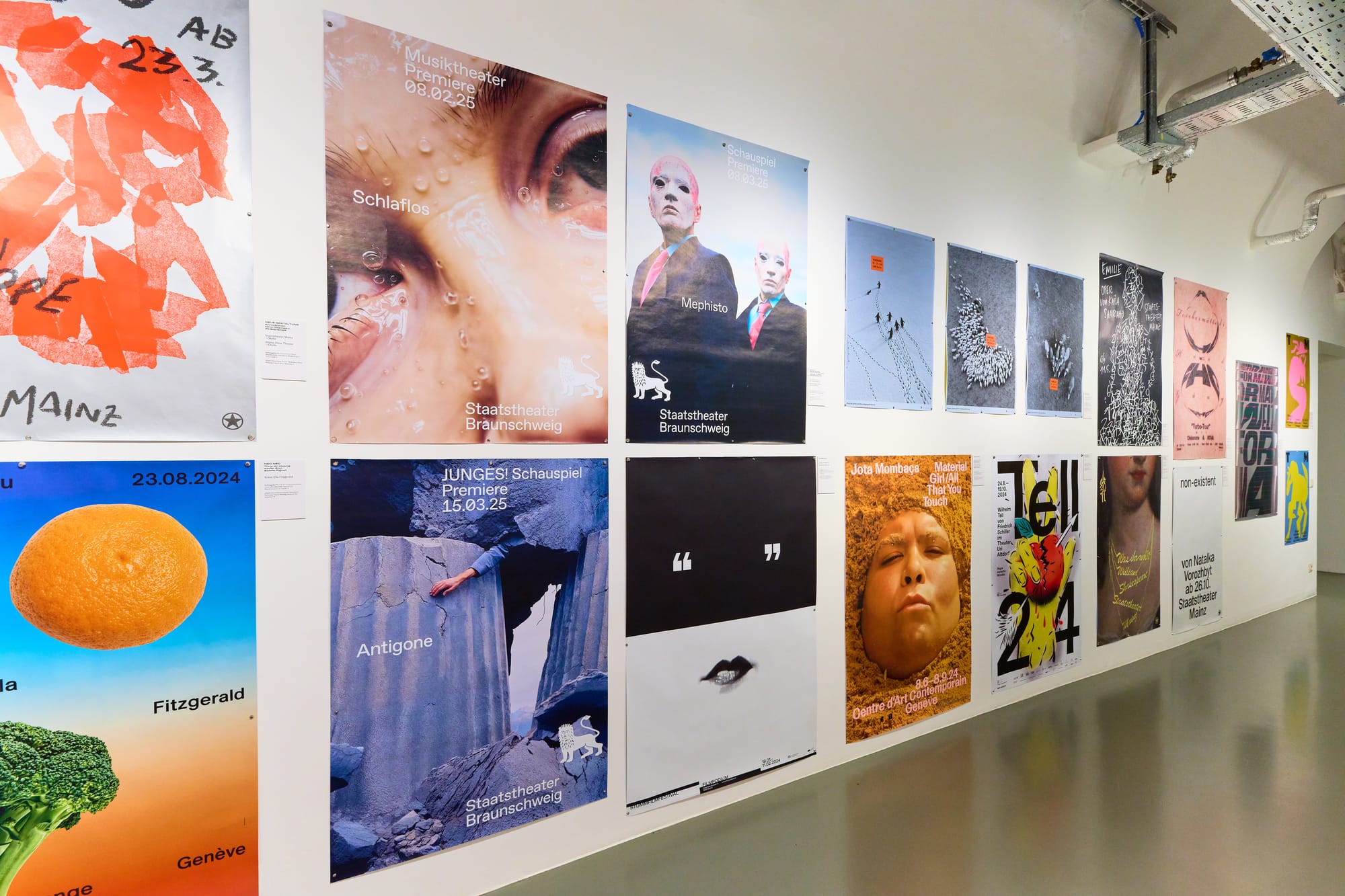
Celebrating the enduring vitality of the printed page, 100 Best Posters 24 brings together the most exceptional graphic design from Germany, Austria, and Switzerland. This annual tradition at the MAK highlights a selection of works that demonstrate clever typographic solutions and bold visual trends from across the German-speaking region. The display includes everything from minimalist theatre announcements to vibrant digital prints, showcasing the diversity of contemporary poster culture. By presenting these winning entries, the museum offers a unique overview of the current aesthetic shifts within the field of professional graphic design. It is a rare chance to see how designers translate complex messages into a single, striking image that commands attention in the public sphere.
ORT — Ouriel Morgensztern
Until 12 April 2026
Viennese photographer Ouriel Morgensztern offers a subjective and intimate perspective on the Heidi Horten Collection in the intervention exhibition ORT. Rather than providing a traditional architectural survey, Morgensztern employs radical framing and extreme close-ups to focus on the textures and fragments of the museum’s interior. His photographs play with light and shadow, creating a delicate balance where the building feels simultaneously present and absent. This exploration of duality extends to his recent project inspired by the film The Third Man, where he retraces cinematic locations to evoke a sense of history through empty spaces. By omitting the physical presence of visitors and artworks, he captures the quiet, aesthetic essence of the institution.
Nika Neelova. Cascade
Until 6 April 2026
British artist Nika Neelova acts as a kind of contemporary archaeologist in her exhibition Cascade at the Museum der Moderne Salzburg. By exclusively using found objects, she scrutinises the stories embedded in material remains to create sculptures that feel like artefacts from a non-linear timeline. This presentation is unique for how it interlaces Neelova’s work with prehistoric objects and ritual items borrowed from local cultural history collections. These ancient pieces sit alongside modern loans from artists such as Isa Genzken and Marisa Merz, forming a singular narrative about Salzburg’s salt-mining heritage. The resulting display is a utopian vision where the past and future merge, playfully encouraging visitors to reconsider their own experience of history.
Best-sellers. Popular paintings
Until 27 April 2026
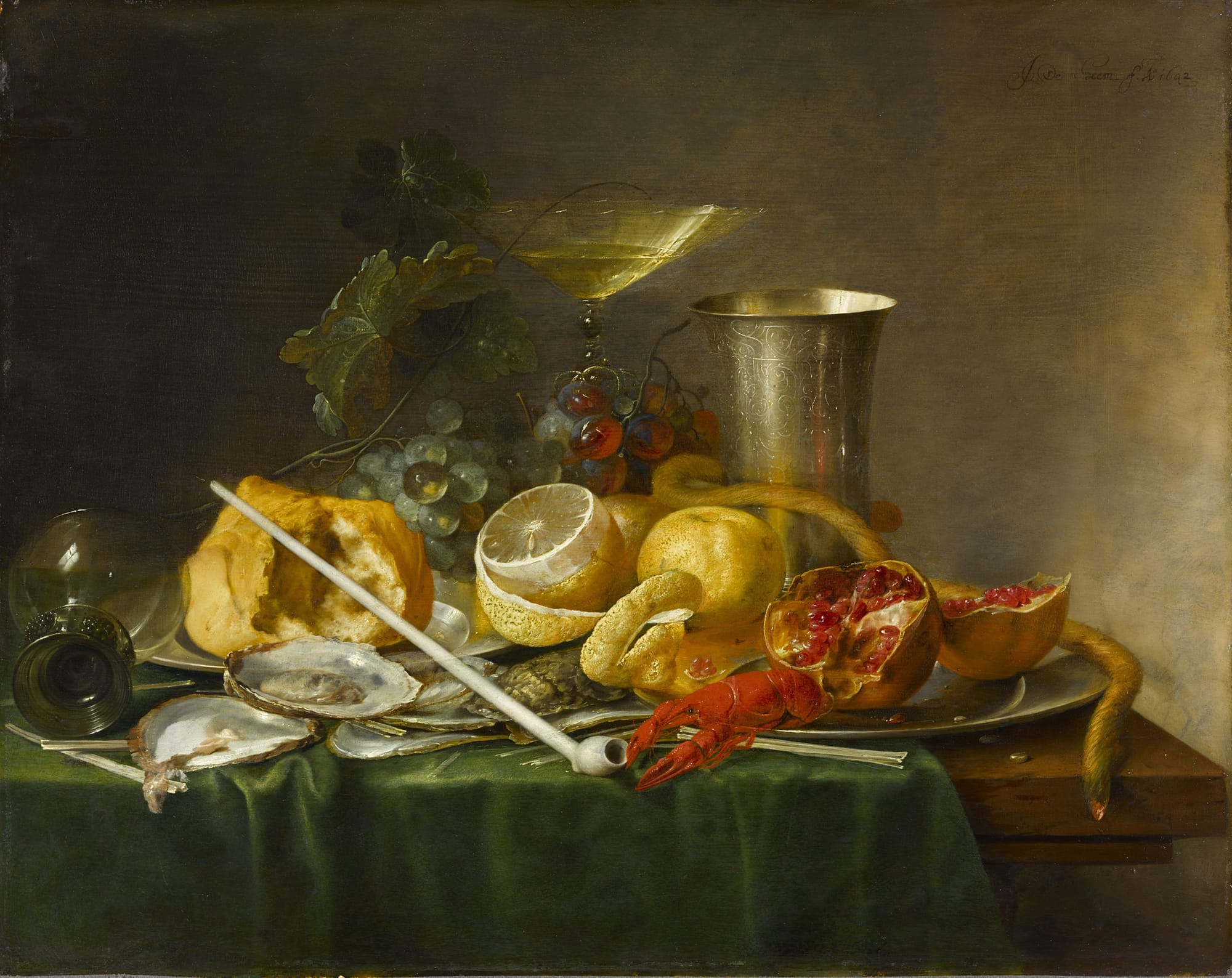
Salzburg’s Residenzgalerie presents a selection of its most beloved works in the exhibition Best-sellers. Popular paintings. Rather than following a strictly academic narrative, the curation relies on digital access data and gift-shop sales figures to identify the public’s favourites. The display juxtaposes the traditional hierarchy of genres, where history painting sat at the summit above portraiture and still life, with the actual preferences of modern visitors. Featuring pieces such as Pierre Subleyras’s Adoration of the Three Magi, this show marks a final highlight before the museum closes for major redevelopment at the end of April 2026.
Heroic and Romanticised. The Peasants’ War Reflected in Art and Dictatorship
Until 27 April 2026
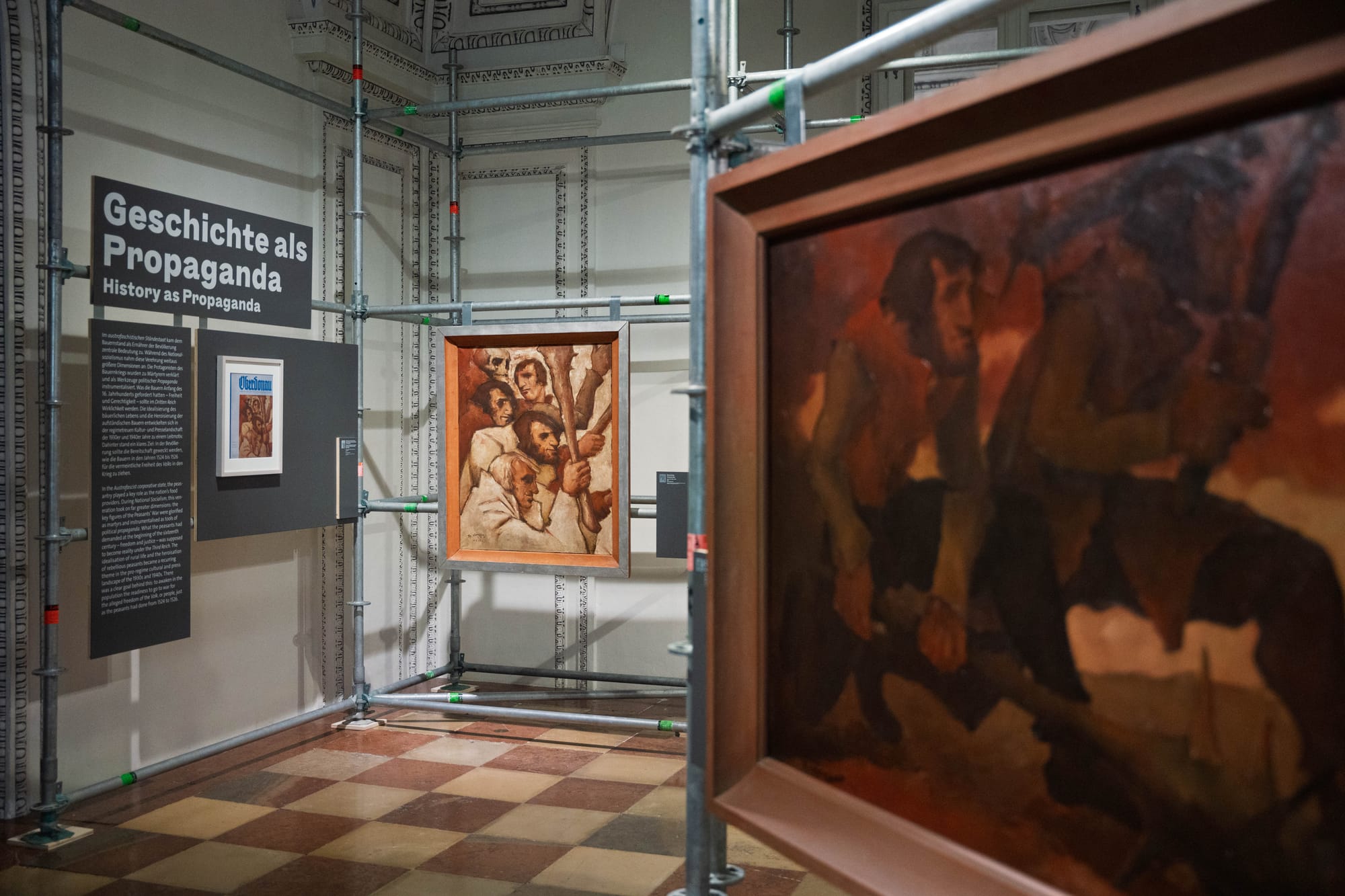
The North Oratory of the Cathedral Museum hosts Heroic and Romanticised, a guest exhibition from the Salzburg Museum that explores the enduring legacy of the sixteenth-century Peasants’ War. By examining how this uprising of the common man has been interpreted through art and literature, the display reveals a complex history of both celebration and manipulation. Particular focus is given to how twentieth-century authoritarian regimes co-opted these historical events for propaganda. As the DomQuartier prepares to close for significant renovations at the end of April 2026, this presentation provides a timely reflection on the intersection of artistic expression and political power.
Being a Girl*!? From Panel Painting to Social Media
Until 6 April 2026
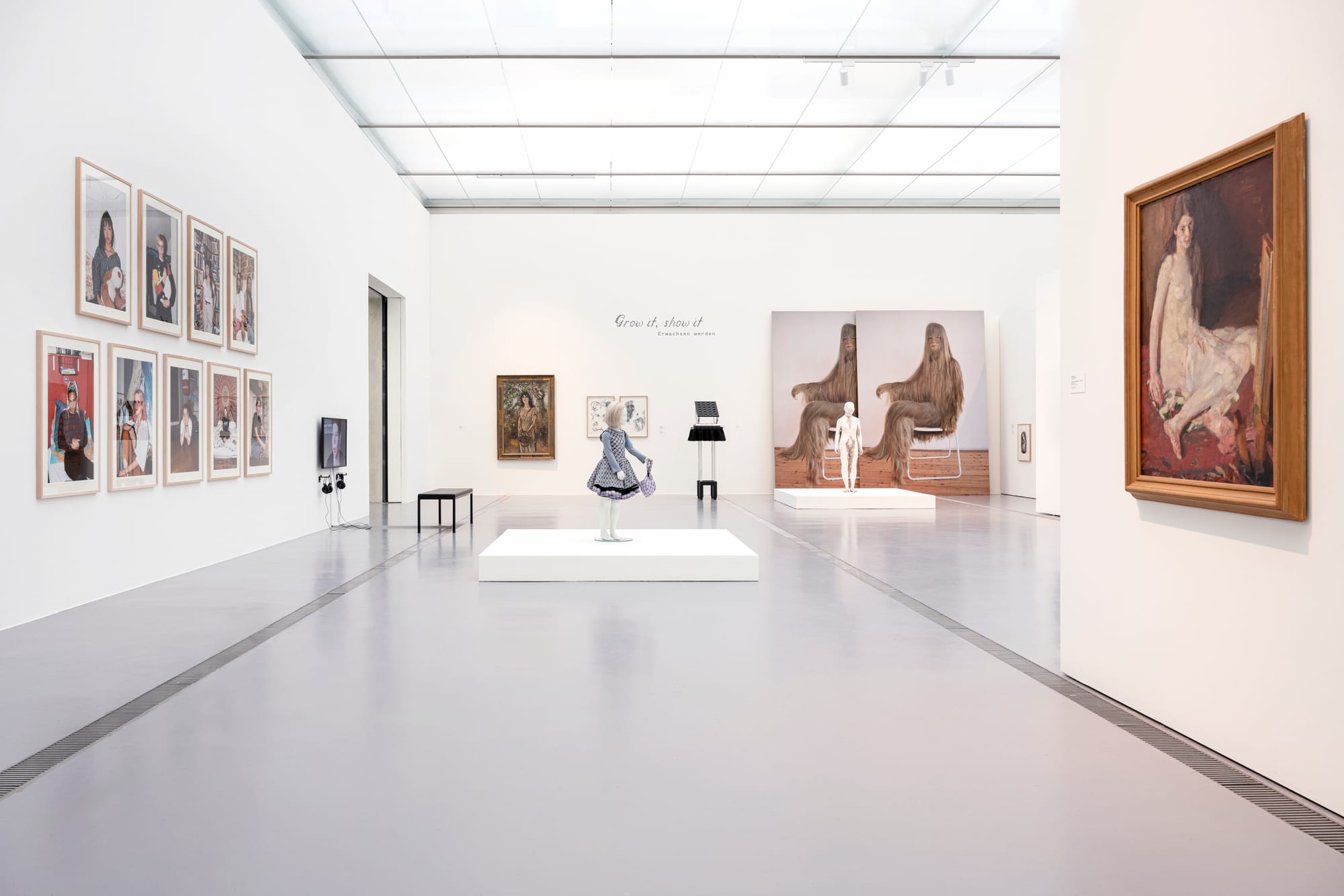
Lentos Kunstmuseum Linz examines the multifaceted nature of female adolescence in the expansive exhibition Being a Girl!?*. Drawing from a collection of over 150 works, the presentation tracks how the representation of young women has shifted from sixteenth-century panel paintings to the digital age of social media. The curation is organised into nine thematic circles, examining contemporary issues such as gender fluidity, diversity, and the modern pressure of self-optimisation. By placing historical depictions alongside works by artists like Pablo Picasso and Isa Schieche, the show provides a nuanced look at the complex transition into adulthood.
🇧🇪 Exhibitions in Belgium
Fragile: Friable media in Belgian art on paper
Until 19 April 2026
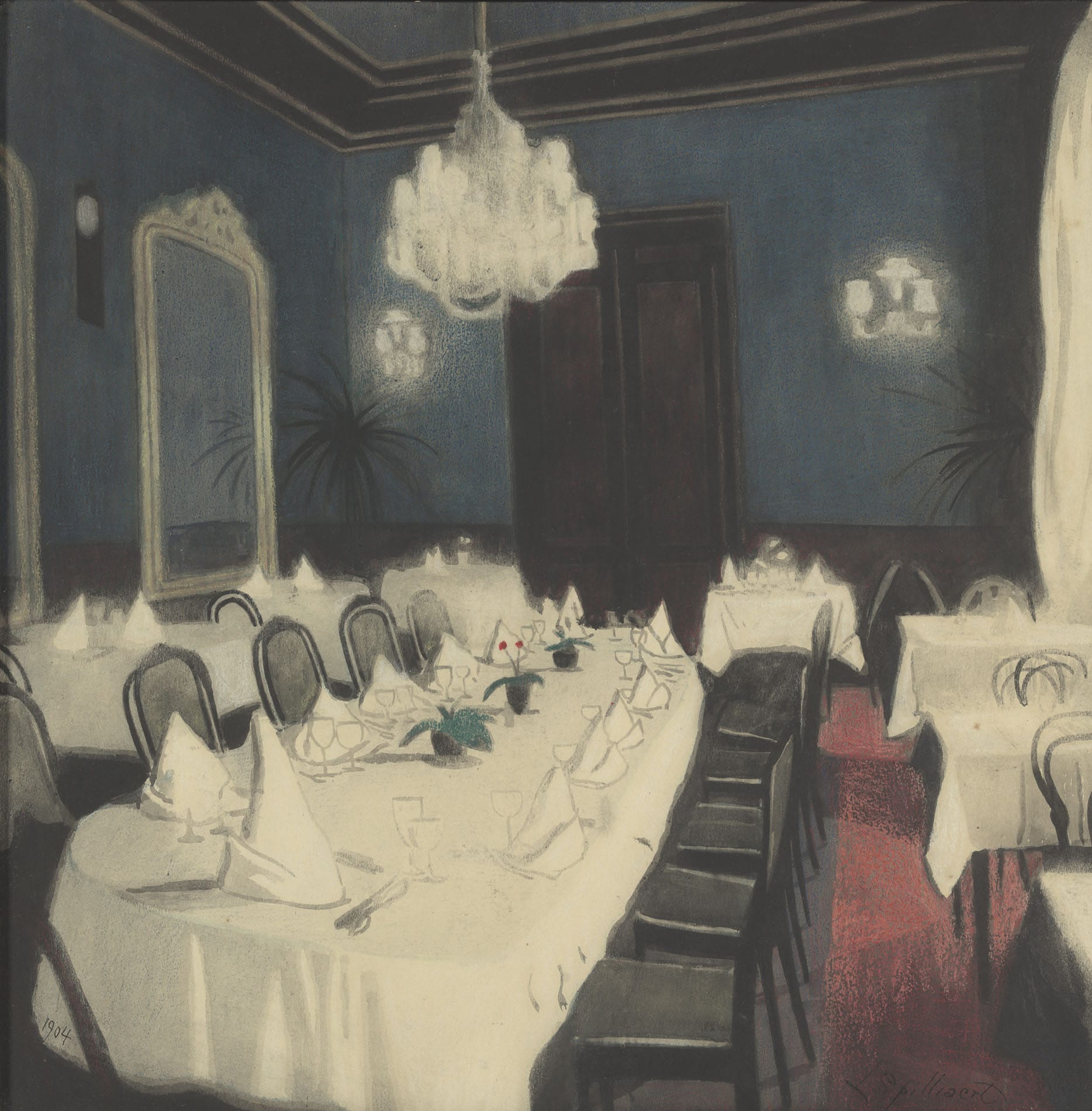
The delicate beauty of Belgian works on paper is highlighted in the exhibition Fragile at the Royal Museums of Fine Arts of Belgium. Located within the Spilliaert Room, the presentation focuses on the resurgence of pastels and powdery drawing materials around 1900. Visitors can observe how artists such as Henry De Groux, Berthe Art, and Léon Spilliaert utilised these friable media for both intimate sketches and large-scale compositions. Because these pieces are highly sensitive to light and touch, they are rarely displayed, making this a unique opportunity to see them before the rotation concludes in April 2026.
Marc De Blieck: Point de voir
Until 5 April 2026
Ghent’s S.M.A.K. invites visitors to scrutinise the very nature of the photographic image through the works of Marc De Blieck in Point de voir. By treating photography as an intersection of technical processes and cultural norms, De Blieck exposes the friction between authentic registration and artificial construction. His images may appear simple at first glance, yet they reveal a complex visual grammar that deconstructs how we perceive reality. The presentation features a dialogue between earlier pieces and recent creations, encouraging a critical reflection on how images are manufactured and consumed in a digital world.
Robert Doisneau
Until 19 April 2026
At La Boverie in Liège, the extensive retrospective Robert Doisneau. Instants donnés brings together nearly 400 photographs that capture the poetic essence of everyday life. The curation highlights the photographer’s humanist gaze across themes such as childhood, street scenes, and artists’ studios, featuring works produced between 1934 and 1992. This iteration is notably enriched by a unique Belgian section, showcasing scenes from the blast furnaces of Liège to figures like Georges Simenon. Accompanying the images are rare documents and audio testimonials that provide a deeper look into the creative process of this mid-century master.
Doisneau. Regards croisés
Until 19 April 2026
Exploring the persistent legacy of the humanist tradition, Regards croisés at La Boverie presents a creative encounter between Robert Doisneau and the next generation of image-makers. Students from Liège’s leading art academies have produced new works that respond directly to the master’s celebrated "imperfect lens" and his flair for capturing the ordinary. This collaborative project functions as a contemporary mirror to the museum’s wider archival survey, questioning how the poetry of the street has evolved in the twenty-first century. It offers a rare chance to see historical masterpieces in conversation with fresh, local talent before the display ends in April 2026.
🇩🇰 Exhibitions in Denmark
Copenhagen Pieces II: The Council For Visual Art 2022–2025
Until 6 April 2026
Housed within the striking architecture of a former church, Nikolaj Kunsthal presents Copenhagen Pieces II, an overview of the City of Copenhagen’s most recent artistic acquisitions. This exhibition gathers works selected by the Council for Visual Art between 2022 and 2025, offering a snapshot of the current creative energy defining the Danish capital. The selection features a broad spectrum of disciplines, including sculpture, textiles, and digital media, highlighting both established names and emerging voices. By bringing these public treasures together, the presentation explores how art purchased for the city’s shared spaces reflects modern life and evolving cultural values before concluding in April.
Platform * Cecilie Penney × Lawrence Ebelle
Until 6 April 2026
Built environments and their capacity for empathy are the core concerns of Rest and Routine, a collaborative installation by Cecilie Penney and Lawrence Ebelle. The project stages a symbolic “duet” between two architectural philosophies: the light-filled, slow-paced sanatoriums of the past and the hyper-efficient super hospitals of today. Visitors navigate a space where hospital floor plans are engraved into the linoleum underfoot, accompanied by a soundscape that blends operatic vocals with the rhythmic hum of medical machinery. This sensory experience makes the rigid structures of healthcare systems tangible, prompting a reflection on how spatial design influences the healing process.
A Black Hole Calling Us — Cecilie Waagner Falkenstrøm
Until 26 April 2026
Marking the inauguration of the ARoS Art Square, Cecilie Waagner Falkenstrøm’s interactive installation A Black Hole Calling Us occupies the space between Musikhusparken and the museum’s main entrance. This large-scale commission invites the public to engage with a digital presence that feels both vast and intimate. By utilising artificial intelligence to create a responsive environment, the artist explores the boundaries between human consciousness and technological evolution. The work transforms the architectural surroundings into a site of curiosity, prompting a reflection on our complex relationship with the unknown through a lens of digital wonder.
Anna Boghiguian — The Sunken Boat
Until 26 April 2026
Anna Boghiguian explores the intricate links between global maritime history and the contemporary climate crisis in the solo exhibition The Sunken Boat. Through her characteristic use of expressive drawings and painted figures, the artist reconstructs narratives of trade and migration that have shaped our modern world. The installation at ARoS Aarhus serves as a poetic meditation on rising sea levels, drawing parallels between the sunken vessels of the past and the ecological vulnerabilities of the present. By weaving together personal memory and historical research, Boghiguian creates a space where the fragility of our planet meets the weight of human ambition.
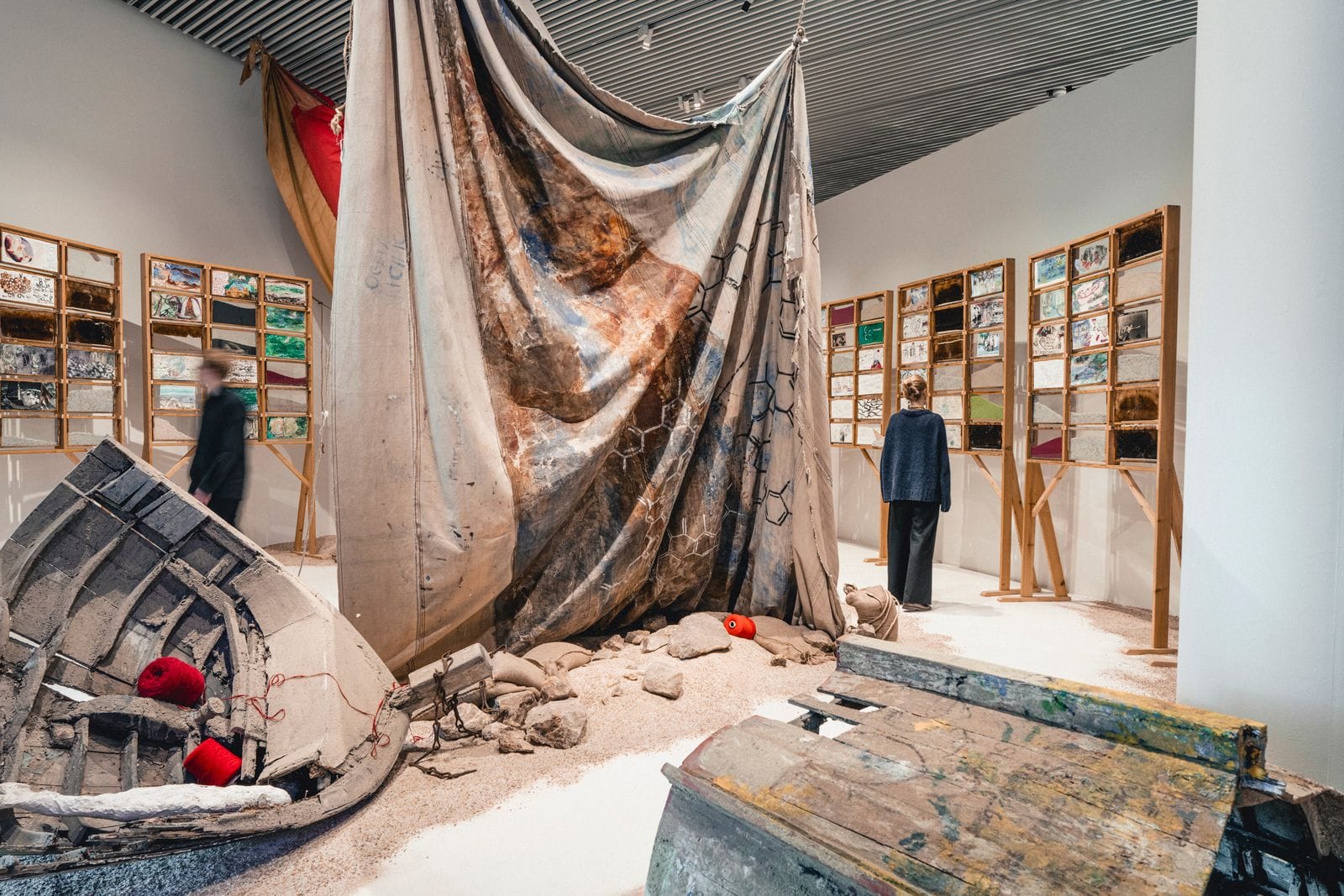
Jenkin van Zyl — Lost Property
Until 6 April 2026
Jenkin van Zyl’s Lost Property transforms the subterranean gallery at ARoS into a cinematic landscape where the lines between biological life and industrial machinery are intentionally blurred. This site-specific installation utilises film and sculpture to construct a theatrical world-building experience, pulling visitors into a cryptic narrative of transformation and desire. By examining the friction of the human body against rigid technological systems, the work challenges our understanding of modern identity. The result is a dark, atmospheric fantasy that functions as a surreal critique of existence, encouraging an encounter with the strange and the otherworldly within the museum’s depths.
Louisiana's new works
Until 6 April 2026
A spectacular encounter with over 130 works unfolds across the South and North Wings of the museum, highlighting a diverse array of pieces added to the permanent collection in recent years. The presentation places legendary figures like Diane Arbus and Ed Ruscha alongside contemporary voices such as Shara Hughes and Issy Wood, bridging the gap between 1945 and the present day. Visitors can navigate a landscape of painting, photography, and large-scale installation, including Nan Goldin’s poignant masterpiece on memory and Paul McCarthy’s grimly iconic sculptures. By mixing established classics with artists appearing in the collection for the first time, the display creates a vivid portrait of the shifting priorities within international modern art.
Monira Al Qadiri Chameleon
Until 6 April 2026
Oil molecules appear as shimmering, monumental structures in Chameleon, Monira Al Qadiri’s major exhibition at ARKEN. The Kuwaiti artist occupies the museum’s Art Axis with iridescent, floating sculptures that transform industrial drill heads and petrochemical components into otherworldly jewels. By blending ancient mythology with speculative futurism, Al Qadiri investigates the cultural and environmental impact of “petroculture,” questioning the global dependence on the resources extracted from deep within the Earth. The presentation includes video works that reimagine oil refineries through a child’s imagination, creating a playful yet ironic cosmos that probes the stories we will tell in the aftermath of the oil age.
Kenneth Rasmussen: Goddammit
Until 6 April 2026
Mental clutter finds a tangible, aesthetic release at ARKEN, where Kenneth Rasmussen’s solo exhibition Goddammit unfolds through a dense thicket of knitted plastic. Spreading across the floor and suspended from the ceiling, a jungle of sculptures crafted from shredded shopping bags serves as the centerpiece for a wider exploration of the artist’s prolific practice. The installation pairs these tactile structures with colossal linoleum prints and imaginative ceramic figures, creating a vivid “stream of consciousness” that reflects Rasmussen’s life and experiences with special needs. By positioning art as a healing, activist force, the presentation confronts the friction between rigid societal norms and the raw, spontaneous energy of individual creativity.
The Story of Public Art
Until 1 April 2026
Divided into two expansive chapters, The Story of Public Art at MAPS Museum chronicles the evolution of artistic experiments in the public realm from the 1960s to the digital age. The first section, “Dancing in the Streets,” investigates urban actions and media interventions across the globe, featuring everything from 1980s billboards to contemporary AI-driven world-building. In contrast, the second half of the survey focuses on the dialogue between human creativity and the natural environment, showcasing works by Land Art pioneers alongside modern investigations into organic life forms. Featuring over 90 artists from 40 countries, this ambitious presentation, designed by the renowned firm FormaFantasma, transforms the museum into a dynamic site for questioning how art reshapes our perceptions of power, nature, and social relations.
Vilhelm Lundstrøm
Until 12 April 2026
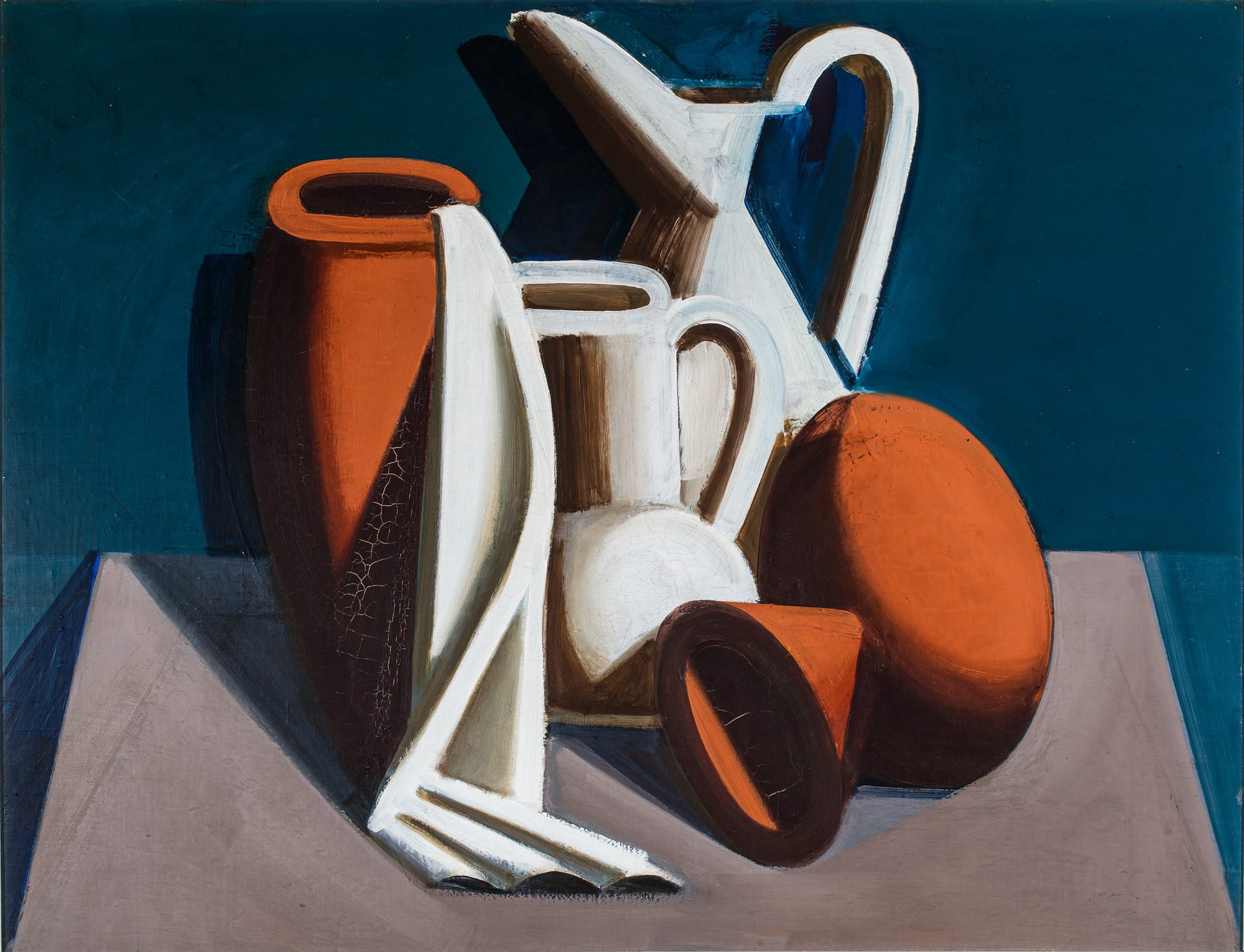
For Kunsten Museum of Modern Art Aalborg, the works of Vilhelm Lundstrøm represent a cornerstone of its identity, as the institution houses one of Denmark’s most significant collections of his output. This presentation traces the artist’s evolution from his early, provocative experiments to the refined compositions of his maturity. Visitors can observe the progression from his radical Cubist collages and “packing-case” assemblages to the serene, geometric still lifes and nudes that defined his later years. These balanced arrangements of jugs, fruit, and figures, that are often set against deep blue backgrounds, highlight his mastery of form and colour.
Per Kirkeby
Until 6 April 2026
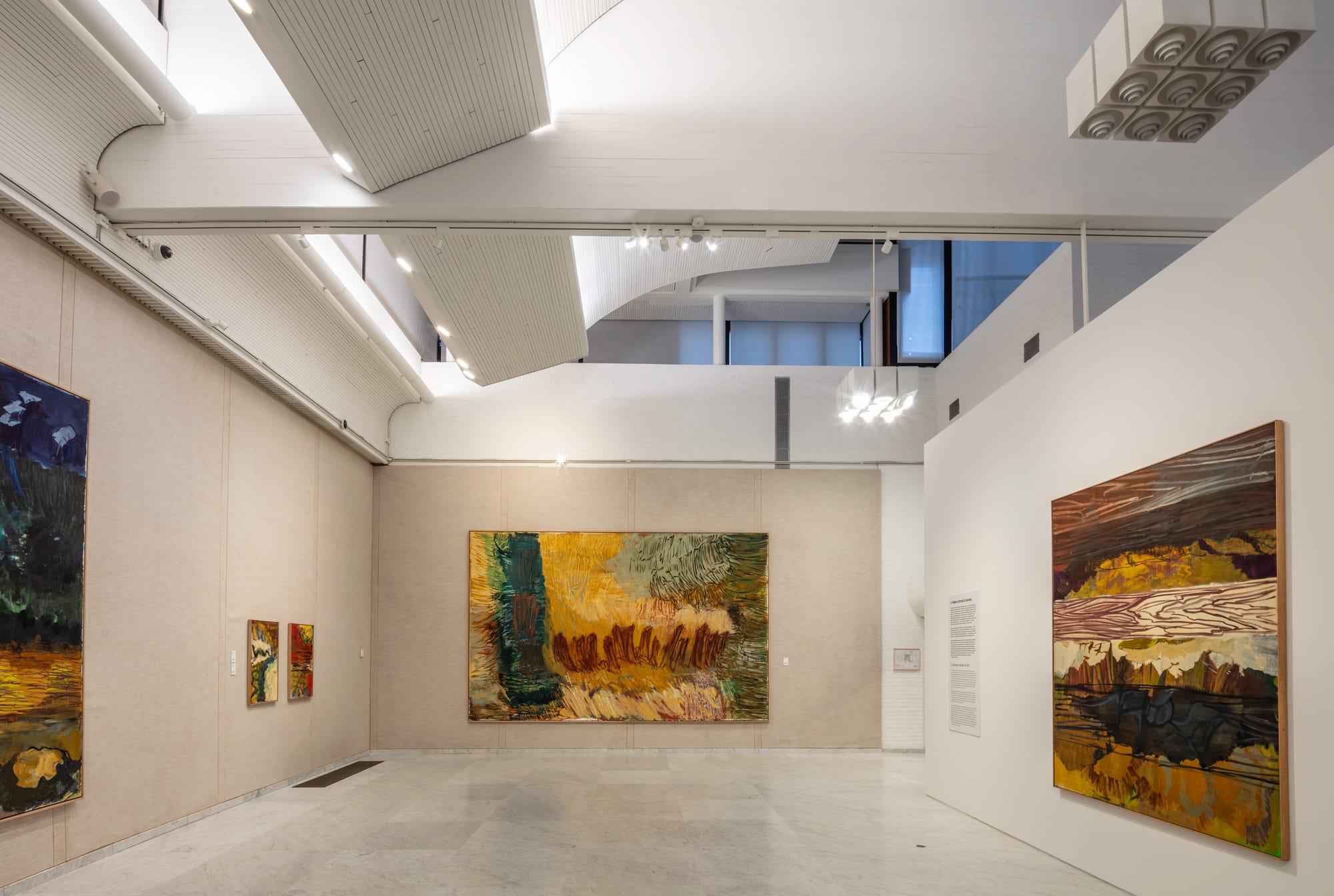
Per Kirkeby’s profound connection to the landscapes of North Jutland is examined through a diverse selection of works at Kunsten Museum of Modern Art Aalborg. Drawing heavily from the Louisiana Museum of Modern Art’s collection, the display highlights how Kirkeby’s background in geology informed his artistic language. His creative output, ranging from small, tactile bronzes to expansive, layered canvases, reflects a fascination with natural history and the passage of time. These pieces harmonise with the museum’s unique architecture, inviting a sensory exploration of the textures and structures found within the earth’s ancient, shifting layers.
Poul Gernes 100 Years
Until 13 April 2026
Museum Jorn celebrates the centenary of Poul Gernes by presenting a selection of significant works from its permanent collection. As a leading figure of the Danish 1960s avant-garde, Gernes is recognised for a radical, minimalist aesthetic defined by vibrant geometric patterns and bold stripes. This display features early sculptural experiments alongside graphic pieces, including alternative designs for the EC flag and a plaster layered cake. These varied objects, from ceiling lamps to rhythmic letter paintings, illustrate his anti-academic approach to art, where simple forms and colours transform everyday materials into a playful, cohesive universe.
With me: The Skagen Painter Viggo Johansen
Until 13 April 2026
Viggo Johansen was a bold member of the Skagen Painters who frequently turned his back on the group’s social spectacles to capture quiet, domestic life. This selection at Skagens Museum highlights his preference for lamp-lit interiors and the desolation of the heath over the bustling coastal scenes favoured by his peers. Through a tactile scenography by Luise Midtgaard, his paintings, such as the notable Aftenpassiar, invite an intimate look at private moments. These works offer a contemporary perspective on invisible labour and the deliberate choice between social activity and solitude.
🇫🇷 Exhibitions in France
Mickalene Thomas: All About Love
Until 5 April 2026
At the Grand Palais, the vibrant work of African-American artist Mickalene Thomas is celebrated through a survey of pieces titled All About Love. Drawing inspiration from the writings of bell hooks (Gloria Jean Watkins), this presentation focuses on the visibility and representation of Black women, framing love as a transformative tool for liberation and self-possession. Her signature style incorporates painting, rhinestone-studded collage, and photography to challenge traditional art historical narratives. By reinterpreting canonical European masterpieces, Thomas places her subjects, such as family, friends, and muses, at the centre of a lush, empowering universe that prioritises Black female agency and joy.
Architectural journey: Frank Gehry
Until 12 April 2026
An open itinerary at the Fondation Louis Vuitton invites visitors to explore the complex creative process behind Frank Gehry’s structural masterpiece. This permanent presentation, titled “Architectural journey”, uses original scale models, drone footage, and initial sketches to explain the building’s technological evolution. Guests can traverse the exposed steel “hull” and panoramic terraces, gaining insight into the materials and design that have defined this Parisian landmark. Complementing the architectural narrative are site-specific commissions by artists such as Olafur Eliasson and Katharina Grosse, who provide contemporary artistic responses to Gehry’s soaring glass and wood volumes.
Marina Abramović: Looking at Colors
Until 27 April 2026
Marina Abramović invites visitors into a space of radical stillness at Centre Pompidou-Metz with her participative work Looking at Colors. Set within the Paper Tube Studio, the installation encourages guests to sit immobile before large panels of primary red, blue, or yellow. This meditative exercise requires physical endurance and mental discipline, turning the audience into the protagonist of the artistic process. By focusing intensely on these pure pigments, participants embark on a journey of introspection and emotional transformation. It is a rigorous exploration of self-perception, where art serves as a functional tool for personal concentration and quietude.
Arnaud Labelle-Rojoux: Voyez-vous ça
Until 12 April 2026
Arnaud Labelle-Rojoux, a singular figure in the French art scene, presents a multifaceted exploration of humour and popular culture at MAC VAL. This exhibition, titled “Voyez-vous ça !”, is organised into three distinct chapters that highlight his role as an artist, performer, and writer. Visitors encounter Stop Making Sense, an expansive work comprising 365 daily collages, alongside “composite pieces” that blend historical references with contemporary wit. By juxtaposing marginal artistic forms with archival materials and live performances, Labelle-Rojoux creates a dense, non-hierarchical universe that encourages a playful re-evaluation of how we perceive and categorise the world around us.
Insights into the Living World: Exploring Art and Nature with Vincent Munier
Until 12 April 2026
The Musée des Beaux-Arts de Strasbourg offers a sensory journey through the wild with “Lumières sur le vivant”, an exhibition that places the evocative photography of Vincent Munier in dialogue with classical artworks. Munier’s images of snow leopards and arctic wolves are juxtaposed with landscape paintings by masters such as Claude Lorrain, highlighting a shared fascination with light and form. Enhanced by the subtle scents and sounds of the forest, the display encourages a contemplative pace. This immersive experience invites visitors to reflect on human humility and the urgent necessity of protecting the fragile beauty of our natural world.
🇩🇪 Exhibitions in Germany
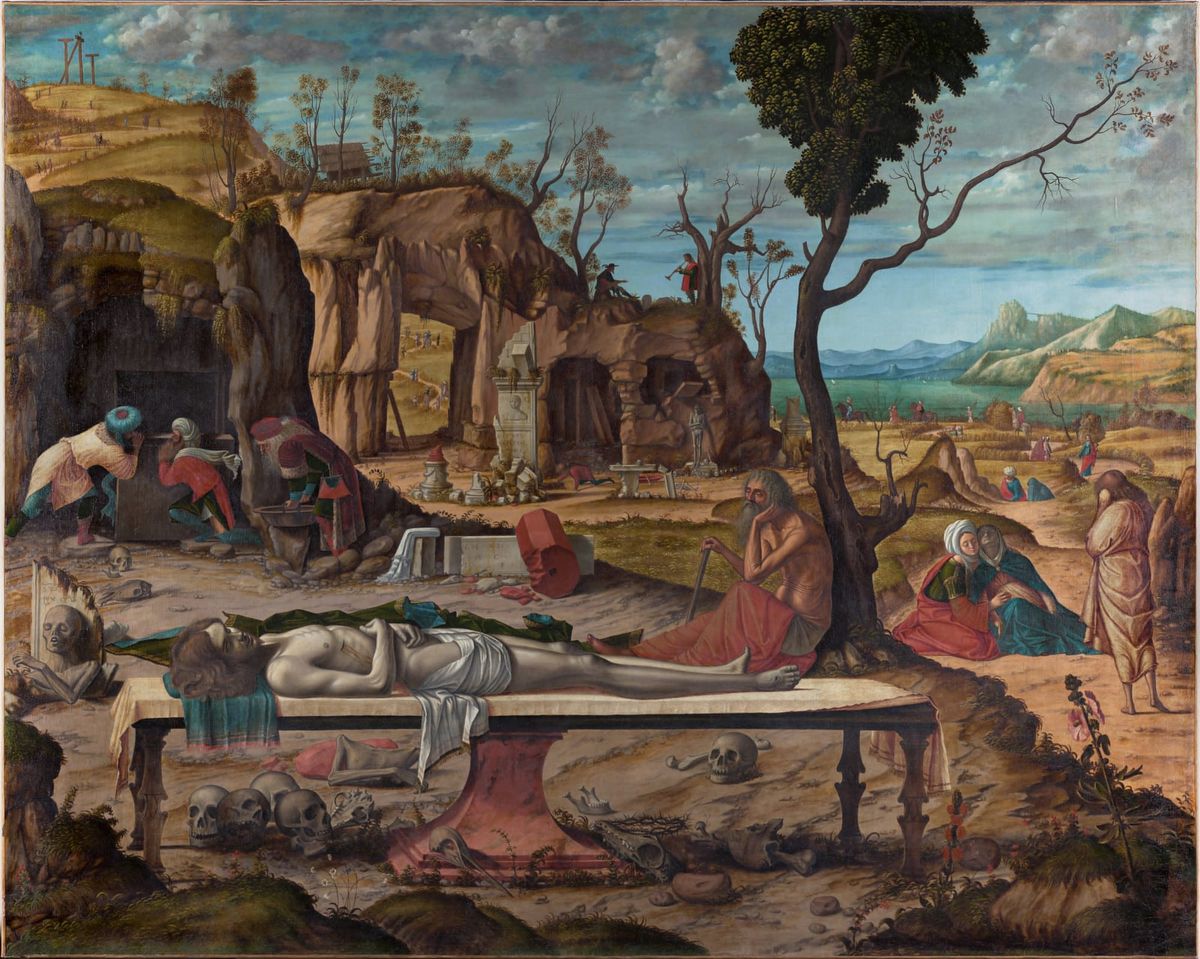
Tribute to Vittore Carpaccio: A Restored Masterpiece and Venetian Painting around 1500
Until 6 April 2026
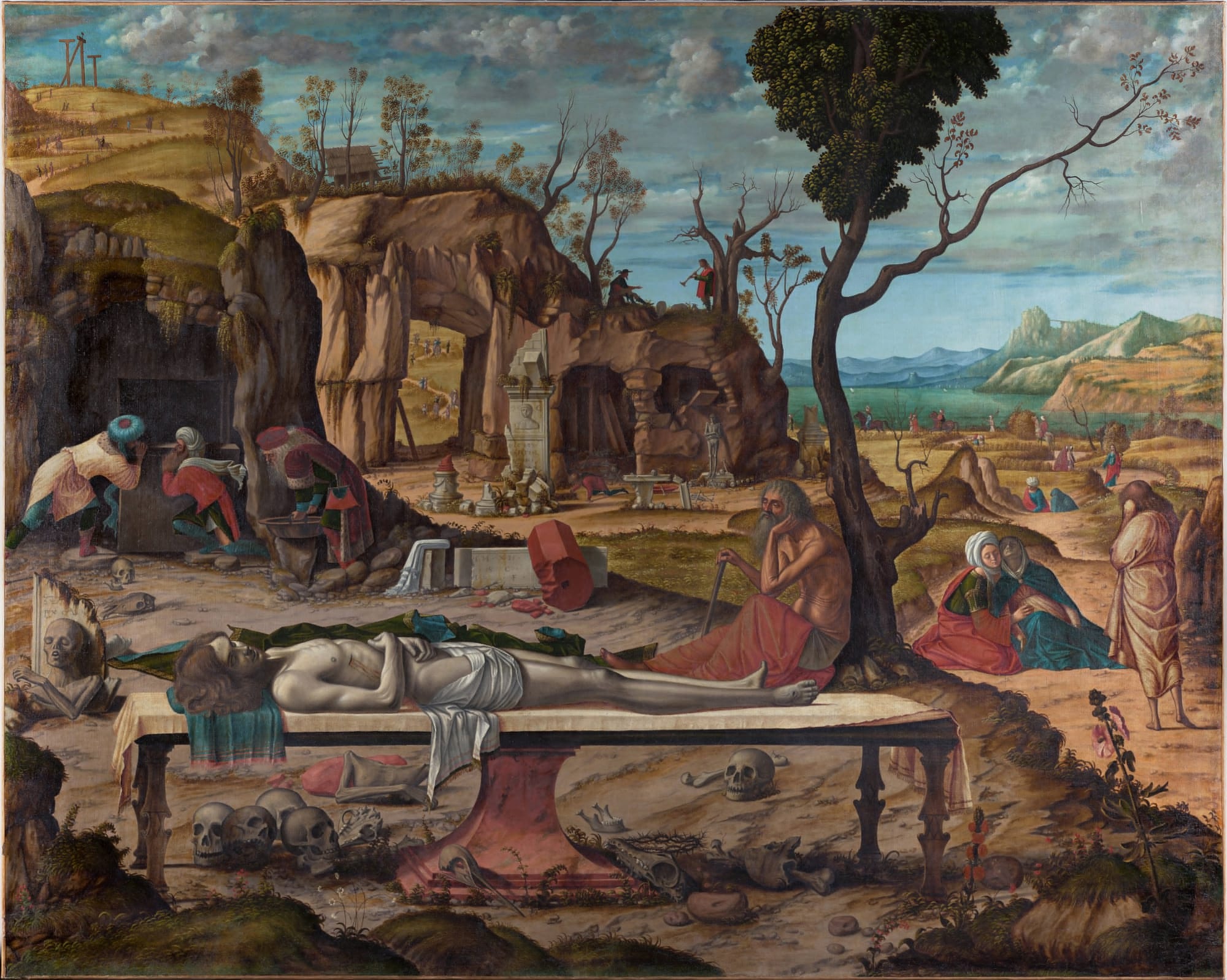
Venetian Renaissance mastery is brought into sharp focus at the Gemäldegalerie through a presentation centred on the recently restored The Preparation of Christ’s Tomb. This enigmatic work by Vittore Carpaccio, depicting the quiet, liminal moments following the crucifixion, has been returned to its original luminous palette after extensive conservation. By placing this large-scale canvas alongside pieces by contemporaries such as Giovanni Bellini, the display highlights Carpaccio’s distinct narrative style and technical precision. Supplemental loans of drawings and archival materials further illuminate the creative process of a painter whose detailed, storytelling approach continues to captivate art historians and visitors alike.
Max Ernst to Dorothea Tanning: Networks of Surrealism: Provenances from the Ulla and Heiner Pietzsch Collection
Until 8 April 2026
One hundred years after the first Surrealist manifesto, the Neue Nationalgalerie in Berlin examines the international movement’s intricate web of connections. This presentation features approximately 100 paintings and sculptures from the Ulla and Heiner Pietzsch Collection, including works by Max Ernst, Dorothea Tanning, and René Magritte. By tracing the provenance of these pieces, the display sheds light on the personal and professional relationships that sustained artists during their displacement and exile. These individual object biographies reveal stories of friendship, loss, and resilience, offering a unique perspective on how Surrealism evolved across Paris, Brussels, Mexico, and New York amidst the century’s political upheavals.
Christoph Schlingensief. Deutschlandsuche ’99
Until 25 April 2026
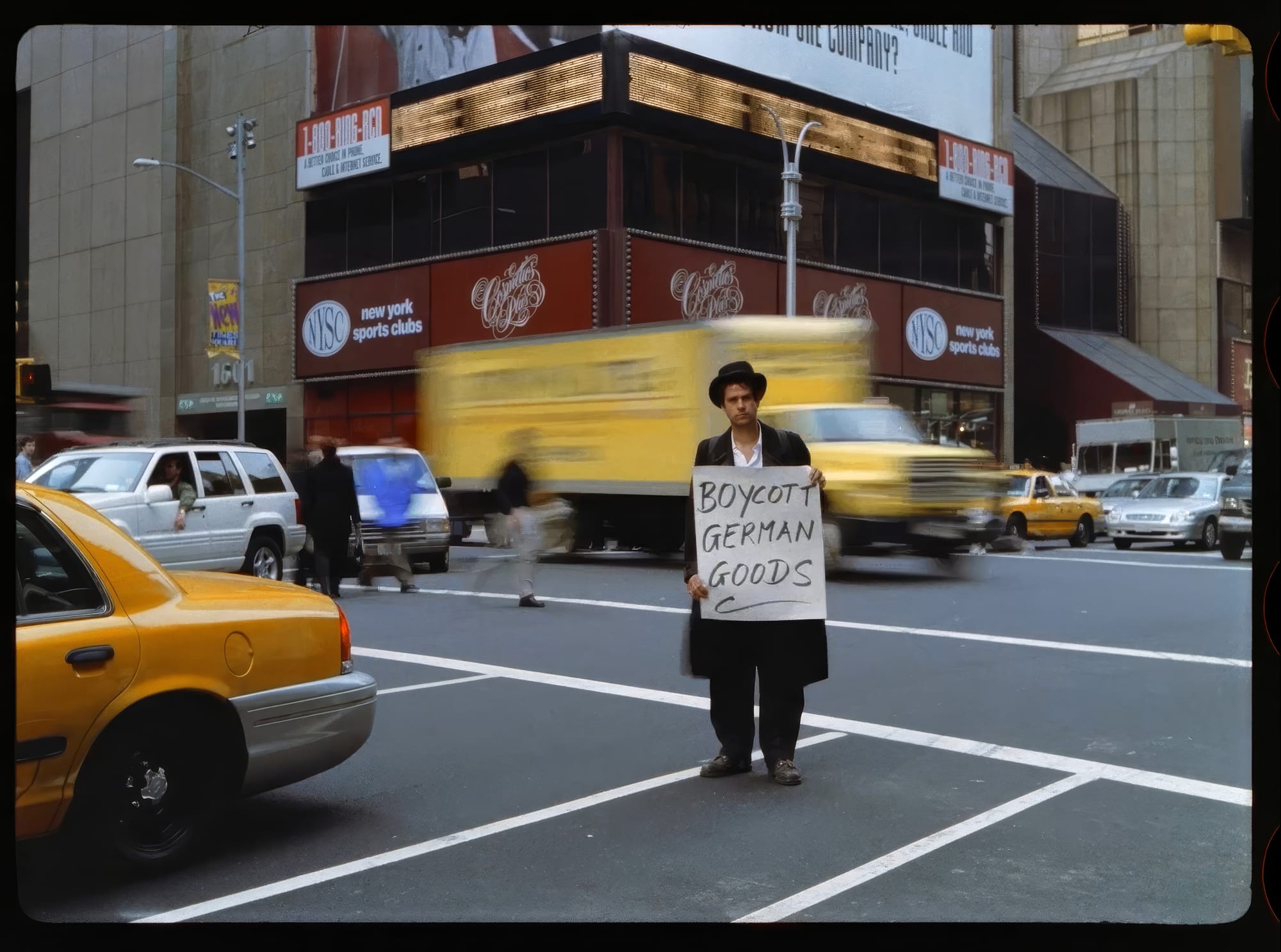
The boundary-pushing work of German filmmaker and performance artist Christoph Schlingensief is highlighted at the Neue Nationalgalerie through a dedicated presentation of his 1999 action, Deutschland versenken. Created for a project in New York, the installation captures Schlingensief’s symbolic ritual of throwing an urn and a suitcase filled with everyday German objects into the Hudson River. This provocative gesture addressed the weight of national history and identity at the turn of the millennium. Through film stills and conceptual elements, the display explores his unique ability to blend political commentary with theatrical flair, challenging viewers to confront the complexities of cultural memory and social complacency.
Extreme Tension. Art between Politics and Society: Collection of the Nationalgalerie 1945–2000
Until 25 April 2026
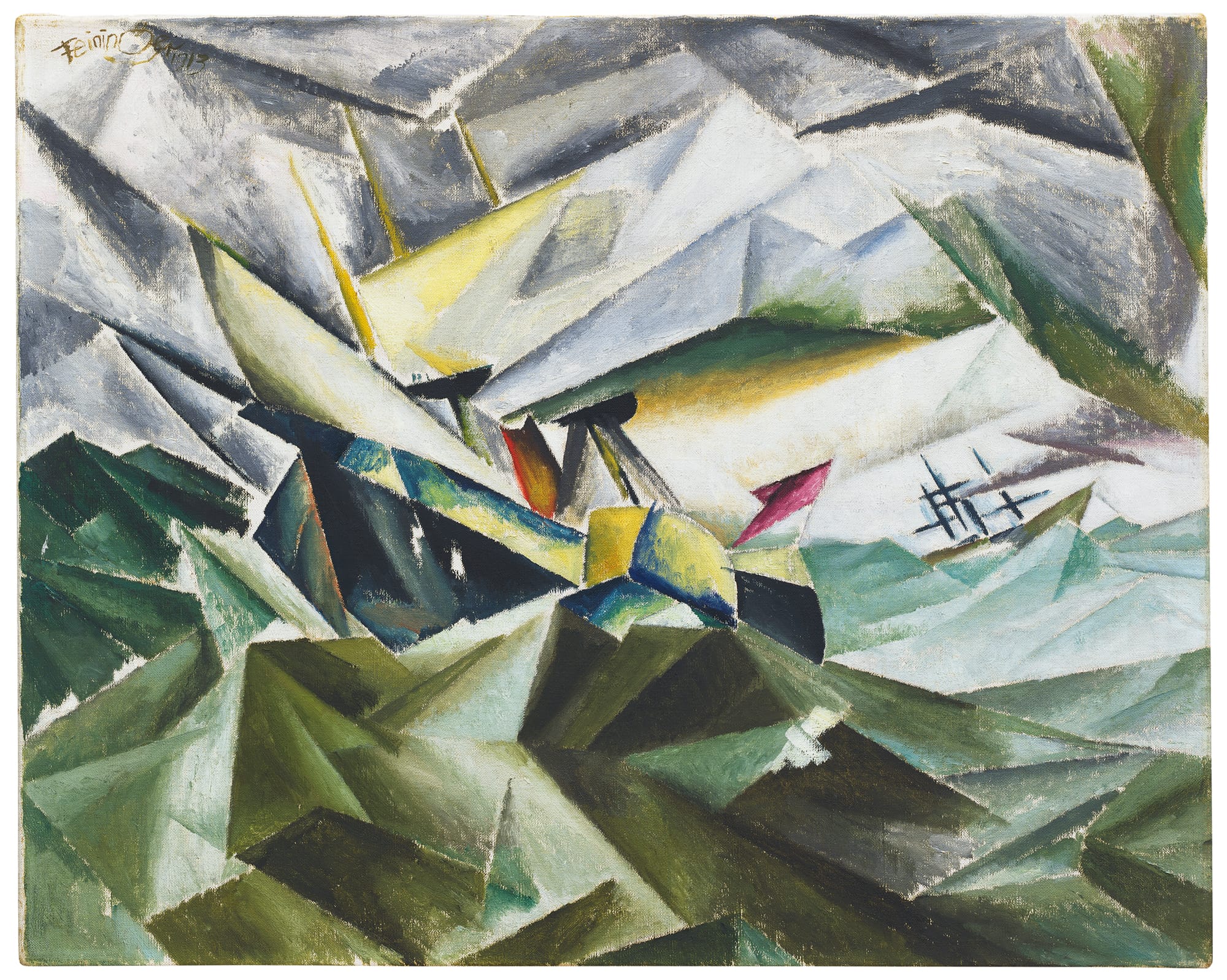
Rupture and transformation define the post-war era in Extreme Tension, a presentation of the Nationalgalerie’s collection from 1945 to 2000 at the Neue Nationalgalerie. Taking Günter Brus’s radical 1970 performance Zerreißprobe as its starting point, the display explores how global events (Holocaust and war, upheaval and emancipation, Cold War and the fall of the Berlin Wall) reshaped artistic expression. Key works by figures such as Joseph Beuys, Marina Abramović, and Francis Bacon are organised into thematic sections covering feminism, identity, and ecology. This survey highlights the diverse materials and methods used by artists from both East and West to navigate a world marked by profound social and political division.
Sweeter than honey
Until 12 April 2026
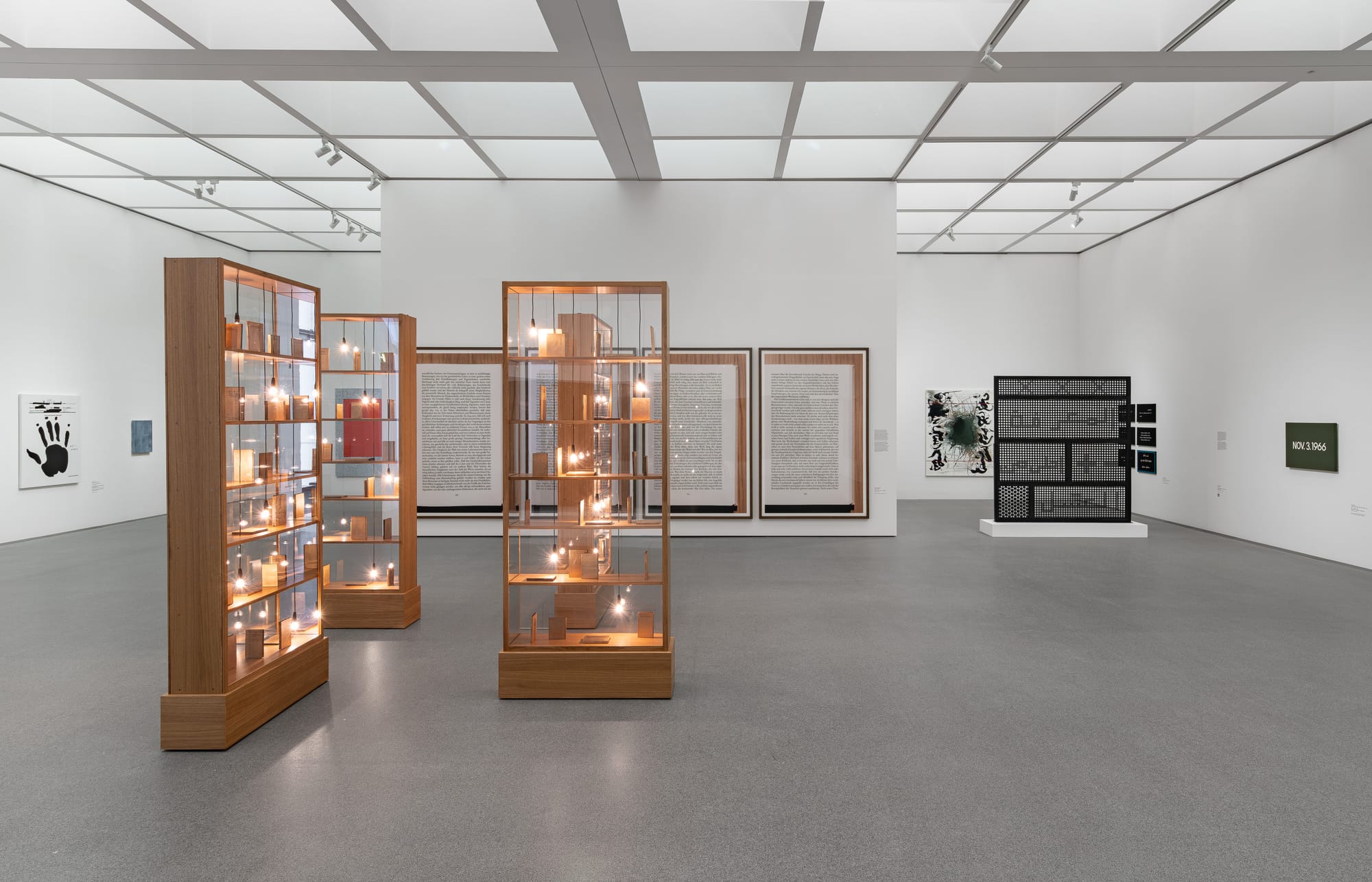
Drawing from the unique holdings of the Written Art Collection, this presentation at Pinakothek der Moderne features over 100 works by sixty artists, including Etel Adnan and Jenny Holzer. The title is borrowed from a piece by Susan Hefuna, it alludes to the poetic capacity of art to render bitter truths as something more palatable and profound. Occupying 1,200 square metres, the selection highlights how handwriting, calligraphy, and typography function as vital tools for socio-political dialogue. From mid-century Art Informel to contemporary digital messages, the exhibition illustrates a global, multi-generational fascination with the reciprocal relationship between text and image.
Stefan Rinck: The Return of the Alpine Clan
Until 12 April 2026
Stone sculptures by Stefan Rinck transform the rotunda of the Pinakothek der Moderne into a whimsical universe of mythical beings. Titled “Der Alpen-Clan kehrt zurück” (“The Return of the Alpine Clan”), this installation features a troupe of diverse sandstone figures, led by a shamanic female figure draped in a lion’s pelt. Rinck’s work cleverly blends high and low culture, referencing everything from medieval gargoyles to contemporary comics and arcade games. By placing these archaic yet humorous creatures in a modern architectural setting, the artist invites a playful discussion on human nature, regional identity, and environmental shifts in the Alpine landscape.
Paula Scher: Type is Image
Until 12 April 2026
Five decades of influential graphic design are distilled into a single, vibrant environment at Die Neue Sammlung, where Paula Scher’s work transforms the Paternoster Hall. This presentation, titled “Type is Image”, features over 300 projects that illustrate her career from 1970s record covers to the visual identity of the Public Theater in New York. The display eschews traditional framing; instead, hand-painted maps blanket the floors while oversized letters support the exhibition cases. These typographic experiments, ranging from early posters to recent architectural commissions, demonstrate how alphabet forms can function as independent imagery, creating a rhythmic and witty dialogue with the museum’s unique moving architecture.
Roni Horn. You Are the Weather
Until 12 April 2026
One hundred portraits of a single woman, captured in the geothermal pools of Iceland, form the core of Roni Horn’s You Are the Weather at Museum Brandhorst. These close-up photographs document the subtle, involuntary shifts in the subject’s expression as she reacts to the sun, wind, and rain. By arranging the gelatin silver and chromogenic prints at eye level, Horn creates a space where the viewer is directly confronted by an unwavering gaze. This quiet study explores the human face as a sensitive barometer, suggesting that the presence of the observer is as much a part of the atmosphere as the weather itself.
Ho Tzu Nyen: Time & the Tiger
Until 12 April 2026
Complex video installations by Singaporean artist Ho Tzu Nyen occupy the darkened first floor of the Galerie der Gegenwart at Hamburger Kunsthalle. This survey, titled Time & the Tiger, explores the multifaceted history and shifting identities of Southeast Asia through a blend of documentary footage, digital animation, and mythical storytelling. Central to the display is the recurring figure of the tiger, used to unravel pre-colonial legends and modern geopolitical narratives. These immersive works — including Hotel Aporia and The Critical Dictionary of Southeast Asia — challenge conventional historical hierarchies, presenting the region as a fluid, ever-evolving matrix of diverse cultures and conflicting memories.
Art Around 1800: An Exhibition About Exhibitions
Until 26 April 2026
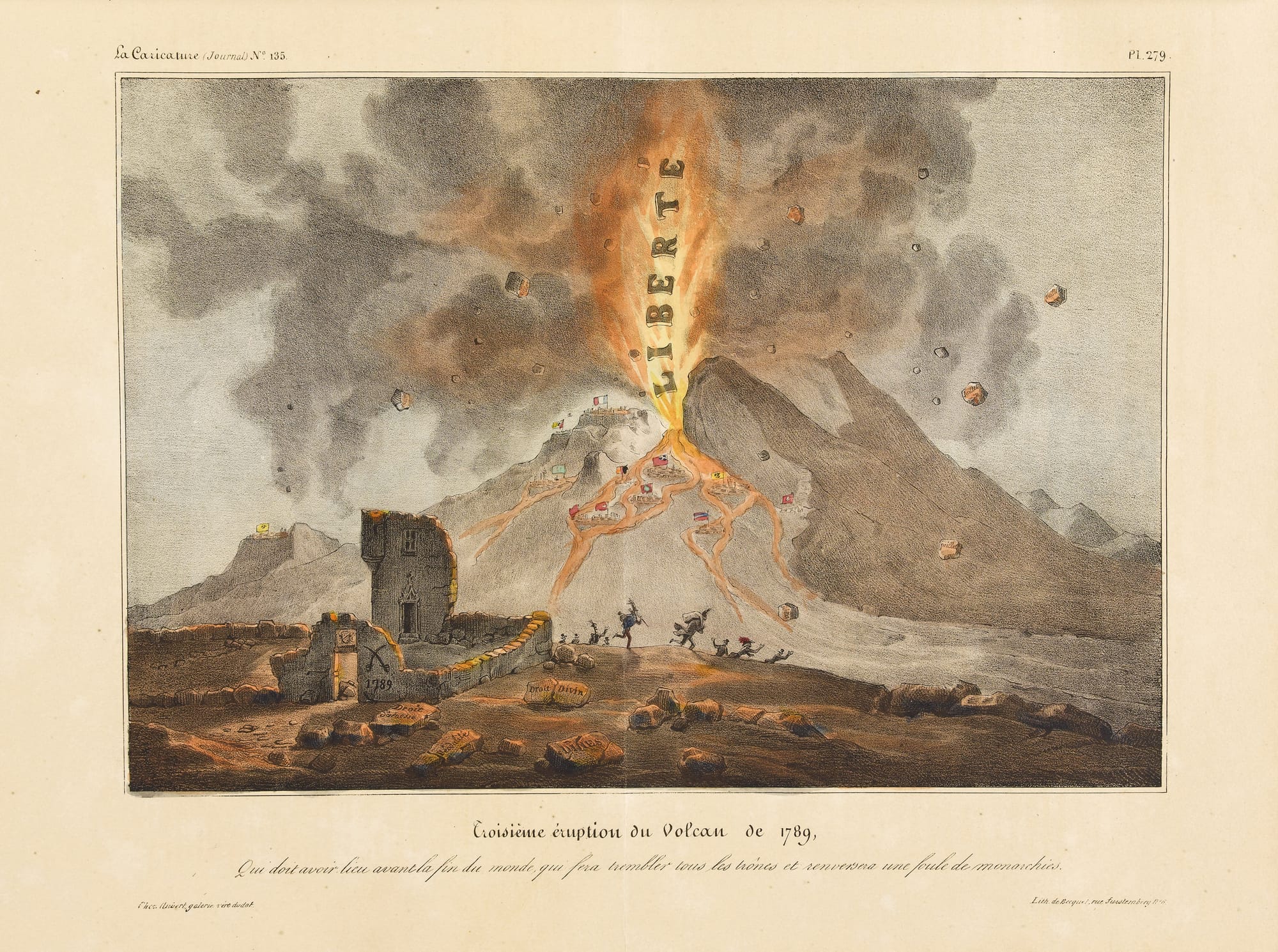
Extending its run after a previous feature in our “exhibitions ending in March” edition, this examination of the transformative period around 1800 remains on view at the Hamburger Kunsthalle. The presentation explores a tumultuous era when the French Revolution and the rise of industrialisation fundamentally reshaped European society and artistic expression. Visitors can observe how masters like Caspar David Friedrich and Philipp Otto Runge navigated the shift from courtly traditions to a new, subjective focus on nature and the individual. These atmospheric landscapes, architectural drawings and other works capture the tension between Enlightenment ideals and the burgeoning Romantic movement that would define the modern age.
Asta Gröting: A Wolf, Primates and a Breathing Curve
Until 12 April 2026
Subtle gestures of daily life are at the heart of Asta Gröting’s solo presentation at the Städel Museum. Focusing on eight works created between 2015 and 2025, the exhibition showcases her evolution from sculpture into film and video. A particular highlight is Breathing Curve, a laser projection developed specifically for this space, alongside the premiere of a video featuring Helge Schneider and Matthias Brandt. By manipulating time and perspective, Gröting renders invisible interpersonal dynamics visible. These moving images invite a quiet contemplation of the familiar and the foreign, capturing the delicate poetry found within the relationships between humans, animals, and their shared environments.
Bárbara Wagner & Benjamin de Burca: The Tunnels We Dig
Until 26 April 2026
“The Tunnels We Dig” is a presentation of three large-format film installations by Bárbara Wagner and Benjamin de Burca. By blending documentary observation with fictional staging, the duo explores the emancipatory power of music and the shared identities of subcultural communities. A particular focus is the newly produced Future of Yesterday, which examines the contemporary Straight Edge hardcore scene in Germany and its roots in 1980s counterculture. Through direct collaboration with their performers, the artists create a temporal space where diverse generations negotiate resistance. These pieces reveal how collective artistic practices allow marginalised groups to claim a public voice and defy social exclusion.
Land and Soil. How We Live Together
Until 19 April 2026
Fundamental questions about ownership and sustainability converge at K21 in the expansive exhibition “Land and Soil”. For the first time, the museum utilizes its entire former parliament building and the surrounding park to host works by thirty international artists, including Andreas Gursky and Maria Thereza Alves. The presentation navigates various models of resource management, from indigenous planning strategies to utopian blockchain projects. By incorporating materials like coal, pine needles, and chocolate, the display connects the industrial history of Düsseldorf to global environmental struggles. This survey invites visitors to reflect on the very ground they stand on, challenging traditional notions of how we live together and share the earth's finite resources.
🇭🇺 Exhibition in Hungary
Orsolya Csilléry: Golden Mud
Until 13 April 2026
The archaic Hungarian term sárarany, meaning “pure gold,” provides the conceptual framework for Orsolya Csilléry's exhibition at Műcsarnok, where the artist explores the transformative journey from raw matter to refined creation. Her large-scale landscapes, inspired by the Roman countryside and the Carpathian Basin, employ a unique technique of colored pencil layered over watercolor to bridge the gap between human observation and cosmic scale. Central to the display is the motif of the tree, which she uses to navigate both the wild forest and the curated garden. Beyond these “landscape portraits,” the exhibition highlights Csilléry’s rare commitment to the artist's book genre, a meticulous process in which she personally handles every stage of production, from initial design and typesetting to final printing.
🇮🇹 Exhibitions in Italy
Wax Upon a Time: The Medici and the Arts of Ceroplastics
Until 12 April 2026
Masterpieces of a largely forgotten medium are brought back to light in “Wax Upon a Time: The Medici and the Arts of Ceroplastics” at the Uffizi Gallery. This inaugural exhibition dedicated to the art of wax sculpture features approximately 90 works, including intricate reliefs, busts, and the famous death mask of Lorenzo the Magnificent. The presentation explores how Renaissance and Baroque artists utilized the malleable, organic nature of wax to achieve a haunting verisimilitude in depicting the human form and its eventual dissolution. By gathering these fragile survivors, many of which were scattered from the Medici collections in the 18th century, the display offers a rare glimpse into a virtuosic craft that once bridged the worlds of fine art, science, and religious devotion.
The Unfinished: Between Poetics and Technique
Until 12 April 2026
Scientific imaging techniques, such as reflectography and X-ray fluorescence, provide the foundation for “The Unfinished: Between Poetics and Technique” at the Capitoline Museums’ Pinacoteca. By peeling back the visible layers of masterpieces by Guido Reni, Jacopo Palma il Vecchio, and Garofalo, the exhibition exposes the hidden sketches and anatomical “pentimenti” (revisions) that define the creative struggle. This survey moves beyond mere conservation, positioning the “unfinished” as a deliberate aesthetic category that forces the viewer to mentally complete the artist's gesture. Digital frames and 3D models allow visitors to trace these evolutionary steps, offering a rare, forensic look at how Renaissance and Baroque icons were negotiated and performed on the canvas.
From Greece to Rome
Until 12 April 2026
Villa Caffarelli hosts an extraordinary gathering of over 150 original Greek masterpieces, exploring the profound cultural exchange that defined Roman aesthetics. This presentation features rare sculptures, bronzes, and ceramics, some returning to Rome for the first time in centuries. Visitors can observe how sacred votive objects transitioned into political symbols and status markers within aristocratic Roman homes. Highlights include the magnificent Capitoline bronzes and the expressive Wounded Niobid sculpture. Through these artefacts and clever digital reconstructions, the display traces the evolution of Greek art from early imports to its complete integration into the fabric of the Roman Empire.
Rome in the World
Until 6 April 2026
Rome serves as the focal point for a complex investigation into urban ecosystems at MAXXI, where the city is compared with seventeen other global metropolises. Curated by Ricky Burdett, this display uses data and art to examine how the Eternal City measures up against modern peers in terms of mobility, environment, and social fabric. A highlight of the show is a large terracotta model of Rome, which acts as a three-dimensional map for projecting spatial and social narratives. Through photography and historical documents, the presentation explores both the traditional Grand Tour imagery and the contemporary perspectives of migrants and scholars. This multi-layered study invites visitors to reconsider the city’s unique DNA within a rapidly changing global context.
Luigi Pellegrin: Envisionings for Rome
Until 6 April 2026
This presentation explores the singular career of Luigi Pellegrin, an architect who navigated the line between practical urbanism and surrealist fantasy. The selection of works highlights his fascination with macrostructures and dreamlike landscapes that reimagine the city’s physical boundaries. A significant portion of the display is dedicated to his 1990s proposals for the Jubilee and the clever redevelopment of Rome’s railway networks. These speculative designs, though avant-garde, anticipated many of the infrastructural challenges the city faces today. By examining these intricate drawings, visitors gain insight into a mind that sought to blend functional requirements with a bold, imaginative aesthetic.
William Kentridge / Philip Miller: BREATHE DISSOLVE RETURN
Until 6 April 2026
A cinematic and musical landscape unfolds at MAXXI as William Kentridge and composer Philip Miller transform two of their most significant past projects into a film-concert. Drawing from the ephemeral Tiber river frieze Triumphs and Laments and the powerful The Head and the Load, the presentation replaces linear narrative with a clever collage of memory and resistance. Voices, kora, and percussion weave through a tapestry of moving images to explore historical contradictions. This collaborative work invites a fresh interpretation of history, presenting it as a series of fragments that refuse to be forgotten.
Franco Battiato: Another life
Until 26 April 2026
Every dimension of Franco Battiato’s creative genius is examined in this tribute at MAXXI. Organised five years after the artist’s passing, the display goes beyond his musical legacy to explore his work as a poet, painter, and filmmaker. Rare memorabilia, historical posters, and album covers provide a tangible narrative of his career, while a central listening area allows visitors to engage directly with his sonic innovations. The journey also incorporates Middle Eastern symbolism and cinematic research, reflecting the spiritual depth that informed his revolutionary approach to Italian culture. This survey offers a comprehensive look at an intellectual who constantly defied categorisation.
“Guests at the Palace” – Portrait of Lazzaro Zen by Francesco Guardi
Until 26 April 2026
Displaying a rare foray into portraiture by the celebrated vedutista Francesco Guardi, the Doge’s Palace presents a work with a singular history. The painting depicts Lazzaro Zen, a young man originally named Alì who escaped slavery in West Africa before finding refuge and a new identity in eighteenth-century Venice. On loan from local charitable institutions, the piece commemorates his 1770 baptism into the Zen family, whose coat of arms adorns his elegant, ostrich-feathered hat. Guardi’s typically vibrant brushwork shifts here toward a more formal, precise style that captures the sitter’s psychological depth. This presentation serves as a poignant reminder of the multi-ethnic and polyglot nature of the historic Republic.
🇱🇮 Exhibitions in Liechtenstein
In Touch: Encounters in the Collection
Until 12 April 2026
Hilti Art Foundation presents forty masterpieces that foster a dynamic dialogue between artists and viewers. The selection features twenty-three influential figures of the twentieth century, including Wassily Kandinsky, Paul Klee, and Sophie Taeuber-Arp. The works are organised into three thematic chapters. Visitors can explore the historical networks that linked these creators across national borders, as well as the stylistic contrasts found in recurring motifs like seascapes and bronze figures. By pairing historical works with later explorations by artists such as Sean Scully, the display highlights the enduring connections that bridge classical modernism with contemporary practice.
The Joy of Seeing: Josef Seger’s Stamp Art
Until 6 April 2026
How much artistry fits onto a single postage stamp? This question is at the heart of the latest display at the Liechtenstein Postal Museum, which celebrates the work of Vaduz-born designer Josef Seger. Between 1945 and 1977, Seger shaped the visual identity of the principality’s stamps with 69 distinctive designs, ranging from princely portraits to delicate studies of local wildlife. The exhibition brings together original sketches alongside thirty previously unreleased animal and landscape studies. These small-scale works reveal a mastery of detail and thematic breadth, offering a fresh perspective on the creative process behind these everyday miniature masterpieces.
🇳🇱 Exhibitions in the Netherlands
Erwin Olaf: Freedom
Until 6 April 2026
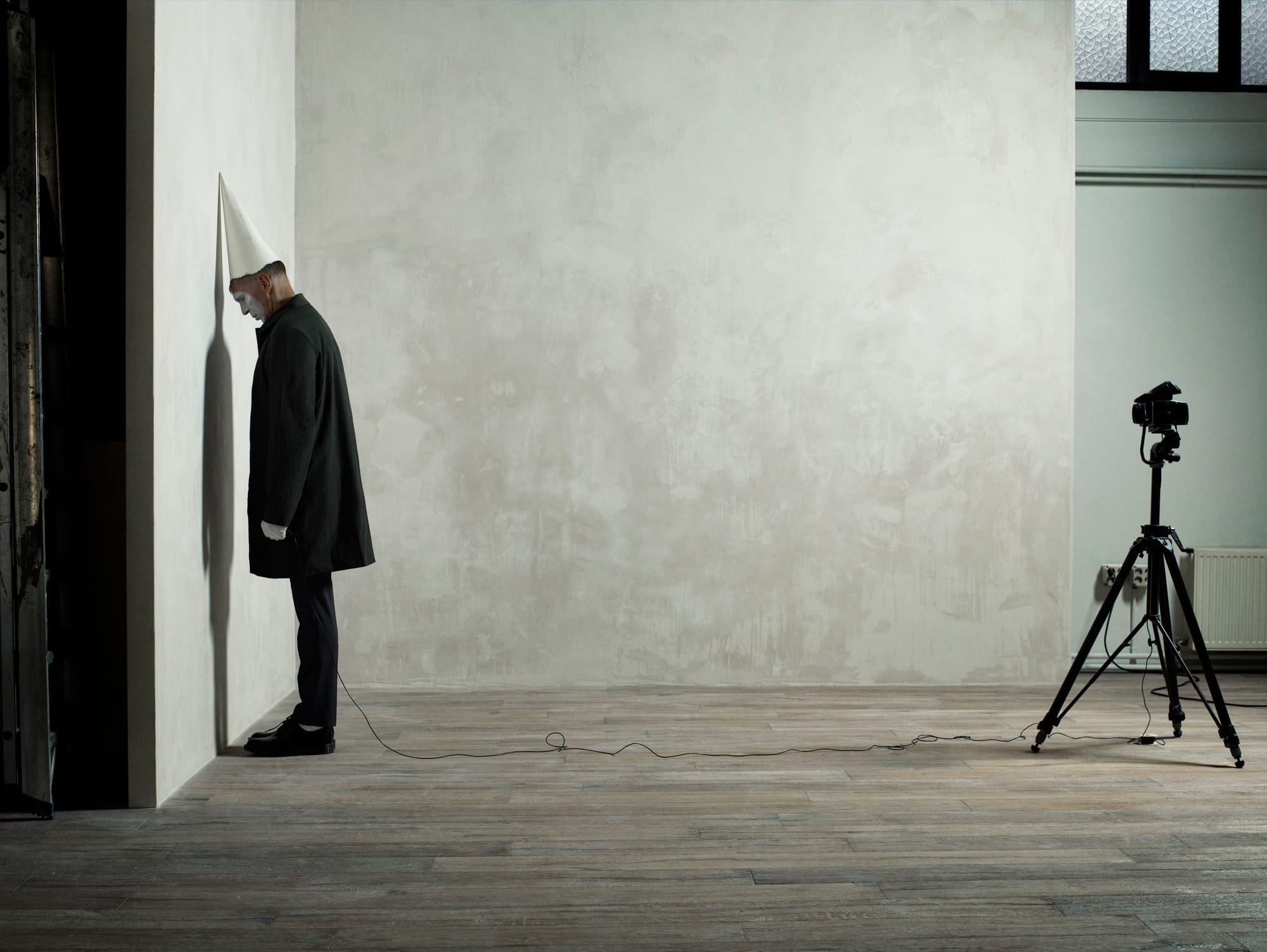
Photography as an act of activism serves as the core theme for this comprehensive survey of Erwin Olaf’s career at the Stedelijk Museum. Titled Freedom, the exhibition traces his journey from early black-and-white reportages on gay rights to the meticulously staged, cinematic studio series that brought him worldwide acclaim. The presentation highlights his unwavering commitment to exploring human vulnerability, gender, and social justice through iconic works such as Chessmen and Skin Deep. Alongside his photography, visitors can examine personal archive materials, sculptures, and a final, unfinished video titled For Life. This poignant selection reveals the technical perfection and profound social engagement of an artist who dedicated his life to defending the liberty of the individual.
Jan Dibbets 1966–1976 — Toward Another Photography
Until 5 April 2026
Focusing on a decade of radical change in the work of Jan Dibbets, H’ART Museum presents a survey of the artist’s transition from painting to the camera. The display highlights the period between 1966 and 1976 when Dibbets became a key figure in Conceptual Art and Land Art, famously using “perspective corrections” to trick the viewer’s eye. Original archival documents and rare sketches sit alongside his celebrated colour studies and horizon-line photographs. Beyond his famous photographic series, visitors can discover less-frequently seen cinematographic works, sound installations, and sculptures. This presentation offers a unique opportunity to see how one artist’s research into the photographic apparatus fundamentally shifted the boundaries of contemporary art.
All Around Fashion
Until 12 April 2026
An unusual transformation has turned Gallery II of Depot Boijmans Van Beuningen into a working fashion studio, offering a rare look at the museum’s registration and conservation processes. This display allows visitors to observe the meticulous task of documenting the entire fashion collection, where garments by designers such as Maison Martin Margiela and Hussein Chalayan are carefully examined and photographed. Each session reveals the practical challenges of preserving avant-garde materials, from paper dresses by Dirk Van Saene to Claude Montana’s leather ensembles. As new pieces are constantly cycled through the photo studio, the presentation remains in a state of flux. This behind-the-scenes perspective highlights the delicate balance between maintaining a designer’s original vision and the technical realities of long-term museum care.
Beyond Surrealism
Until 6 April 2026
This presentation at the Depot explores the enduring legacy of the Surrealist movement. The display brings together masterpieces by René Magritte and Salvador Dalí with works by contemporary artists who continue to push the boundaries of reality and the subconscious. Visitors can examine a diverse array of paintings, sculptures, and drawings that reject rationalism in favour of the uncanny and the dreamlike. By placing historical works alongside modern interpretations, the exhibition traces how Surrealist themes of desire and the bizarre have evolved. It offers a fresh perspective on a movement that remains remarkably relevant in our increasingly digital and distorted world.
Kudzanai-Violet Hwami: They have always been here
Until 12 April 2026
Zimbabwean artist Kudzanai-Violet Hwami brings her first solo exhibition in the Netherlands to Kunsthal Rotterdam, presenting a collection of layered paintings and digitally altered photography. The display focuses on themes of identity and displacement, particularly highlighting queer people of colour within the African diaspora who are frequently absent from historical narratives. For this occasion, Hwami has created her first bronze sculptures, expanding her practice into the three-dimensional realm. Her canvases use a vibrant mix of oil, acrylic, and charcoal to merge family memories with political observations. By reworking archival material, she investigates the tension between personal freedom and cultural inheritance.
Lois Dodd: Framing The Ephemeral
Until 6 April 2026
In her first major survey in the Netherlands, American painter Lois Dodd presents a quiet yet determined look at the everyday at Kunstmuseum Den Haag. The display brings together over sixty years of work, focusing on the immediate surroundings of her homes in New York and Maine. Dodd’s style is defined by a rapid, direct approach to painting en plein air, where windows, woodpiles, and laundry lines are rendered with geometric simplicity and a peculiar light. These observations of domestic life and nature avoid sentimentality, instead finding a rhythmic, almost abstract beauty in the mundane. By highlighting her unique observational power, the exhibition celebrates an artist who remains an essential figure in modern American representational art.
Open-Ended
Until 6 April 2026
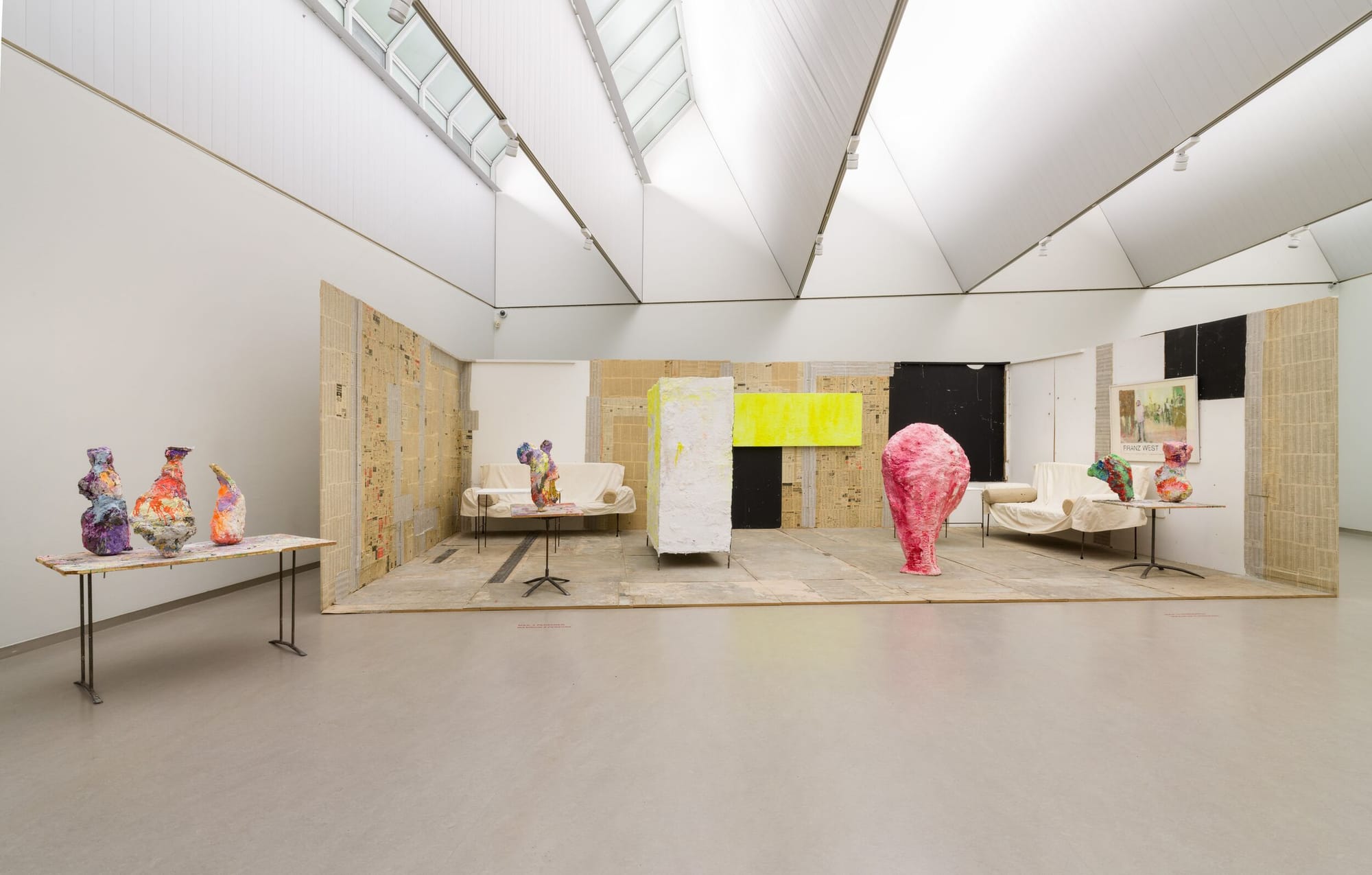
Visitors are invited to become active participants rather than passive observers in this experiential display at the Kröller-Müller Museum. Titled Open-Ended, the selection features artworks that function as literal passages, such as Gianni Colombo’s dizzying Topoestesia corridor, which playfully challenges one's sense of balance. A central highlight is the rattling Bone Curtain by Marina Abramović and Ulay, a wall-to-wall installation that compels guests to physically push through a boundary of bone and rope. By incorporating interactive elements like Franz West’s Clamp, where guests can place a telephone call to a stranger, the gallery becomes a space for movement and reflection. These works guide the viewer on a metaphorical journey between a beginning and an end.
Library exhibition: Simultané
Until 2 April 2026
The Van Abbemuseum presents an expansive look at the career of Dutch artist Theo van Doesburg through the lens of Simultané. By examining his multidisciplinary approach, the display highlights how he blended painting, architecture and typography into a unified aesthetic experience. Visitors can explore a diverse range of sketches, architectural models and vibrant canvases that illustrate his commitment to the De Stijl movement. This presentation emphasizes his desire to dissolve boundaries between different creative fields. It offers a clear perspective on how his radical ideas transformed modern design principles and continues to influence contemporary visual culture today.
🇪🇸 Exhibitions in Spain
The Prado Multiplied: Photography as Shared Memory
Until 2 April 2026
The Museo del Prado reveals the fascinating history of its own fame by examining how the camera’s lens transformed static masterpieces into global sensations. This presentation highlights the shift from rare gallery visits to the mass distribution of photographic prints, which allowed European art to enter private homes for the first time. Visitors encounter a diverse selection of early photographs and printing plates that document the institution’s evolution. It provides a clear understanding of how these reproductions helped build a shared cultural memory, turning paintings into international symbols of beauty and history.
Oliver Laxe: HU/هُوَ. Dance as if no one were watching you
Until 20 April 2026
Director Oliver Laxe brings a distinctive cinematic language to the Museo Reina Sofía, where his exploration of landscape and human spirituality takes a central role. The presentation focuses on his unique process of filmmaking, blending documentary realism with a poetic sensibility that captures the essence of rural life in Galicia. Through a selection of film clips and production materials, the display reveals how he uses light and sound to create a specific atmosphere. It is an insightful look into how he challenges traditional narrative structures to evoke a sense of timelessness.
Juan Uslé:That Ship on the Mountain
Until 20 April 2026
Spanning more than forty years of Juan Uslé’s career, this exhibition at the Museo Reina Sofía is structured as a non-chronological short story. The display occupies eleven rooms within the Nouvel Building, where the artist’s paintings are presented alongside his writings and photography. Visitors can observe Uslé’s stylistic shift from the dark tones of his early years in Cantabria to the vibrant, rhythmic abstractions he developed after moving to New York. His work explores the subconscious links between the visible world and the imaginary, with repetitive, pulse-like brushstrokes defining his more recent, lyrical canvases.
Out of Focus: Another View of Art
Until 12 April 2026
A captivating investigation into the aesthetic power of the blur, this presentation at CaixaForum Madrid traces the evolution of soft-focus techniques from Impressionism to the present day. Taking Claude Monet’s Water Lilies as a starting point, the exhibition examines how imprecision became a deliberate expressive tool rather than a technical flaw. The display features a diverse array of media — including paintings by Mark Rothko and Gerhard Richter — alongside video works by Bill Viola. By juxtaposing these historical and contemporary pieces, the show reveals how a lack of clarity can offer a sharper understanding of our world.
Ubu painter. Alfred Jarry and the arts
Until 6 April 2026
The grotesque and cynical figure of Ubu, created by French playwright Alfred Jarry, takes on a new life at the Museu Picasso in Barcelona. This exhibition explores Jarry’s influence on the 20th-century avant-garde, tracing his impact from the Nabis painters to Surrealists like Max Ernst and Joan Miró. Picasso himself was captivated by the subversive character, famously reimagining Ubu in his work The Dream and Lie of Franco. By bringing together Jarry’s original drawings and manuscripts with contemporary pieces by William Kentridge, the display highlights how this satire of power continues to resonate within modern art.
Poetry has just begun. 50 years of the Miró
Until 6 April 2026
The Fundació Joan Miró celebrates half a century of its existence with a display that re-examines the visionary ideas of its founder. This presentation explores how Miró conceived the museum as a living space for creative exchange rather than a static monument. Moving through the galleries, visitors encounter archival materials and artworks that trace the evolution of the institution since its birth in the 1970s. The narrative highlights the building’s unique architecture designed by Josep Lluís Sert, and its role in fostering modern art. This tribute reflects on how a museum can remain a laboratory for freedom.
ARNA (moth)
Until 6 April 2026
Heightened sensory perception and the physical effects of temperature serve as the foundation for Huaqian Zhang’s installation at Espai 13. Entitled ARNA (moth), the work focuses on somatic channels that exist beyond the reach of language, exploring how heat can both threaten and revitalise the body. Instead of providing clarity, her light sculptures create a sense of overexposure, featuring glowing edges and energy flows that resist visual fixation. This ethereal environment challenges the visitor’s orientation — blurring contours to evoke a state of rippling imagery. It is a striking investigation into the boundaries of human sensation.
in situ: Mark Leckey. And the City Stood in its Brightness
Until 12 April 2026
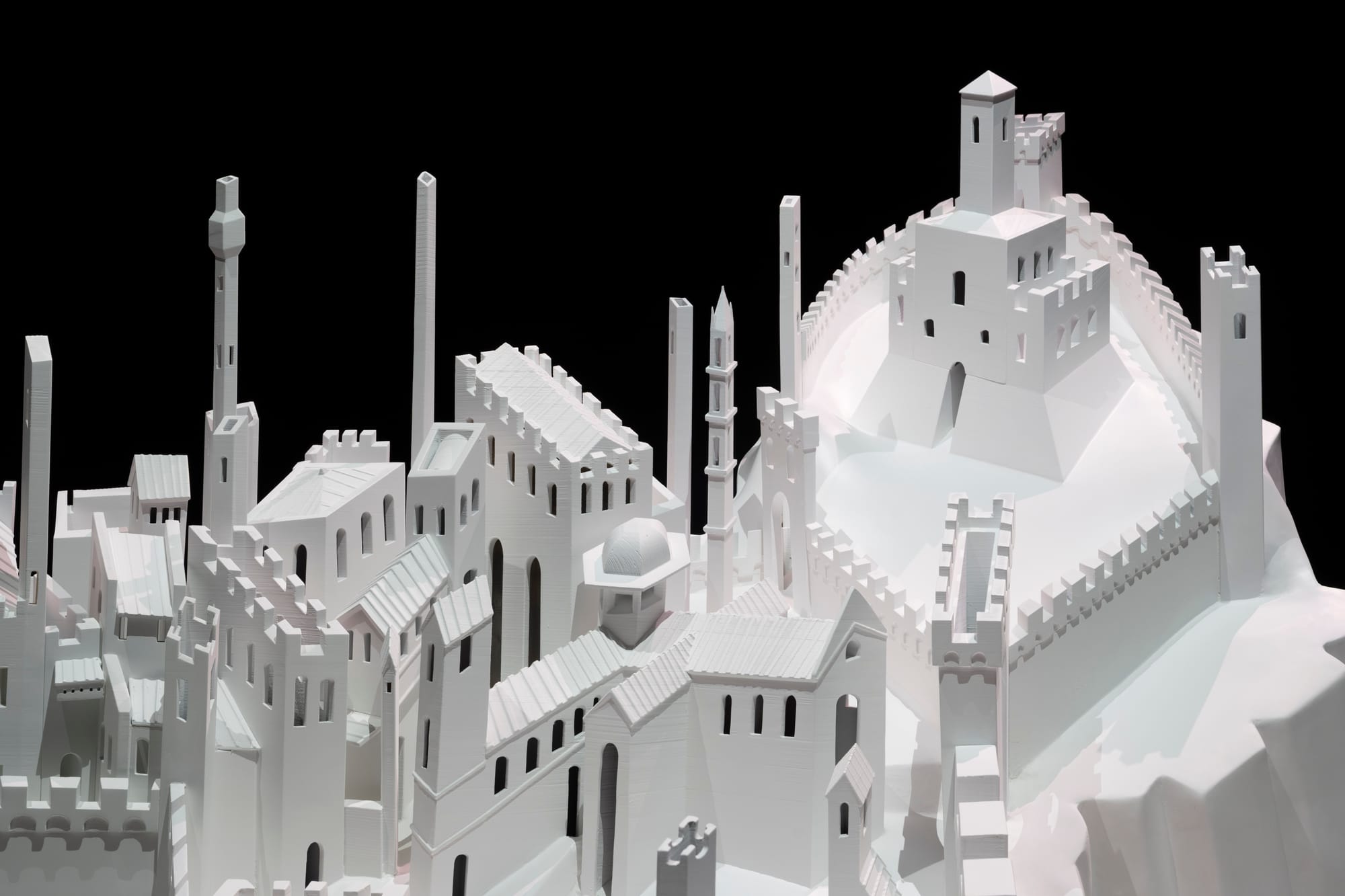
Mark Leckey transforms the architecture of the Guggenheim Bilbao with a site-specific installation that bridges medieval imagery and modern technology. Taking a 15th-century cityscape as its departure point, the artist creates a sculptural environment where physical forms shift into flickering apparitions. A six-minute cycle of light and sound defines the rhythm of the space, moving from the soft glow of dawn to a blinding strobe at its peak. This sensory journey explores how digital systems and collective memory shape our identity, inviting visitors to inhabit a world where the past and future collide.
After Hopper. Engravings by José Antonio Azpilikueta
Until 19 April 2026
A fascinating reinterpretation of Edward Hopper’s atmospheric realism, this exhibition at the Bilbao Fine Arts Museum showcases twelve recent engravings by José Antonio Azpilikueta. Commissioned by publisher Jose Ignacio Olave to illustrate a series of short stories, these prints translate Hopper’s cinematic solitude into a unique graphic language. Azpilikueta employs flat inks and precise line drawings to explore the spatial tension and visual silence inherent in the American artist’s work. Alongside the final prints, the display features sketches and archival materials that contextualise the creative process behind this sophisticated tribute to urban isolation and the play of light.
Picasso Memory and Desire
Until 12 April 2026
Centered on the transition between Classicism and Surrealism, this presentation at the Museo Picasso Málaga explores the complex interplay of history and aspiration. The exhibition uses the painting Studio with Plaster Head as a pivotal signifier, tracing how Picasso and his contemporaries (including Salvador Dalí and Giorgio de Chirico) redefined the classical bust as a modern emblem. Visitors move through a narrative where memory is not a static archive but a force reactivated by the intensity of desire. By showcasing a diverse range of media, the show highlights how these artists navigated the paradoxes of 20th-century identity.
AM CB: Annette Messager and Christian Boltanski
Until 6 April 2026
Establishing a long-overdue dialogue between two giants of French contemporary art, this presentation at the Centre Pompidou Málaga brings together the works of Annette Messager and Christian Boltanski. Despite being life partners, they maintained separate careers, yet this display of thirty works, spanning from 1968 to 2022, reveals their shared fascinations with memory and the human condition. Visitors can explore a diverse array of media, including artist books, experimental photography, and large-scale installations. While Boltanski often focuses on the absence of the body, Messager emphasises its presence, creating a compelling tension between their individual methods.
Andrea Canepa. Between the Deep and the Distant
Until 6 April 2026
A physical mapping of Indigenous cosmology awaits visitors at IVAM, where Andrea Canepa transforms the gallery into a landscape of deep time. The artist develops the idea that the past lies buried beneath our feet, while the future recedes along the distant horizon. An enveloping subterranean environment on the lower floor evokes ancestral caves or wombs. Upstairs, a metallic line mirrors the Andean ceque system to connect sacred spaces. By moving between these levels, the viewer traverses a vertical axis that treats the present as a threshold between eras.
🇨🇭 Exhibitions in Switzerland
“Sensations”
Until 26 April 2026
A physical mapping of sensory perception awaits visitors at the Fondation Beyeler, where the collection display Sensations explores the boundary between felt emotion and visual impression. Taking the late works of Paul Cezanne as a starting point, the exhibition investigates his concept of “colour sensations” as a primary foundation for modern painting. Masterpieces by Francis Bacon, Louise Bourgeois, and Mark Rothko illustrate how artists translate intense internal states into tangible forms. By juxtaposing historical highlights with contemporary pieces by Issy Wood and Lucas Arruda, the presentation reveals the enduring power of the unmediated sensory experience.
Bees beings beans: Diambe
Until 12 April 2026
Diambe’s presentation at Kunsthalle Basel utilizes a blend of sculpture, film, and ritual to explore the delicate existence of bees. By working with organic materials such as beeswax, egg tempera, and plant dyes, the artist choreographs a narrative focused on themes of loss and rebirth. These works function as sensual landscapes that negotiate the boundaries between cultural memory and ecological crisis. Through a combination of traditional bronze and ephemeral textiles, the display probes the colonial archive using a logic of transformation. This environment invites visitors to consider disappearance not as an absence, but as a continuing, rhythmic state.
They. Contemporary aboriginal artists.
Until 19 April 2026
Contemporary Aboriginal painting finds a vibrant stage at the Musée Rath in Geneva, where the spotlight falls on the creative prowess of female artists. Organised in partnership with the Fondation Opale, this exhibition features significant figures such as Emily Kam Kngwarray and Sally Gabori. These women reinvent ancient cultural and spiritual narratives with a striking sense of aesthetic freedom — translating the rhythms of the sea and ancestral lands into bold, abstract compositions. Through a diverse selection of bark paintings and canvases, the display underscores how memory and identity continue to flourish through modern artistic expression.
The universe of Armand Schulthess
Until 25 April 2026
Fragments of a lost encyclopedic world are reconstructed at the Collection de l’Art Brut in Lausanne. After abandoning his civil service career, Armand Schulthess spent decades transforming a vast Ticino estate into a physical manifestation of human knowledge. He populated his garden with thousands of engraved metal plates and suspended assemblages, most of which were destroyed after his death. This presentation brings together nearly 300 salvaged pieces, pairing them with evocative documentary photographs by Hans-Ulrich Schlumpf. These remnants serve as a testament to a life dedicated to mapping science and philosophy through a singular, solitary creative vision.
Jean Tschumi Designer
Until 26 April 2026
At mudac’s new gallery space, Le Carré, the bespoke furniture designs of Swiss architect Jean Tschumi are brought into sharp focus. The exhibition examines his original creations for Le Cèdre — the Lausanne headquarters of Vaudoise Assurances — which demonstrate his dedication to achieving total architectural harmony. Visitors can view original armless chairs and iron tables paired with contemporary reissues produced by Girsberger. By combining these functional objects with archival films and sketches, the display illuminates Tschumi’s signature pursuit of transparency and lightness. It provides a rare look at how a corporate interior was transformed into a cohesive work of art.
🇬🇧 Exhibitions in the United Kingdom
Rose Wylie: The Picture Comes First
Until 19 April 2026
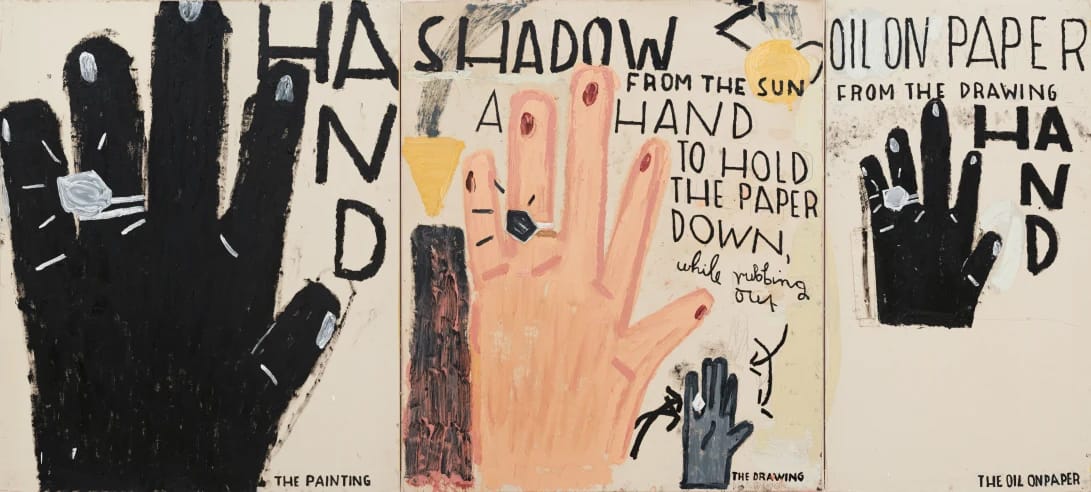
Through a massive survey of more than ninety works, the Royal Academy of Arts celebrates the irreverent and exuberant practice of the British painter Rose Wylie. As the first British woman to receive a solo exhibition in the institution’s Main Galleries, Wylie presents a visual universe where high and low culture merge: from childhood memories of the Blitz to red-carpet appearances by Nicole Kidman. Large-scale, unstretched canvases and thick, tactile paint record an iterative process that prioritises the visual impact over narrative logic. These bold compositions, which frequently incorporate handwritten text and repeated motifs, illustrate Wylie’s belief that a painting’s primary meaning resides simply in its physical existence.
The John Madejski Fine Rooms
Until 19 April 2026
The John Madejski Fine Rooms at the Royal Academy of Arts offer a stunning journey into the architectural heart of Burlington House. These sumptuously restored eighteenth-century spaces, originally designed for the Earl of Burlington, serve as a permanent gallery for highlights from the RA’s extensive collection. Visitors can admire masterpieces by founding members such as Joshua Reynolds and Thomas Gainsborough, displayed beneath magnificent coved ceilings decorated by William Kent. By showcasing these works within their original domestic context, the enfilade of rooms offers a rare glimpse into the historic grandeur that has shaped British art since 1768.
ming wong: Dance of the sun on the water | Saltatio solis in aqua
Until 6 April 2026
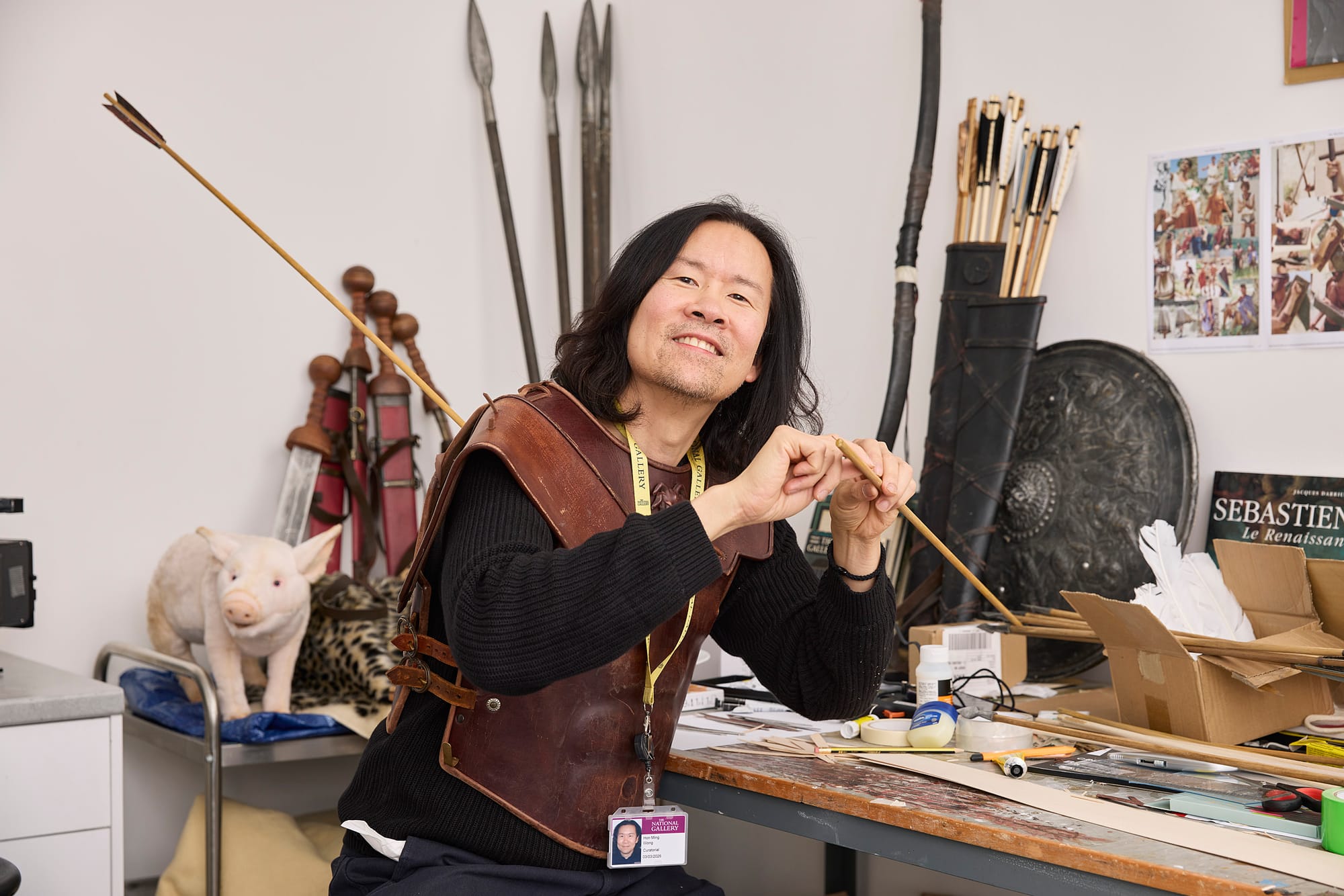
Inside the historic rooms of the National Gallery, artist in residence Ming Wong reimagines the martyrdom of Saint Sebastian through a contemporary lens. His experimental short film, Dance of the sun on the water | Saltatio solis in aqua, draws inspiration from the fourteen depictions of the saint within the museum’s own collection. By blending Renaissance influences with references to Derek Jarman’s 1976 cinema, Wong creates a visually exquisite installation that bridges diverse historical periods. This witty and experimental work explores how the endurance of spiritual figures remains relevant, asserting the power of archival stories in our modern world.
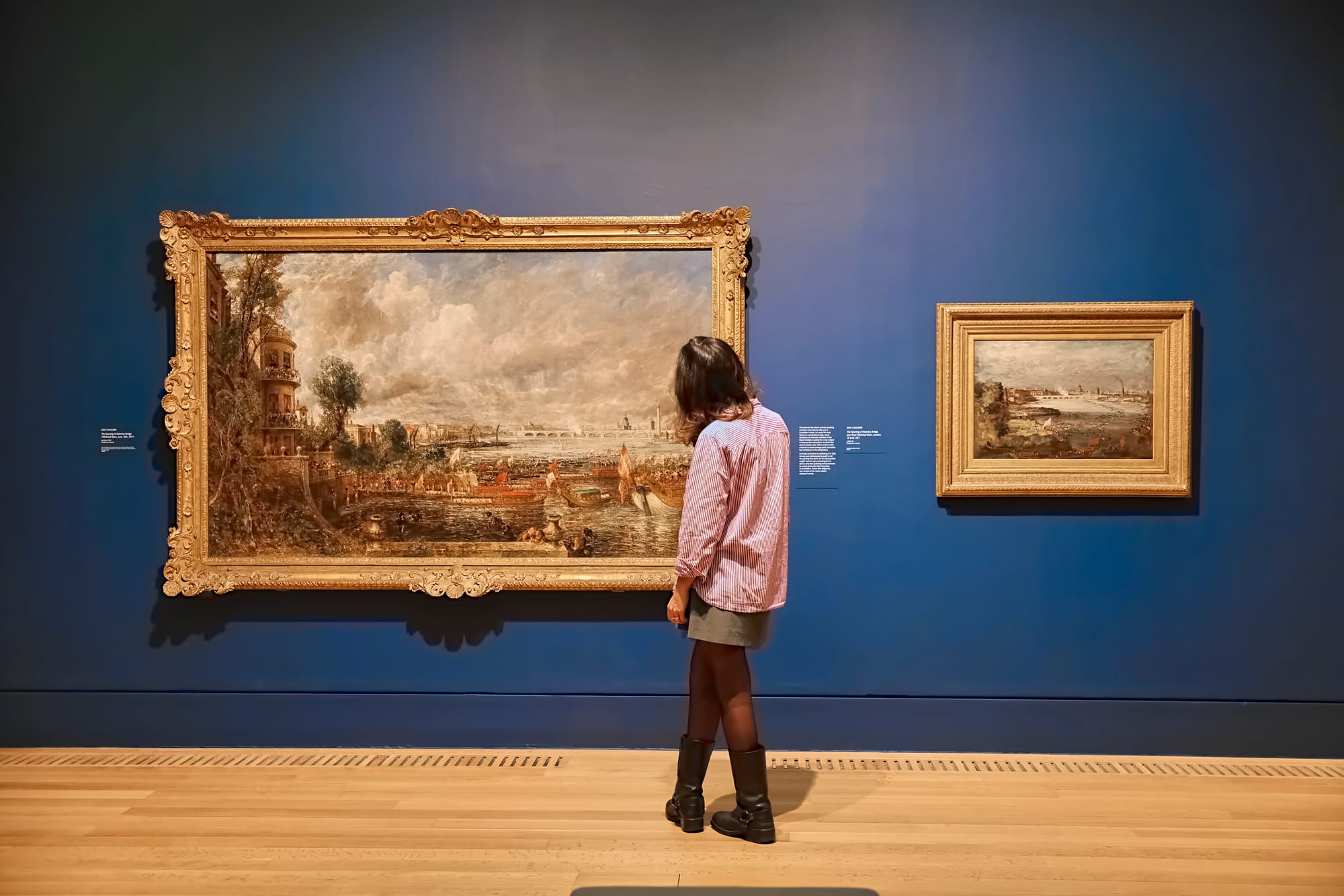
Turner & Constable: Rivals & Originals
Until 12 April 2026
Celebrating 250 years since their births, Tate Britain brings together more than 170 works by the two masters of British landscape painting. The exhibition explores the intense competition between J. M. W. Turner and John Constable, whose contrasting styles were famously likened to a clash of fire and water. While Turner captured the sublime through dramatic sunsets and global travels, Constable sought authenticity in the familiar scenes of his native Suffolk. This pairing offers a unique look at their intertwined lives, featuring personal sketchbooks alongside masterpieces like The White Horse, and revealing how two rivals fundamentally transformed the genre.
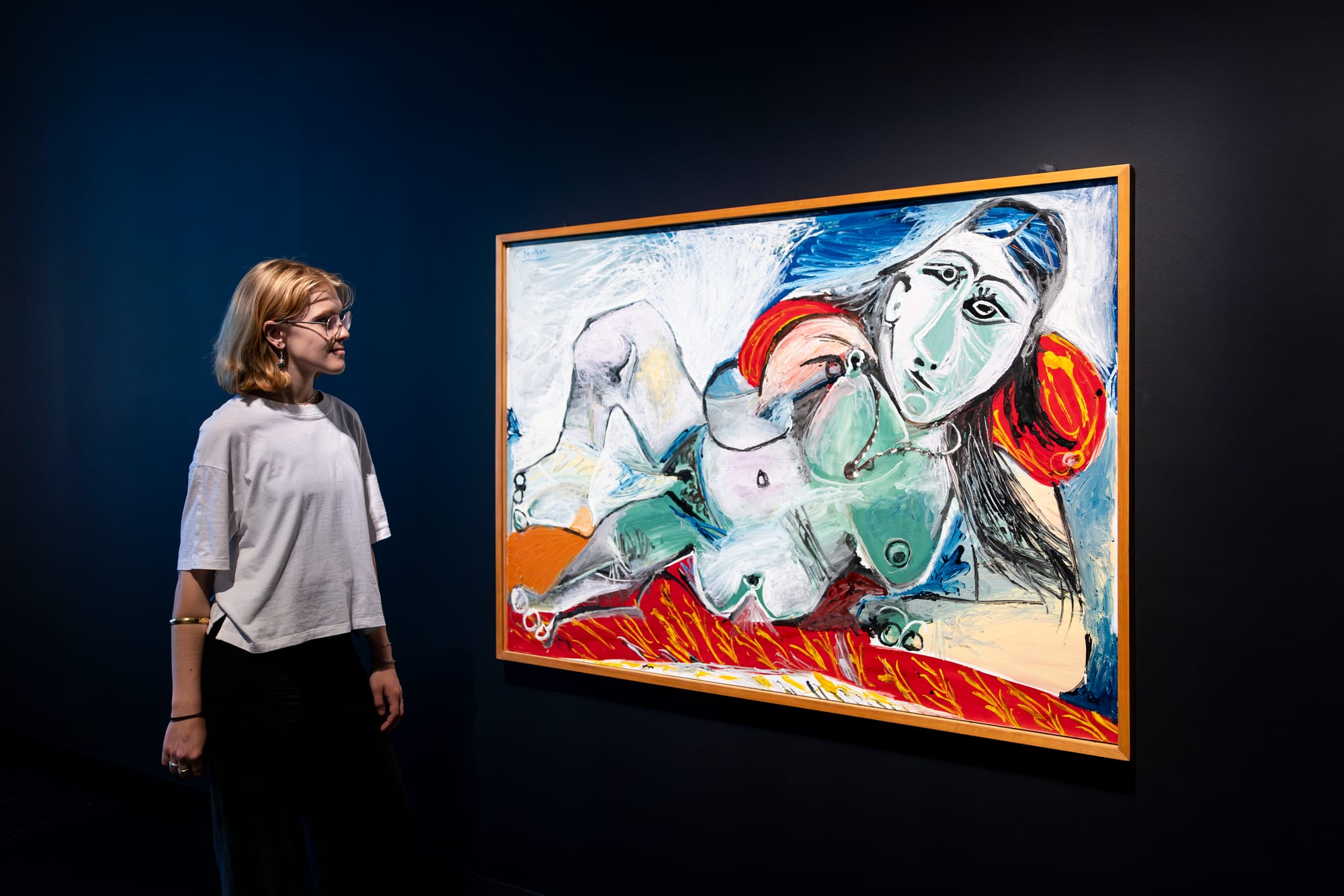
Theatre Picasso
Until 12 April 2026
Drawing inspiration from the world of the stage, this exhibition at Tate Modern explores Pablo Picasso’s enduring passion for performance. The presentation brings together a vast array of costumes, set designs, and sketches that reveal how his collaborations with the Ballets Russes influenced his broader artistic language. Visitors can explore the dynamic relationship between his experimental paintings and the world of dance — a creative exchange that famously pushed the boundaries of modernism. By showcasing these dramatic works alongside archival footage, the display illuminates how the energy of the theatre provided a vital laboratory for Picasso’s most inventive ideas.
Máret Ánne Sara
Until 12 April 2026
A multisensory monument to ancestral knowledge and ecological interconnection occupies the Turbine Hall at Tate Modern. Created by Sámi artist Máret Ánne Sara, the installation Goavve-Geabbil responds to the industrial history of the site by reframing energy as a sacred life-force rather than a resource. Reindeer hides, bones, and wood are combined with industrial materials, scent, and sound to highlight the erosion of indigenous culture. This immersive work upholds Sámi science and philosophy as vital tools for planetary health. By navigating this charged space, visitors encounter a powerful plea for the regeneration of our shared world.
Tarek Atoui
Until 11 April 2026
Through his site-specific commission for the Turbine Hall, Tarek Atoui reimagines the relationship between sculpture and sound. The Lebanese composer creates a multisensory environment featuring intricately engineered instruments that function as both performance tools and physical art objects. By drawing on his research into music history and production, the artist invites visitors to engage with sound as a tangible, spatial experience rather than a mere auditory one. This installation transforms the industrial scale of Tate Modern into a laboratory for sonic experimentation. It stands as a testament to Atoui’s innovative approach to blending technology, performance, and the act of listening.
Wilhelmina Barns-Graham
Until 11 April 2026
Eight decades of artistic evolution are chronicled in this major retrospective at Tate St Ives, which marks the first comprehensive survey of Wilhelmina Barns–Graham’s career. As a leading figure of British modernism, she expressed her profound connection to the landscapes of Cornwall and Scotland through a vibrant language of abstraction. The exhibition brings together over 170 works, including paintings, prints, and archival documents. It is tracing her path from early student days to her late mastery of colour. By showcasing her rhythmic compositions and bold use of light, the display celebrates a life dedicated to translating spiritual experience into tangible, energetic form.
Emilija Škarnulytė
Until 12 April 2026
Acting as a “future archaeologist”, Emilija Škarnulytė transforms Tate St Ives into a site for exploring deep time and invisible power structures. Her immersive films and installations document Cold War military bases and decommissioned nuclear plants, reframing these industrial ruins as relics of a vanished human culture. The exhibition features the artist’s hybrid half-fish persona, who navigates abandoned submarine tunnels and deep-sea habitats to bridge the gap between science and mythology. By melding ancient prophecy with modern research, the display creates a haunting narrative for our endangered planet, urging a radical reconsideration of the world’s geological order.
Andy Warhol: Pop Icon
Until 19 April 2026
In a major partnership with Tate and the National Galleries of Scotland, Lakeside Arts presents an outstanding selection of works by the definitive American pop artist. The exhibition explores how Andy Warhol challenged traditional conventions of fame and consumerism, featuring iconic portraits of celebrities like Marilyn Monroe and Liz Taylor. By situating his silkscreen prints within a period of intense social and political change, the display reveals a practice that fundamentally redefined the nature of creativity. This presentation offers a clear view of the ideas behind Warhol’s most famous imagery, illustrating his enduring impact on the modern persona.
Alfred Buckham: Daredevil Photographer
Until 19 April 2026
Take to the skies at the Scottish National Portrait Gallery, where the first major exhibition dedicated to the pioneering aviator and photographer Alfred Buckham is now on display. Daredevil Photographer charts the remarkable career of a man who combined his passion for flight with a ground-breaking approach to aerial imagery. By standing in open cockpits and securing himself with only a rope, Buckham captured breathtaking views that bridged the gap between military record and fine art. The display features over 100 photographs and personal objects (including his modified cameras and journals) while exploring how his darkroom “jigsaws” anticipated modern digital techniques. It is a thrilling tribute to a maverick whose work transformed our perspective of the world from above.
Performing Trees
Until 4 April 2026
The Whitworth invites visitors to reconsider the natural world through a selection of over fifty works where arboreal forms serve as the primary protagonists. Eschewing the idea of nature as a static backdrop, this display utilises textiles, wallpapers, and paintings to illustrate how artists have used timber to mirror human emotion. Pieces by Paul Cézanne and Agostino Carracci appear alongside contemporary drawings by George Shaw, tracing themes of myth, memory, and sacred shelter. By examining trees as active witnesses to history, the presentation encourages a deeper reflection on our ecological ties before these items return to the archives.